
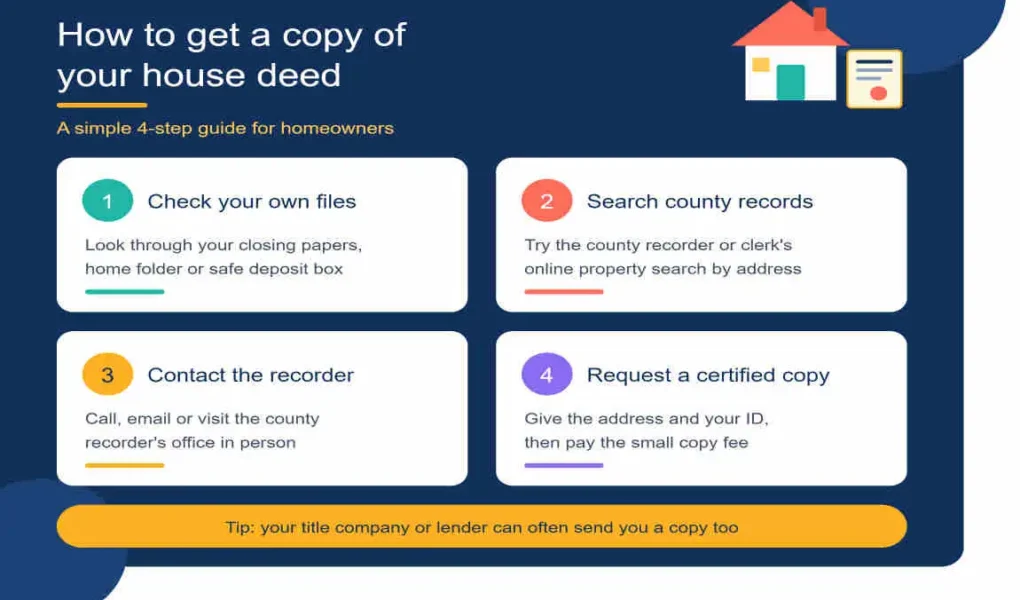
You are about to refinance, sell, or add a family member to the property, and someone asks for a copy of your deed. You open the filing cabinet and it is not there. Don’t panic. Almost every deed in the United States is a public record, which means a fresh copy is usually only a few clicks (or one short phone call) away.
What Is a Deed (and Why Do You Need a Copy)?
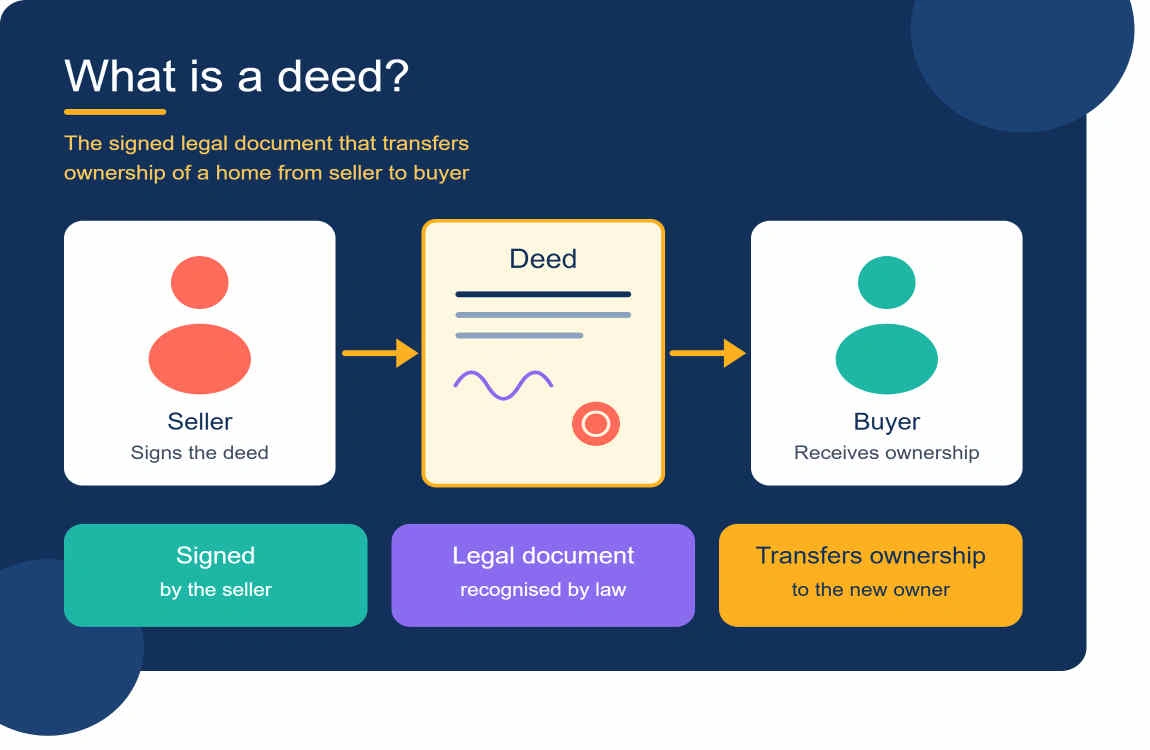
A deed is the written document that transfers title to real property from one person, the grantor, to another, the grantee. According to USLegal’s real estate deeds definition, the deed must describe the property, name both parties, be signed and notarized by the grantor, and be recorded with the County Recorder or Recorder of Deeds to complete the transfer. FindLaw’s legal dictionary adds that deeds are recorded at the local registry to give public notice of ownership.
That last point is the good news. Because your deed was recorded, the county holds an official version, even if your own paper copy has vanished.
Common reasons you may need a copy:
- Selling or refinancing the home
- Applying for a home equity loan
- Adding or removing a name (marriage, divorce, inheritance)
- Settling an estate or a boundary dispute
- Checking that nobody has tampered with your title
Step-by-Step: How to Get a Copy of Your House Deed
Identify the right county office
Deeds are filed in the county where the property sits, not where you live now. The office may be called the County Recorder, Recorder of Deeds, Register of Deeds, County Clerk or Registrar-Recorder, depending on your state. A quick search for your county name plus “deed search” or “recorder” will usually take you straight to it, as Trust & Will’s deed guide also suggests.
Search the records online first
Many counties now let you look up a property by address, owner name or document number and download the recorded deed as a PDF. Norton LifeLock notes that many county portals show a scanned copy of your home’s latest deed, which is handy for both retrieval and monitoring.
No luck online? Gather the following before you call or write:
- Property address and the names of owners on the deed
- Approximate recording date (the year is often enough)
- Parcel number, or section/block/lot, found on your property tax bill
Submit your request and pay the fee
You can usually request a copy in person, by mail or online. Fees are set locally, so always check your county’s current schedule. Two real estate examples show how much they differ:
| County | What it charges (published schedule) | Source |
|---|---|---|
| Los Angeles County, CA | Certified copy: $6 first page, $3 each extra page. Plain copy: $5 first page, $3 each extra page. | LA County Registrar-Recorder |
| Nassau County, NY | Certified copy: $5 in person, $10 by mail (includes a $5 search fee). Requires your section, block and lot numbers from your tax bill. | Nassau County Clerk |
Turnaround varies too. Los Angeles County, for example, states that online orders are processed within 20 working days of receipt, according to its online request page. Walk-in requests are often same day.
Other Ways to Get Your Deed
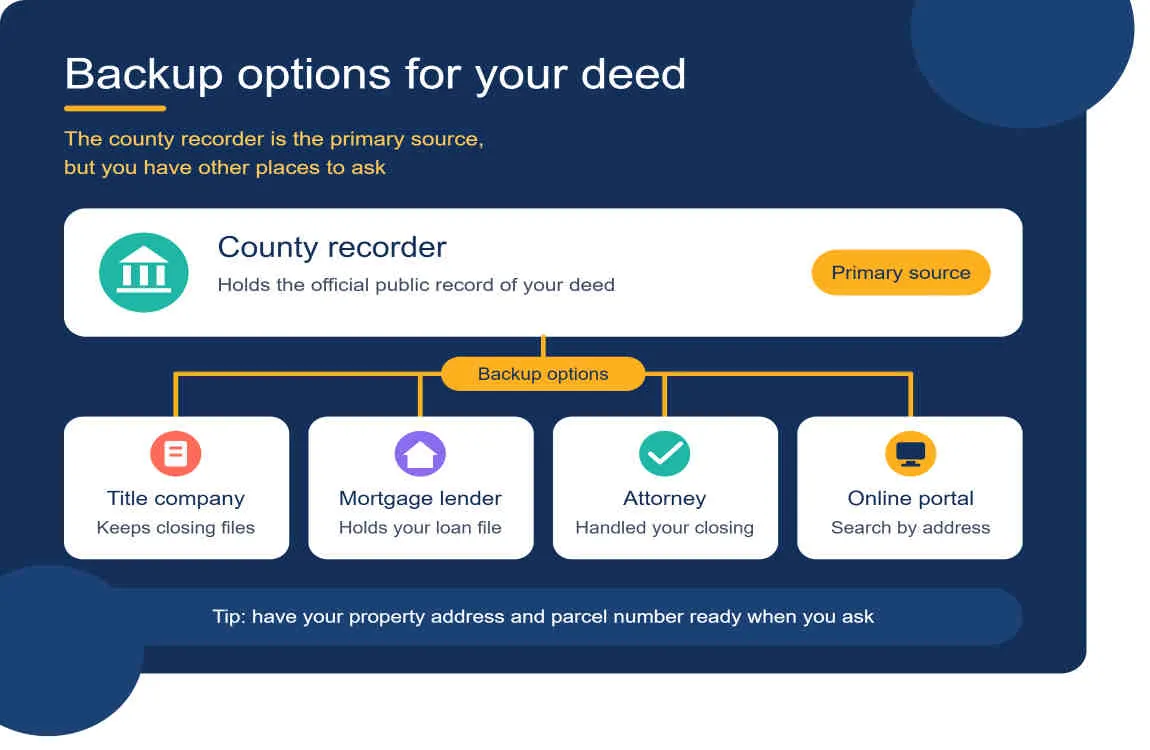
- The title or escrow company from your purchase. They keep closing files and can often send you the recorded deed or point you to its recording number.
- Your real estate attorney. If a lawyer handled your closing, their file should include it.
- Your mortgage lender. Lenders hold a copy of the recorded home security instrument and can sometimes help with related documents.
- A third-party records service. These can search for you, but they typically charge more than the county. Compare the price against the county fee first.
Deed vs. Title: Don’t Mix Them Up
People use the words interchangeably, but they are different things. The title is your legal right to own the property, while the deed is the document that transfers that right. BiggerPockets also explains that the type of deed you received (warranty, quitclaim, executor’s and so on) depends on how the property was acquired, which affects how much protection you have. If you are not sure which type you hold, reading your copy once you get it is well worth the time.
Why Pulling Your Deed Is Also a Smart Security Check
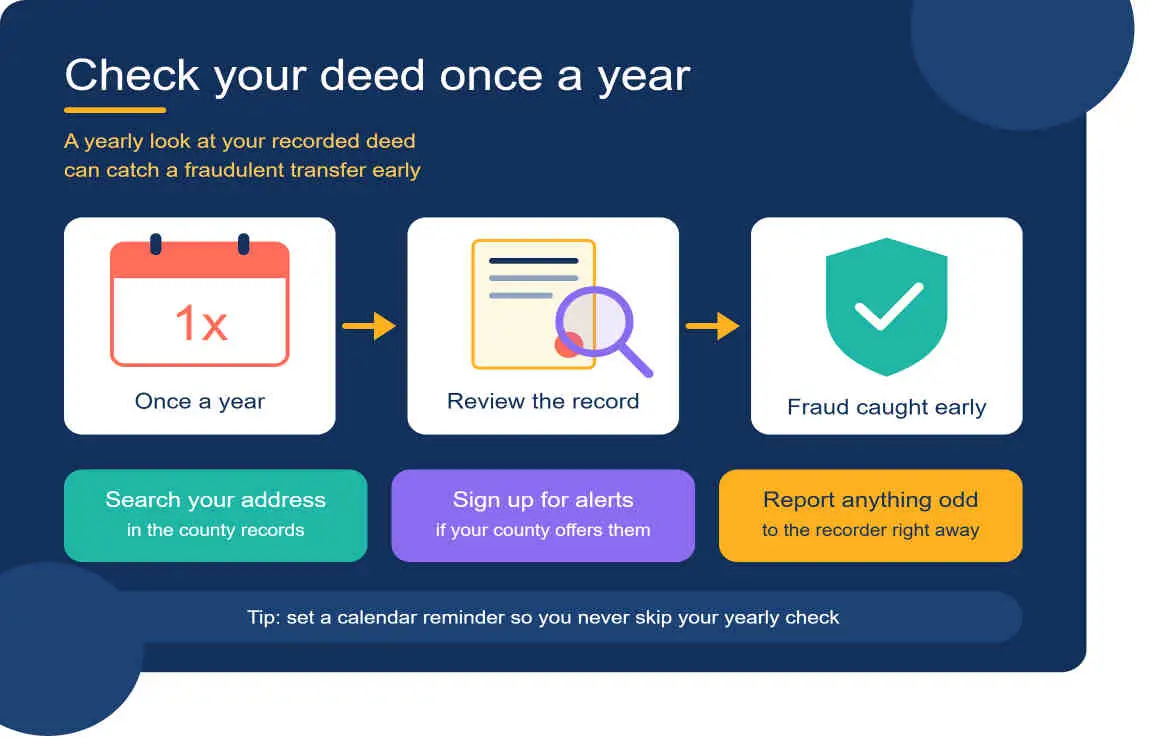
Deed fraud (also called home title theft) happens when a criminal records a forged deed that moves your property into another name. California’s Department of Financial Protection and Smart Innovation advises owners to check their title regularly through the county recorder and notes that absentee, elderly and recently deceased owners are the most at risk. The same page points to California’s Senate Bill 255, signed in October 2025, as a new tool for homeowners.
Norton’s guide to home title theft lists the typical red flags and recommends contacting your lender’s fraud department right away if you suspect something is wrong. Many counties also offer free property-alert systems that email you when a new document is recorded against your address. It takes a couple of minutes to sign up and it is one of the best habits a homeowner can build.
Common Mistakes That Slow You Down
- Searching the wrong county. Always use the county where the property is located.
- Using only your current address. If street names or numbers changed since the deed was recorded, search by owner name or parcel number instead.
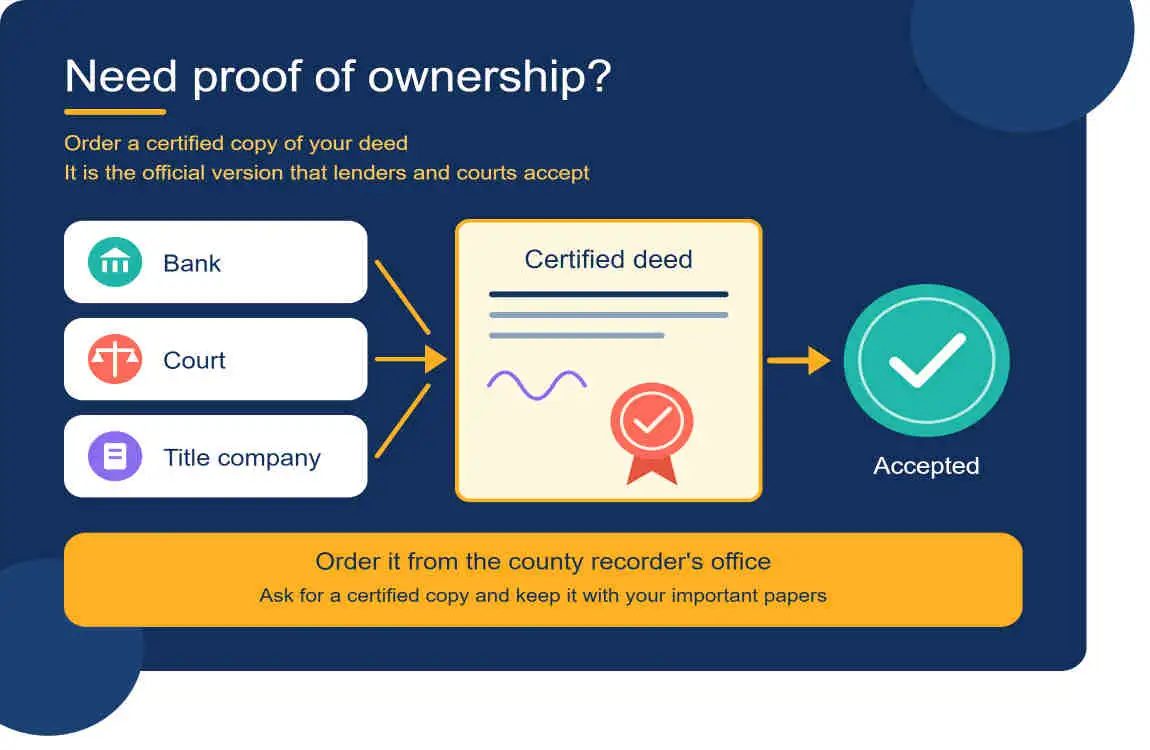
- Ordering a plain copy when you need a certified one. Check what the requesting bank, court or agency actually accepts before you pay.
- Forgetting fees on extra pages. Longer deeds house cost more, so confirm the page count.
- Assuming fees are national. They are not, so always check your county’s current schedule.
Frequently Asked Questions
Can anyone get a copy of my deed?
In most places, yes. Recorded deeds are public records, so a plain copy is typically available to anyone. Some offices ask for ID for certified copies, and rules vary by state.
How much does a copy of a deed cost?
Usually somewhere between a few dollars and about $25 for a short document, depending on the county, as the Los Angeles and Nassau County fee schedules above illustrate. Always confirm the current fee with your county office.
How long does it take?
Online portals can be instant. Counter service is often same day. Mail and some online orders can take days or weeks, with Los Angeles County quoting up to 20 working days for online requests.
What if my mortgage is still active?
You still own the deed copy. Your lender may hold a separate recorded document (a mortgage or deed of trust), but your ownership deed is recorded with the county, so request it there.
I live outside the United States. Does this still apply?
The county-recorder process described here is specific to the U.S. Other countries use land registries with their own request procedures and fees, so check your national land registry.
Final Thoughts
Getting a copy of the deed to your house is far easier than most owners expect. Identify the correct county, search the online records, choose a certified copy if you need it for legal or financial purposes, and pay the small fee. Once you have it, store a digital scan and the paper copy in two separate safe places, and glance at your county’s record once a year to make sure everything still looks right.