A toilet that leaks only when flushed almost always has a worn seal or loose joint that fails under flush pressure. The usual culprits are a perished cistern-to-pan washer (the rubber doughnut), loose cistern bolts, a failing flush valve washer, or a poor seal where the pan meets the waste pipe. Dry the area, flush, and watch where the water first appears. That one check tells you which part to replace.
Why Does a Toilet Leak Only When Flushed?
When you flush, the cistern empties into the pan in a few seconds. That sudden rush puts pressure on every joint between the cistern, pan and waste pipe. A joint that holds still water can weep, drip or spray once that pressure arrives. This is why a leak that shows up only on flushing points to a seal or connection, not to the water supply pipe, which would drip all the time.
Where Is the Water Coming From? Common Causes Compared
| Where you see water | Most likely cause | Typical fix | DIY? |
|---|---|---|---|
| Between cistern and pan (close-coupled toilet) | Perished cistern-to-pan washer or poorly seated cistern | Replace the doughnut washer and reseat the cistern | Yes |
| Around the cistern bolts, inside the pan | Worn bolt washers or loose fixings | Replace washers, tighten evenly | Yes |
| Dripping from underneath the cistern | Failed flush valve washer or cracked cistern | Replace washer or flush valve; replace cistern if cracked | Washer: yes |
| At the flexible hose or isolation valve | Loose or worn connection | Nip up the nut or replace the hose | Yes |
| Puddle at the base of the pan | Failed waste pipe (soil pipe) connector or sealing | Reseat the pan with a new connector | Usually a plumber |
| Water from outside overflow pipe | Inlet valve not shutting off | Replace the washer or the whole inlet valve | Yes |
The 6 Most Common Reasons Your Toilet Leaks After Flushing
A worn cistern-to-pan washer (doughnut)
On a close-coupled toilet, a rubber doughnut seals the cistern outlet to the pan inlet. As it ages it hardens or flattens, or it never sat correctly after installation. Water then escapes during the flush and runs down the back of the pan. Because it only moves under flush pressure, the leak pipe is easy to mistake for condensation.
Loose or corroded cistern bolts
The bolts that hold the cistern to the pan compress the doughnut. If they are loose, or the rubber washers on them have perished, water seeps along the bolt and drips from the underside. Over-tightening is a risk too, as it can crack ceramic.
A faulty flush valve or washer
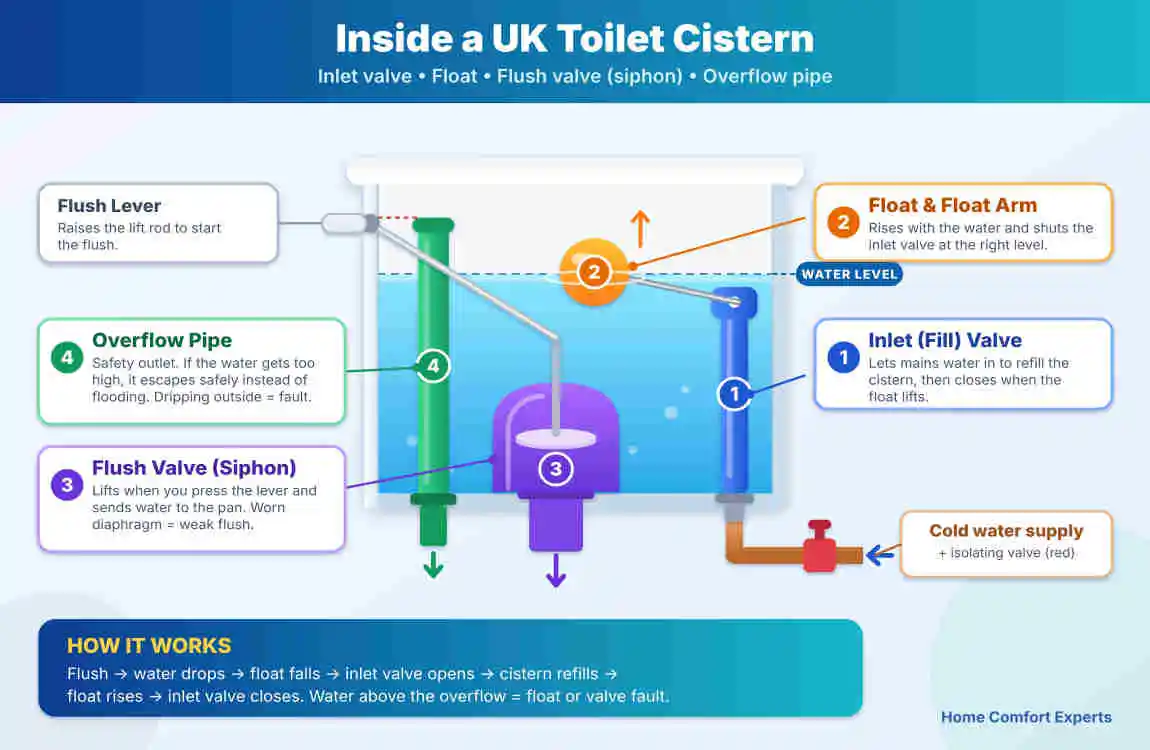
The flush valve holds water in the cistern until you press the button. If it is worn, dirty or does not seat properly, water can pass through it into the pan, leading to the “phantom flush” many people hear at night.
An inlet (fill) valve that will not shut off
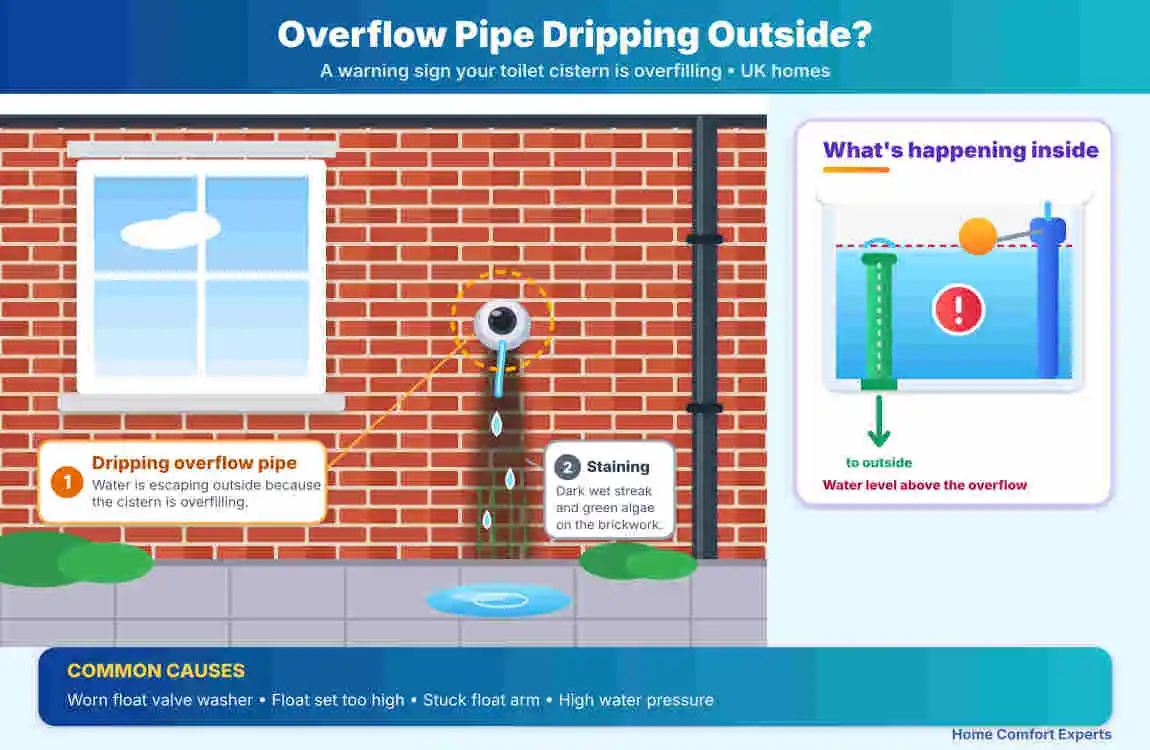
If the inlet valve fails, the cistern overfills and water runs out of the overflow pipe. In many UK homes that pipe discharges outside, so a steady drip from an outside wall is a warning sign.
A leaking waste pipe connection
If water pools around the base of the pan after flushing, the seal between the pan outlet and the soil pipe may have failed. This is more serious because the water may be waste water, so treat it as a hygiene issue and call a plumber.
A cracked cistern or pan
Hairline cracks can leak only when the cistern is full or under flush load. Porcelain cannot be repaired reliably, so a cracked cistern or pan should be replaced.
How to Find the Leak in 10 Minutes
- Dry everything. Wipe the cistern, pipes, pan base and floor with kitchen roll or toilet tissue.
- Flush and watch. Flush once and note where the first drop appears. Use the torch on your phone for the back of the pan.
- Check the supply. Run a dry tissue along the flexible hose, isolation valve and inlet valve. A wet tissue means a supply leak, not a flush leak.
- Do the tissue test for hidden leaks. Water Safe advises placing a dry sheet of toilet tissue across the back of the pan and leaving it for up to three hours or overnight. Wet or torn paper in the morning means you have a leaky loo.
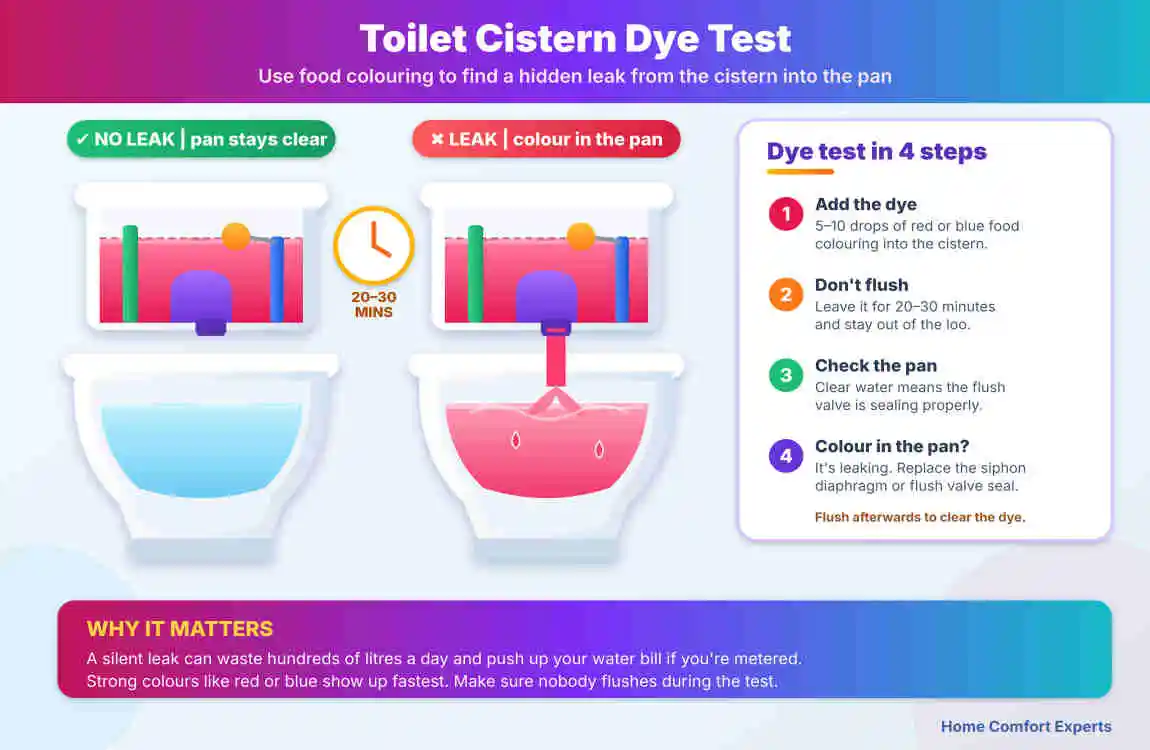
- Try a dye test. Add several drops of food colouring to the cistern and do not flush. If coloured water reaches the pan within about 10 to 15 minutes, water is passing through the flush valve. Avoid cleaning blocks that tint the water, as they spoil the result.
- Look at the overflow. If water is trickling from an overflow pipe outside, the inlet valve is the problem.
How to Fix a Leaking Toilet Yourself
Tools you will probably need
- Adjustable spanner and screwdriver
- Sponge, bucket and towels
- Replacement cistern-to-pan washer, bolt washers, flush valve washer or inlet valve (match your model)
- Plumber’s tape or sealant for threaded fittings only
Fixing a leak between the cistern and pan
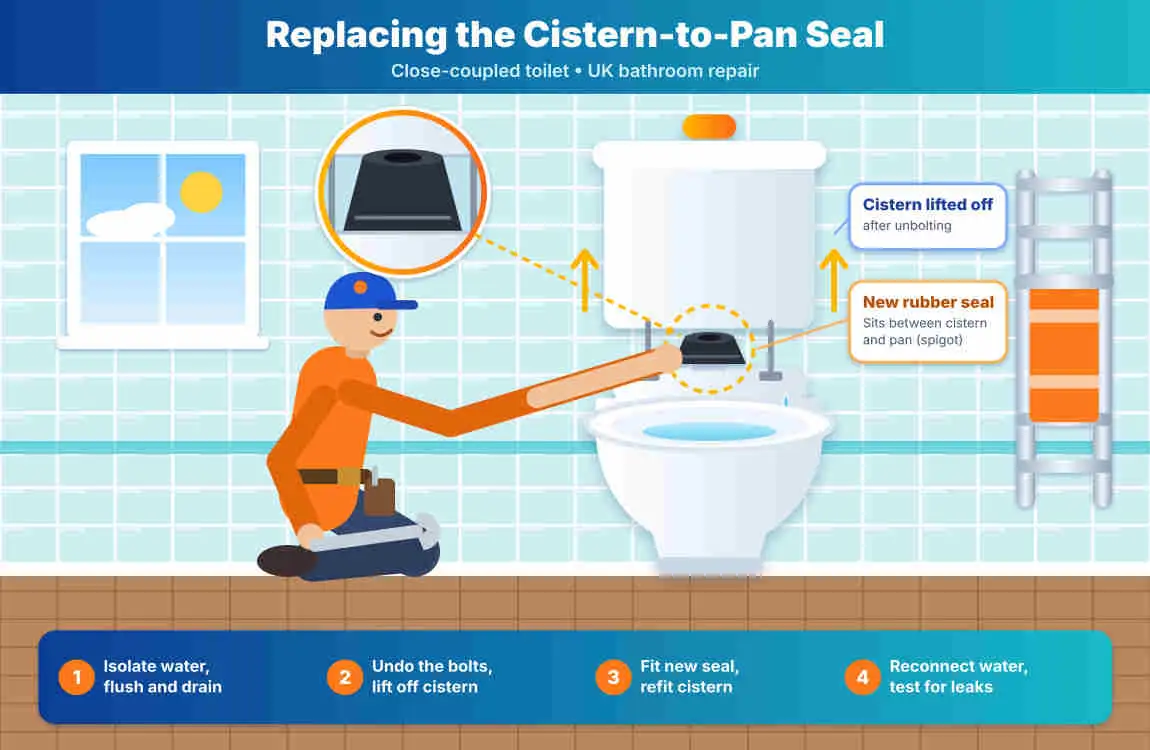
- Turn off the cistern isolation valve (the small tap near the pipe). If there is none, shut off the water at the stopcock.
- Flush to empty the cistern, then sponge out the rest.
- Disconnect the supply hose, then undo the wing nuts or bolts under the cistern.
- Lift the cistern off, replace the rubber doughnut and the bolt washers, and check the pan inlet for debris.
- Lower the cistern square onto the pan. Tighten the bolts evenly, a little at a time, so you do not crack the ceramic.
- Reconnect the hose, turn the water on, and flush several times while checking for drips.
Fixing a leaking flush valve or inlet valve
If dye reaches the pan, the flush valve washer is not sealing, so replace it or the whole valve. If the overflow is running, replace the inlet valve washer or fit a new valve. Universal replacement valves suit most UK cisterns, but check your toilet make first.
When to Call a Plumber
Book a professional if you notice any of these:
- Water pooling around the base of the pan after each flush
- A cracked pan or cistern
- Soft or stained flooring, ceiling stains below the bathroom, or mould
- A leak that continues after you replace the seals
- Any suspicion that waste water, not clean water, is leaking
Prices vary by region, fault, parts and call-out fee, so ask for a written quote first. If you rent, tell your landlord or letting agent in writing before you carry out repairs.
UK Rules You Should Know
In England and Wales, toilet cisterns must comply with the Water Supply (Water Fittings) Regulations 1999, which protect drinking water and limit waste. Look for the approval mark from a scheme such as the Water Regulations Advisory Scheme (WRAS), Kiwa or NSF when you buy replacement pipe fittings. The UK government has also consulted on updating toilet cistern specifications to stop cistern water from re-entering drinking water and to understand the causes of leaking toilet valves.
How Common Are Leaking Toilets in the UK?
More common than most people think. Thames Water’s own checks of roughly 100,000 homes found that about 5% of households had a leaky toilet. NI Water puts the figure at 1 in 20 households and says these leaks often go unnoticed. A WRAS survey also found that 22% of Brits would wait more than four days to fix a leaky toilet, even though such a leak can waste up to 400 litres per day.
Cambridge Water says it is a myth that leaks are easy to see or hear. They are hard to spot, so a monthly check is the easiest habit.
How to Stop Your Toilet Leaking Again
- Do a tissue or dye test once a month.
- Replace the cistern-to-pan washer and bolt washers whenever you remove the cistern.
- Tighten bolts evenly and stop when snug.
- Use WRAS-approved or equivalent fittings.
- Check the outside overflow pipe after heavy use or a cold spell.
- Do not use in-cistern chemical blocks pipe, which can damage rubber seals.
Frequently Asked Questions
Why is my toilet leaking only when I flush?
A leak that appears only on flushing usually comes from a worn cistern-to-pan seal, loose cistern bolts, a failing flush valve washer or a poor waste pipe connection. Water passes through these joints under flush pressure, so they stay dry the rest of the time.
Is a leaking toilet an emergency?
A small drip is not usually an emergency. A spreading leak, one soaking the floor, or one from the waste pipe should be dealt with quickly. Turn off the isolation valve, stop using the toilet and call a plumber if you cannot find the cause.
How much water can a leaking toilet waste in the UK?
Up to 400 litres a day, according to Water Safe, which also estimates around £300 a year on a metered bill.
How do I test for a leaking toilet without tools?
Dry the back of the pan, lay fresh toilet tissue across it and leave it for up to three hours or overnight without flushing. If the paper is wet or torn, the cistern is leaking into the pan.
Can I fix a leaking toilet myself?
Usually yes. Seals, washers, inlet valves and flexible hoses are standard DIY jobs. Call a plumber for base or waste pipe leaks, cracked porcelain or water damage.
Why does my toilet refill by itself?
A cistern that refills on its own, the “phantom flush”, usually means water is slowly leaking past the flush valve washer into the pan. A dye test will confirm it.
Final Thoughts
A toilet leaking when flushed is rarely complicated. Dry the area, flush, find where the water appears first, and match it to the cause above. Most fixes cost little and take under an hour, while an ignored leak keeps wasting water and money every day.
Sources
- Water Safe: How can I tell if I have a leaky loo?
- Water Safe: Leaky loo tissue test
- Thames Water: Identifying leaks
- WATEF Network (Thames Water): Leaky Loos
- NI Water: Leaky loo, here’s what you can do
- WRAS survey on delayed plumbing repairs (HPM Magazine)
- Water Safe: Preventing plumbing leaks in your new home
- GOV.UK: Water fittings, preventing backflow of water from toilet cisterns
- Cambridge Water: How to fix a leaky loo
- Bristol Water: How to fix a leaky loo