
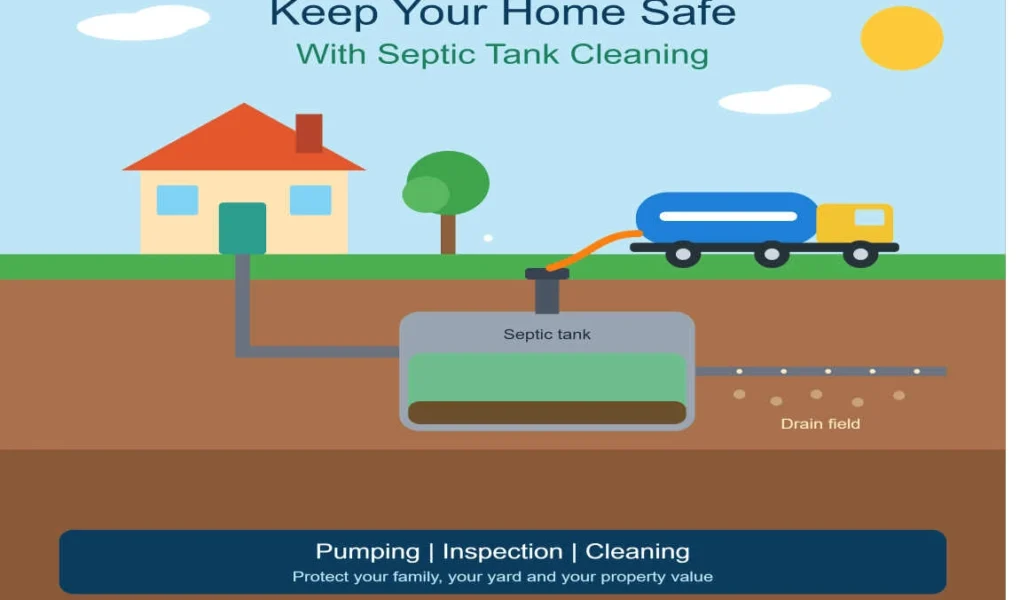
Nobody likes thinking about what happens after a flush. But if you own a home in Kannur district, there’s a good chance a septic tank is quietly doing that job for you every single day, and it won’t send a reminder when it needs help. If you’ve been searching for septic tank cleaning in Thalassery, this guide covers what you need to know: why it matters, when to do it, what to watch for, and how to choose a service that does the work safely and legally.
Why Septic Tank Cleaning Matters for Kerala Homes
Kerala has done something remarkable with household sanitation. A World Bank sanitation specialist noted that clean toilet coverage in the state is around 96%, and most of those toilets connect to septic tanks, because only a very small share of Kerala is on sewer networks. That’s great news for dignity and health. It also means the whole system depends on one habit: emptying the tank on time.
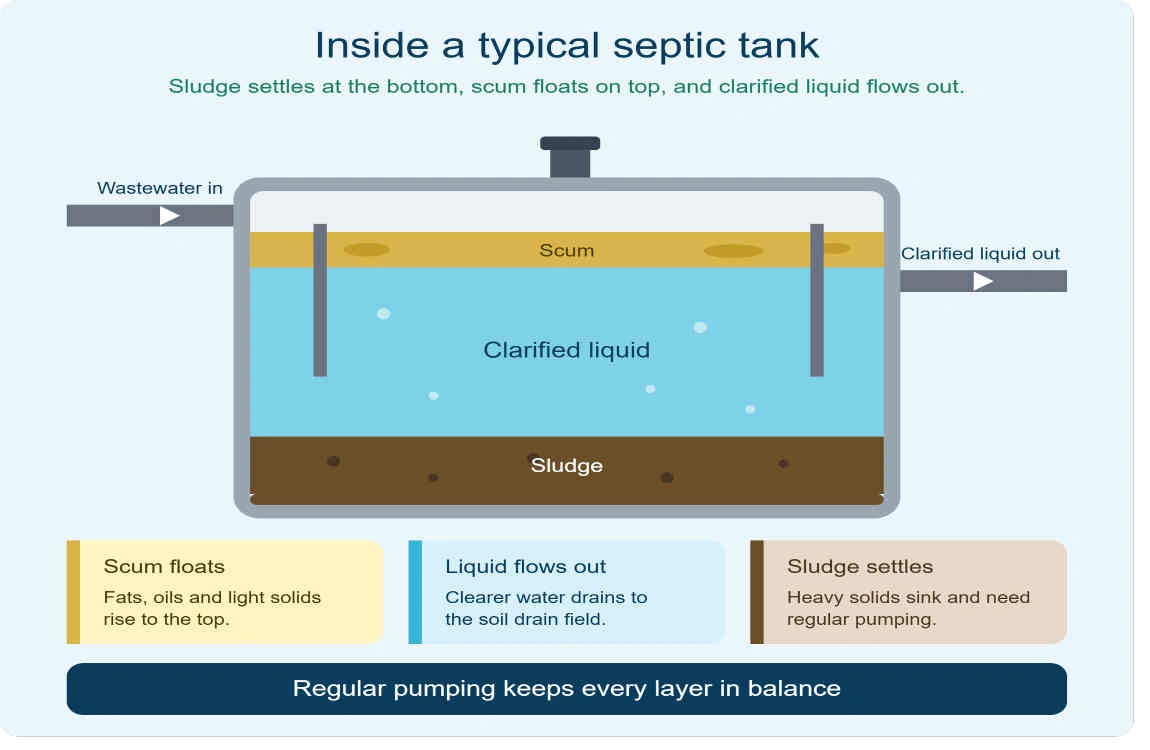
A septic tank doesn’t make waste disappear. It separates solids from liquid, lets bacteria break down part of the material, and sends the liquid onward. The solids, called sludge, keep building up at the bottom. Once the tank fills, the leftovers have nowhere to go but back toward your pipes or into the surrounding soil.
What Happens When You Skip Cleaning?
Delaying septic tank cleaning in Thalassery (or anywhere) usually plays out in a predictable way: first the smell, then the slow drains, then the expensive repair. But the bigger concern is health.
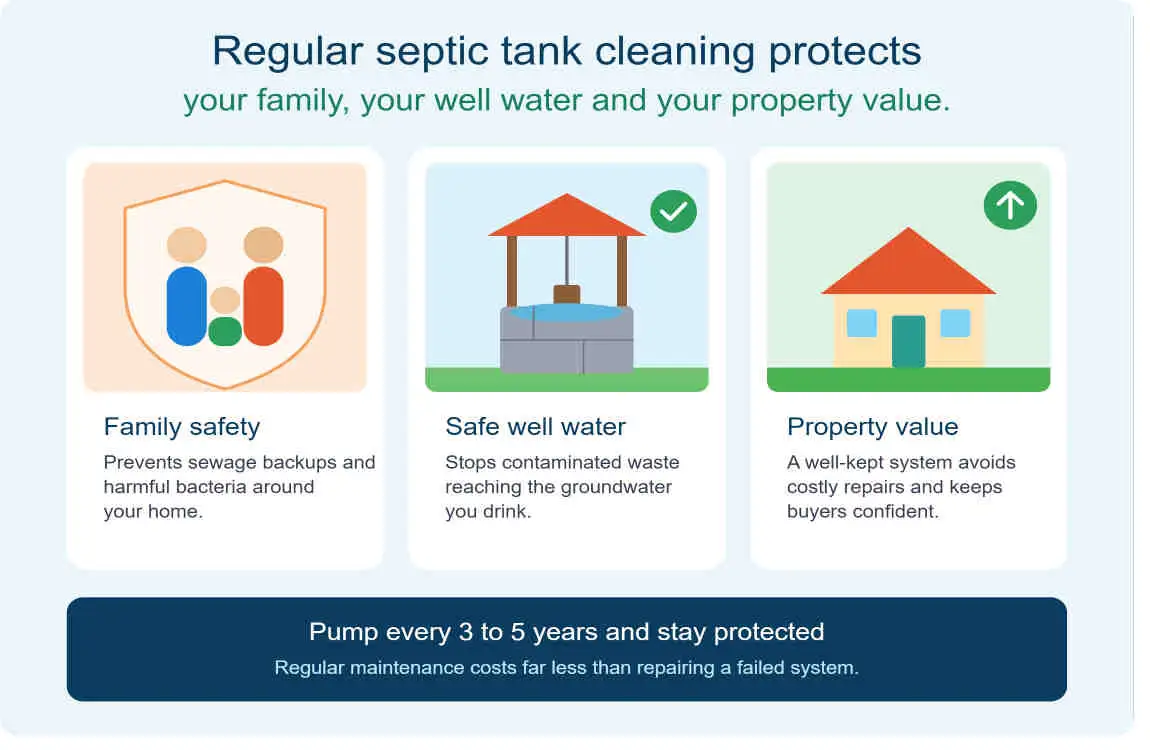
Untreated waste carries bacteria and viruses. When it leaks into soil, it can reach wells that families use for drinking and cooking. A review of US outbreak records covering 1971 to 2008, discussed by Circle of Blue with CDC researchers, found that in outbreaks where a contamination source was identified, about two-thirds were linked to a septic tank or an improperly designed well. The CDC’s Jonathan Yoder described septic problems as a contributor in most outbreaks tied to untreated groundwater. The data comes from the United States, but the biology is the same anywhere: leaking waste plus a shallow well is a risky combination.
How Often Should You Clean Your Septic Tank?
The US Environmental Protection Agency recommends having a septic system inspected at least every three years by a professional, and says household tanks are typically pumped every three to five years. The EPA also points out that the right schedule depends on four things: household size, the total wastewater you produce, the amount of solids in that wastewater, and the size of the tank.
Here’s a rough way to think about it:
| Your situation | Likely cleaning interval |
|---|---|
| Small family, large tank, light water use | Closer to 5 years |
| Average family, average tank | Every 3 to 4 years |
| Big joint family, small tank, heavy water use | Every 2 to 3 years, or sooner after an inspection |
| Rental property or home with guests often | Check every 2 to 3 years |
These are guidelines, not promises. The most reliable move is to ask the technician to measure the sludge layer during each visit and set your next date from that reading.
Warning Signs Your Tank Needs Attention
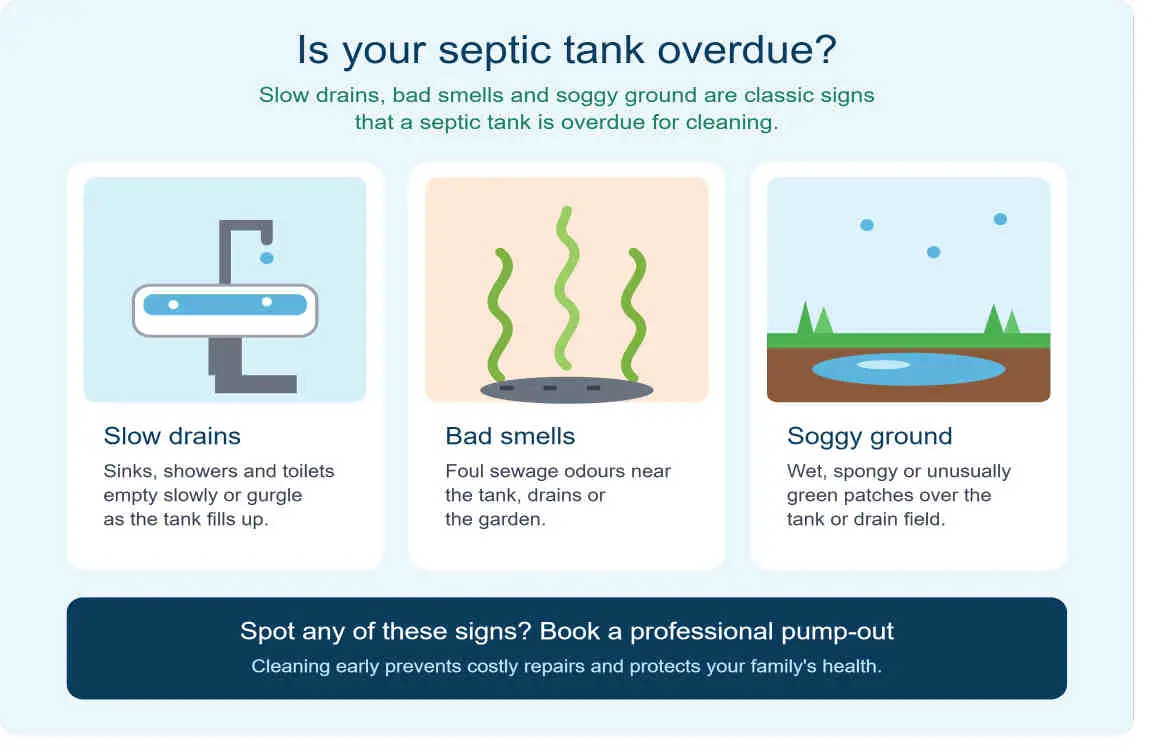
Your home usually tells you before a tank fails. Watch for these:
- Sinks, showers or toilets draining slowly, even after you’ve cleared the pipes
- Gurgling sounds from drains after flushing
- Foul smells around the tank, the garden or the bathroom
- Wet, soggy or unusually bright green patches of ground near the tank
- Sewage backing up into toilets or floor drains
- Well water that suddenly smells, tastes or looks different
If you notice any of them, book a professional inspection instead of waiting. Catching a full tank early is almost always cheaper than repairing a damaged one.
Monsoon Season: Why Timing Matters in Thalassery
Thalassery sits on Kerala’s coast in Kannur district, where heavy monsoon rain is part of life. Wet ground and a high water table put extra stress on a tank that’s already near capacity. A full tank can overflow, and waste can move toward nearby wells.
Kerala has seen how serious this can get. A 2019 field manual on desludging septic tanks, prepared by Gramalaya with UNICEF, records that the 2018 floods inundated wells and septic tanks across 13 districts of the state. You can’t control the weather, but you can control how full your tank is when it arrives. Scheduling septic tank cleaning home in Thalassery before the rains begin is one of the simplest ways to protect your home and well water.
Why You Should Never Choose Manual Cleaning
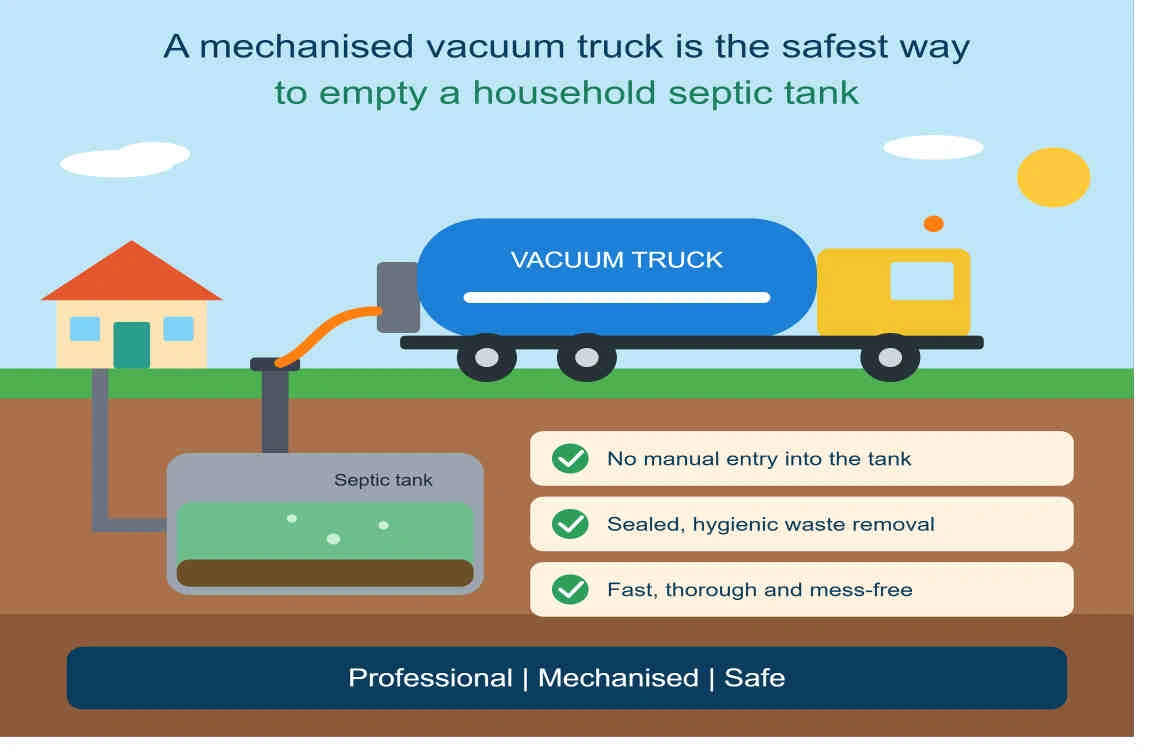
It may be tempting to hire whoever offers the cheapest quote, but cleaning a tank by hand is dangerous. Septic tanks can hold toxic gases, and workers have died in them. India’s Prohibition of Employment as Manual Scavengers and their Rehabilitation Act, 2013 prohibits engaging people in hazardous cleaning of sewers and septic tanks, which the Act defines as manual cleaning without the required protective gear and safety precautions. The Act also asks local authorities to use modern technology for cleaning.
In practical terms, this means you should only use an operator with a vacuum tanker, trained crew and proper safety equipment. It protects the workers, and it protects you from any legal or ethical trouble.
Where Does the Waste Go? Ask Before You Hire
Here’s a question few homeowners ask: after the truck leaves, where does your septage end up? A 2013 World Bank blog on Kerala described how, at the time, the state lacked treatment facilities for septage and some operators dumped it in open spaces, with a real risk of polluting water sources and paddy fields. Dumping is illegal, and practices have been under pressure to improve since then, but it’s still smart to ask.
A responsible provider should be able to tell you clearly where the waste is taken and should be comfortable showing you proof of their registration or authorisation.
How to Choose a Septic Tank Cleaning Service in Thalassery
Use this short checklist before you book:
- Equipment: Do they use a vacuum tanker, not buckets or manual entry?
- Safety: Does the crew wear protective gear and follow safety rules?
- Disposal: Can they explain where the sludge is taken and show authorisation?
- Pricing: Is the quote written down, with no surprise charges on the day?
- Inspection: Will they check the tank condition, baffles, inlet and outlet pipes while it’s empty?
- Paperwork: Do they give a receipt or service record you can keep for next time?
- Reputation: Are there honest local reviews or neighbours who’ve used them?
If you’re building a new home, it’s also worth knowing that the Kerala Municipal Building Rules 2019 point owners to the Indian Standard IS 2470 for septic tank design and construction, according to reporting by The News Minute. A well-built tank is easier to maintain and less likely to leak.
Everyday Habits That Keep Your Septic Tank Healthy
Cleaning is the big event, but daily habits decide how often you need it. The EPA’s guidance and state health departments agree on a few simple points:
- Don’t pour harsh chemicals down the drain. Strong drain openers, paint and similar products can harm the helpful bacteria in the tank.
- Keep fats, oil and grease out. They can clog pipes and the drainage area.
- Flush only toilet paper. Wipes, sanitary products and plastics don’t break down.
- Save water. Fix leaking taps and avoid running several heavy loads of laundry back to back, so the tank isn’t overloaded.
- Protect the area. Keep vehicles and heavy loads off the tank and drainage area, and don’t plant deep-rooted trees close by.
- Keep a record. Note the date of every day home cleaning so you’re never guessing.
Frequently Asked Questions
How often should I get septic tank cleaning in Thalassery?
Most households need it every three to five years, with an inspection about every three years. A large family or a small tank may need cleaning sooner.
Is it safe to clean a septic tank by hand?
No. Toxic gases make manual cleaning dangerous, and Indian law restricts it. Always choose a licensed operator who uses vacuum equipment and safety gear.
What are the signs that my septic tank is full?
Slow drains, gurgling pipes, bad odours, sewage backing up and soggy ground near the tank are the most common signs.
Can monsoon rain affect my septic tank?
Yes. Heavy rain and flooding can overload a tank and push waste toward wells and groundwater. It’s wise to have the tank checked before the rainy season.
Do chemical or “bio” additives replace regular cleaning?
No. Additives don’t remove built-up sludge. Pumping by a professional is what clears it.
Final Thoughts
A septic tank is one of those things you only notice when it fails, and by then the bill and the stress are both higher. A scheduled visit every few years, a trustworthy crew and a few careful habits are all it takes to keep your family healthy and your property protected. If you’ve been putting it off, make this the week you book septic tank cleaning in Thalassery, ideally before the next monsoon arrives.
Sources
- U.S. Environmental Protection Agency (EPA). How to Care for Your Septic System.
- World Bank, The Water Blog (S. Samuel, 3 April 2013). Septage: Kerala’s Looming Sanitation Challenge.
- Circle of Blue (2015), citing CDC research. Septic System Pollution Contributes to Disease Outbreaks.
- Government of India, Ministry of Law and Justice. The Prohibition of Employment as Manual Scavengers and their Rehabilitation Act, 2013.
- Gramalaya and UNICEF via SuSanA (2019). Standard Operating Procedures for Desludging and Rehabilitating Septic Tanks.
- The News Minute. Food poisoning cases in Kerala expose problem of poorly built septic tanks.