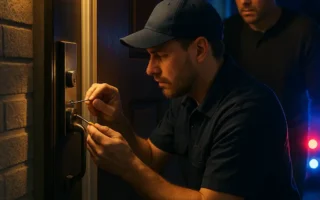
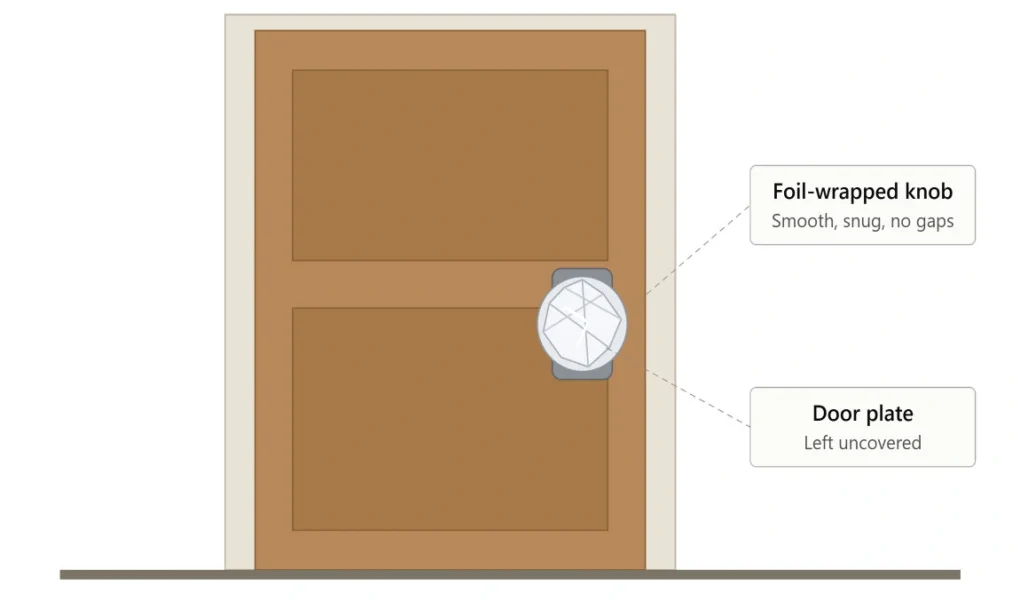
If you’ve scrolled through home-hack videos lately, you’ve probably seen someone wrapping a sheet of kitchen foil around their front door knob and promising it keeps burglars away.
Why People Say You Should Put Foil on a Door Knob
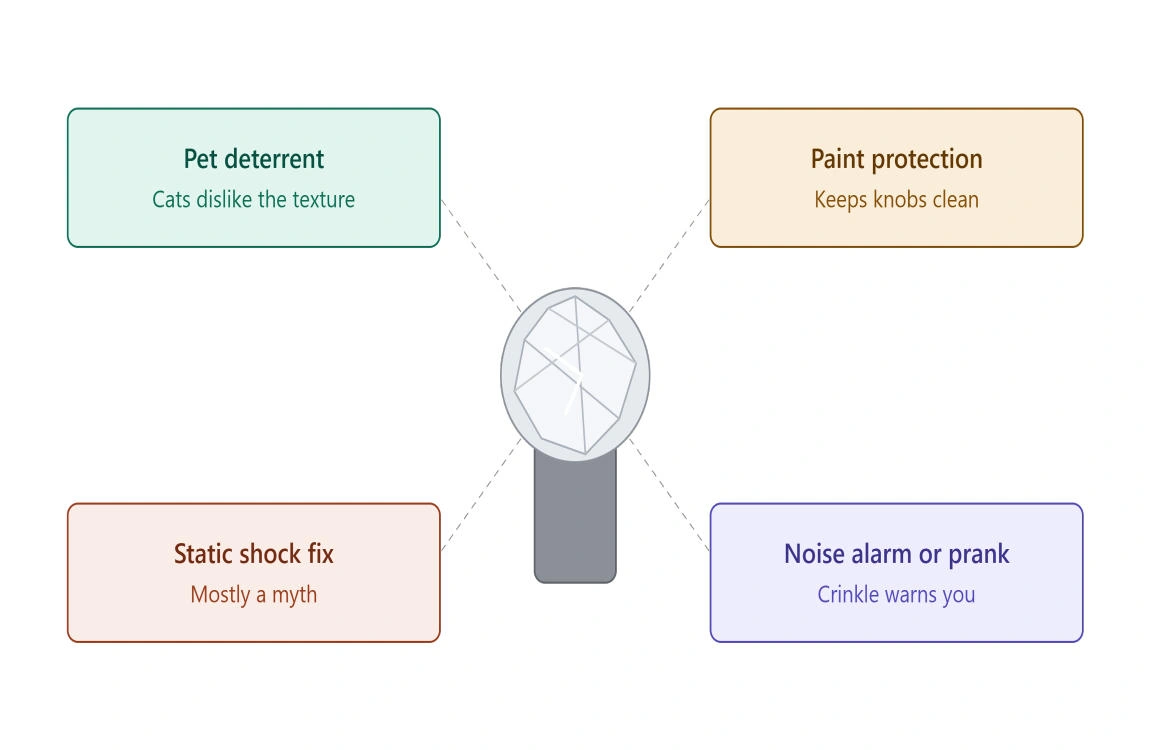
Supporters of the hack usually give three reasons:
- Tamper evidence. If the foil is torn or crumpled when you return, someone may have touched the door handle.
- A harder grip. The slippery, shiny surface is supposed to make the knob awkward to turn.
- A noise alarm. Crinkling foil is supposed to warn you if someone fiddles with the door.
Tom’s Guide adds a psychological angle: the odd-looking, reflective wrap might make an opportunistic intruder wonder what other home security measures are in place, and a disturbed wrap is easy to spot (Tom’s Guide).
Does Foil on a Door Knob Really Keep You Safe?
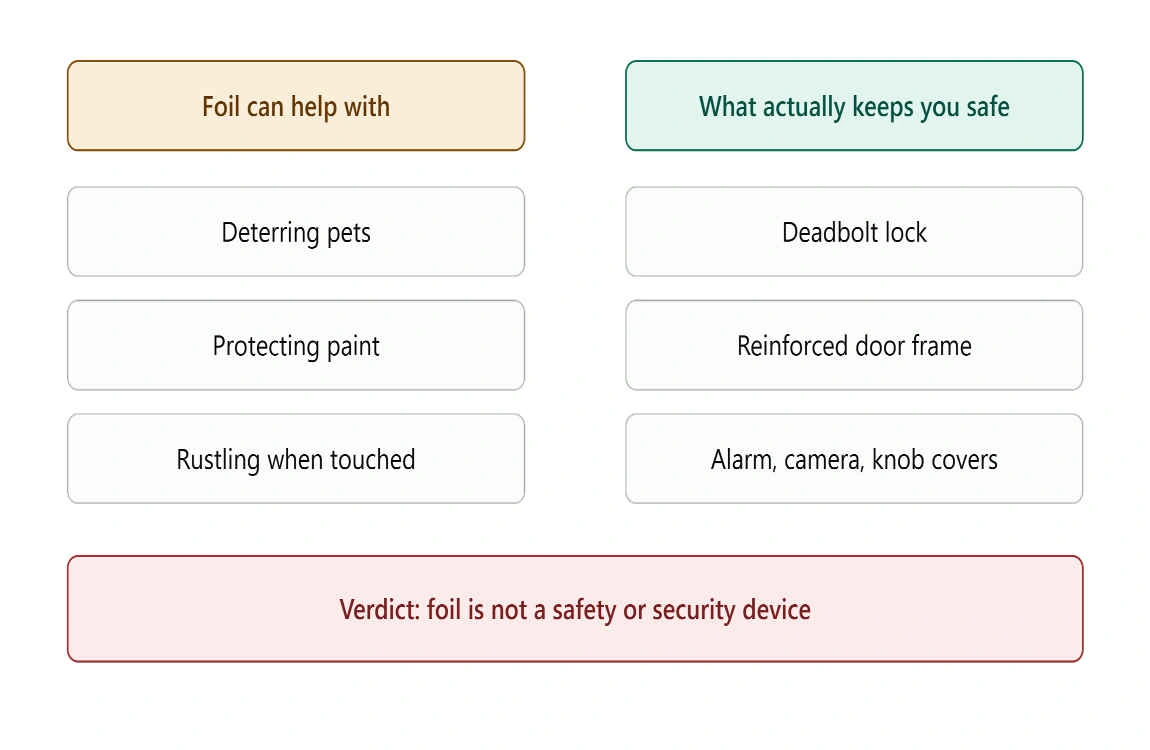
Security writers are largely unconvinced. Bob Vila’s home-security team calls the foil approach a myth and points out that a sturdy deadbolt or smart lock is far more likely to stop an intruder than foil (Bob Vila). Their reasoning is simple: foil tears easily, and a determined person can strip it off in a second.
Hunker goes further, saying the technique gives false hope and does not make a home safer, and it recommends practical steps instead, such as asking your local police department about a home security check (Hunker). Tom’s Guide takes a middle position: it doubts foil would stop a determined burglar but concedes it might put off someone looking for a quick, easy target, as long as it is never your only protection (Tom’s Guide).
| Claim | Reality check |
|---|---|
| Torn foil proves someone tried to get in | Wind, weather, pets or family members can also tear or dislodge it, so it’s unreliable evidence. |
| Foil makes the knob harder to turn | It is thin and easily removed, so it adds almost no resistance to forced entry. |
| Crinkling noise alerts you | Only works if you’re close enough to hear it, and it won’t help in a large or noisy home. |
| Odd look scares burglars off | Possible for a casual opportunist, but there’s no evidence it works. |
Real Ways Foil on a Door Knob Can Help
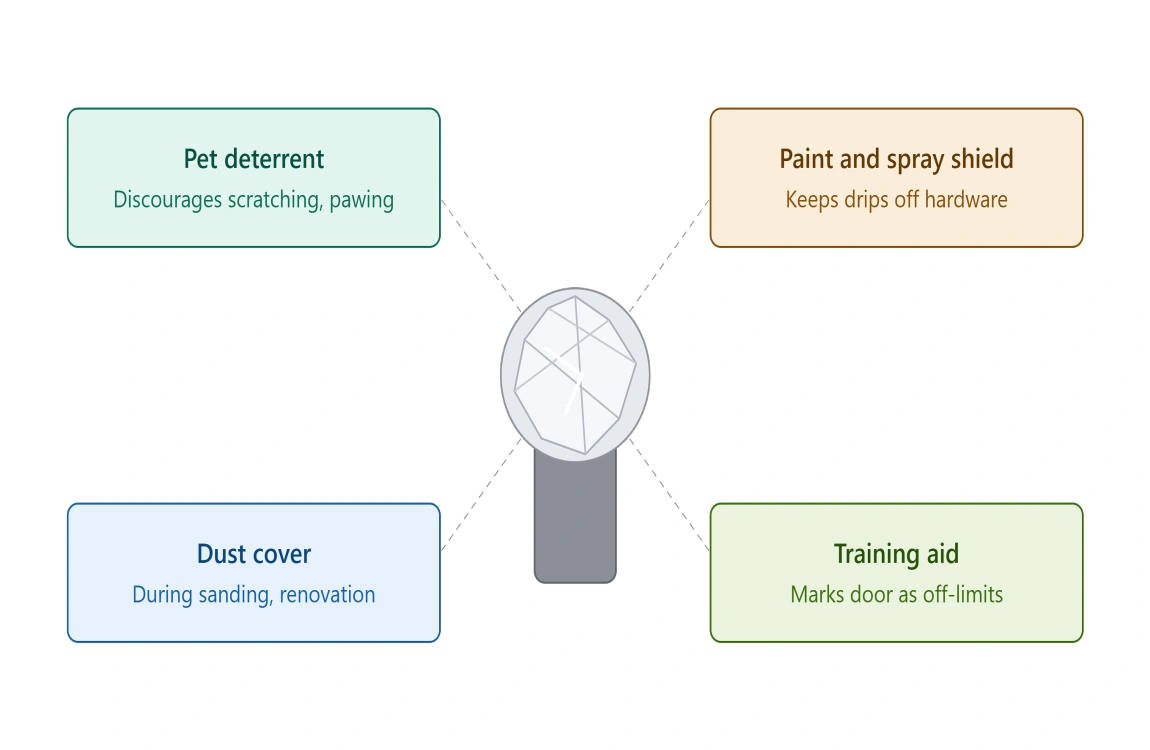
Foil isn’t useless. It just shines in everyday jobs rather than in home defence.
Protecting knobs while painting
This is the most dependable use. Wrapping the knob before you paint or stain a door keeps drips and splatter off the hardware, which saves you scraping and cleaning later (Green Matters). Painter’s tape works too, and is gentler on delicate or antique finishes.
Reducing static shocks
If you get zapped every time you grab a metal knob in dry weather, foil may help. Green Matters reports that some people find it reduces static shock (Green Matters). Eufy’s home-security blog explains the idea: foil is a conductor that can carry the charge away from your body when you touch it (Eufy). Results vary, so consider it a low-cost experiment, not a guaranteed fix.
Deterring pets from scratching
Some dogs and cats dislike the crinkly texture and sound of foil, so a wrap can discourage chewing or scratching at knobs. It doesn’t work on every pet, though, so test it before relying on it.
How to Wrap Foil on a Door Knob Properly
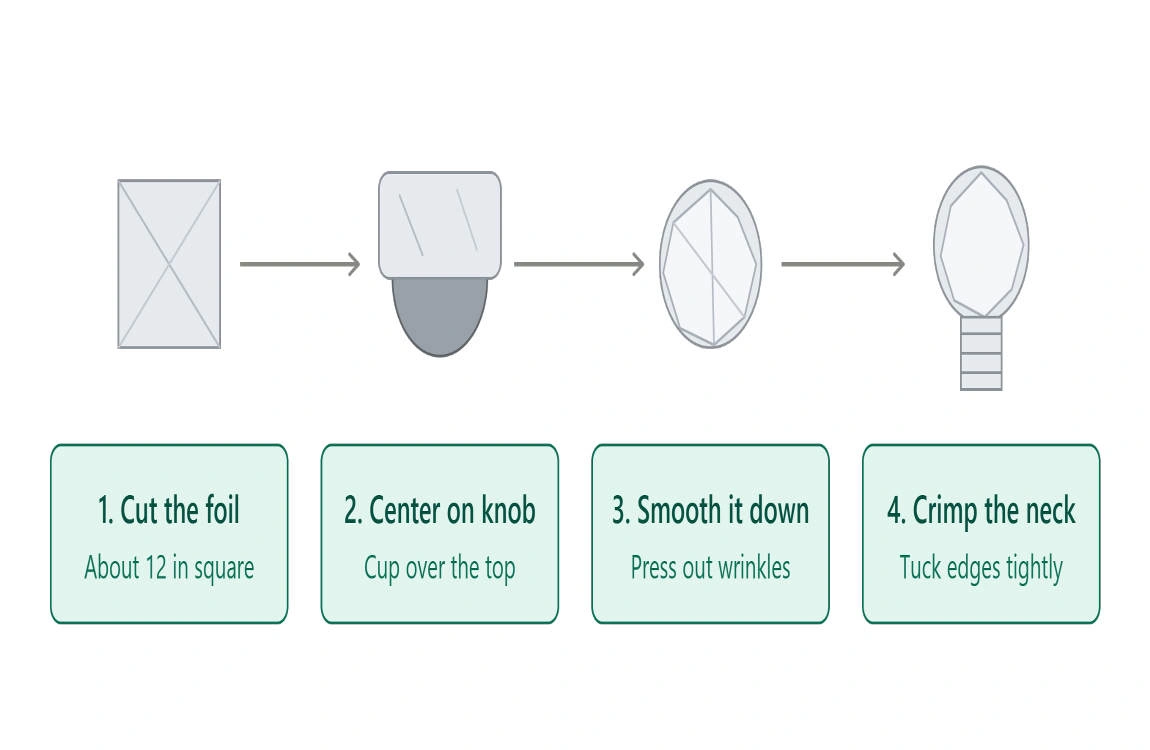
- Cut a sheet of heavy-duty aluminum foil large enough to cover the whole knob with a little to spare.
- Place it over the knob and gently press it down so it hugs the curve.
- Smooth the creases with your palm, working from the top toward the base so no sharp edges stick out.
- Fold the excess neatly around the neck of the knob so the wrap stays put.
- Check the finish. Foil can scratch or mark delicate lacquered, brass or antique hardware, so use painter’s tape on those.
- Remove it when you’re done, whether that’s after the paint dries or the dry season passes, so it doesn’t make your entry look unkempt.
Smarter Ways to Make Your Home Safer
If safety is your real goal, put your time and money here instead:
- A solid deadbolt on every exterior door, with a reinforced strike plate.
- A smart lock or smart doorbell so you can see and speak to visitors, even when you’re not home.
- Exterior lighting, ideally motion-activated, around entry points.
- A security camera or alarm system that actually alerts your phone.
- A local police home-safety check, which many departments offer, according to Hunker (Hunker).
Frequently Asked Questions
Why put foil on a door knob when you’re home alone?
The advice claims the wrap alerts you to tampering or discourages intruders. Experts say it’s not a reliable security measure, so use proper locks and alarms instead.
Does foil on a door knob stop burglars?
No. Foil tears easily and can be removed in seconds, so it won’t stop forced or determined entry. At most it’s a weak visual cue.
Is it safe to put foil on a door knob?
Yes, for short-term uses like painting. Just keep the wrap smooth so there are no sharp edges, and avoid it on delicate finishes that foil could mark.
Can foil stop static shocks from door knobs?
Possibly. Some people report fewer zaps because foil conducts the charge away, but results aren’t guaranteed.
Final Thoughts
So, why put foil on a door knob? It’s great for protecting hardware during painting and may take the sting out of static shocks, but it’s not a dependable home-security tool. Use foil for the small jobs it’s good at, and invest in strong locks, lighting and cameras for real peace of mind.