
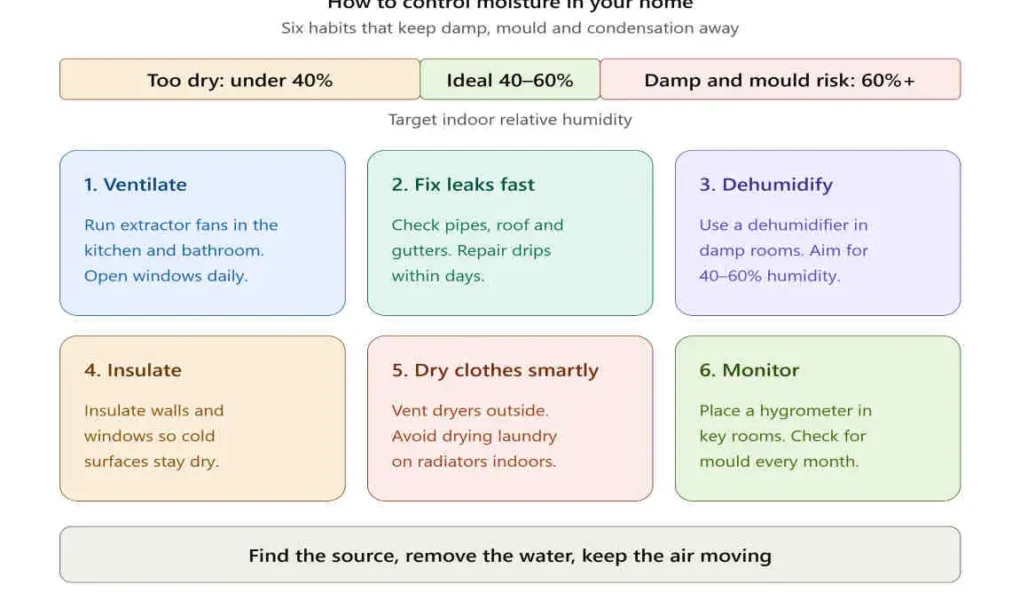
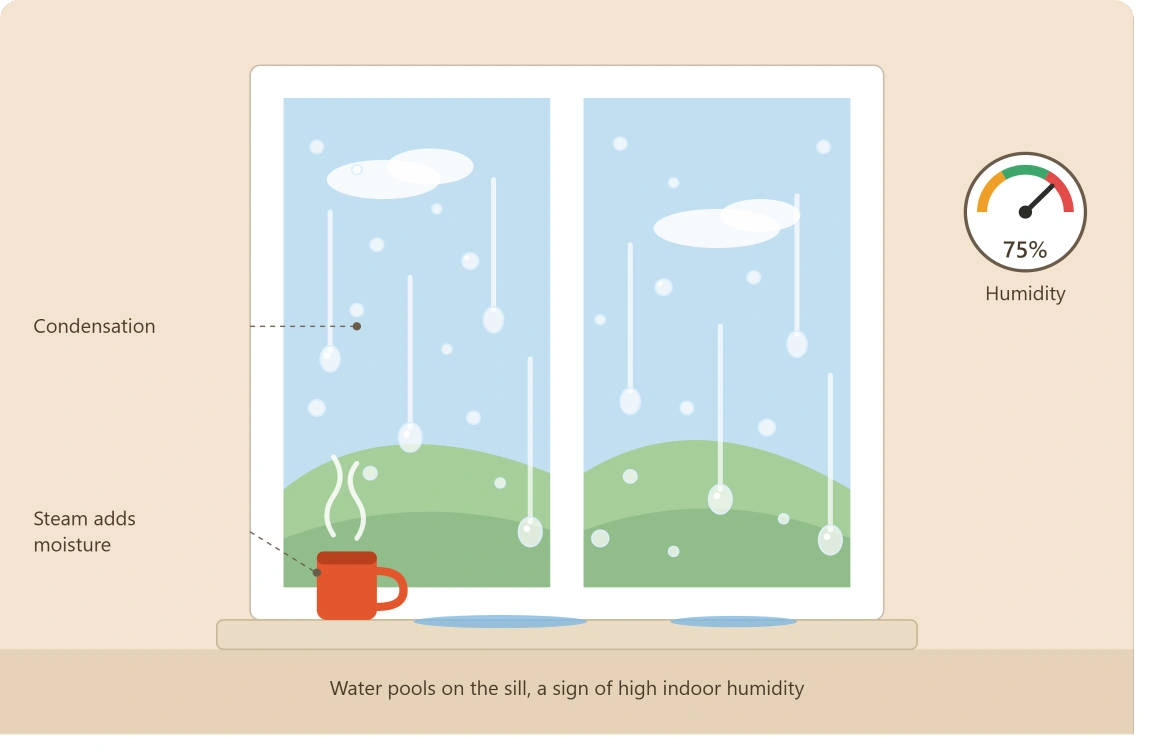
If you have ever noticed foggy windows, a musty smell in the bathroom, or a dark patch creeping across a bedroom corner, you already know that too much moisture is a quiet troublemaker. Learning how to control moisture in house spaces is one of the smartest things a homeowner can do, because excess dampness damages your belongings, drives up energy bills and creates the perfect conditions for mold.
Why Controlling Moisture in Your Home Matters
Moisture is not just a comfort issue. According to the U.S. Environmental Protection Agency, eliminating all mold and mold spores indoors is virtually impossible, but controlling indoor moisture controls mold growth. In other words, you cannot make your home mold-proof, but you can make it a place where mold struggles to survive.
Humidity also affects your wallet. The U.S. Department of Energy points out that heating and cooling account for about 48 percent of the energy costs in an average home, and that a home with too much moisture in the air can feel warmer than the actual temperature. That often means people set the thermostat lower than they need to, and pay for it every month.
What Is the Ideal Indoor Humidity Level?
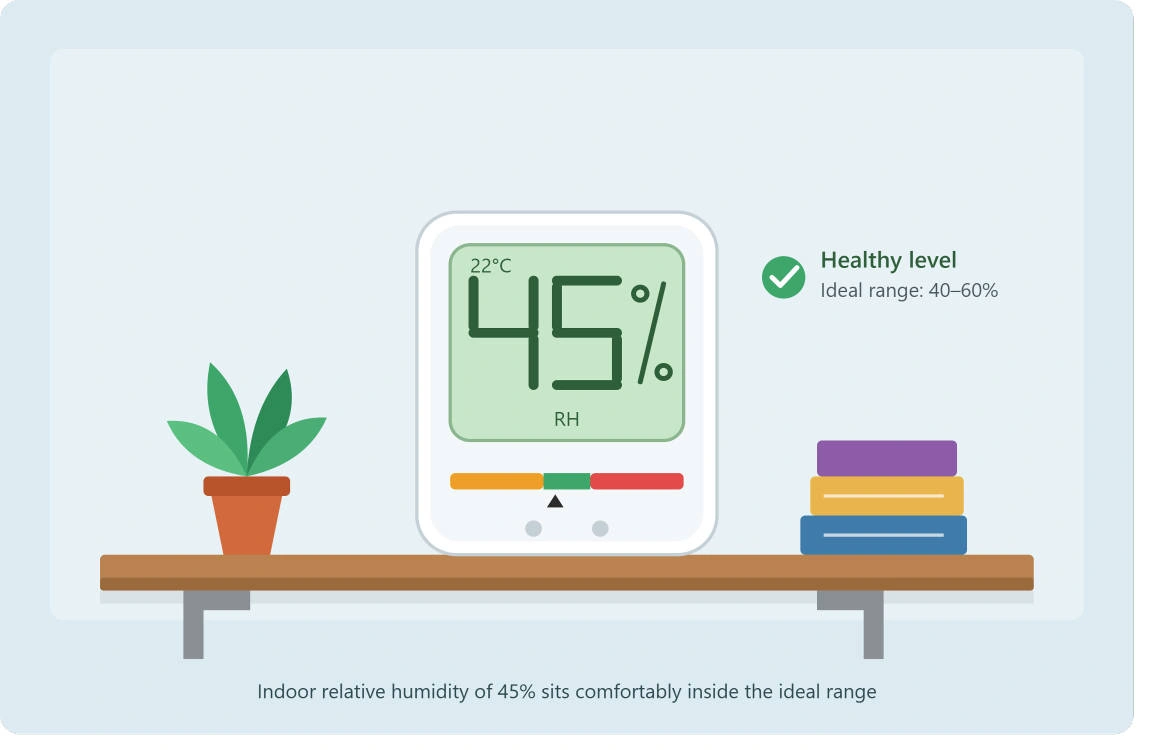
The EPA advises keeping indoor relative humidity below 60 percent, ideally between 30 and 50 percent. Above that range, condensation and mold become far more likely. Much lower than 30 percent, the air can feel uncomfortably dry.
You do not need to guess. The same EPA course notes that humidity gauges, including models that track both temperature and humidity, are generally available for less than $50 at hardware stores or online. A small digital hygrometer in your bedroom, bathroom and basement will tell you exactly where the problem areas are.
Where Does Household Moisture Come From?
Water finds its way into a home from more places than most people expect. The EPA explains that showers and even cooking can add moisture to the air, and that the amount of moisture air can hold depends on temperature. As air cools, it holds less water, which is why you see droplets form on cold windows and pipes.
Common moisture sources include:
- Cooking, boiling water and running dishwashers
- Hot showers and baths without proper ventilation
- Clothes dryers that are not vented outdoors
- Drying laundry indoors
- Leaking pipes, roofs or foundations
- Poor drainage around the outside of the house
How to Control Moisture in House: 9 Practical Steps
Find and Fix Leaks Quickly
This is the single most important step. Check under sinks, around toilets, behind appliances and along ceilings for stains or soft spots. The EPA’s mold prevention guidance puts it simply: solve moisture problems before they become mold problems. A slow drip you ignore for a month can cost far more than the plumber would have.
Use Exhaust Fans the Right Way
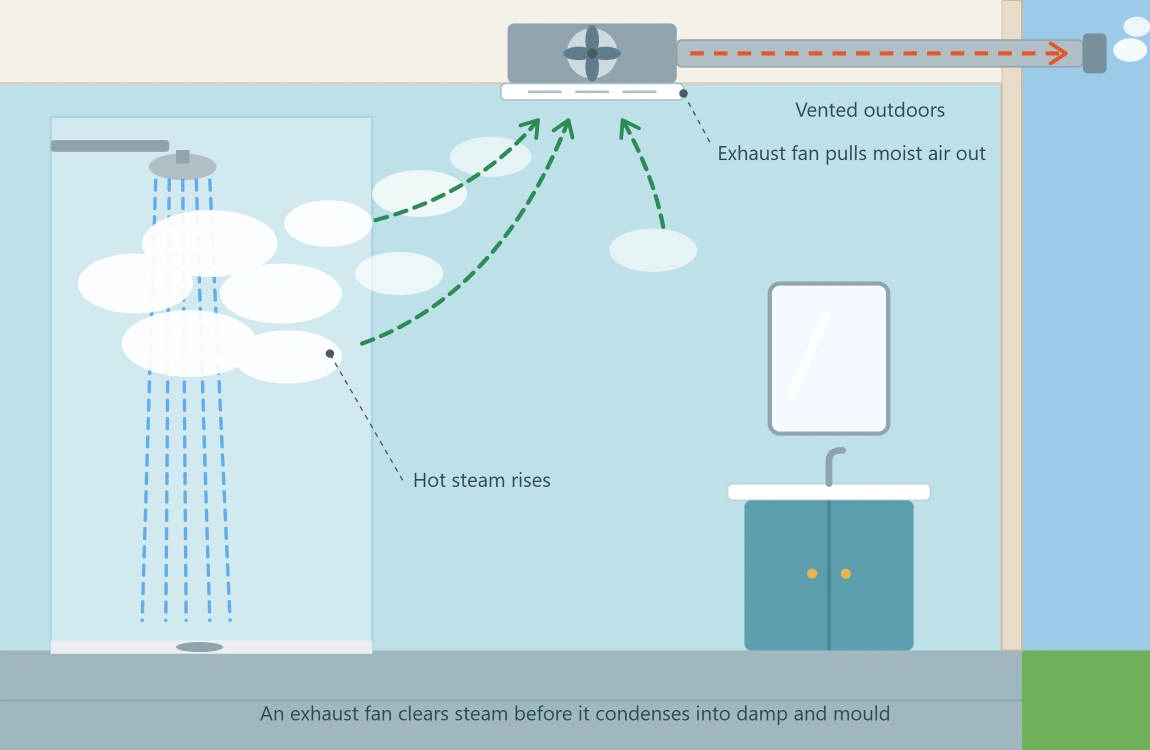
Run the bathroom fan during showers and for about 20 minutes afterward, and switch on the kitchen extractor while cooking. There is one catch worth knowing: the Department of Energy warns that exhaust fans vented into your attic only redistribute humidity within your home. Make sure your fans duct all the way to the outside.
Check Your Dryer Vent
A dryer pushes out a surprising amount of water vapor. The Department of Energy recommends making sure the venting system is sealed all the way from the back of the dryer to the exhaust port on the exterior of your home. Loose or disconnected ducting dumps warm, wet air straight into your living space.
Use a Dehumidifier When Ventilation Is Not Enough
In humid climates, or in naturally damp spaces like basements, a dehumidifier can be the difference between a fresh home and a clammy one. The Department of Energy suggests a whole-house or portable ENERGY STAR-rated dehumidifier as one option, and research agrees. A study by the National Renewable Energy Laboratory in hot-humid Houston found that dehumidification separate from the cooling system was required to keep indoor relative humidity below 60 percent all year in energy-efficient homes.
One safety tip from the EPA: keep the appliance clean, because dehumidifiers and air conditioners should not become sources of biological pollutants themselves. Empty and wash the water tank regularly.
Open Windows Briefly, Not All Day
Fresh air matters. The EPA notes that a tight, energy-efficient house holds more moisture inside, so you may need to run a kitchen or bath ventilating fan sometimes, or open a window briefly. The EPA’s guidance on ventilation adds a useful rule of thumb: bring in outside air when it is cold and dry, but dehumidify instead when the outdoor air is warm and humid.
Stop Condensation on Cold Surfaces
Droplets on windows and pipes appear when warm, humid air meets a cold surface. The EPA explains that excess moisture condenses on window glass because the glass is cold, and recommends raising the temperature of cold surfaces where moisture collects. Insulating cold water pipes, improving air circulation and upgrading single-pane windows all help.
Seal Air Leaks
Humid outside air can sneak in through gaps around doors, windows and utility penetrations. The Department of Energy calls finding and sealing these spots a cost-effective way to improve comfort and cut energy costs. A tube of caulk and some weatherstripping go a long way.
Manage Water Around Your Foundation
Moisture problems often start outdoors. Clean your gutters, make sure downspouts discharge well away from the house, and check that the soil slopes away from your walls. The Department of Energy notes that directing water away with landscaping and sealing your foundation can have a big impact on indoor humidity.
Dry Water Damage Within 24 to 48 Hours
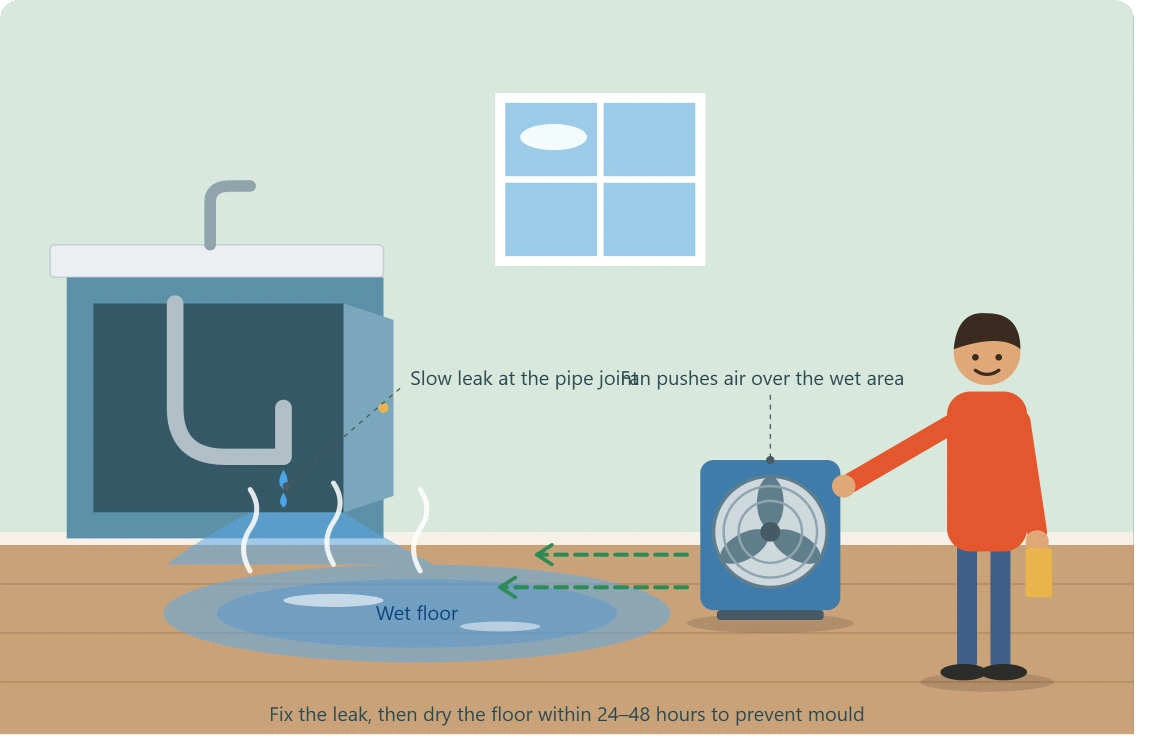
After a leak, spill or flood, speed is everything. The Centers for Disease Control and Prevention advises that you clean and dry or remove wet items within 24 to 48 hours to prevent mold from growing. FEMA adds an important warning: painting or caulking over mold will not prevent it from growing back, so fix the water problem completely first.
Signs You Have a Moisture Problem
Watch for these warning signs, especially in bathrooms, kitchens, basements and north-facing rooms:
- A musty or earthy smell that does not go away
- Condensation on windows, mirrors or walls
- Peeling paint or bubbling wallpaper
- Dark spots or fuzzy patches on walls, ceilings or grout
- Warped wooden floors or doors that suddenly stick
- Persistent allergy or breathing symptoms indoors
When to Call a Professional
Small patches of surface mold can usually be cleaned home by a homeowner with detergent and water. For larger problems, guidance quoted by the National Environmental Health Association says that if mold covers more than 10 square feet, the EPA suggests contacting a qualified remediation contractor for professional cleanup. Call a pro too if the moisture source is hidden, if the problem keeps returning, or if anyone in the household has asthma or other breathing conditions.
Frequently Asked Questions
What is the fastest way to reduce moisture in a room?
Turn on an exhaust fan or dehumidifier, open a window briefly if the outdoor air is drier than the indoor air, and remove the source such as wet laundry or standing water. Use a hygrometer to confirm the room is heading back below 50 percent.
Do houseplants and indoor laundry drying increase humidity?
Yes. Both release water vapor into the air. A few plants are rarely a problem, but drying a full load of washing indoors in a closed room can noticeably raise humidity. Use a vented dryer or a ventilated space instead.
Is 60 percent humidity too high in a house?
It is the upper limit, not the goal. The EPA recommends staying below 60 percent and ideally between 30 and 50 percent, so sustained readings of 60 percent or more call for action.
Will opening windows always lower humidity?
No. In warm, humid weather, opening windows can bring more moisture inside. In those conditions a dehumidifier or air conditioner works better.
Final Thoughts
Learning how to control moisture in house environments comes down to a simple routine: measure your humidity, fix leaks fast, ventilate smartly and dry any water damage within a day or two. Do these consistently and you protect your health, your furniture and your energy bills all at once. Start with a hygrometer this week, and you will quickly see where your home needs help.


