
You are filtering homes online, you set the bathroom dropdown to “1-5,” and suddenly the results are all over the place. One listing says 2.5 baths. Another says 3 baths but the photos show what looks like two. So what do 1-5 bathroom houses really mean, and why does the number on the listing not always match what you see when you walk through the door?
What “1-5 Bathroom Houses” Actually Means
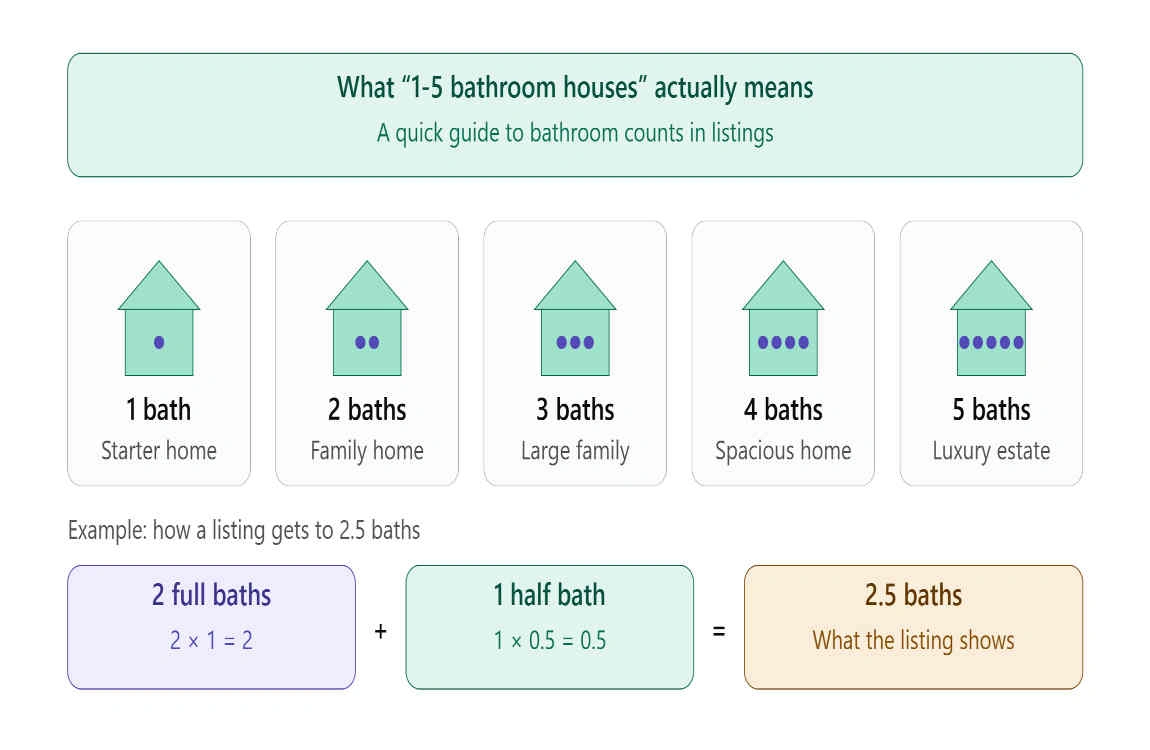
When someone searches for 1-5 bathroom houses, they are usually looking at a range: homes with as few as one bathroom and as many as five. It is a filter, not a house type. A cozy starter home, a family colonial and a large executive property can all sit inside that range.
The catch is that the word “bathroom” is not as simple as it sounds. A home with “3 baths” could have three complete bathrooms, or a mix of full, partial and powder rooms. That is why understanding the types matters more than the headline number.
The Four Types of Bathrooms Behind the Numbers
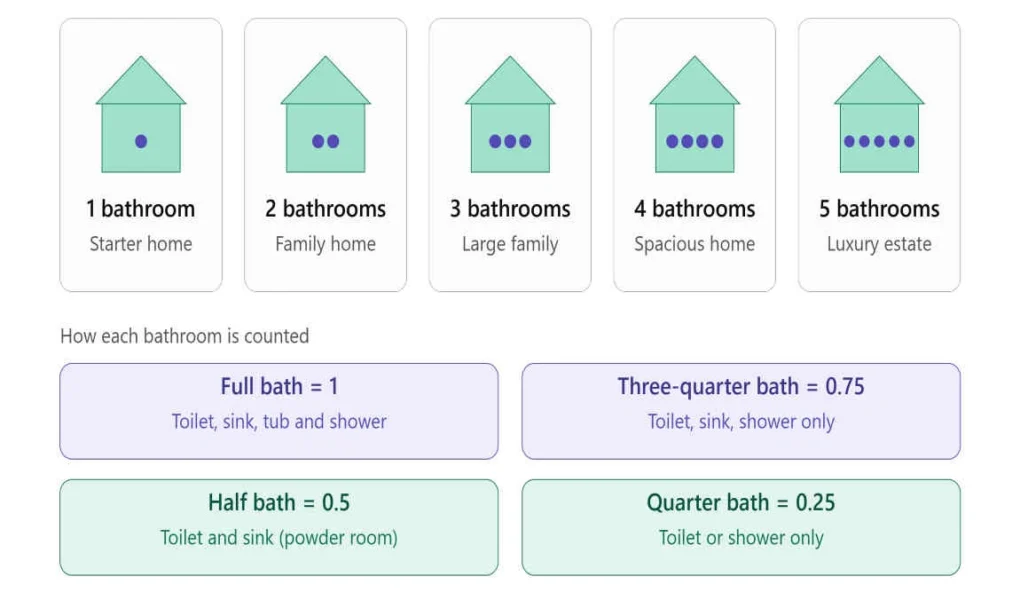
Real estate professionals sort bathrooms by how many of the four main fixtures they contain: a toilet, a sink, a shower and a bathtub. A full bathroom is generally described as one with all four, with a shower and tub combo counting as both.
Full bath
All four fixtures: toilet, bathroom sink, shower and tub (or a combined shower-tub). This is the classic family bathroom.
Three-quarter bath
Three fixtures. Most often that means a stall shower, sink and toilet, though in some older homes it may be a tub instead of a shower. These are common in guest rooms, basements and tighter floor plans.
Half bath
Two fixtures, usually a toilet and a sink. Half baths are also called powder rooms or guest bathrooms and are often placed on the main floor so visitors do not need to wander upstairs.
Quarter bath
Just one fixture. A quarter bath is sometimes nothing more than a standalone shower. You will rarely see one advertised, but they do exist in basements, garages and older properties.
How Listings Count Bathrooms (And Where It Gets Confusing)
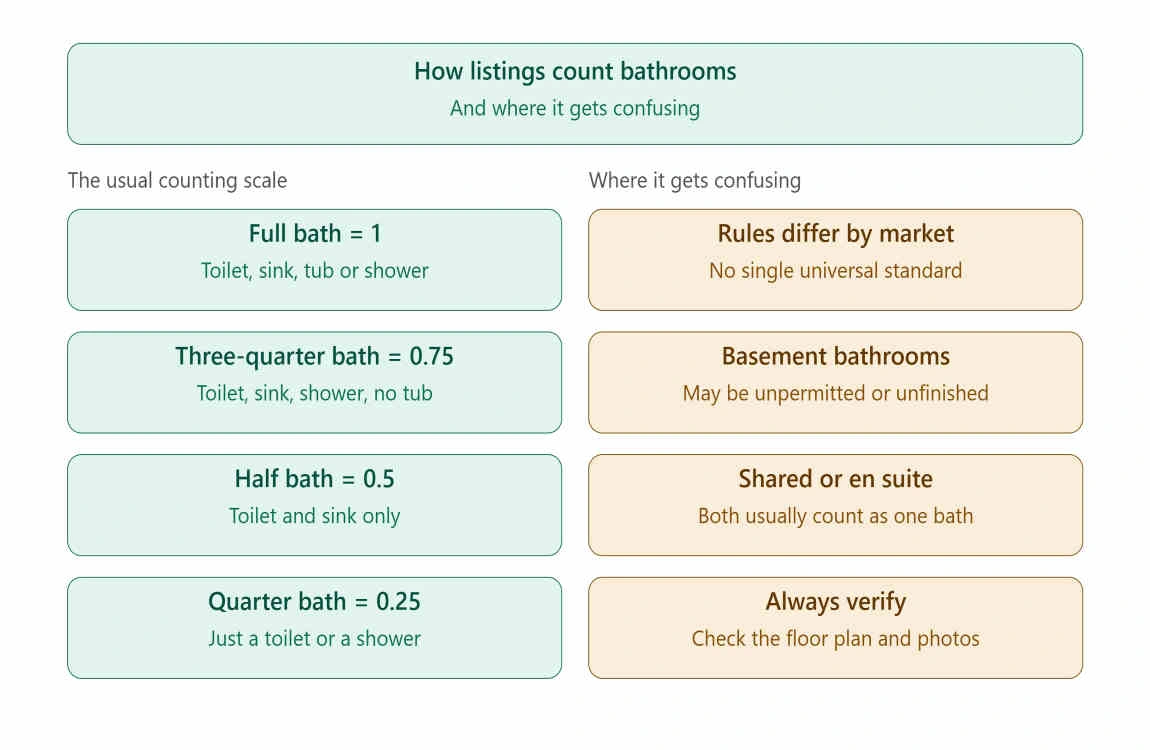
Listings typically add the types together. For example, a beachside home listed with two and three-quarters baths could have two full bathrooms, one half bath and one quarter bath. So 2 + 0.5 + 0.25 = 2.75.
Here is where buyers get tripped up:
- Two half baths do not equal one full bath. A home with two full baths and two half baths is not simply described as having three bathrooms, because listing each type separately gives a more accurate picture.
- Definitions vary by market. In an Inman roundup, agents explained that a room with a toilet, sink and shower counts as a full bath in New York City, while a similar room might be called three-quarter in parts of New Hampshire. Some local listing systems do not even offer a three-quarter option.
- Photos may not tell the whole story. Always check the actual home fixtures rather than relying on the number alone.
Quick takeaway: “1-5 bathrooms” is a range of counts, but the real value sits in what each bathroom contains and where it is located in the house.
What Each Bathroom Count Looks Like in Real Life
bathroom houses
Common in starter homes, cottages and older properties. They are easier to maintain and often more affordable, but sharing one bathroom can get tight in a busy household. If you are buying one, check whether it is a full bath, since a single tub-free bathroom can limit appeal for some buyers.
bathroom houses
This is the sweet spot for many small families. Two bathrooms ease the morning rush and make hosting guests far less awkward. A 1.5 or 2-bath layout often means one full bath plus either another full bath or a convenient powder room.
bathroom houses
A popular layout for growing households, usually offering a primary bathroom, a shared bathroom and a guest or powder room. Three baths strikes a balance between comfort and upkeep.
bathroom houses
Ideal for larger families, multigenerational living or anyone who works from home and hosts often. Each bedroom area can have its own bathroom access, which cuts down on shared-space friction.
bathroom houses
Typically larger homes with several en-suite bedrooms and a main-level powder room. They offer privacy and flexibility, but expect higher cleaning time, utility use and maintenance costs.
Do More Bathrooms Add Value?
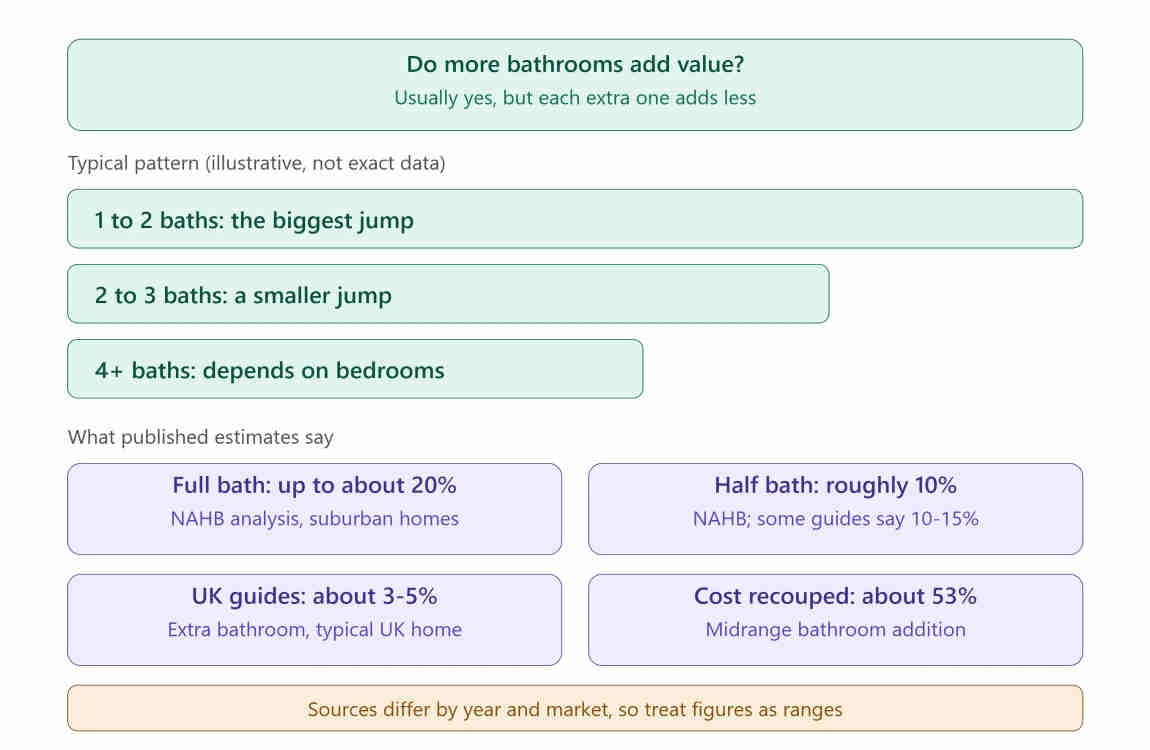
Generally, yes, but with diminishing returns. A bathroom count is often one of the first things buyers check and it affects how a home is valued. Opendoor research cited by Apartment Therapy suggested that adding a half bath can raise resale value by roughly $9,000. Treat any figure like that as a ballpark; results depend on your local market, the quality of the work and how many bathrooms the home already has.
Location inside the house matters too. A powder room near the living area is useful to every guest, while a fifth bathroom tucked away upstairs adds less everyday convenience.
A Practical Checklist Before You Choose
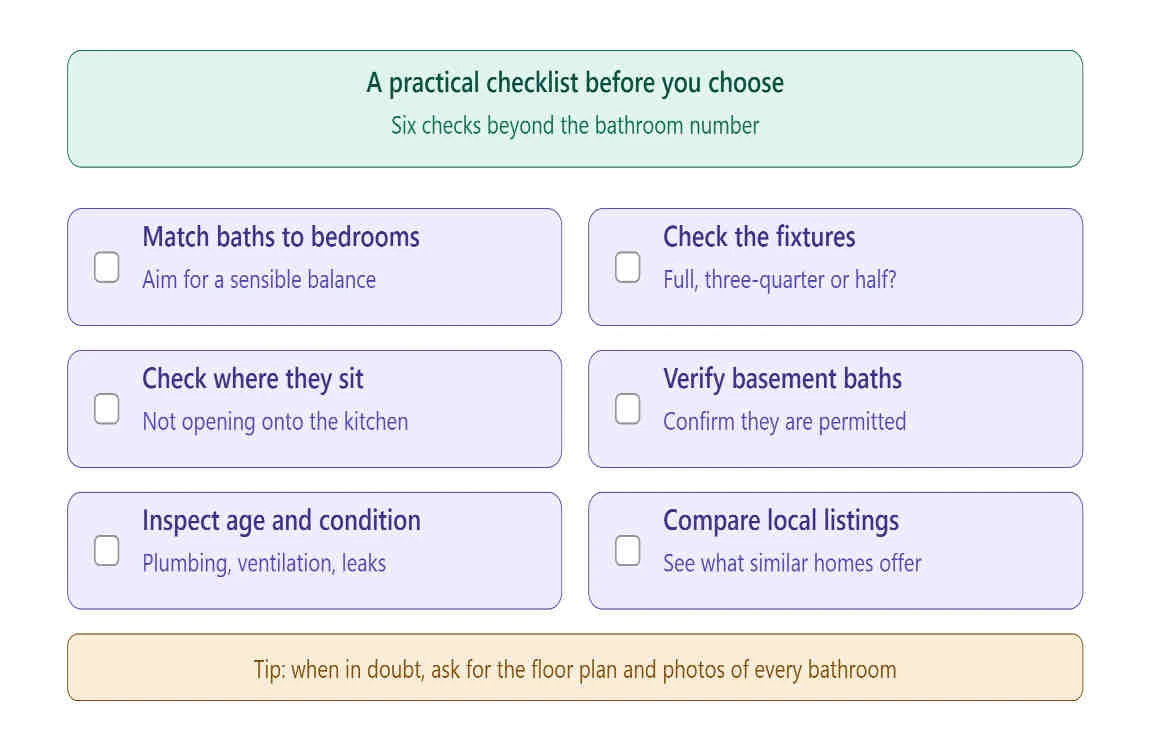
- Count fixtures, not just the number. Confirm which rooms are full, three-quarter or half baths.
- Ask how your local market labels them. The same room can be described differently from one area to the next.
- Check where each bathroom sits. Is there one on the main level? Is there one near the bedrooms?
- Look at square footage properly. Appraisers working on many mortgage-backed homes follow a national measuring method; Fannie Mae requires the ANSI Z765-2021 standard, so measurements in an appraisal may differ from a listing’s marketing figures.
- Think about upkeep. More bathrooms mean more cleaning, plumbing and renovation costs over time.
Frequently Asked Questions
Is a 1-5 bathroom house a specific type of home?
No. It is a search range covering homes with anywhere from one to five bathrooms.
Does a three-quarter bath count as a full bath?
Not strictly, because it lacks one of the four fixtures. In practice, local habits vary, so it is worth asking the listing agent.
What does 2.5 baths mean?
It usually means two full bathrooms plus one half bath (a toilet and sink).
Are two half baths the same as one full bath?
No. They are listed separately because they offer different functionality.
Which is better: more bathrooms or bigger bathrooms?
It depends on your household. A busy family may prefer more bathrooms, while a couple may value one spacious, well-designed bathroom.
Final Thoughts
Understanding 1-5 bathroom houses is really about decoding what is behind the number. Once you know how full, three-quarter, half and quarter baths work, listings stop feeling like a puzzle. Look past the headline count, check the fixtures, think about how you will actually live in the space, and you will choose a home that fits both your routine and your budget.