You flush, you wash up, you run the dishwasher, and everything just disappears. But where does it actually go? If you have ever stopped mid-chore and wondered, “is my house septic or sewer?”, you are far from alone. It is one of the most common questions new homeowners, buyers and renters ask, and the answer matters more than most people realise.
A septic system needs regular care, and neglecting one can lead to repair bills that run into the thousands. A municipal sewer connection, on the other hand, is mostly someone else’s responsibility. Knowing which one you have is the first step to looking after your home properly.
Septic vs Sewer: What’s the Difference?
Both systems do the same job: carry wastewater away from your home and treat it. They just do it very differently.
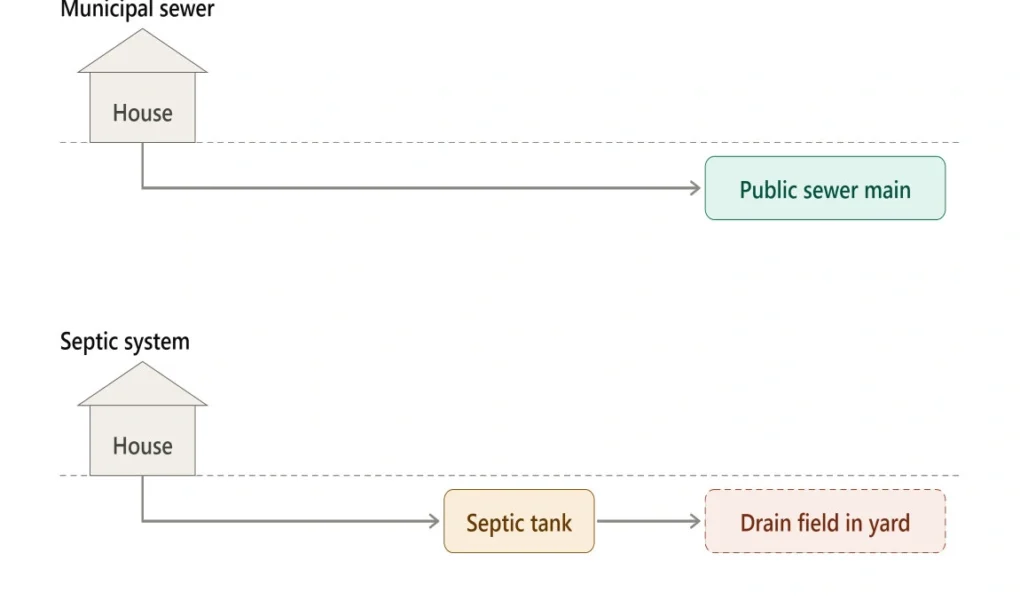
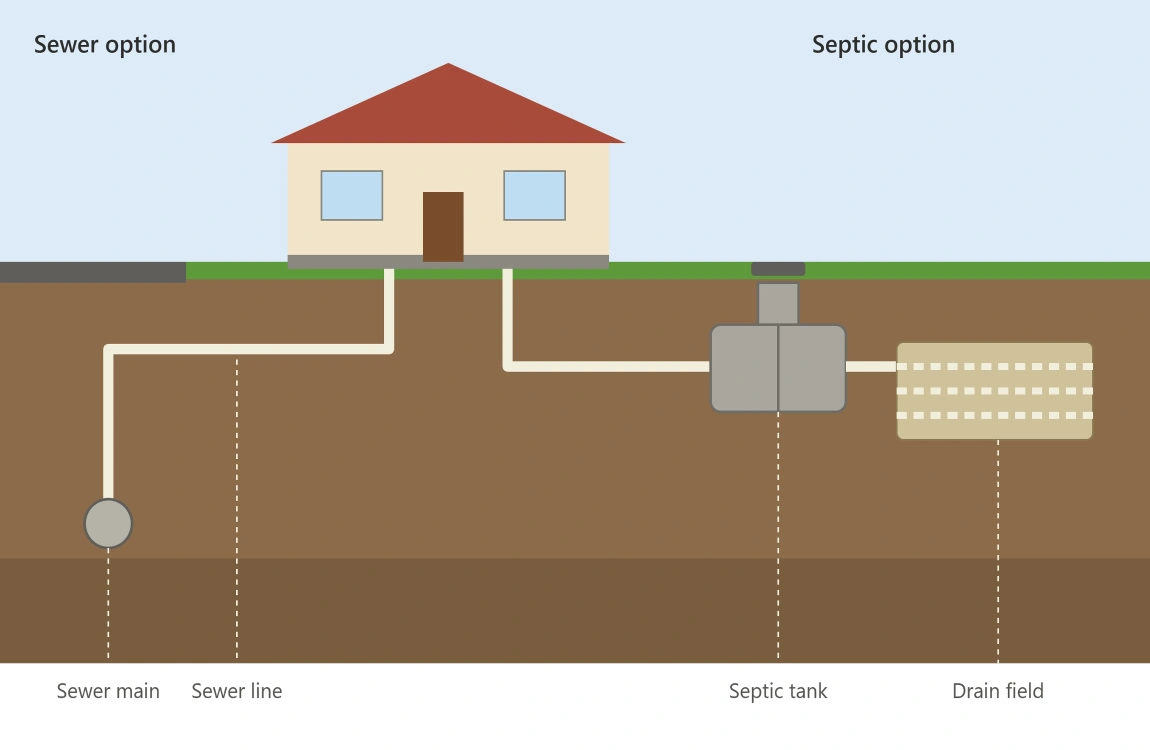
A sewer system is a public network of underground pipes. Wastewater leaves your house through a lateral line, joins the main under the street, and travels to a municipal treatment plant. You pay for this service, usually through a monthly or quarterly bill.
A septic system is a private, on-site treatment setup. According to the U.S. Environmental Protection Agency (EPA), a typical system has two main parts: a septic tank and a drainfield (also called a soil absorption field). The tank holds wastewater so solids can settle out, and the liquid then drains into the soil, where natural processes finish the cleaning. The EPA’s guide to types of septic systems explains the conventional and alternative designs in more detail.
How Common Are Septic Systems?
More common than you might think. Reporting by Circle of Blue puts the number at more than 21 million U.S. households, or nearly one-fifth of the country, and they are especially common in New England and the Southeast. Vermont has historically had the highest share, at around 55 percent of homes.
They are still being built, too. The National Association of Home Builders found that roughly 16 percent of new single-family homes started in 2024 used individual septic systems, while 84 percent connected to public sewer. In New England, that figure for new homes was close to half.
7 Ways to Find Out if Your House Is Septic or Sewer
Check your water or utility bill
This is the quickest test. If you are on a septic system, you typically will not be charged for sewer service. The EPA notes that homes with septic systems usually show a $0.00 charge for wastewater or sewer services on the utility bill, or no utility bill at all. If your bill has a clear “sewer” line item with a real amount, you are almost certainly connected to the public sewer.
Look at where you live
Location is a strong hint. Homes in cities, towns and dense subdivisions are usually on a public sewer, while rural home properties and homes with big gaps between neighbours are far more likely to be on septic. The EPA says that if you live in a rural area, there is a high likelihood your home is served by a septic system.
Find out if you use well water
Private wells and septic systems often go together, since homes without city water mains are commonly beyond the reach of city sewer lines too. The EPA lists well water as one of the tell-tale signs of a septic system. It is not a guarantee, but it is a strong clue.
Ask your neighbours
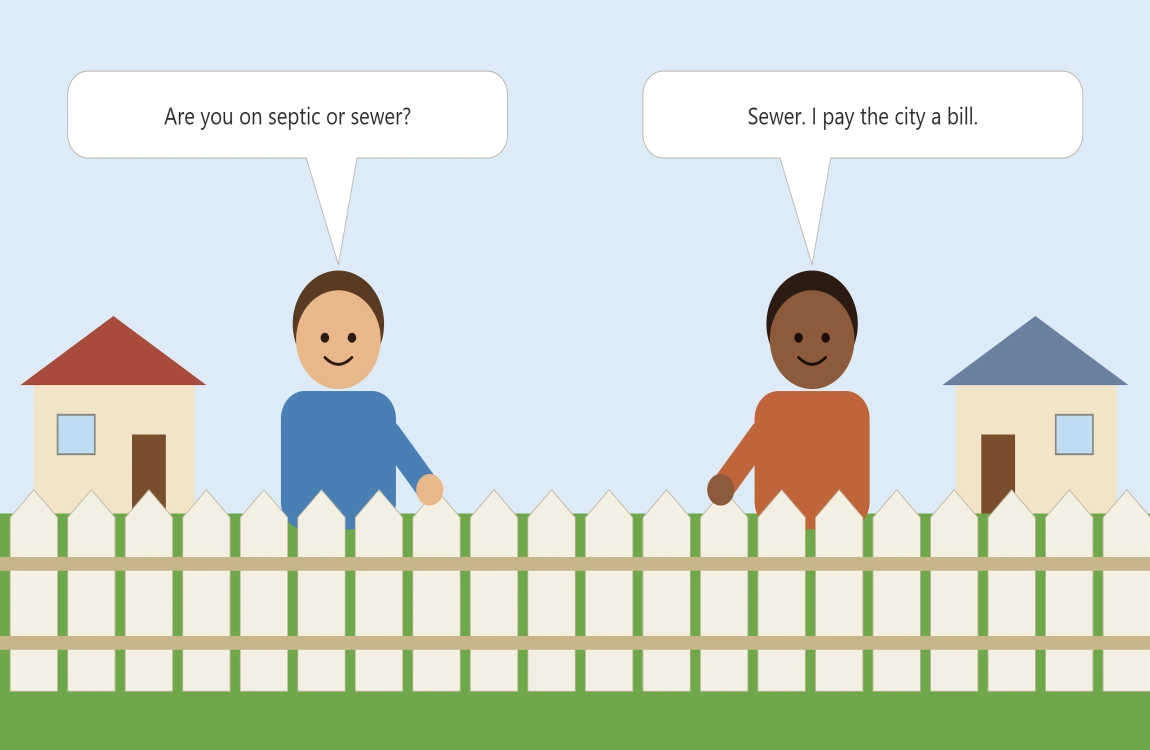
Do not underestimate the simplest method. Homes on the same street were often built in the same era and connected the same way. Researchers at the University of Georgia’s College of Agricultural and Environmental Sciences recommend asking neighbours as one of the first steps. If they are all on septic, yours likely is as well.
Two neighbours chatting over a garden fence about whether their homes use septic or sewer
Check the age of the property
Sewer lines often reach an area decades after the first homes were built. The University of Georgia guide points out that if your building is older than the local sewer system, it may still be running on its original septic system. Older homes sometimes stay on septic even after the street gets a sewer main, so do not assume.
Walk your yard and look for clues
If you have a septic system, there is a tank and a drainfield somewhere on your property. Things to look for:
- Round or rectangular lids (concrete, plastic or fibreglass) flush with the grass or slightly raised, which are access points to the tank.
- A slightly mounded or unusually lush strip of lawn, which can indicate a drainfield.
- Small vent pipes poking out of the ground away from the house.
- A cleanout cap near the foundation, which can appear on either system type and is not proof on its own.
On a sewer-connected property you will generally find a cleanout near the house or at the property line, but no tank and no drainfield.

Look at your property records or call the local authority
When the clues point both ways, go to the records. The EPA suggests contacting your local permitting authority, such as the county health or environmental department, which may hold records of septic systems on your property. Be aware that the EPA itself has no national database of septic systems, so the answer sits at the local level. If you are buying a dream home, ask for the “as built” drawing of the septic system. The EPA’s homebuyer’s guide to septic systems recommends requesting it, along with an inspection by a septic service professional before you purchase.
Your water utility or town sewer department can also confirm whether your address is connected to the public sewer. It is often a two-minute phone call.
Quick Comparison: Septic vs Sewer at a Glance
| Clue | Likely septic | Likely sewer |
|---|---|---|
| Utility bill | No sewer charge ($0.00) | Clear sewer line item |
| Location | Rural or large lots | City, town or dense subdivision |
| Water source | Private well | Public water supply |
| Neighbours | Also on septic | Connected to the street main |
| Yard | Tank lids, drainfield, vent pipes | Cleanout only |
| Maintenance | Owner’s responsibility | Utility handles the main line |
Why It Matters That You Know
Septic systems reward owners who pay attention. The EPA says a typical system should be inspected every three to five years by a septic service provider, and that the average lifespan is roughly 15 to 40 years with proper care. The agency also warns that a malfunctioning system can cost homeowners around $3,000 to $7,000 to fix, which is why routine inspections and pumping are far cheaper than emergency repairs (EPA SepticSmart brochure).
Not knowing what you have can lead to real mistakes: flushing the wrong things, planting trees over a drainfield, parking vehicles on the tank, or skipping pump-outs for a decade.
Warning Signs of a Septic Problem
If you have confirmed you are on septic, watch for these red flags. The EPA advises calling a septic professional if you notice any of them:
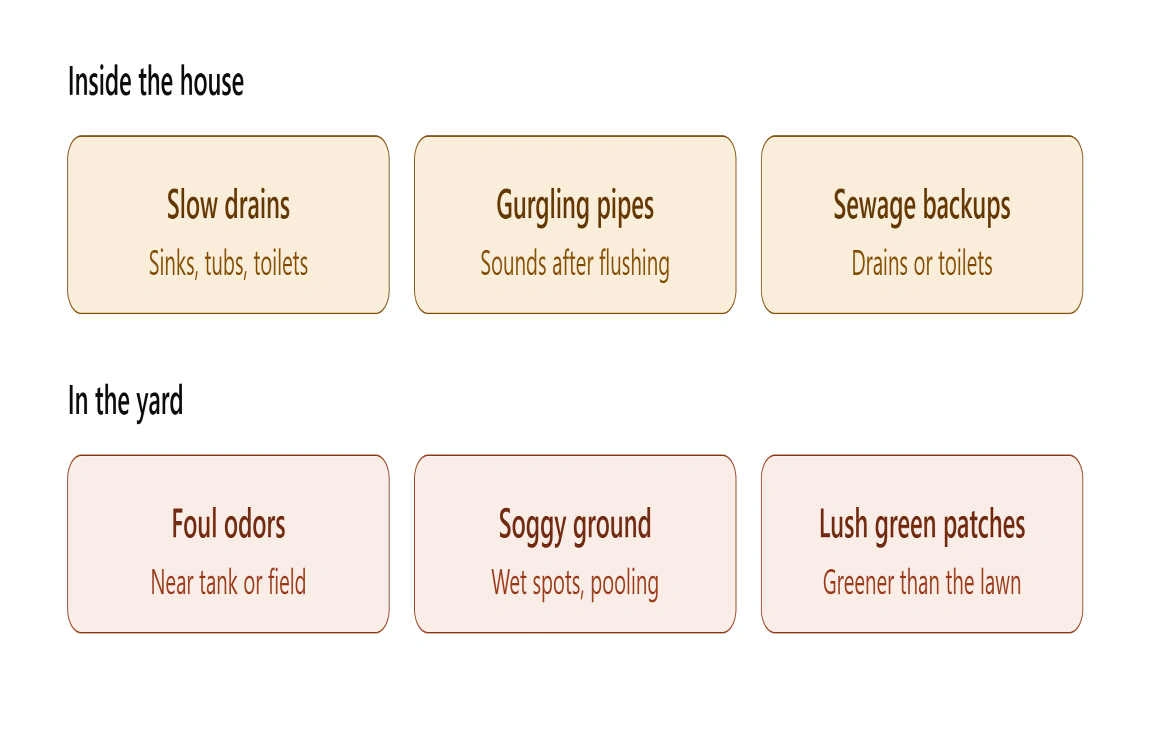
- Pooling water or muddy, soggy soil around the tank or drainfield, or in your basement
- Strong sewage odours near the tank or drainfield (the EPA notes a smell is not always the first sign)
- Slow drains or gurgling plumbing throughout the house
- Sewage backing up into sinks, tubs or toilets
Frequently Asked Questions
Is my house septic or sewer if I get a water bill?
Not necessarily. You could receive a bill for water only. Check whether it lists a separate sewer charge. If the bill shows no sewer fee, that suggests septic.
Can a house have both septic and sewer?
Not at the same time for the same plumbing, but some homes switch. When a sewer main is extended to an older neighbourhood, a property may disconnect from its septic tank and connect to the sewer. Records from your local health or sewer department can confirm the current setup.
Who do I call to find out for sure?
Start with your local water utility or town sewer department. If they have no record of you, contact your county health or environmental department, which often keeps septic permits and as-built drawings.
How do I find my septic tank once I know I have one?
Look for the as-built drawing, ask your local health authority, or hire a septic inspector or pumper to locate it. The EPA recommends working with a septic service provider.
Final Thoughts
So, is my house septic or sewer? Start with your utility bill, think about where you live, check for well water, and have a quick chat with the neighbours. If the answer is still unclear, your local health department or sewer utility can settle it. Once you know, you can budget correctly, maintain the system properly, and avoid the expensive surprises that come from guessing.