
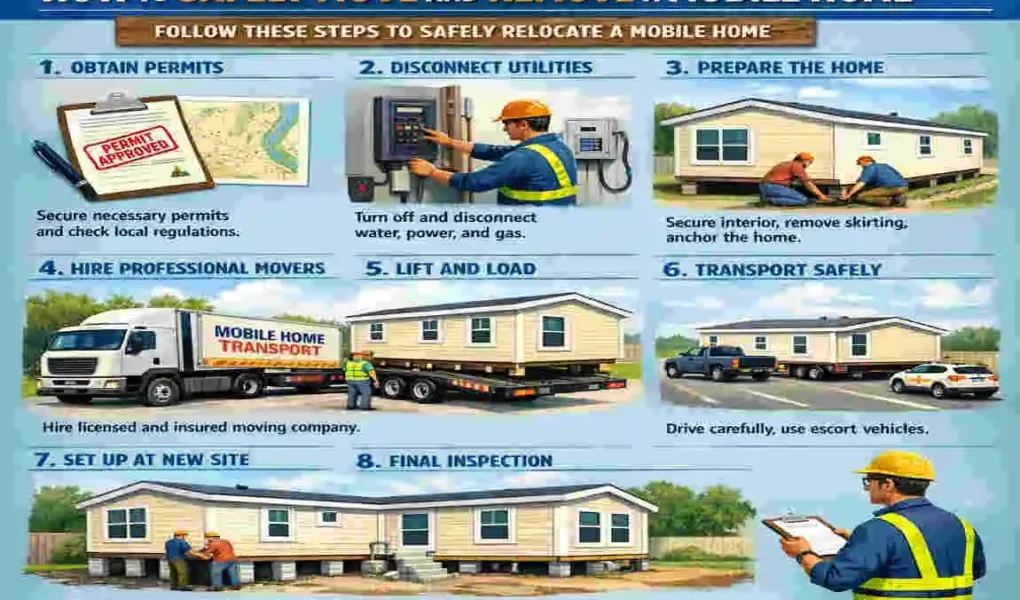
Moving or removing a mobile home is not a small job. It takes planning, the right tools, and careful attention to safety rules. Whether you want to relocate your home to a new lot or take down an older unit, the process should always be handled with care.
If you are working on this project, you need to consider permits, utilities, equipment, and site conditions before anything starts. A smart plan can help you avoid damage, delays, and extra costs.
Plan Before You Move
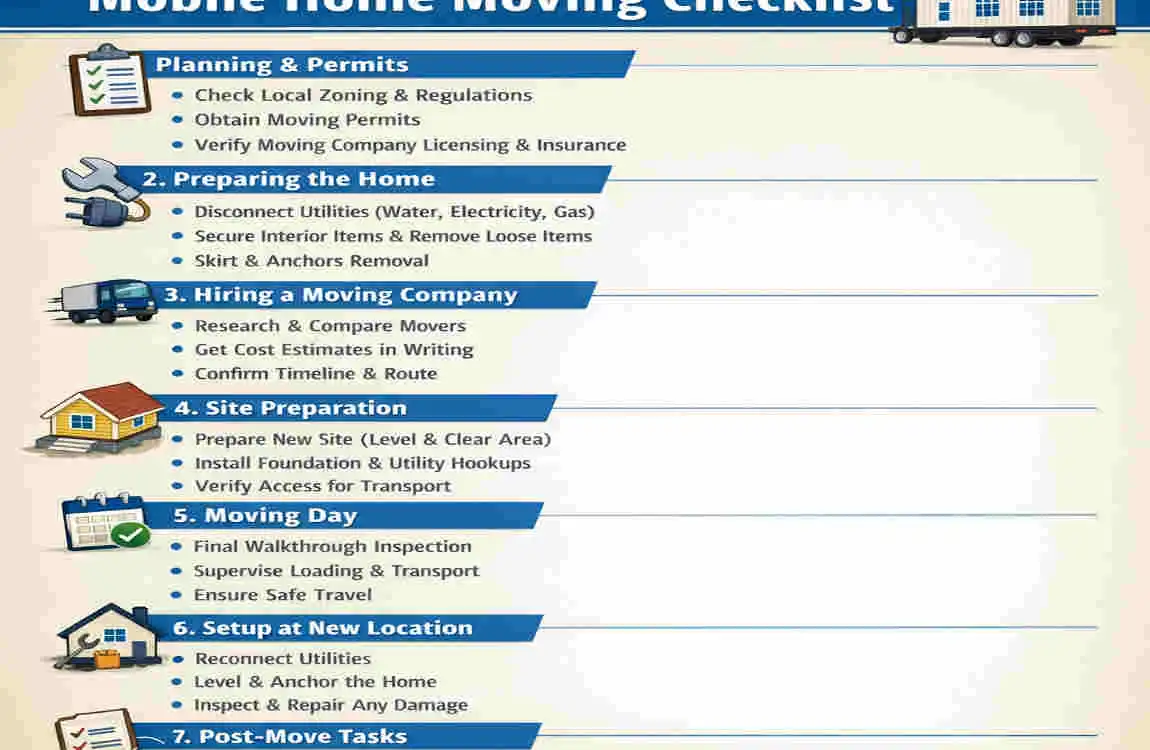
Check permits and local rules.
Before you move a mobile home, always check the local permit and zoning rules. Different cities and counties may have different requirements. Some areas may also have restrictions on where a mobile home can be placed.
This step matters because skipping permits can lead to fines or delays. It can also stop the move altogether.
Hire the right moving company.
Licensed and insured professionals should usually move a mobile home. These experts know how to lift, secure, and transport the home safely.
You should never guess your way through this kind of job. A trained mover can help protect both the home and the people involved.
Inspect the home first.
Before moving, look closely at the home’s condition. Check the frame, floor, roof, and undercarriage. If the home is weak or damaged, moving it may not be safe.
A damaged home can shift, crack, or fall apart during transport. That is why inspection is such an important first step.
Disconnect utilities
All utilities should be shut off and disconnected before the move. This includes:
- Electricity
- Water
- Gas
- Sewer
This step helps prevent leaks, shocks, and other dangerous problems.
Remove attached structures
Before the home can be moved, remove anything attached to it, such as:
- Skirting
- Porches
- Decks
- Steps
- Storage additions
These parts are not built for transport, so they must come off first.
Safe Mobile Home Moving Process
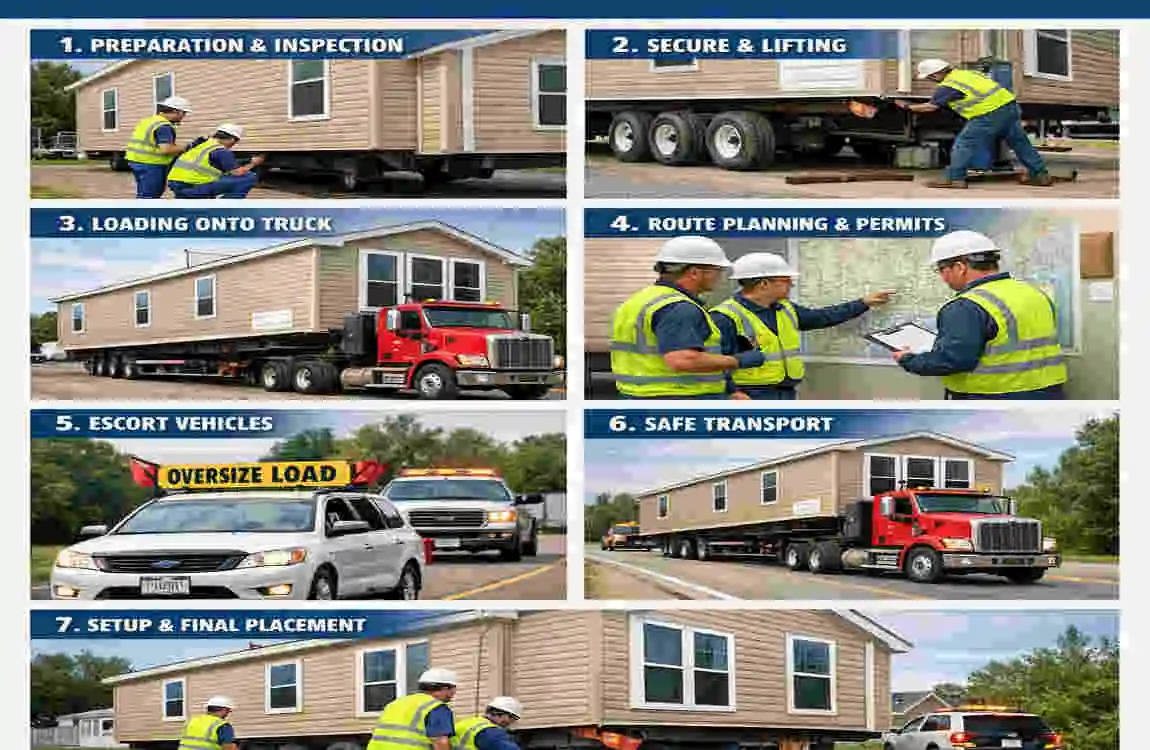
Inspect the frame, axles, and tyres.
The frame, axles, and tyres must be in good shape before the move begins. These parts carry the home during transport, so they need to be strong and stable.
If there are signs of wear or damage, they should be fixed before the home is moved.
Secure doors, windows, and loose items
Inside and outside the home, everything should be secured. Doors and windows should be locked or taped shut. Loose furniture, decorations, and personal items should be removed or tied down.
This helps prevent damage while the home is in motion.
Lift and prepare the home.
Professional movers use specialised equipment to lift the mobile home and prepare it for travel. This is one of the most important stages of the process.
The home must be lifted evenly and carefully. If it is not handled properly, the frame can bend or crack.
Transport on an approved route
The home should travel only on a route approved for mobile home transport. This route must be safe for the home’s size and weight.
The mover may need to avoid low bridges, narrow roads, or sharp turns. Good route planning reduces the chance of accidents.
Install and level the home.
When the home reaches its new location, it must be placed on a proper foundation and levelled correctly. This step is important for safety, comfort, and long-term stability.
A poorly levelled home can cause doors to stick, floors to slope, and plumbing problems to appear.
Reconnect utilities and inspect
After the home is set up, the final step is to reconnect the utilities. A safety inspection should also be conducted to ensure everything works properly.
This final check helps make sure the home is safe to live in again.
How to Remove a Mobile Home
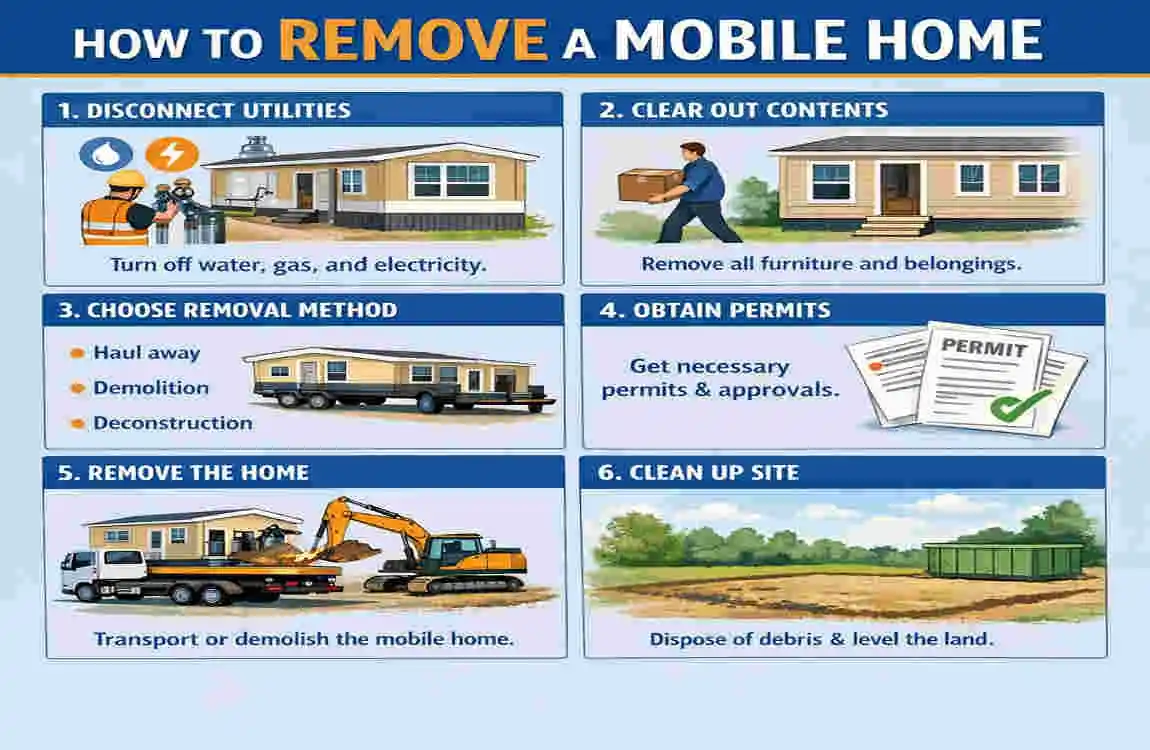
When removal makes more sense
Sometimes moving is not the best option. If the home is too old, badly damaged, or no longer safe to use, removal may be the better choice.
In that case, the home may be demolished or taken apart piece by piece.
Get demolition permits
Just like moving, removal often requires permits. Before any work starts, check with your local office to find out what is needed.
This keeps the project legal and prevents problems later.
Disconnect all services
All utility lines must be disconnected before removal begins. This includes water, power, gas, and sewer connections.
This is a safety must. It helps avoid fires, leaks, and other hazards.
Remove hazardous materials
Older homes may contain materials that need special handling. If hazardous items are present, they should be removed by trained professionals.
This protects workers, the property, and the environment.
Dismantle or demolish the structure.
A mobile home can be removed in different ways. Some are torn down completely, while others are taken apart and salvaged.
Professionals will choose the safest method based on the home’s condition and the site.
Recycle and clean the site.
Whenever possible, useful materials like metal, wood, and reusable parts should be recycled. After removal, the site should be cleaned and prepared for future use.
A clean site is easier to sell, rebuild on, or landscape.
Safety Tips
Safety Tip Why It Matters
Hire licensed movers Reduces risk of damage and legal issues
Disconnect utilities first Prevents accidents and leaks
Inspect the home’s condition Ensures it is safe to transport
Secure loose items Prevents interior damage during travel
Follow local regulations Avoids fines and delays
Cost Factors
The cost of moving or removing a mobile home can vary a lot. Several things affect the final price.
Main cost factors
- Distance of the move: Longer moves usually cost more.
- Home size and weight: Bigger homes need more equipment and labour.
- Permit fees: Local permits can add to the total.
- Utility work: Disconnecting and reconnecting services may incur additional charges.
- Site preparation: The new site may need levelling or foundation work.
- Demolition and disposal: Removal costs depend on how the luxury home is taken down and where materials go.
It is always smart to ask for a detailed estimate before work begins.
Frequently Asked Questions
Can I move a mobile home myself?
In most cases, no. Moving a mobile home usually requires special equipment, permits, and trained professionals.
How long does it take to move a mobile home?
It can take one to several days, depending on distance, permits, weather, and site prep.
Do I need a permit to move a mobile home?
Yes. Most places require permits before a mobile home can be transported.
What should be removed before moving a mobile home?
Remove skirting, porches, decks, utility hookups, and any loose items inside or outside.
| Topic | Information |
|---|---|
| Purpose | Move or remove a mobile home safely while following local laws and safety standards. |
| Planning | Inspect the home’s condition, measure dimensions, and determine if moving is practical. |
| Permits | Obtain all required moving permits and transportation approvals from local authorities. |
| Professional Movers | Hire licensed and insured mobile home movers for safe transport. |
| Utility Disconnection | Disconnect electricity, gas, water, sewer, and internet before moving. |
| Preparation | Remove skirting, decks, porches, awnings, and secure all interior items. |
| Transportation | Use specialized trailers, towing equipment, and follow an approved travel route. |
| Safety Measures | Check tires, axles, hitch connections, and weather conditions before transport. |