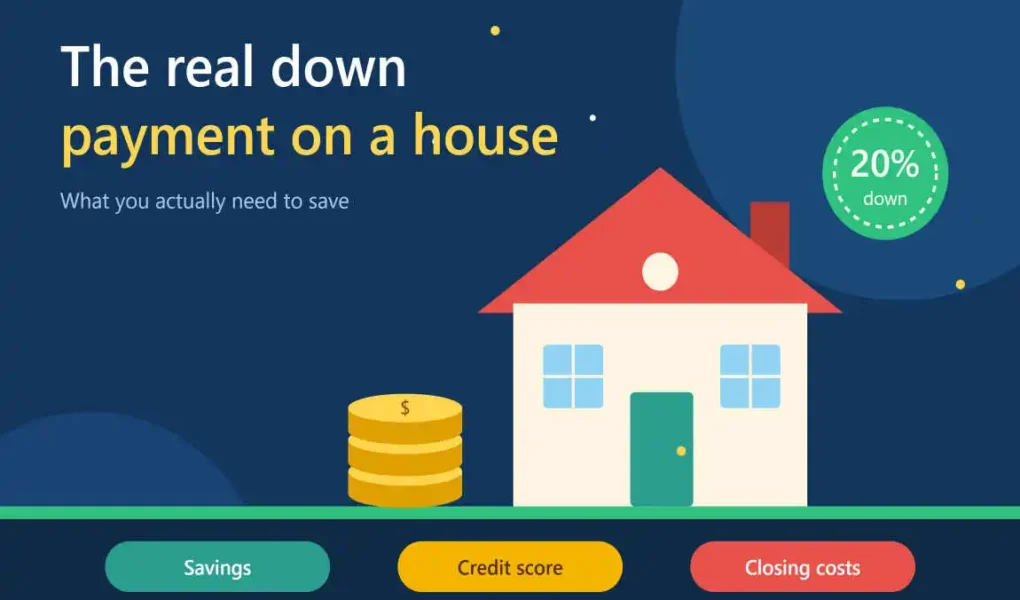
When people talk about a down payment, they usually mean one number: 3%, 5%, or the classic 20% of the purchase price. But the real cost of getting into a home goes well beyond that figure. Closing costs, inspections, appraisal fees, moving expenses, and the repairs a new home almost always needs can add thousands to what you actually need in the bank on day one. Add an emergency fund so one broken furnace doesn’t wipe you out, and the true “down payment” looks very different from the number on the mortgage calculator.
What is a down payment?
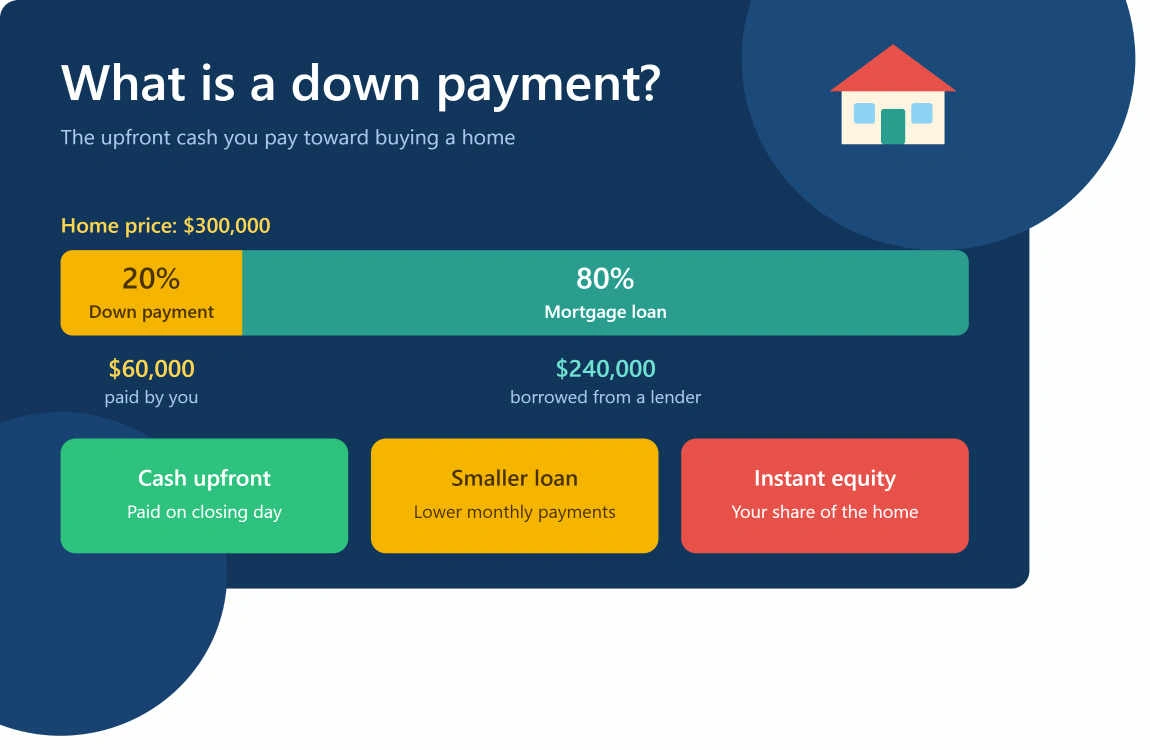
A down payment is the portion of the purchase price you pay out of pocket at closing. The lender finances the remainder. Put $40,000 down on a $400,000 modern home and your loan is $360,000. The more you put down, the smaller your loan and, usually, the lower your monthly payment. The Consumer Financial Protection Bureau has a free step-by-step guide to the whole home-buying process if you want to see where this fits.
How much do buyers actually put down?
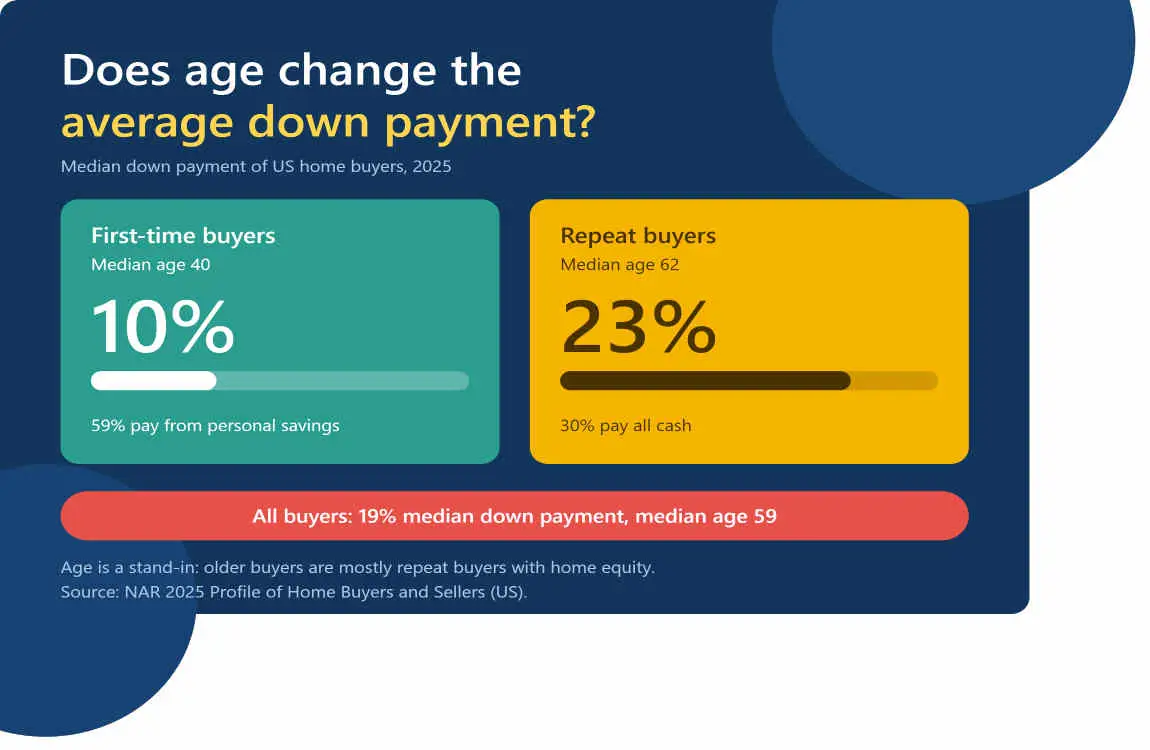
Forget the headlines for a moment and look at what real buyers did. The National Association of Realtors (NAR) surveys recent buyers every year. In its latest annual profile, first-time buyers put down a median of 10%, which matches the highest level recorded since 1989, while repeat buyers put down 23% (NAR). Across all buyers, the median was 19% (NerdWallet, citing NAR).
In dollars, that adds up. Using NAR’s October 2025 median existing-home price of $415,200, NerdWallet calculated a median down payment of about $78,888 for all buyers (NerdWallet). First-time buyers, who typically buy cheaper old homes and put down less, need a much smaller sum.
Down payment by loan type: the real minimums
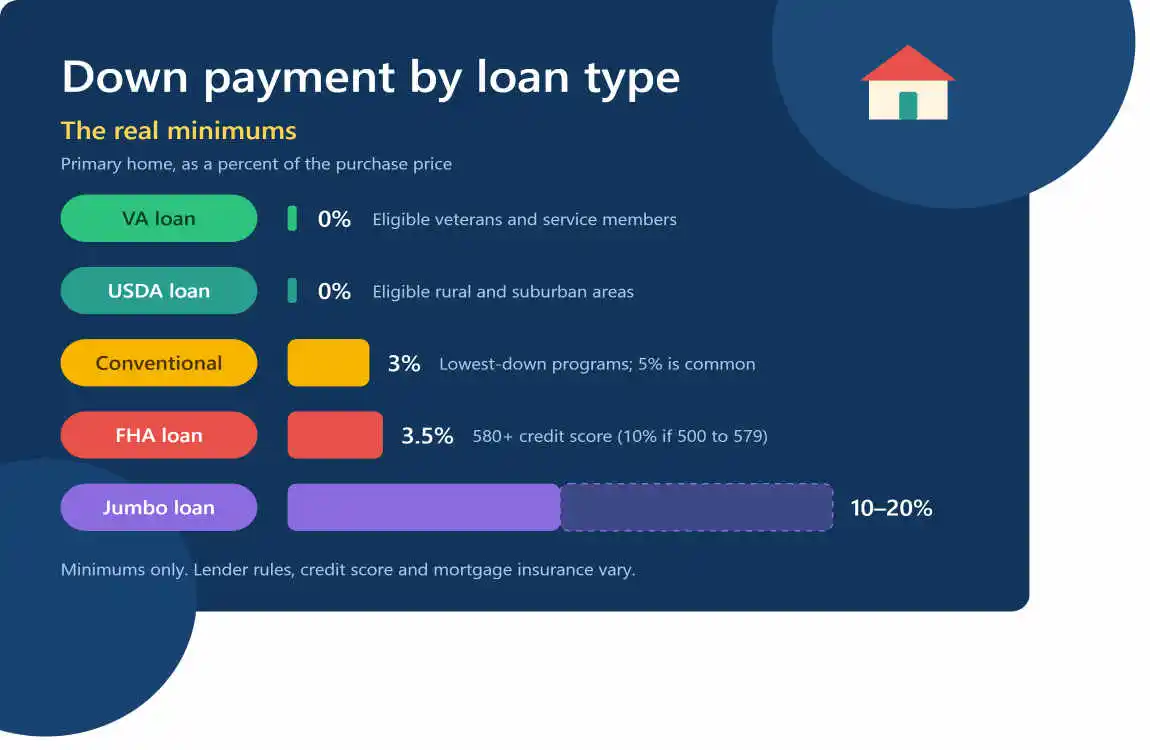
This is the part most “20% down” advice skips. Your minimum depends on the mortgage you choose:
| Loan type | Minimum down | Good to know |
|---|---|---|
| VA loan | 0% | For eligible service members, veterans and some surviving spouses. A one-time funding fee can apply. |
| USDA loan | 0% | For eligible homes in qualifying rural and some suburban areas, with income limits. |
| Conventional 97 / HomeReady | 3% | Fannie Mae and Freddie Mac options. Program rules differ on first-time buyer status and income limits. |
| FHA loan | 3.5% | For credit scores of 580 or higher; scores of 500–579 generally need 10%. |
| Conventional (traditional) | 5%–20% | 20% avoids private mortgage insurance but is not mandatory. |
You can read the official rules directly: HUD on FHA loans, VA home loans, USDA guaranteed loans, and Fannie Mae HomeReady.
What it looks like in dollars
Percentages feel abstract until you attach a price. Here is the math on a $400,000 home:
Swap in your own target price and multiply. A $300,000 home at 3.5% is $10,500. A $550,000 home at 10% is $55,000.
Does your age change the average?
Yes, and quite a lot. Younger buyers have had less time to save and less home equity to roll over. NAR’s generational data, as summarized by NerdWallet, shows median down payments climbing steadily with age (NerdWallet, citing NAR).
Where does the money come from?
For first-time buyers, the answer is mostly their own pockets. According to NAR data, about 59% used personal savings, 26% used financial assets such as stocks or retirement accounts, and 22% relied on gifts or loans from family and friends. (Buyers can use more than one source, so the shares add up to more than 100%.) See the full breakdown in NAR’s release.
Is 20% down worth it?
It has real perks, but it is not a must. With less than 20% down on a conventional loan, lenders typically require private mortgage insurance (PMI), which you can usually cancel later once you build enough equity. FHA loans work differently. Their mortgage insurance property premium may stay for the life of the loan if you put down less than 10%, unless you refinance (HUD).
Don’t forget closing costs
Your down payment is only one piece of the cash you need. Closing costs (lender fees, appraisal, title, taxes and prepaid items) are separate and typically add up to a few percent of the home price. The CFPB explains how to read your Loan Estimate and Closing Disclosure so there are no surprises (CFPB). Some sellers or assistance programs can help cover these costs.
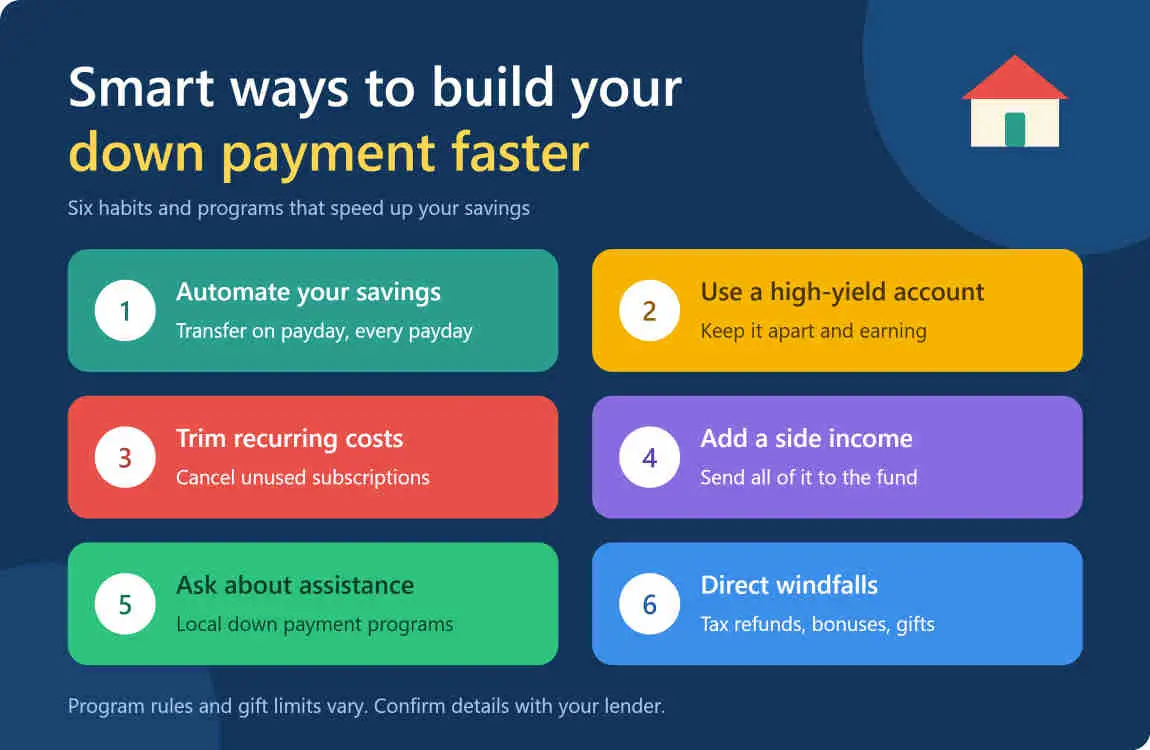
Smart ways to build your down payment faster
- Automate it. Send a fixed amount to a high-yield savings account on payday, so saving happens before spending.
- Look into assistance programs. Many state and local real estate housing agencies offer grants or low-interest second loans for eligible buyers.
- Use gift funds correctly. FHA and many conventional loans allow family gifts, but your lender will need documentation, so tell them early.
- Improve your credit score. A higher score can unlock better loan terms and, on FHA loans, the 3.5% minimum instead of 10%.
- Check VA and USDA eligibility. If you qualify, you may not need a down payment at all.
Frequently asked questions
How much is a down payment on a $300,000 house?
At 3% it is $9,000, at 3.5% it is $10,500, at 10% it is $30,000 and at 20% it is $60,000.
Can I buy a house with no down payment?
Yes, if you qualify for a VA or USDA loan. You will still need cash for closing costs unless a seller or assistance program covers them.
Is 5% down enough?
It can be. Many conventional lenders accept 5%, and it sits above the FHA and 3% conventional minimums. You will likely pay mortgage insurance until you reach about 20% equity.
Do I need 20% down to avoid PMI?
For a conventional loan, 20% is the usual threshold to skip PMI. Ask your lender about when PMI can be removed if you put down less.
Is a bigger down payment always better?
Not always. A larger down payment saves interest, but you still want cash reserves for repairs, moving and emergencies.
The bottom line
So, how much is a house down payment? The typical first-time buyer puts down about 10%, but you can qualify with as little as 0% to 3.5% depending on your loan. Start by picking a realistic price range, check which programs fit you, and then work backward to a savings goal. Talk to a few lenders before you decide, because the right number is the one that gets you into a home you can comfortably afford.