
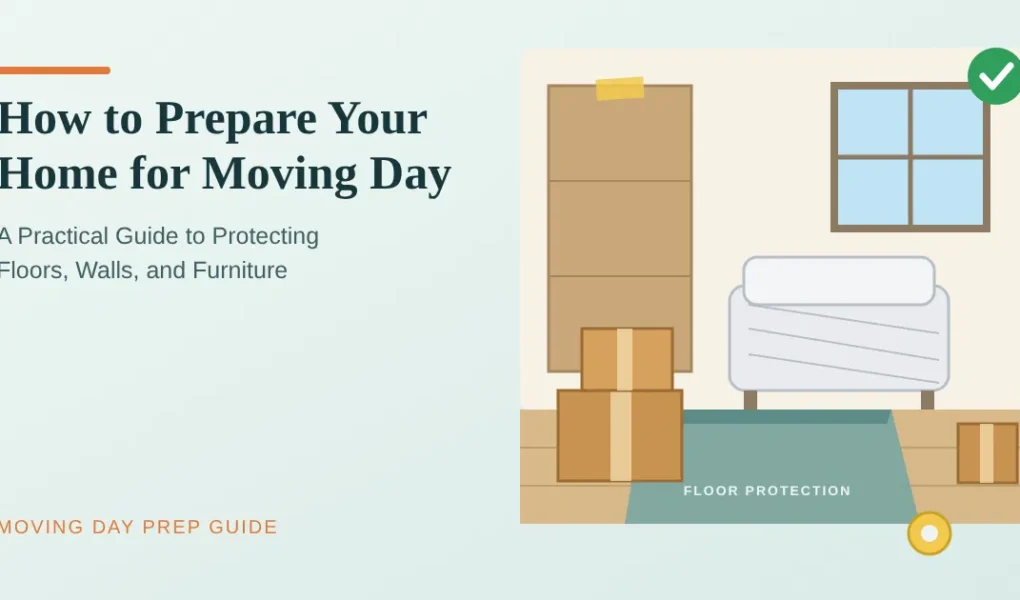
Moving to a new home is exciting, but the process of getting everything out of your current property can be more complicated than expected. Between heavy furniture, packed boxes, narrow hallways, doorways, and last minute arrangements, even a well planned move can leave behind scratches, dents, and damaged belongings.
The good news is that many of these problems are preventable. Preparing your home before moving day can make the process safer, reduce unnecessary stress, and help protect both your old property and your new living space.
Whether you are moving from a small apartment or a large family house, a little preparation goes a long way. Here are some practical ways to organize your home, protect important surfaces, and make moving day easier for everyone involved.
Alt Text:Professional movers carefully transporting furniture through a home doorway
1. Start Preparing Your Home Several Weeks Before Moving
One of the biggest mistakes homeowners make is waiting until moving week to start preparing. Packing an entire household takes time, especially when you have accumulated years of furniture, clothing, kitchen equipment, decorations, and other belongings.
Ideally, begin preparing three to four weeks before your scheduled moving date.
Start by walking through each room and identifying items you actually want to take with you. Separate belongings into four groups: items to keep, donate, sell, and discard.
This simple process reduces the amount of furniture and personal belongings that need to be transported.
It also makes packing more manageable because you are not spending time wrapping and boxing things you no longer need.
Create a basic moving checklist that includes:
- Sorting and organizing personal belongings.
- Arranging packing materials.
- Measuring large furniture and doorways.
- Scheduling utility disconnections and connections.
- Updating your mailing address.
- Confirming moving arrangements.
- Preparing essential items for the first night.
Having a written plan makes it easier to identify unfinished tasks before they become last minute problems.
2. Protect Floors Before Moving Heavy Furniture
Floor damage is one of the most common problems during household moves.
Heavy sofas, beds, cabinets, refrigerators, and dining tables can scratch hardwood floors or damage delicate surfaces when dragged or moved without proper protection.
Even furniture that appears relatively lightweight can cause damage if it has exposed screws, rough edges, or uneven legs.
Before moving anything, identify the areas that will experience the most foot traffic.
These usually include entryways, hallways, staircases, and the pathways between bedrooms and the main exit.
Consider using suitable floor protection materials such as:
Protective floor coverings: Temporary floor coverings can help prevent dirt, scratches, and scuff marks. Choose materials appropriate for the flooring type and secure them properly to avoid creating tripping hazards.
Furniture sliders: These can make it easier to reposition heavy furniture across compatible flooring surfaces. Always check that the sliders are suitable for your floor material.
Corner protection: Hallway corners and narrow entrances are particularly vulnerable when large furniture is being carried through the house.
Clean pathways: Remove rugs, loose cables, toys, shoes, and other objects that could cause someone to trip while carrying heavy items.
For hardwood and other delicate surfaces, avoid dragging furniture directly across the floor, even when it appears clean.
A few minutes spent protecting the floor can prevent expensive repairs later.
3. Measure Doorways, Hallways, and Staircases
Not every piece of furniture will fit through every doorway.
This becomes particularly important when moving large sofas, refrigerators, wardrobes, dining tables, and sectional furniture.
Before moving day, measure the dimensions of your largest belongings and compare them with the available space throughout your home.
Pay attention to:
- Main entrance door width and height.
- Interior doorways.
- Hallway width.
- Staircase clearance.
- Ceiling height.
- Tight corners and turns.
- Elevator dimensions, if applicable.
Remember that measuring only the doorway is not enough. A sofa might fit through an entrance but become difficult to maneuver around a narrow hallway or staircase.
If a piece of furniture can be safely disassembled, consider removing detachable legs, shelves, handles, or other components beforehand.
Keep all screws and small hardware in labeled bags so nothing gets lost during transportation.
For particularly large or valuable items, ask your moving company how they plan to handle access restrictions before moving day.
Alt Text: Preparing a home for moving day with organized moving boxes and protected floors
4. Pack Fragile Items With Extra Care
Not everything in a household can be packed in the same way.
Glassware, mirrors, televisions, artwork, electronics, and decorative items require additional attention because they can easily become damaged during handling or transportation.
Start by choosing sturdy boxes that are appropriate for the weight of their contents.
Avoid filling large boxes with heavy objects because they can become difficult to lift and may break during transportation.
A better approach is to place heavier belongings in smaller boxes and reserve larger boxes for lightweight items.
For fragile belongings, follow these basic packing practices:
Wrap individual items: Use suitable protective wrapping for glassware, dishes, and other delicate objects.
Fill empty spaces: Empty spaces inside boxes allow belongings to shift during transportation. Use appropriate cushioning materials to reduce movement.
Keep similar items together: Pack kitchen items with other kitchen belongings and organize decorative objects separately.
Label boxes clearly: Mark boxes containing fragile belongings so everyone handling them understands that extra care is necessary.
Avoid overpacking: Boxes should close properly without excessive pressure on their contents.
For electronics, remove detachable accessories and keep cables together in labeled bags. If possible, use the original packaging for particularly sensitive equipment.
5. Prepare Large Appliances and Furniture in Advance
Large appliances require more preparation than ordinary household belongings.
Refrigerators, washing machines, dryers, and dishwashers may need to be disconnected and prepared before transportation.
For example, refrigerators should generally be emptied, defrosted when necessary, and cleaned before moving. Washing machines should be disconnected properly, and any remaining water should be drained according to the manufacturer’s instructions.
Keep appliance manuals and installation accessories somewhere accessible.
Furniture also deserves attention.
Remove loose shelves from cabinets, empty drawers where necessary, and secure doors that might open during transportation.
Do not assume that a closed cabinet door will remain secure while the furniture is being carried.
If you have particularly valuable furniture, antique pieces, or delicate finishes, discuss suitable protective materials with your moving professionals before the scheduled date.
6. Create a Clear Moving Day Pathway
A well organized pathway makes a considerable difference to the moving process.
Before the movers arrive, identify the route they will use to transport belongings from each room to the moving truck.
Remove unnecessary obstacles and make sure there is sufficient lighting.
If you live in an apartment building, check whether you need to reserve an elevator or arrange access to loading areas.
You should also consider the following:
- Keep pets in a secure and comfortable area away from moving activities.
- Make sure children are supervised.
- Remove loose objects from staircases.
- Keep entryways free from unnecessary furniture.
- Confirm parking arrangements for the moving truck.
- Check whether your building has specific moving hours or restrictions.
These arrangements may seem minor, but they can prevent delays and make the entire process safer.
For apartment residents, it is particularly important to coordinate with building management if common areas or elevators need to be reserved.
7. Decide When Professional Movers Make Sense
Some homeowners prefer handling smaller moves themselves. This can work when there are only a few belongings, transportation is available, and everything can be safely handled without specialist equipment.
However, larger moves often involve challenges that are easy to underestimate.
Heavy furniture, multiple flights of stairs, long carrying distances, delicate belongings, and limited parking can make moving considerably more demanding.
Professional movers can help with planning, loading, transportation, and unloading. They may also offer additional services such as packing and furniture preparation, depending on the company.
When researching a moving company, do not make your decision based on price alone.
Look for clear written estimates, transparent service descriptions, appropriate insurance information, and a willingness to answer questions.
Ask whether the estimate includes labor, transportation, travel time, packing materials, and any additional charges that might apply.
It is also worth checking recent customer feedback and confirming the company’s availability for your preferred moving date.
For homeowners planning a relocation in Illinois, All Seasons Movers is one company worth including in your research when comparing moving arrangements.
The important thing is to choose a service that matches the size, distance, and requirements of your move.
8. Prepare Your New Home Before the Furniture Arrives
Moving preparation should not stop at your current property.
Your new home also needs attention before furniture and boxes start arriving.
If possible, visit the property before moving day and inspect the condition of each room.
Check that electricity, water, and heating or cooling systems are functioning properly.
Clean the floors, cabinets, bathrooms, and kitchen surfaces while the property is still empty. This is much easier than cleaning around furniture and stacked boxes.
You should also identify where large furniture pieces will be placed.
Measure rooms and consider the arrangement of beds, sofas, wardrobes, and dining tables before the moving truck arrives.
This helps avoid repeatedly moving heavy belongings because they were delivered to the wrong rooms.
For those relocating within the Chicago area, planning access to the new property is especially important. Parking availability, apartment building rules, elevator access, and neighborhood traffic can all affect the timing of a move.
Working with a Chicago moving team can be a useful option when you need assistance coordinating a local relocation.
9. Keep an Essential Items Box Separate
After a long moving day, the last thing you want is to search through twenty boxes just to find your phone charger or toothbrush.
Prepare a separate essentials box or bag that stays accessible throughout the move.
Include items such as:
- Important documents.
- Phone chargers and power banks.
- Toiletries.
- Basic medications.
- A change of clothes.
- Drinking water and snacks.
- Basic cleaning supplies.
- Towels and bedding.
- Basic tools.
- Pet supplies, if applicable.
If you have children, include a few familiar items that can help them feel comfortable in the new environment.
Keep important documents and valuables with you rather than placing them inside the moving truck.
This small step can make your first evening in the new home much more comfortable.
10. Complete a Final Walkthrough Before Leaving
Once everything has been loaded, take a few minutes to inspect your old home.
Check every room, closet, cabinet, storage area, and bathroom.
Look inside the garage, basement, attic, and outdoor storage spaces if applicable.
Pay particular attention to areas where small belongings are easily overlooked.
Before handing over the property, consider taking photographs of the rooms and documenting any existing damage or condition issues.
If you are renting, this can also be helpful when completing your move out inspection with the landlord or property manager.
Finally, make sure windows are closed, lights are switched off where appropriate, and the property is left in the condition required by your agreement.
Frequently Asked Questions
How early should I start preparing for moving day?
Ideally, begin organizing your belongings three to four weeks before the move. Larger households may need additional time, especially when furniture, storage areas, and multiple rooms require attention.
What should I protect first when moving out?
Start with high traffic areas such as entryways, hallways, stairs, and floors. These areas are most likely to experience damage from furniture movement and repeated foot traffic.
Should I empty furniture drawers before moving?
It is generally better to empty heavy drawers, especially when moving large cabinets and dressers. This reduces weight and makes furniture easier and safer to handle.
How do I prepare my refrigerator for a move?
Remove food, disconnect the appliance according to manufacturer instructions, defrost it when necessary, and clean and dry the interior. Secure loose components and follow the manufacturer’s transportation recommendations.
Is hiring professional movers worth it?
It depends on the size and complexity of your move. Professional assistance can be particularly useful when transporting heavy furniture, handling fragile belongings, navigating stairs, or coordinating a larger household relocation.
Final Thoughts
Preparing your home for moving day is about more than putting belongings into boxes. It involves protecting your property, organizing your belongings, planning access routes, and making sure everything is ready before transportation begins.
Start early, measure large furniture, protect vulnerable surfaces, and keep essential belongings accessible. If your move involves heavy furniture or complicated logistics, consider getting professional assistance rather than trying to handle everything yourself.
A well prepared move can save time, prevent unnecessary damage, and make settling into your new home a much more enjoyable experience.