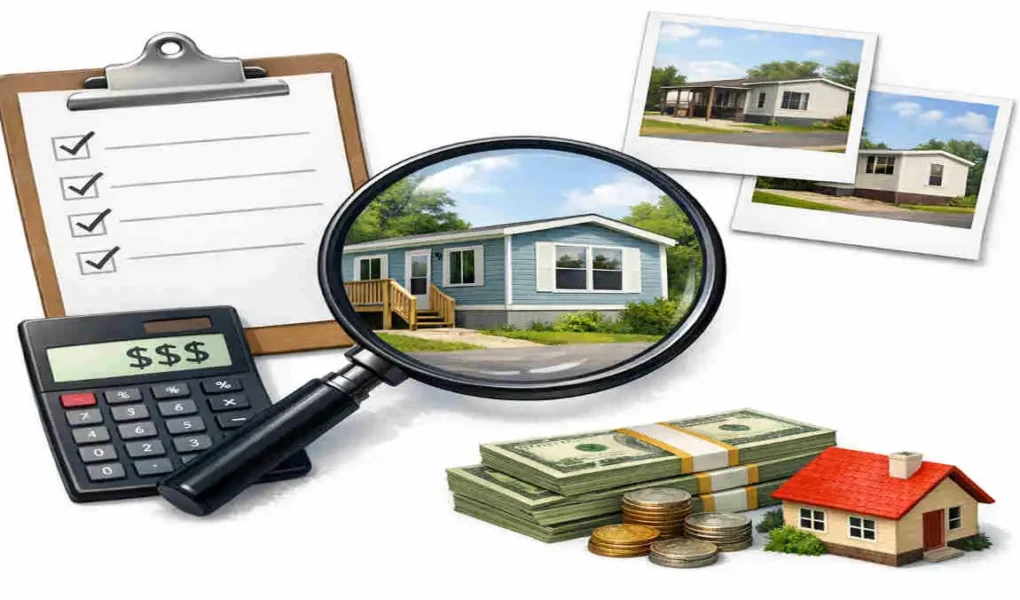
If you own a mobile home, knowing its value is very important. It helps you set a fair price if you want to sell, understand your net worth, and make smarter choices about insurance or refinancing.
The value of a mobile home is not based on just one thing. It depends on age, condition, size, location, upgrades, and even whether you own the land. That is why learning how to value a mobile home correctly can save you time and help you avoid pricing mistakes.
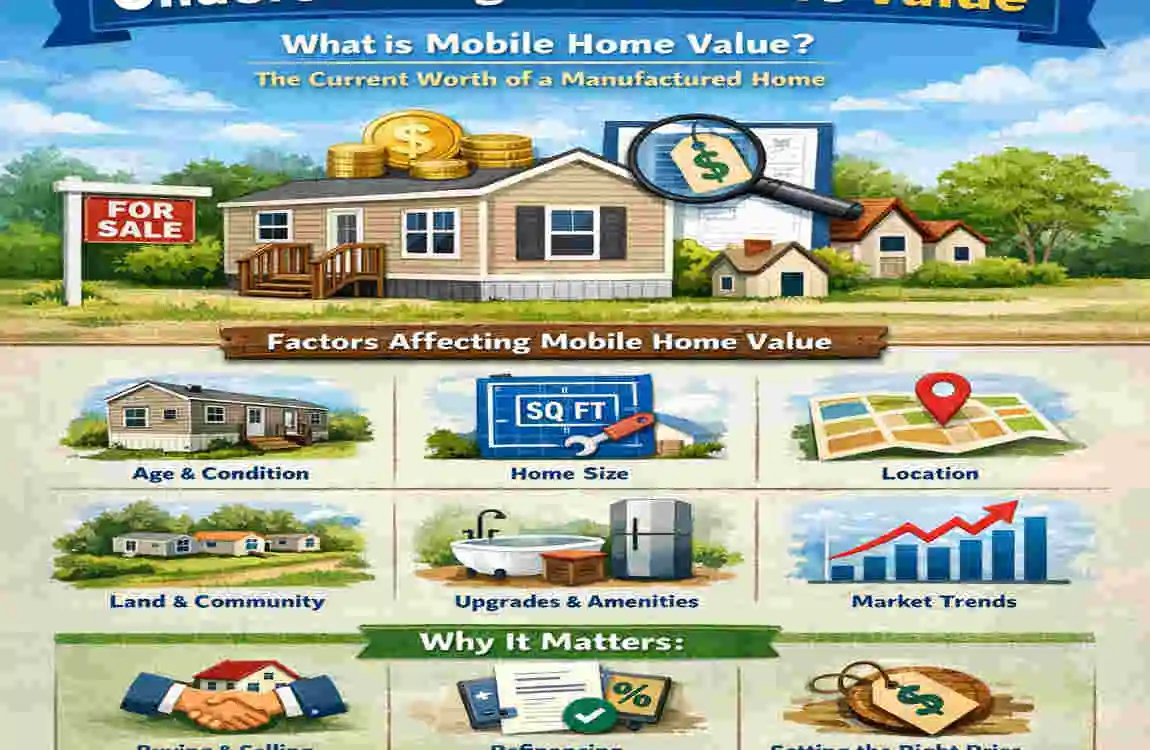
What Does Mobile Home Value Mean?
Market Value vs Assessed Value
Market value is the price a buyer is likely to pay in the current market. It changes based on demand, location, and condition.
Assessed value is usually used for tax purposes. It may be different from what someone would actually pay for the home.
These two numbers can be close, but they are often not the same. If you want to sell, market value matters the most.
Replacement Value Explained
Replacement value is the amount it would cost to rebuild or replace the home today. This is useful for insurance, but it does not always show what a buyer will offer.
A mobile home can have a high replacement cost and still sell for less if it is old, damaged, or located in a weak market.
Why Accurate Valuation Matters
A correct value helps you:
- Set a fair asking price
- Avoid losing money
- Negotiate with confidence
- Plan for insurance or financing
When you understand the real value, you make better decisions from the start.
Key Factors That Affect Mobile Home Value
Age and Manufacturer
Older mobile homes usually lose value over time. This is called depreciation. A newer home often brings a better price, especially if it has been well cared for.
The manufacturer can also matter. Some brands are known for better build quality, stronger materials, or better floor plans. Buyers often notice that.
Size and Floor Plan
Bigger homes usually have more value than smaller ones, but the layout matters too.
A smart floor plan can make a home feel more open and useful. A cramped design may lower interest, even if the home is large.
Overall Condition
Condition is one of the biggest parts of value. Buyers look at:
- The roof
- Walls and floors
- Plumbing and wiring
- Windows and doors
- Signs of water damage
A clean, well-kept home usually sells faster and for more money.
Location and Community
Where the home sits can significantly affect its value. A mobile home in a nice community, near services, schools, and jobs, often has stronger demand.
If the home is in a quiet, clean park with good management, buyers may see more value in it.
Land Ownership vs Leased Land
This is a major factor.
If you own the land, the total property value is often higher. Buyers like owning both the home and the land because it feels more secure.
If the home is on leased land, the value may be lower because the buyer will also need to pay monthly lot rent.
Upgrades and Renovations
Improvements can raise value, but not every upgrade gives the same return. Some changes matter more than others.
For example, a new roof or updated kitchen may add more value than a fancy decoration that only changes appearance.
How to Value a Mobile Home Step by Step
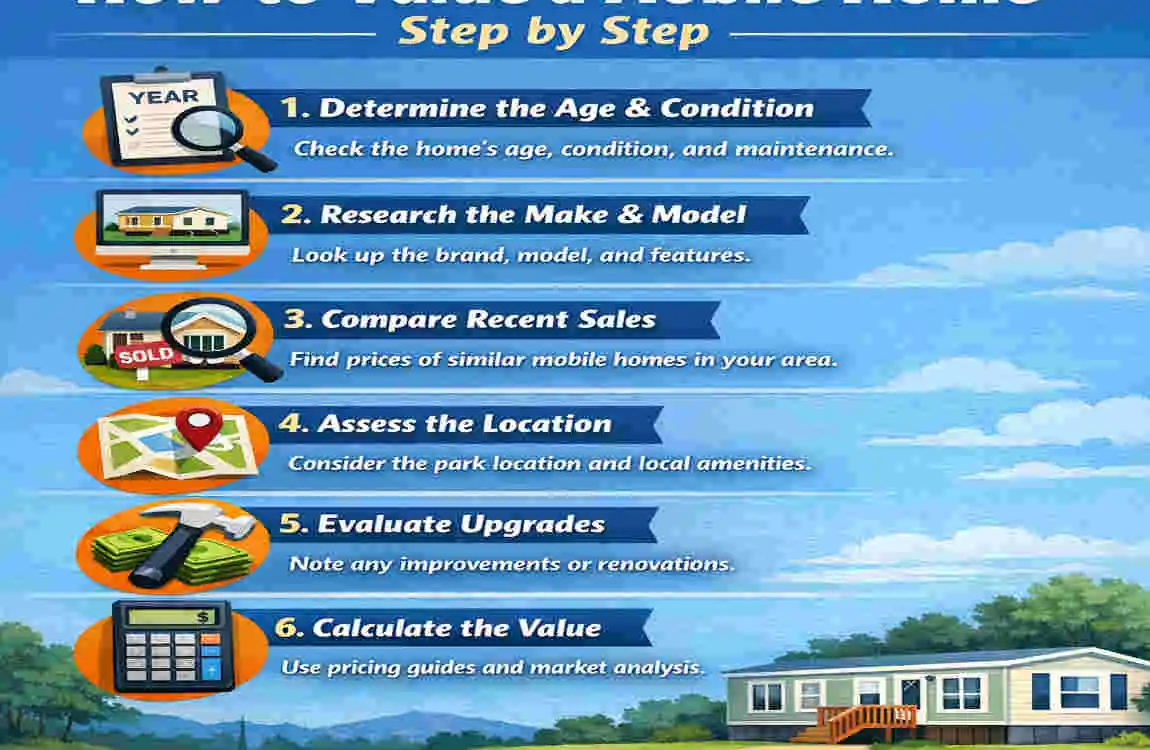
Gather Home Information
Start with the basics. Write down:
- Year built
- Size in square feet
- Number of bedrooms and bathrooms
- Manufacturer name
- Whether the land is owned or leased
You should also note recent repairs and upgrades. This gives you a clearer picture of the home’s condition.
Check Comparable Sales
Look at similar mobile homes that sold near you. Try to compare homes with:
- Similar age
- Similar size
- Similar location
- Similar condition
This method is one of the best ways to estimate real market value because it shows what buyers are actually paying.
Review Local Market Trends
Even a great home may sell for less in a slow market. That is why you should check whether prices in your area are rising, steady, or falling.
If demand is strong, your home may be worth more. If there are many homes for sale and few buyers, value may go down.
Use Online Valuation Tools
Online tools can give you a quick estimate. They are helpful as a starting point, but they are not always exact.
Use them as a guide, not as the final answer. A tool cannot always understand your home’s true condition or your local market.
Consider Professional Appraisal
If you want a more accurate number, a professional appraisal can help. An appraiser looks at the home, the market, and comparable sales to estimate the value more accurately.
This is especially useful if you are selling, refinancing, or settling legal matters.
Common Methods Used to Estimate Mobile Home Value
Comparable Sales Method
This is the most common method. It compares your home with similar homes that recently sold.
It works well because it reflects real buyer behaviour: if three similar homes sold for around the same amount, that gives you a strong clue about your home’s value.
Cost Approach
This method looks at how much it would cost to replace the home, then subtracts depreciation.
It is often used when a home is newer or when there are not many comparable sales available.
Income Approach
This method is mostly used for rented mobile homes. It looks at how much rental income the home can generate.
If the home is an investment property, this method can be useful for buyers and sellers who care about cash flow.
Improvements That Increase Mobile Home Value
Not every project adds the same value, but some upgrades are usually worth considering.
High-Impact Improvements
- Kitchen upgrades such as new cabinets, counters, or appliances
- Bathroom remodelling with clean fixtures and updated finishes
- New flooring that makes the home feel fresh
- Roof replacement to improve safety and lower repair concerns
- Energy-efficient windows to help with comfort and utility savings
- Fresh paint and curb appeal to make a strong first impression
Simple updates often make the home feel more cared for, which can help buyers feel more confident.
Mistakes to Avoid When Valuing a Mobile Home
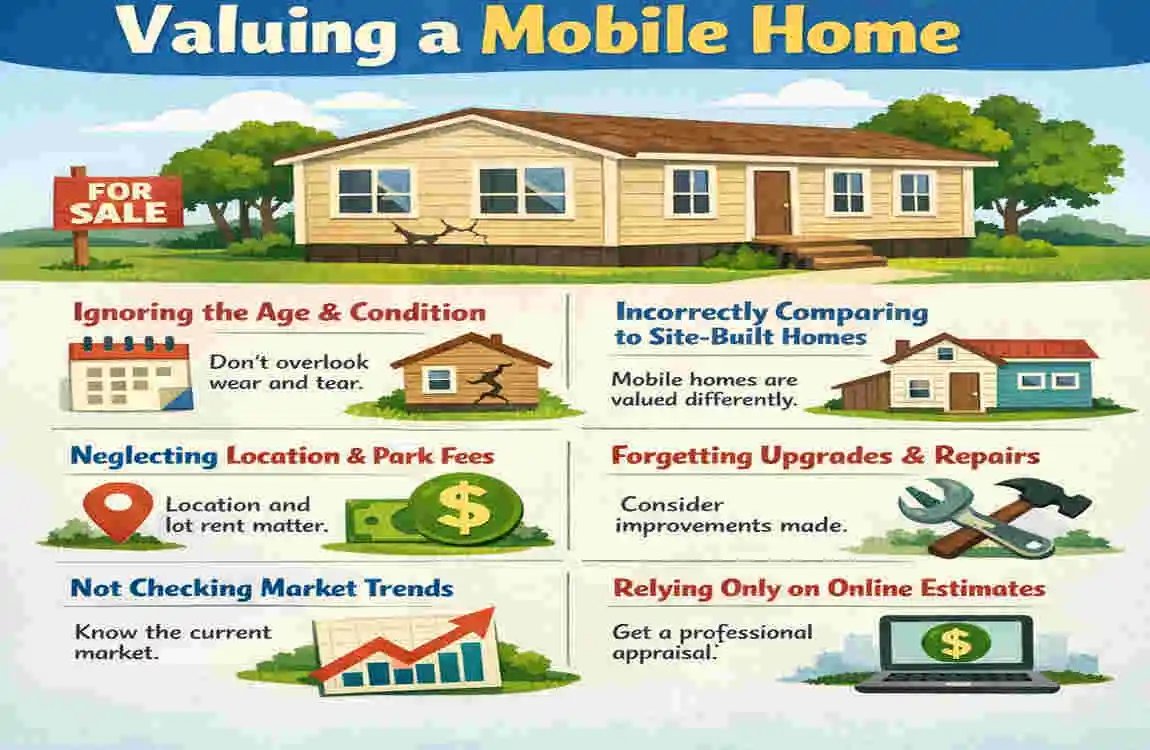
Ignoring Local Market Conditions
A home’s value depends on the area around it. If you ignore local demand, you may set the wrong price.
Overpricing Based on Emotion
It is easy to feel your home is worth more because of memories and personal effort. But buyers only care about the market, condition, and features.
Forgetting Depreciation
Mobile homes usually lose value over time unless they are well maintained or improved. Do not assume the home will automatically gain value like some traditional houses do.
Skipping Repairs Before Evaluation
Small repairs can make a big difference. Broken fixtures, leaks, or damaged flooring can quickly lower the price.
Tips for Getting the Best Selling Price
If you want to get the strongest offer, focus on presentation and preparation.
Simple Ways to Improve Appeal
- Clean the home thoroughly
- Remove clutter and extra furniture
- Gather maintenance records
- Take clear, bright photos
- Price the home competitively
These steps help buyers see the home in a better light and reduce doubts.
FAQ
How do I determine the value of my mobile home?
Compare similar homes, review the condition, check local sales, and consider a professional appraisal.
Does the age of a mobile home affect its value?
Yes. Older homes usually lose value over time, but good maintenance and upgrades can help.
Can renovations increase a mobile home’s value?
Yes. Kitchen, bathroom, flooring, roofing, and energy-saving upgrades can improve resale value.
Are online mobile home value calculators accurate?
They can give a rough estimate, but local sales and professional appraisals are usually more reliable.
Does owning the land increase mobile home value?
Yes. A mobile home sold with owned land is often worth more than one on leased land.
How often should I estimate my mobile home’s value?
It is smart to review it every few years or before selling, refinancing, or changing insurance.
| Factor | Details |
|---|---|
| Home Age | Newer mobile homes typically have a higher market value than older models. |
| Condition | Well-maintained homes with updated interiors and exteriors are worth more. |
| Location | Homes in desirable neighborhoods or parks generally have higher values. |
| Size | Larger homes with more bedrooms and bathrooms usually sell for more. |
| Land Ownership | Mobile homes on owned land are often valued higher than those on leased lots. |
| Upgrades | Renovations such as new flooring, roofing, HVAC systems, or kitchens can increase value. |
| Comparable Sales | Compare recent sales of similar mobile homes in the same area to estimate market value. |