Modern English Tudor homes blend old-world charm with everyday comfort. They feel warm, timeless, and elegant, but they also work well for today’s lifestyle. Think of a classic storybook house with steep roofs, black-and-white details, and cozy rooms—then add open spaces, smart features, and better energy use.
That mix is a big reason why many homeowners love the English Tudor style today. People want homes that feel personal and rich in character, not plain or too modern. At the same time, they want layouts that fit real life. That is where modern Tudor architecture stands out.
History and Key Features of the English Tudor Style
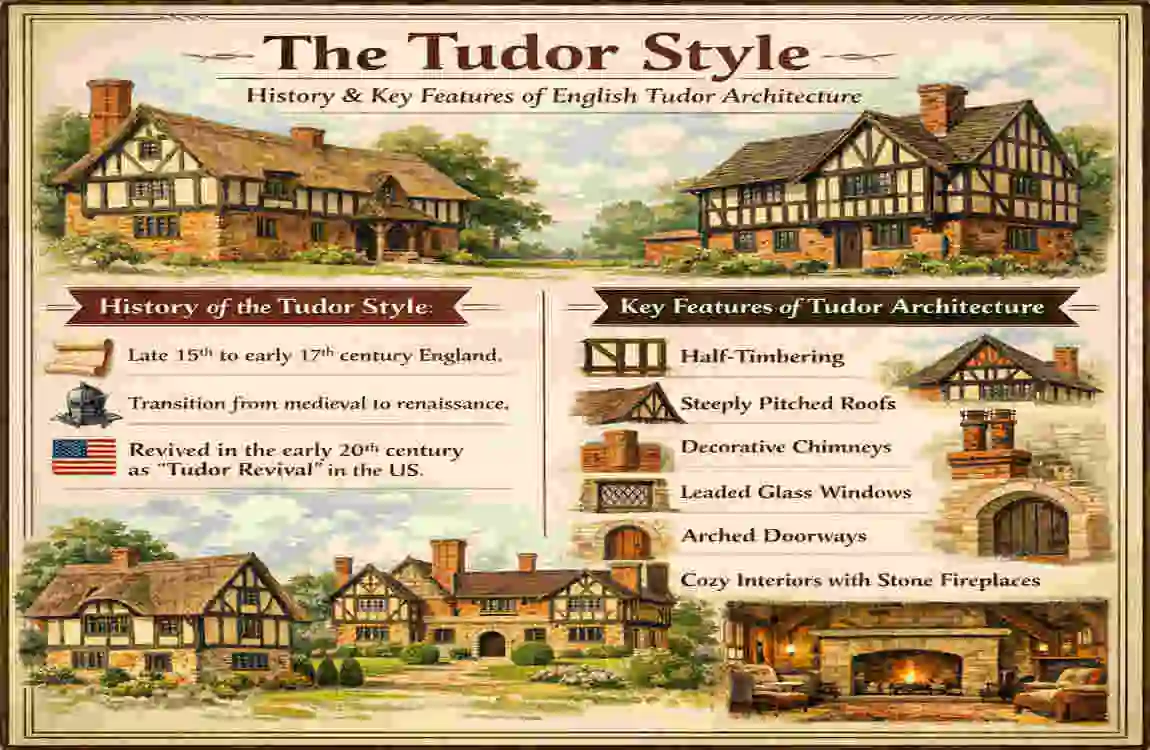
Where the style came from
The original Tudor style came from England between 1485 and 1603.Luxury homes from this era were built with strong, practical materials and simple shapes. Over time, the style became known for its romantic look and rich details.
Today, people still love it because it feels warm and full of character. Modern English Tudor homes keep that charm but make it easier to live in them comfortably.
What makes Tudor homes stand out
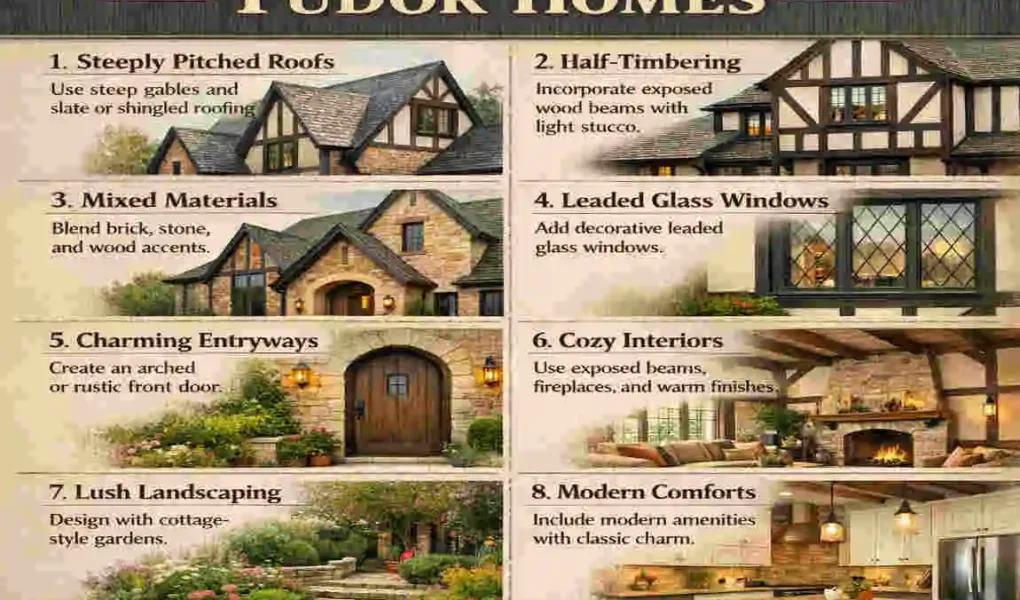
The most common features of Tudor home design include:
- Steep gabled roofs
- Half-timbering with dark beams and light walls
- Tall chimneys
- Leaded or diamond-pane windows
- Asymmetrical facades
These details create the classic Tudor look. In modern versions, designers often use newer materials that last longer and need less upkeep.
How the style has changed
Modern versions of this style maintain the same visual identity while improving comfort, safety, and performance. For example, faux timber beams may replace old wood, and better insulation may hide behind the walls. This keeps the design beautiful while making the home easier to maintain.
Planning Your Modern English Tudor Home
Start with the site and climate.
Before you draw anything, consider your land, climate, and budget. A Tudor home needs the right roof shape, wall materials, and window placement to look balanced. If you live in a hot area, , focus on insulation, shaded openings, and materials that reduce heat.
Think about your budget early.
A Tudor-inspired home can be beautiful, but the details matter. Your budget should cover the roof, exterior finish, windows, and interior finishes. It helps to spend more on the parts that last longest, such as roofing and wall materials.
Work with the right experts.
A good architect or designer can help you balance style and function. This is especially important in modern Tudor architecture, as the home must look traditional while meeting current building requirements. A 3D model can also help you see the design before construction starts.
Simple planning steps
- Study your lot size and orientation.
- Decide which Tudor features you want to keep.
- Set your budget by room and by exterior detail.
- Check local building rules and roof height limits.
- Choose materials that fit your climate and maintenance needs.
Crafting the Exterior of Modern English Tudor Homes
Focus on the roof first.
The roof is one of the most important parts of modern English Tudor homes. Steep rooflines instantly create that classic look. In a modern build, you can use durable shingles or composite materials that retain the style while reducing maintenance.
Use half-timbering more smartly.
Traditional Tudor homes used heavy wooden beams. Today, many designers use faux beams or fiber-cement details that look authentic without the same upkeep. Pair them with cream or soft white walls for the familiar black-and-white Tudor effect.
Choose the right windows and doors.
Windows should feel elegant but also work well for modern living. Leaded glass is a popular choice, but double-glazed panes are better for comfort and energy savings. Front doors can be large, heavy, and detailed, often with dark wood or iron accents.
Blend old and new materials.
You do not need to use only old-style materials. Brick veneer, stone accents, and even solar-ready roofing can fit well into the English Tudor style. The key is balance. The home should still feel grounded, warm, and timeless.
Exterior details that matter
- Dark rooflines
- Light stucco or plaster walls
- Strong vertical lines
- Tall chimneys
- Soft outdoor lighting
These small choices help the house feel complete.
Interior Design for Modern English Tudor Homes
Keep the cozy feel, but open the layout.
Inside, modern English Tudor homes should feel warm, not heavy. Many older Tudor homes had small rooms, but modern living often works better with open kitchens, larger family spaces, and better flow between rooms. You can still keep cozy corners, reading nooks, and a formal dining area.
Use natural materials
Wood, stone, and plaster work very well in Tudor interiors. Wide-plank oak floors, exposed ceiling beams, and textured walls can make the home feel rich without looking too busy. Keep the palette soft and natural to keep the space calm.
Choose colors that feel timeless.
Earthy shades work best. Think warm gray, soft cream, sage green, brown, and muted black. You can add stronger accents through furniture, rugs, or artwork. This creates depth while keeping the home easy to live in.
Add modern comfort carefully.
A Tudor interior should never feel outdated. Smart lighting, underfloor heating, and hidden storage can improve daily life without altering the home’s character. A stone fireplace with a gas insert is also a smart way to mix tradition and convenience.
Incorporating Modern Amenities Seamlessly
Make technology discreet
Modern homes need smart systems, but they should not dominate the look. Hide wiring, place speakers carefully, and keep control panels simple. In modern Tudor architecture, the goal is to make technology useful without making it visible.
Focus on energy efficiency.
Good insulation, triple-glazed windows, and efficient heating systems are very important. They help reduce energy bills and make the home more comfortable year-round. This is especially valuable when you want a beautiful home that also performs well.
Upgrade kitchens and bathrooms.
You can keep the Tudor character while adding modern finishes. Quartz counters, spacious showers, and sleek fixtures pair well with wood cabinets, stone tiles, or dark hardware. The result feels fresh but still classic.
Smart ways to add comfort
- Hidden speakers and lighting controls
- Energy-saving windows
- Efficient heating and cooling
- Water-saving bathroom fixtures
- Accessible design features when needed
These updates make daily life easier without ruining the traditional look.
Landscaping and Outdoor Spaces
Let the garden match the home.
The outside space should feel like part of the house. Cottage-style gardens, boxwood edges, lavender, and climbing plants fit modern English Tudor homes very well. They soften the strong rooflines and brick or stucco surfaces.
Use paths and patios with character.
Stone walkways, curved paths, and arched entries all support the Tudor look. A patio with natural stone or brick also works nicely under the deep roof overhangs. If you want an outdoor kitchen or fire pit, keep the materials simple and classic.
Common Mistakes to Avoid in Modern English Tudor Homes
One of the biggest mistakes is adding too many details. Tudor homes already have a strong visual style, so too much ornament can make the house look busy. Another common mistake is using cheap materials that do not age well.
Also, do not forget lighting. Tudor homes can feel dark if you do not plan carefully. Use layered lighting inside and outside so the home feels warm, not heavy.
Cost Breakdown and ROI for Modern English Tudor Homes
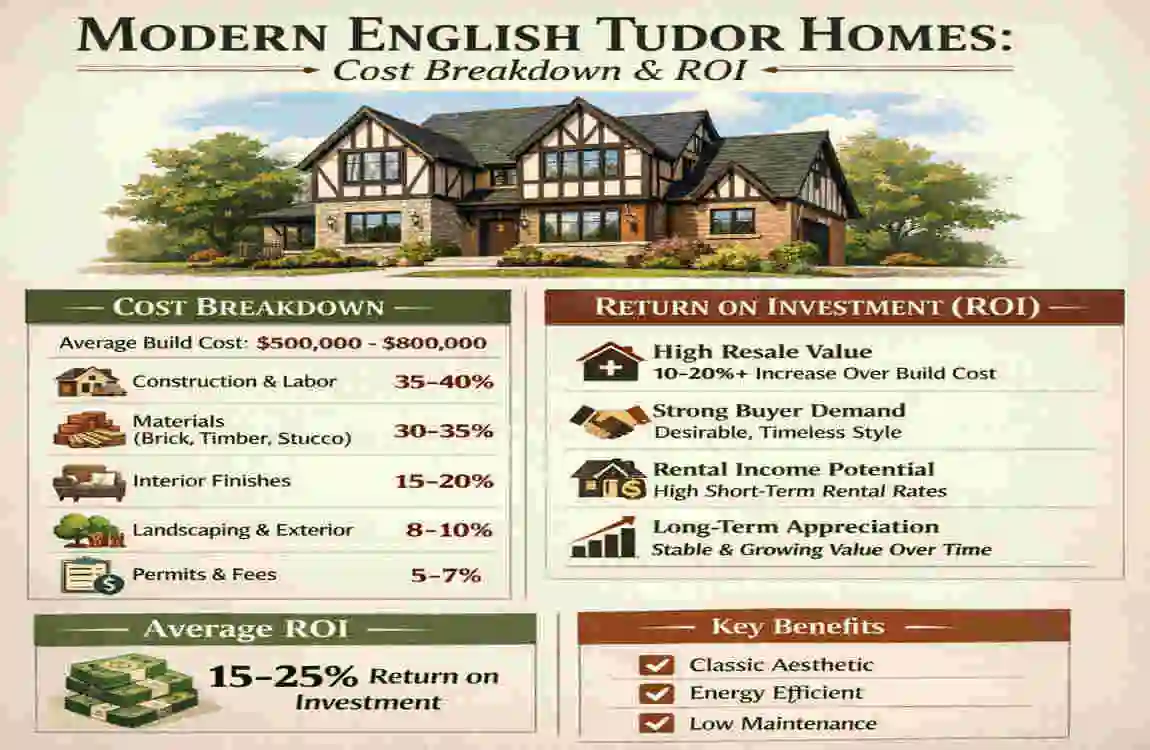
Category Estimated Cost Range
Exterior design and materials $50,000–$120,000
Interior finishes $80,000–$150,000
Roof and windows $40,000–$100,000
Landscaping $10,000–$40,000
Smart and energy upgrades $15,000–$50,000
Modern English Tudor homes often retain a strong resale appeal because they offer both character and comfort. Buyers usually like homes that look unique but still feel practical.
FAQ
What defines modern English Tudor homes?
They keep the classic Tudor look, such as steep roofs and decorative timbering, but use modern materials, layouts, and energy-saving features.
How much does it cost to build one?
Costs vary by location and finishes, but Tudor-inspired homes often require a higher budget due to their detailed exteriors and custom design.
Can I build on?
Yes. You can adapt the design for local weather by improving insulation, using heat-friendly materials, and working with a designer who understands the climate.