Facility managers, HOA boards, and park stewards often begin an eco-focused resurfacing project with a simple question: which materials are really better for people and the environment, without sacrificing play? The answer rarely comes from a single product label. It comes from matching a surface system to site conditions, drainage, climate, and maintenance capacity, while weighing life cycle impacts. This article compares several low-impact approaches commonly used on tennis, pickleball, and multi-sport courts and explains the trade-offs that matter. From low VOC acrylic overlays to modular polypropylene tiles and cushioned builds, you will see how binder chemistry, base preparation, color selection, and aftercare each affect durability, heat buildup, runoff, and waste. Two short scenarios illustrate how choices shift when heat, noise, or stormwater are your main constraints, so you can plan a resurface that plays well and ages responsibly.
What Makes a Sport Court Resurface Environmentally Preferable
When you evaluate a resurfacing system, look beyond a single “green” claim and consider a short list of measurable attributes: VOC content in coatings and crack fillers, recycled content in rubber granules or plastic tiles, surface albedo from pigment choices, stormwater performance tied to base permeability, and durability plus repairability that limit tear-outs. For a reference overview of common coating chemistries and surface families, see Eco Friendly Resurfacing Materials | Destination. Pair that with site data such as drainage paths, shade patterns, and prevailing heat to choose a system that solves your specific constraints without trading one impact for another.
Binder chemistry drives both emissions and performance. Waterborne acrylic resurfacer and color coats typically have low VOC content and clean up with water, but they cure best with warm temperatures, moderate humidity, and moving air. Polyurethane binders can lock recycled rubber into a tough surface, but some formulas have higher VOCs and require strict ventilation. Pigments change thermal behavior: cool color acrylics reflect more sunlight and lower surface temperature, but very light tones can increase glare and reduce ball contrast for tennis or pickleball. Durability also carries weight. A slightly thicker system that extends recoating intervals may reduce total material use over a decade.
Waterborne Acrylic Overlays: Low VOC Standard With Cool Color Options
Acrylic systems remain the go-to choice for many asphalt or concrete courts. A typical overlay involves crack routing and sealing, an acrylic resurfacer that fills hairline cracks, one or more leveling coats with graded silica sand, pigmented color coats, and durable line paint designed for ball visibility. The materials are waterborne, tools clean with water, and crews can stage the work in thin lifts that dry quickly in favorable weather. Choose silica sand sizes specified by the coating manufacturer to tune traction without adding unnecessary weight or abrasive wear.
Pros include low typical VOC emissions, familiar play feel, and the option to choose “cool” pigments that reduce heat buildup on sunny days. The trade-offs are climate and care. Cure time stretches in cool, damp weather, and rushing coats can trap moisture that later blisters. Overuse of high-pressure washing can erode the color coat and expose sand. A parks department in a hot, arid region may prefer a mid-tone cool-color acrylic for pickleball to limit surface heat without causing glare. Brooming grit weekly and rinsing with a neutral pH cleaner monthly will extend the recoating cycle and keep skid resistance consistent.
Cushioned Acrylic Systems: Comfort vs. Material Footprint
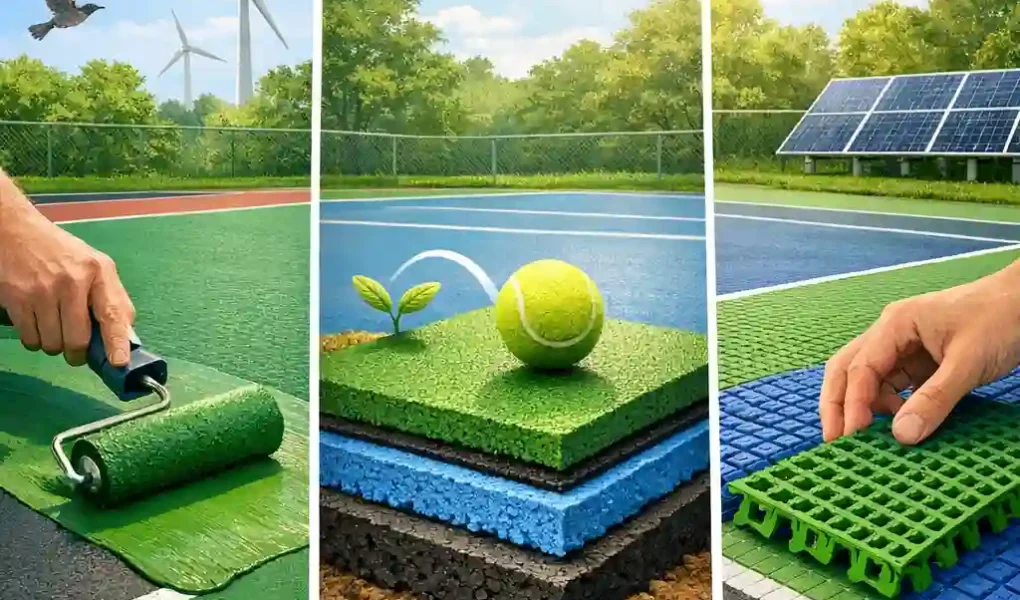
Cushion builds stack several flexible layers that suspend fine rubber granules within acrylic binder, or they install a prefabricated shock pad under the color coats. The result is a court that feels softer underfoot and reduces joint impact while preserving the ball speed and spin players expect. These systems use more total material than a hard acrylic overlay, but they can reduce noise, ease player fatigue, and sometimes last longer between major rehab if maintained. Specify encapsulated EPDM or well-screened SBR granules, and verify that the top color coats fully lock in the cushion layers to minimize particle shedding.
Consider a townhouse HOA adding pickleball lines to a faded tennis court where neighbors complain about noise and players complain about hard landings. A thin cushioned acrylic stack with mid-tone pigments can soften footfall sound and player impact while keeping VOCs low. The trade-off is a higher upfront material footprint and a slightly longer weather window for proper cure. Avoid harsh degreasers or solvent-heavy cleaners that can swell cushion layers; instead, use soft brooms, a leaf blower for dry debris, and gentle rinses to protect the elastic binder and preserve surface uniformity.
Modular Polypropylene Tiles: Replaceable Surface, Different Play Feel
Interlocking polypropylene tiles create a floating sport surface above a concrete or asphalt slab. Perforations let water run through to the base, and damaged tiles can be swapped individually. For projects on cracked or uneven slabs that are not ready for full reconstruction, tiles can bridge minor defects and keep a facility open with less downtime. The plastic is often recyclable at end of life if local streams accept the resin. Installers must honor expansion gaps around the perimeter and choose tile colors thoughtfully; darker tiles absorb more heat and can become slick when hot if traction textures wear.
Tiles introduce distinct trade-offs. Ball bounce and spin differ from acrylic over asphalt, and the tile-to-tile click amplifies footfall noise. Thermal movement on hot days demands correct spacing and anchoring, or buckling can occur at mid court. Debris that settles beneath the grid can trap moisture, so plan seasonal lift and clean cycles or incorporate edge access to vacuum silt. A school using a courtyard with an aging, cracked slab may adopt tiles to avoid demolition during the school year, then schedule a base repair and reinstall during summer. This keeps the playable surface in service while controlling waste.
Permeable Bases and Drainage Layers That Cut Runoff
Surface materials get most of the attention, but stormwater behavior starts under the court. Open graded aggregate bases, permeable asphalt, slit drains, and perimeter French drains reduce runoff that can carry pigment fines into gutters and ponds. On a concrete slab, sawed relief cuts and weep paths toward drain basins can prevent ponding under tiles or prolonged puddles beneath acrylic coatings. If your fieldhouse downspouts dump near the baselines, redirect them before resurfacing, or standing water will stain, promote algae, and shorten the life of color coats and line paint.
A common mistake is to apply fresh color coats to a surface that still has birdbaths or low spots. Those puddles concentrate detergent and UV, which weakens the binder and wears traction aggregates prematurely. Before choosing a material, run a simple flood test with a hose and identify depressions using a long straightedge and chalk. Fill them with a compatible acrylic patch or a leveling binder that your coating manufacturer endorses. In rainy climates, adding a shallow trench drain along the fence line and grading shoulders away from the court can extend the interval before your next major resurface.
Planning Moves That Reduce Waste and Extend Service Life
Good preparation keeps a green surface green. Route and seal structural cracks with acrylic crack fillers reinforced by polyester fabric where movement is expected, rather than masking with color coats that will split again. Select sand gradations that meet slip specs without overloading the topcoats. Use line paint made for sport surfaces so adhesion and gloss suit ball visibility. Schedule work during a warm, dry stretch with steady airflow to support uniform cure. If temperatures swing widely, plan shorter daily sections to reduce cold joints. Avoid applying solvent-based line paint over fresh waterborne coatings, which can lift or wrinkle.
Set a maintenance calendar the day you choose materials. Weekly, use a soft-bristled broom or blower to remove grit that scours color coats. Monthly, rinse with low-pressure water and a neutral cleaner to lift pollen and oils. After storms, clear organic matter promptly to prevent tannin stains and slick biofilm. In winter regions, use a foam- or rubber-edged snow tool rather than metal. Inspect cracks, baselines, and gates annually and log repairs, products, and weather during any work so future crews know the surface history. Recoat when traction readings drop, when embedded sand shows through, or when the uniform color fades, reliable signals that the binder in the wear layer has thinned.
Choosing an environmentally preferable court resurface is not about chasing a single label. It is about aligning materials and methods with the realities of your site. Low-VOC acrylic overlays shine on sound bases and allow cool-color pigments. Cushioned systems trade a larger material stack for impact reduction and quieter play. Tiles keep facilities open over imperfect slabs but change acoustics and ball response. Across all options, drainage fixes and measured maintenance protect the surface and reduce waste more than any one product claim. Start with your constraints, document the base condition, and match a system that manages heat, runoff, and durability together. That plan will perform better, last longer, and have a smaller footprint.