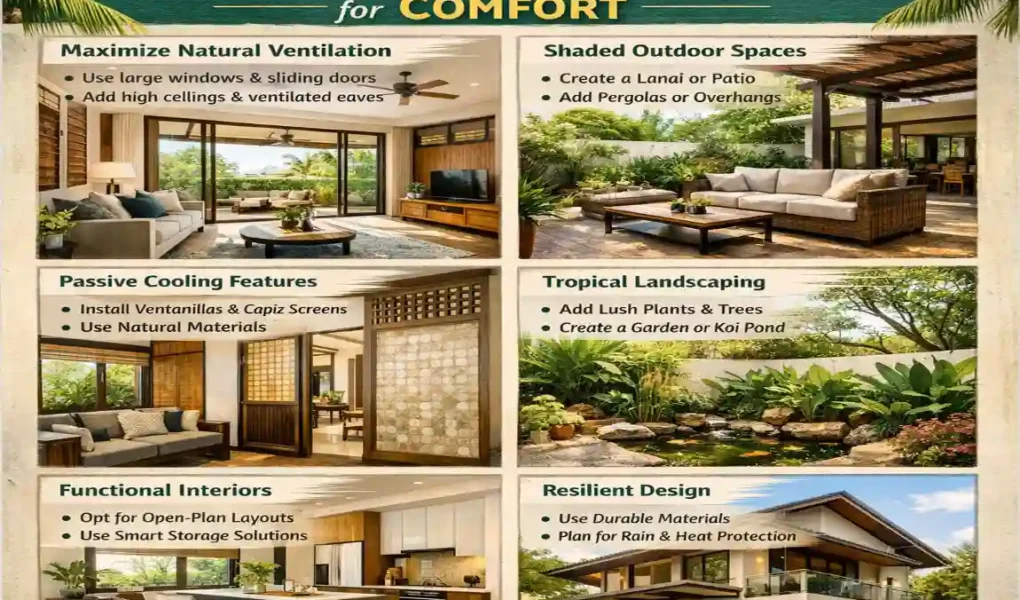
If you are planning a home in the Philippines, comfort should always come first. A beautiful house is nice, but a comfortable home is what truly supports daily life. That means a space that stays cool, feels open, works well for your family, and still looks modern without losing its Filipino soul.
You do not need a luxury budget to create a home that feels calm, fresh, and welcoming. You only need smart planning and a clear focus on what your family really needs.
What Makes Modern Filipino Homes Comfortable? 

Modern Filipino homes are not just about clean lines or trendy finishes. They are about creating a space that fits real Filipino living. That means a home should handle heat, rain, guests, family gatherings, and everyday routines with ease.
Comfort starts with climate.
The Philippines is warm, humid, and often rainy. As a result, comfort is closely tied to airflow, shade, and smart material choices. A home can look modern, but if it traps heat or feels damp, it will never feel truly good to live in.
That is why modern Filipino homes often use wide openings, light colors, protective roofs, and layouts that allow air to move freely. These are not just design choices. They are comfort choices.
Family life shapes the space.
Filipino homes are often active homes. People cook often, gather in shared spaces, host visitors, and sometimes live with extended family. A comfortable home should support that kind of life without feeling crowded.
So instead of designing for looks alone, think about how the home will be used every day. Where will people sit? Where will shoes go? Where will the kids study? Where will wet umbrellas and muddy sandals be placed after rain?
These questions matter more than you think.
Style should feel lived-in, not staged.
A modern Filipino home should feel warm, not cold. It should feel polished yet personal. That is the balance many homeowners want today. You want a home that looks current, but also feels familiar and inviting.
The best homes are often the ones that combine simple design, useful spaces, and a few meaningful Filipino touches. That is where comfort and identity meet.
Start with the Philippine Climate
If you want a comfortable home in the Philippines, the climate must guide your decisions from the start. This is one of the biggest mistakes many homeowners make. They choose colors, finishes, and layouts before thinking about heat and humidity. That leads to rooms that look nice but feel uncomfortable.
Bring in shade and airflow.
Shade is one of your best tools. Sunlight is good, but too much direct heat makes rooms hot and tiring. Use roof overhangs, awnings, shaded windows, covered porches, and planted areas to reduce heat gain.
Airflow is just as important. A home that breathes well feels easier to live in. Cross-ventilation, or letting air move from one side of the house to the other, can make a big difference. This is especially useful in living rooms, bedrooms, kitchens, and hallways.
If you are building a new home, think about how windows and doors line up. If you are renovating, look for ways to improve natural air movement without making the house feel exposed.
Use roof and window choices wisely.
In a hot climate, the roof matters more than many people realize. A poorly designed roof can turn the whole upper part of the house into a heat trap. On the other hand, a good roof system can help keep interiors cooler and more stable.
Windows also matter. Bigger is not always better if the windows face direct afternoon sun. Sometimes, the smarter solution is well-placed openings, shaded glass, or window treatments that soften heat while still letting in daylight.
If you live in a busy neighborhood, you may also want windows that balance airflow with privacy. That is where louvers, screens, and frosted sections can help.
Plan for rain, humidity, and seasonal changes
Comfort in the Philippines is not only about heat. It is also about rain, moisture, and changing weather. Your home should be ready for wet shoes, damp walls, muddy entryways, and strong storms.
This is why covered outdoor areas, proper drainage, and moisture-resistant finishes are so important. A comfortable home should feel safe and usable even when the weather is not ideal.
A few climate-friendly priorities to keep in mind
- Choose materials that resist heat and moisture
- Make ventilation part of the layout
- Use shade to reduce direct sun
- Keep entry areas practical during rain
- Design for easy cleaning and maintenance
When your home works with the climate, daily life becomes much easier.
Plan a Layout That Feels Open but Practical
A lot of people think comfort means having more space. That is not always true. A smaller home can feel more comfortable than a bigger one if the layout is smarter.
Keep shared spaces connected.
In many modern Filipino homes, the living room, dining area, and kitchen are connected or partially open to one another. This is a good approach because it keeps the house feeling open and social. Family members can talk to each other while doing different tasks, and the home feels less boxed in.
That said, open plan does not mean everything must be completely exposed. You still need some separation from noise, smells, and privacy concerns. A partial divider, sliding door, or change in flooring can help define each area without closing it off.
The goal is to make the space feel connected, not chaotic.
Create private zones for rest and focus.
Every comfortable home needs quiet zones. Bedrooms should feel restful. A study nook should feel focused. Even if the house is open in the shared areas, the private rooms must still give people a sense of retreat.
This is especially important if your home has children, older parents, or people who work from home. When everyone is trying to do different things at once, privacy becomes a form of comfort.
Try to place bedrooms away from heavy-traffic areas, if possible. If that is not possible, use design tools like thicker doors, rugs, curtains, and smart furniture placement to soften sound and create calm.
Make the kitchen and dining area easy to use
In many Filipino households, the kitchen is one of the busiest places in the home. It is where meals are prepared, conversations happen, and daily routines often begin and end. A comfortable kitchen should feel easy to move around in.
Think about where food, utensils, appliances, and trash will go. Make sure there is enough counter space. Keep the path between the sink, stove, and fridge simple. If the dining area is nearby, the flow should feel natural and smooth.
When the kitchen is practical, the whole home feels more organized.
Think about movement, not just rooms.
A well-designed house is not only about the rooms themselves. It is also about how people move through the space. Are the hallways too narrow? Do doors collide? Is there enough room to carry groceries, laundry, or luggage without stress?
Comfort often comes from these quiet details. If movement is easy, the whole house feels more relaxed.
Choose Materials That Stay Cool and Are Easy to Maintain
The materials you choose can shape the comfort of your home every single day. Some materials look stylish but become hot, slippery, or hard to clean. Others may feel less fancy at first, but are much better for real living.
Floors, walls, and roofing matter most
Flooring should feel pleasant underfoot and easy to clean. In the Philippines, many homeowners prefer durable, low-maintenancelow-maintenance, and comfortable materials for warm weather. The right choice depends on budget and style, but the key is to avoid surfaces that are too delicate for daily family life.
Walls should also be chosen with care. Light-colored walls can help a space feel cooler and brighter. Durable finishes make cleaning easier, especially in homes with children or pets.
Roofing should be treated as a major comfort feature, not just a structural necessity. A roof that handles heat and rain well will make the whole house feel more livable.
Finishes that age well are often the best choice.
Modern homes sometimes fall into the trap of using finishes that look great in photos but wear out quickly in real use. That is not a good trade.
A better approach is to choose finishes that age gracefully. Surfaces that can handle dust, humidity, foot traffic, and frequent cleaning will save time and stress later.
This matters because comfort is not only about how a home looks on day one. It is also about how easily the home stays beautiful after years of use.
Low maintenance is real comfort.
A home that needs constant fixing can become exhausting. Every time something stains, peels, rusts, or cracks, your peace of mind goes down.
That is why low-maintenance materials are a form of comfort. They reduce daily stress and free up your time. This is especially valuable in busy households where people already have a lot to manage.
A simple rule helps here: if a material looks perfect but seems hard to maintain, think carefully before choosing it.
Let Natural Light and Ventilation Do the Heavy Lifting
One of the best things you can do for a modern Filipino home is let nature enhance comfort. Natural light and ventilation can make a house feel fresher, more spacious, and more welcoming.
Use daylight without overheating the house.
Natural light makes interiors brighter and more pleasant. It reduces the need for artificial lighting during the day and creates a more open feeling in rooms. But too much direct sunlight can raise indoor temperatures, especially in the afternoon.
The solution is not to block all daylight. Instead, use it wisely. Place windows where they can bring in soft light, and use shade to reduce harsh heat. Skylights, transoms, and high windows can also bring in brightness while helping air move upward and out.
Place windows and openings with purpose.
Window placement should support both comfort and privacy. If a room gets strong sun at certain times of the day, orient the openings to reduce that impact. If a room feels stale, add a way for air to pass through more freely.
In many modern Filipino homes, the best designs are not the most dramatic ones. They are the ones who make the indoor environment feel naturally balanced.
Use screens, vents, and doors intelligently.
Sometimes homeowners worry that ventilation means giving up privacy or security. It does not have to. You can use screened openings, vent blocks, louvers, and layered doors to keep air circulating while still protecting the home.
These details may seem small, but they create a big difference in everyday comfort. A house that can breathe will always feel better than a house that traps heat and moisture.
Bring in Filipino Character Without Losing the Modern Feel
A modern Filipino home should feel rooted, not generic. It should reflect local culture. You do not need to copy old bahay na bato houses exactly, nor fill the house with decorative items to make it feel Filipino.
Instead, focus on simple, meaningful touches.
Use local textures and natural materials.
Wood, bamboo, rattan, capiz-inspired details, stone, and woven textures can all bring warmth into a modern space. These materials or material-inspired finishes add softness to a home that might otherwise feel too plain.
The key is balance. Too many textures can make a room feel busy. A few well-chosen elements can make it feel grounded and inviting.
Add familiar patterns and details.
Filipino design often feels comforting because it includes details that people recognize. That could be a patterned screen, a carved accent, a woven lamp, or a locally inspired headboard. These small touches help the house feel personal.
You do not need to be loud or overly decorative. In fact, modern Filipino homes usually look best when the cultural details are subtle and well placed.
Keep the overall look clean and simple.
Modern design works best when the structure stays simple. Clean lines, uncluttered rooms, and thoughtful proportions help the home feel calm. Then, Filipino touches can bring warmth without making the space feel crowded.
This is the sweet spot many homeowners want: modern yet familiar; stylish yet warm.
Design Each Room for Real Life
A good home is built room by room. Each space should support daily habits, not just look polished in photos. When you think this way, your home becomes more useful and more enjoyable.
Living room: make it welcoming and easy to use
The living room is often where family life and guest life meet. It should feel open, flexible, and comfortable. Choose seating that works for both relaxed family time and casual visitors. Leave enough space to move around without bumping into furniture.
Natural light helps the room feel bigger, but add curtains or blinds to control glare and privacy. A rug can soften the space and make it feel more finished.
Most importantly, keep the room usable. A beautiful living room that nobody wants to sit in is not truly comfortable.
Kitchen and dining: design for rhythm and flow
In many Filipino homes, the kitchen is active from morning until night. It needs to support cooking, serving, storage, and cleanup without feeling cramped.
Put the most-used items where you can reach them easily. Keep the dining area close enough for convenience but not so tight that chairs and people get in each other’s way. If your family often shares meals, make the dining area comfortable enough for long conversations, not just quick eating.
Bedrooms: build calm and rest
Bedrooms should feel quiet and personal. They do not need to be overly decorated. In fact, simpler bedrooms often feel more restful.
Use soft lighting, practical storage, and colors that create a peaceful atmosphere. If the bedroom is shared, make sure each person has enough personal space. If it is a main bedroom, prioritize comfort over decoration.
A bedroom should help people slow down.
Bathrooms: keep them bright and easy to clean
Bathrooms should feel fresh, safe, and easy to maintain. Good ventilation is essential. So is lighting. A bathroom that is too dim or too cramped can feel uncomfortable very quickly.
Choose surfaces that are easy to clean and not too slippery. Keep storage simple. The goal is to make the bathroom work well during rushed mornings and quiet evenings alike.
Outdoor spaces: treat them as part of the home
In the Philippines, outdoor spaces can be very useful when well-designed. A covered porch, small garden, laundry area, or patio can add comfort without requiring a huge footprint.
These areas give the house more breathing room. They can also support family routines, especially in homes where people need space for drying clothes, receiving guests, or just enjoying fresh air.
Smart Storage and Flexible Spaces Make Life Easier
A cluttered home often feels less comfortable, even if it is large. That is why storage matters so much in modern Filipino homes.
Hide clutter in simple ways.
Everyday life comes with a lot of items: shoes, school bags, cleaning tools, groceries, cables, toys, and more. If these things have nowhere to go, the house quickly starts to feel heavy.
Built-in cabinets, benches with storage, overhead shelves, and hidden utility spaces can help. When clutter has a place, the whole home feels calmer.
Use furniture that can do more than one job.
Flexible furniture is useful, especially in homes with limited space. A dining table can also serve as a study area. A bench can store items. A bed frame can include drawers. A divider can create privacy without blocking light.
This approach supports comfort because it makes the home easier to adapt as needs change.
Plan for the future, not just today.
Families grow. Children get older. Work habits change. Older parents may move in. A truly comfortable modern Filipino home should be able to adjust over time.
That means thinking ahead when you plan storage, room sizes, and layout. The best homes are not only beautiful now. They are also ready for the next stage of family life.
Traditional vs Modern Filipino Home Design
Many homeowners wonder whether to choose a traditional or modern look. The truth is, you do not have to pick one side completely. The best homes often borrow from both.
AspectTraditional Filipino DesignModern Filipino DesignWhy Comfort Improves
Layout: Often compartmentalized and formal. More open and flexible. Open flow can improve movement and social use.
Materials Wood, bamboo, capiz, and natural textures Concrete, steel, glass, engineered finishes, mixed materials Modern materials can improve durability and maintenance
Ventilation Large windows, raised floors, and airy spaces Planned ventilation, shaded openings, and improved airflow Better air movement reduces heat and stuffiness.
Style Ornamental, detailed, and warm Clean, simple, and minimal Simpler spaces are easier to maintain and feel calmer
Connection to culture: Strong use of heritage features; Subtle cultural accents and local textures; Comfort comes from familiarity without clutter.
Maintenance can be more delicate depending on the materials. It is often easier to clean and maintain. Lower upkeep creates less stress.
This table shows an important idea: modern does not have to mean cold, and traditional does not have to mean old-fashioned. A comfortable home can borrow the best of both.
Common Mistakes to Avoid When Designing Modern Filipino Homes
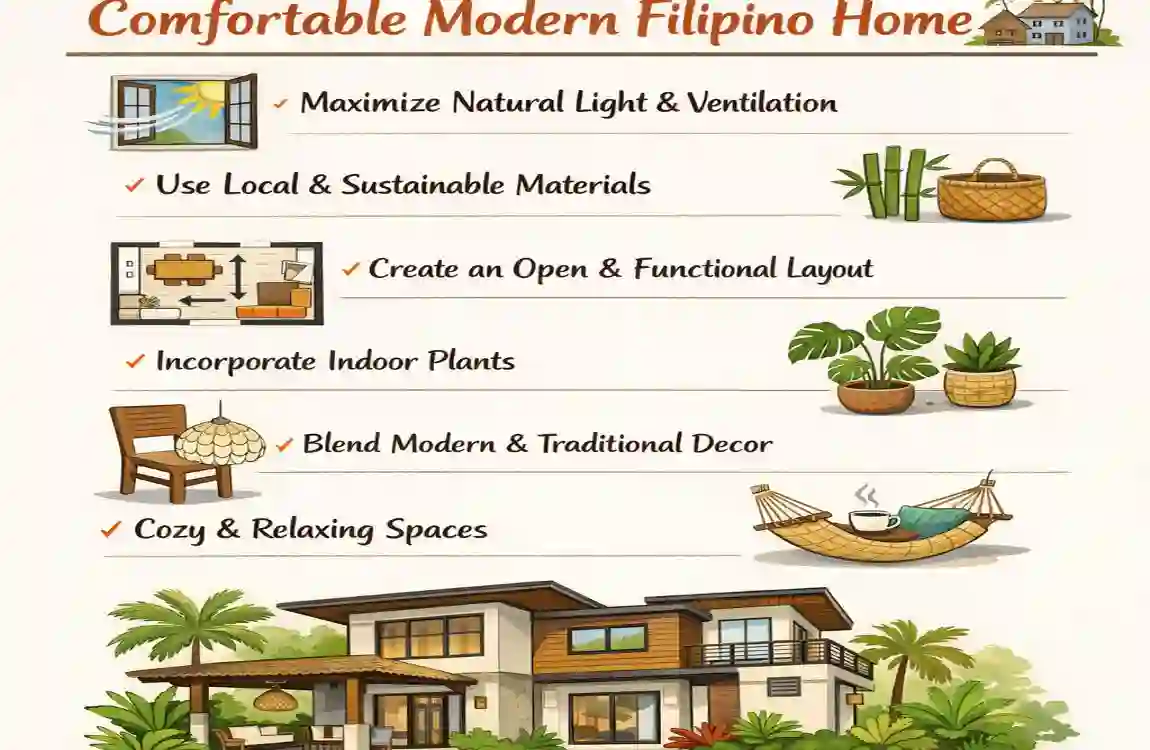
Even a well-funded project can go wrong if the focus is in the wrong place. Here are some mistakes to watch out for.
Putting style above comfort
A house can look impressive online and still feel uncomfortable in real life. If a design choice makes cleaning harder, increases heat, or blocks movement, it is probably not worth it.
Always ask: Will this make daily life easier or harder?
Forgetting about ventilation
Some homes are sealed too tightly because the design looks cleaner that way. But a home that cannot breathe can feel hot, stale, and humid. In the Philippine climate, ventilation is not optional. It is essential.
Choosing materials only because they look expensive
A shiny surface may impress at first, but if it scratches easily or gets too hot, you will regret it. Choose materials based on performance, maintenance, and comfort, not just appearance.
Ignoring the way your family actually lives
A home should fit your routines. If your family loves cooking, make the kitchen a priority. If guests visit often, make the entry and living area welcoming. If people work or study from home, create quiet corners.
Design around real life, not imaginary life.
Not planning for change.
A comfortable home should stay comfortable over time. If your needs are likely to change, design for flexibility now. It will save you stress later.
FAQs About Modern Filipino Homes
What makes a home “modern Filipino”?
A modern Filipino home combines contemporary design with features that suit Filipino life and climate. It often includes open spaces, natural ventilation, practical layouts, and warm local touches.
How can I make a house feel cooler in the Philippines?
Focus on shade, airflow, and light-colored finishes. Use windows and openings that support ventilation, and choose materials that do not trap too much heat.
Do modern Filipino homes need to be expensive?
No. Comfort does not always require a huge budget. Smart layout planning, simple materials, and good ventilation can make a big difference even in a modest home.
Can I mix traditional Filipino style with modern design?
Yes, and this often works very well. You can mix modern layouts with natural textures, local patterns, or heritage-inspired details to create a balanced look.
What is the most important part of a comfortable Filipino home?
There is no single answer, but ventilation, layout, and low-maintenance materials are often the biggest factors in daily comfort.
Are open-plan layouts good for Filipino homes?
They can be very good, especially for family interaction and airflow. But they should still include some privacy and separation where needed.
What colors work best for modern Filipino homes?
Light and neutral colors often work well because they help rooms feel brighter and cooler. You can add warmth with wood tones and Filipino-inspired accents.
How do I keep a modern home from feeling too cold or plain?
Add texture, natural materials, warm lighting, and personal details. Small cultural touches can make the space feel more human and inviting.