
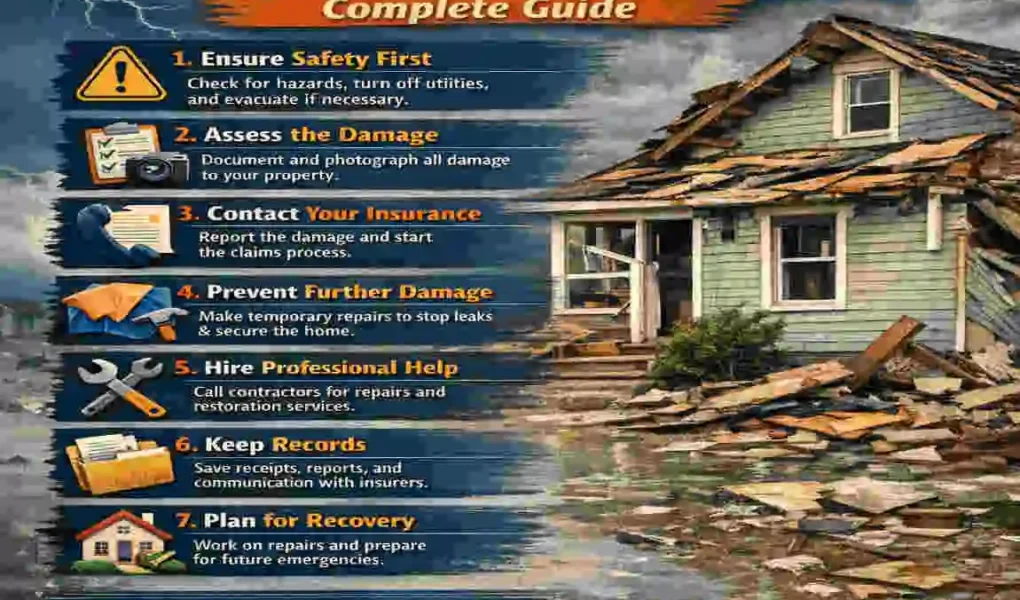
A storm can leave your home in a difficult state. You may see broken windows, roof leaks, flooded rooms, or fallen debris everywhere. It can feel overwhelming at first, but quick and calm action can make a big difference.
The most important thing is to stay safe, document the damage, and begin the repair process properly. If you follow the right steps, you can protect your home, reduce repair costs, and make the recovery process much easier for your family.
Check Safety Before Entering Your Home
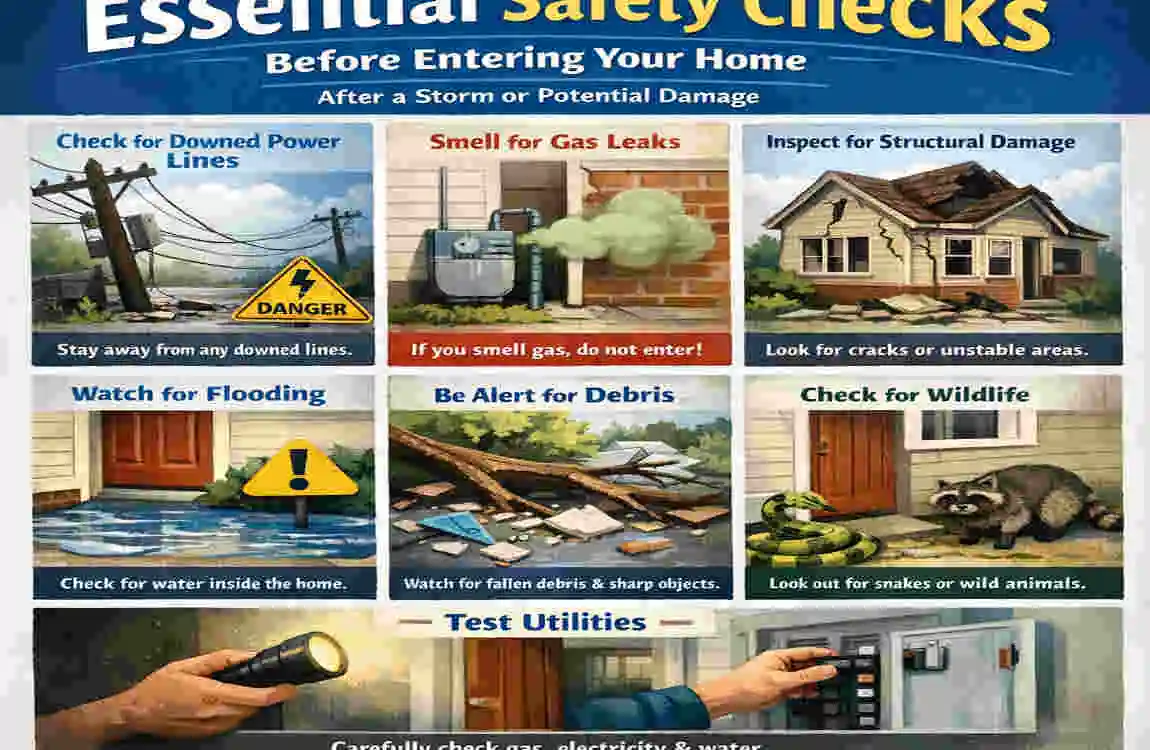
Put Safety First
Before you step inside, take a careful look around the property. A storm can create hidden dangers that are easy to miss at first glance.
Watch for fallen power lines, gas smells, broken glass, and standing water near electrical areas. Also look for signs of structural damage, like cracked walls, tilted roofs, or loose debris.
Do Not Rush Inside
If anything looks unsafe, stay out and call the right emergency service or utility provider. It is always better to wait than to take a risk.
Even if the outside looks fine, the inside may still be dangerous. Storm damage can affect wiring, walls, and floors in ways you cannot see right away.
Inspect and Document the Damage
Take Photos and Videos
Once the home is safe, walk through carefully and record everything. Use your phone to take clear photos and short videos of all damaged areas.
Focus on roof damage, water stains, broken windows, flooded floors, damaged furniture, and personal items. This record will help later when you file an insurance claim.
Make a Simple Damage List
Write down what was damaged and where it happened. A clear list helps you stay organised and makes the claims process easier.
You can note things like:
- Roof leaks or missing shingles
- Broken glass or doors
- Flooded rooms
- Damaged walls or ceilings
- Wet carpets or furniture
Prevent Further Damage
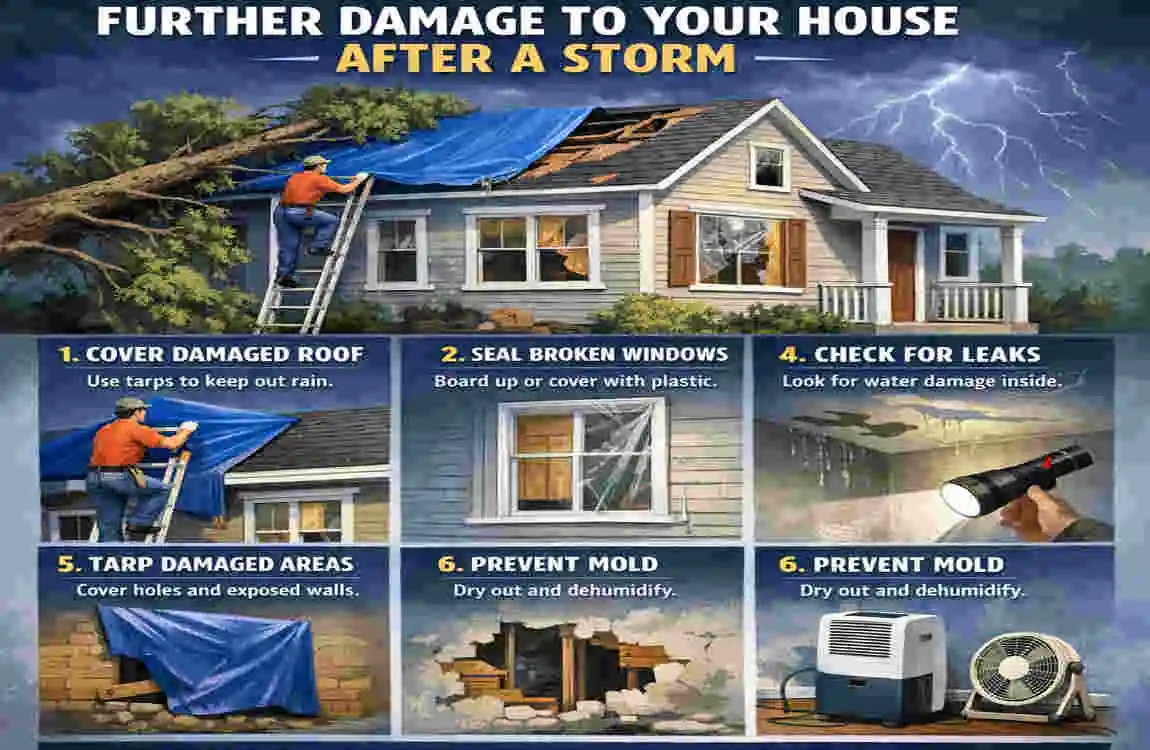
Use Temporary Protection
Storm damage can worsen quickly if you leave it exposed. Temporary steps can protect your home until full repairs begin.
You may need to:
- Cover broken windows with plastic or boards
- Place a tarp over roof damage
- Move valuables away from wet areas
- Remove standing water if it is safe
- Dry out damp spaces as quickly as possible
Avoid Permanent Repairs Too Soon
Try not to start major repairs right away if your insurance company has not yet seen the damage. Temporary fixes are usually fine, but permanent changes can make claims harder to process.
Contact Your Insurance Company
Report the Damage Quickly
Call your homeowner’s insurance provider as soon as possible. The sooner you report the storm damage, the sooner the claim process can begin.
Be ready to share your photos, videos, and damage list. If you already made temporary repairs, keep the receipts too.
Keep Good Records
Save every message, phone call note, and payment related to the storm. This helps you stay organised and provides proof if questions come up later.
Hire Professional Repair Services
Bring in the Right Experts
Storm damage often needs more than one type of repair. Depending on the problem, you may need:
- Roofing contractors for leaks and roof damage
- Electricians for wiring problems
- Water damage experts for flooding
- Structural contractors for major home repairs
Choose Contractors Carefully
Before hiring anyone, check their license, insurance, and reviews. Ask for a written estimate so you understand the cost and work involved.
A trusted professional can save you time, stress, and costly mistakes.
Look for Hidden Storm Damage
Not All Damage Is Easy to See
Some problems stay hidden after a storm. A roof may look okay from outside, but water may already be trapped inside the walls or attic.
Hidden damage can include:
- Weak roof sections
- Mold growth
- Damaged insulation
- Foundation cracks
- Moisture behind walls
Get a Proper Inspection
If you are unsure, have a professional inspect the home. Finding hidden damage early can prevent much bigger repairs later.
Clean Up Safely After Storm Damage
Wear the Right Protection
Cleanup can be risky, especially with broken glass, wet surfaces, and debris. Wear gloves, strong shoes, a mask if needed, and safety glasses.
Keep Damaged Items Organised
Separate things you can save from things that need to be thrown away. Take photos before discarding anything, especially if you may need it for insurance.
This small step can help support your claim and keep the cleanup process clear.
Prepare Your Home for Future Storms
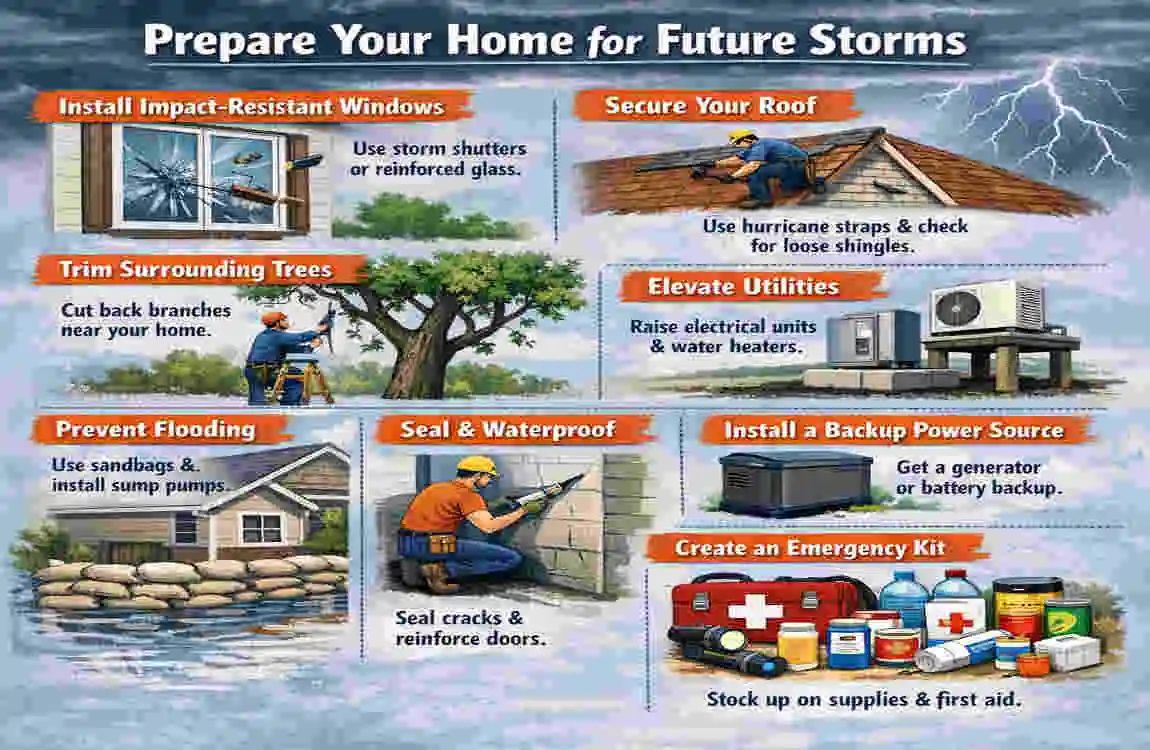
Make Your Home Stronger
Once repairs are done, consider how to prevent future damage. A few simple improvements can better prepare your home for the next storm.
Helpful steps include:
- Regular roof checks
- Cleaning gutters often
- Trimming weak tree branches
- Improving drainage
- Securing outdoor items before bad weather
- Considering storm-resistant windows
Storm Prep Step Why It Helps
Roof inspections Finds weak spots early
Gutter cleaning Helps water drain properly
Tree trimming Reduces falling branch damage
Better drainage Lowers flood risk
Outdoor secure storage Prevents flying debris
Frequently Asked Questions
What should I do immediately after a storm damages my house?
First, make sure everyone is safe. Then check for hazards, document the damage, make temporary repairs if needed, and contact your insurance company.
Does homeowners insurance cover storm damage?
Many policies do cover storm damage, such as wind, hail, and fallen trees, but coverage depends on your specific plan.
Should I repair storm damage myself?
Small temporary fixes may be okay, but major repairs should be handled by professionals for safety and better results.
How long do I have to file a storm damage insurance claim?
Deadlines vary, so it is best to file as soon as possible after the storm.
| Step | What to Do | Why It Matters |
|---|---|---|
| Ensure Safety First | Check for injuries, avoid damaged areas, and turn off electricity or gas if needed. | Prevents accidents and further risks. |
| Inspect the Damage | Carefully check the roof, windows, siding, foundation, and interior areas for damage. | Helps understand repair needs and costs. |
| Take Photos & Videos | Document all visible damage before cleaning or repairs. | Provides proof for insurance claims. |
| Prevent Further Damage | Cover broken windows, place tarps over roof leaks, and remove standing water safely. | Reduces additional property damage. |
| Contact Your Insurance Company | Report the storm damage and provide photos, receipts, and repair details. | Starts the claims process quickly. |