
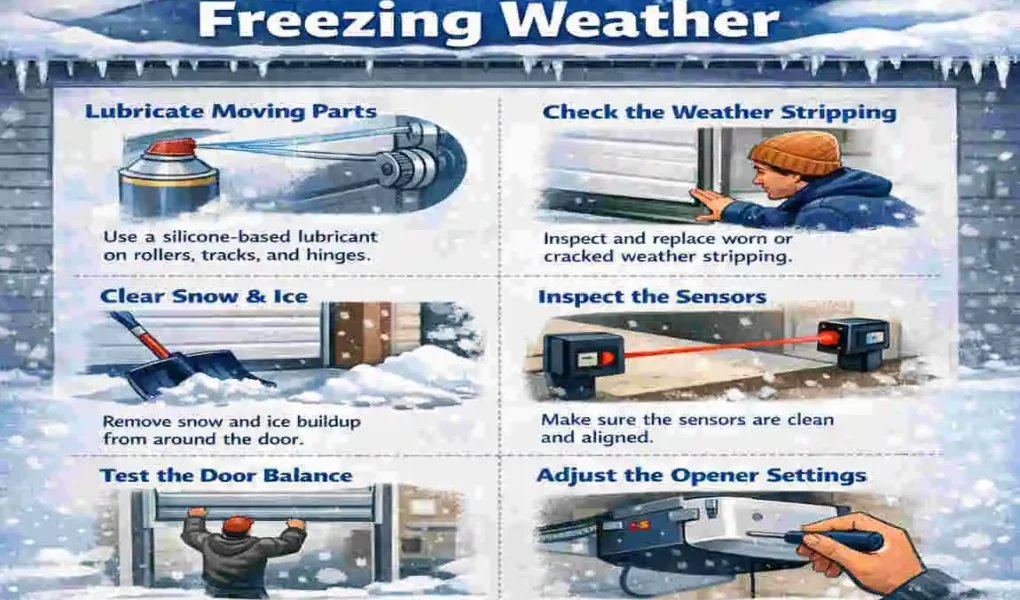
Cold weather can be rough on your garage door. When snow melts near the bottom of the door and then freezes again, the door can stick to the floor. That makes it hard to open, and forcing it can damage the opener, seals, or other parts.
Winter can also bring ice buildup, frozen weather stripping, extra strain on the motor, and moisture problems inside the garage. These issues often show up at the worst times, like when you are leaving for work or trying to pull your car into the garage.
That is why it helps to prepare early. Knowing how to keep the garage door from freezing to the floor can help protect your garage system and prevent costly repairs. With a few simple steps, you can keep the door moving smoothly all winter long.
Why Does a Garage Door Freeze to the Floor?
Ice and Moisture Buildup Under the Garage Door
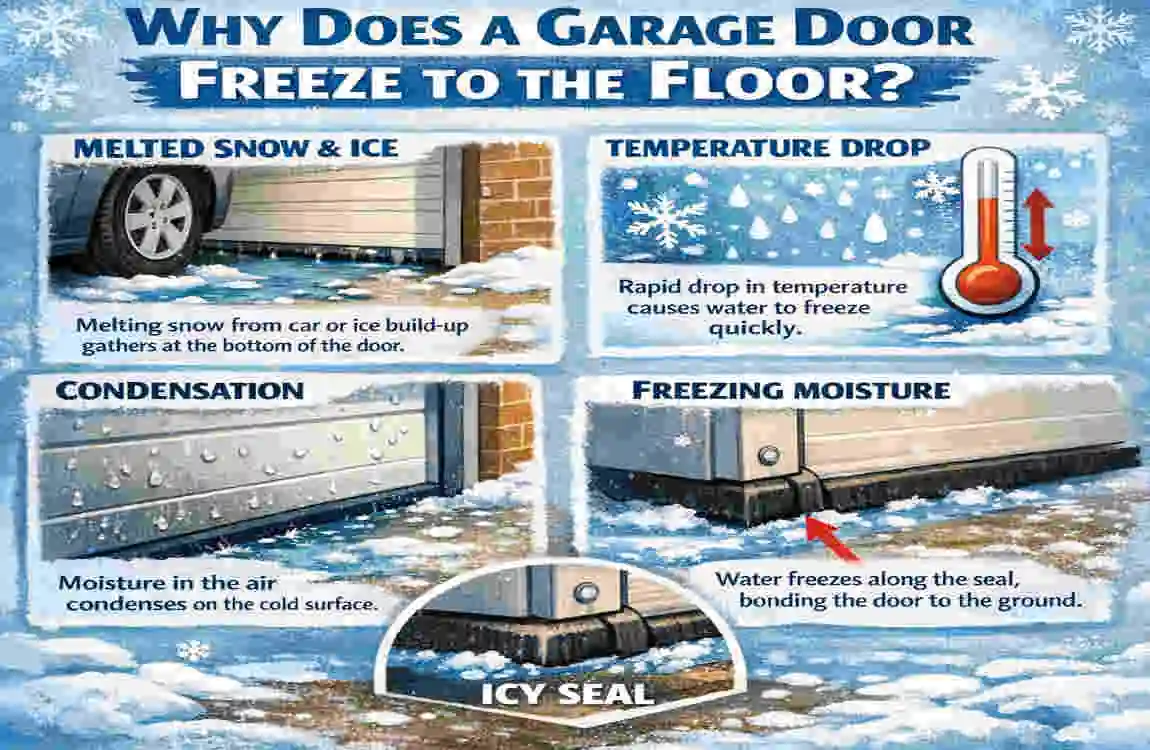
When snow, rain, or slush gets near the garage entrance, it can collect under the door. As temperatures drop, that water turns into ice and bonds the door to the floor.
Even a thin layer of ice can create a strong seal. That is why the door may feel stuck even if it looks only lightly frozen.
Poor Garage Door Sealing
A worn or cracked bottom seal can let in cold air and moisture. Once water gets inside, it can freeze right at the base of the door.
If the seal is damaged, the door loses one of its main defences against winter weather. This is one of the most common reasons garage doors freeze shut.
Temperature Changes During Winter
Winter weather often swings between cold and very cold, with wet periods in between. These changes cause melting and refreezing, which builds up ice over time.
Condensation inside the garage can also add moisture. That moisture may freeze along the floor, making the problem worse.
How to Keep Garage Door From Freezing to Floor
Keep the Garage Door Area Clean and Dry
The best first step is to keep the area around the door dry. After snowstorms, remove snow, slush, and standing water near the entrance.
A clean garage threshold helps stop ice from forming. It also reduces the chance of moisture getting trapped under the seal.
Simple winter habits help a lot:
- Shovel snow away from the garage after each storm
- Sweep out dirt and debris that can hold moisture
- Keep drainage areas clear so water does not pool near the door
- Avoid tracking in excess snow from vehicles or shoes
Apply a Weather-Resistant Garage Door Seal
The bottom seal is one of the most important parts of winter protection. It presses against the floor and helps block water, cold air, and snow.
If the seal is cracked, stiff, or falling apart, replace it before winter gets worse. A fresh seal can make a big difference in keeping the door from freezing to the floor.
BenefitExplanation
Blocks moisture Helps prevent ice from forming under the door
Reduces drafts Keeps the garage warmer and more stable
Protects door parts Lowers winter wear on the system
Use a Silicone-Based Lubricant on Moving Parts
Cold weather can make garage door parts stiff. That includes rollers, hinges, springs, and tracks.
A silicone-based lubricant works better in winter than heavy grease because it stays smoother in low temperatures. Apply it lightly to moving parts so the door opens and closes more easily.
Focus on these areas:
- Rollers
- Hinges
- Springs
- Tracks
Do not overdo it. A little goes a long way.
Improve Garage Door Insulation
Insulation helps keep the garage at a more stable temperature. When the space stays warmer, there is less chance of melting and refreezing at the door.
You can use foam panels, reflective insulation, or an insulated garage door. Even a small insulation upgrade can help reduce winter problems.
Main benefits of insulation:
- Reduces heat loss
- Limits big temperature swings
- Helps protect stored items and garage equipment
Winter Garage Door Maintenance Checklist
A simple checklist can help you stay ahead of problems before they become serious.
Maintenance Task How Often
Remove snow and ice buildup After storms
Inspect door seals Before winter
Lubricate moving parts Every few months
Check door balance Once per season
Test opener operation Monthly
Best Ways to Remove a Frozen Garage Door Safely
Do Not Force the Garage Door Open
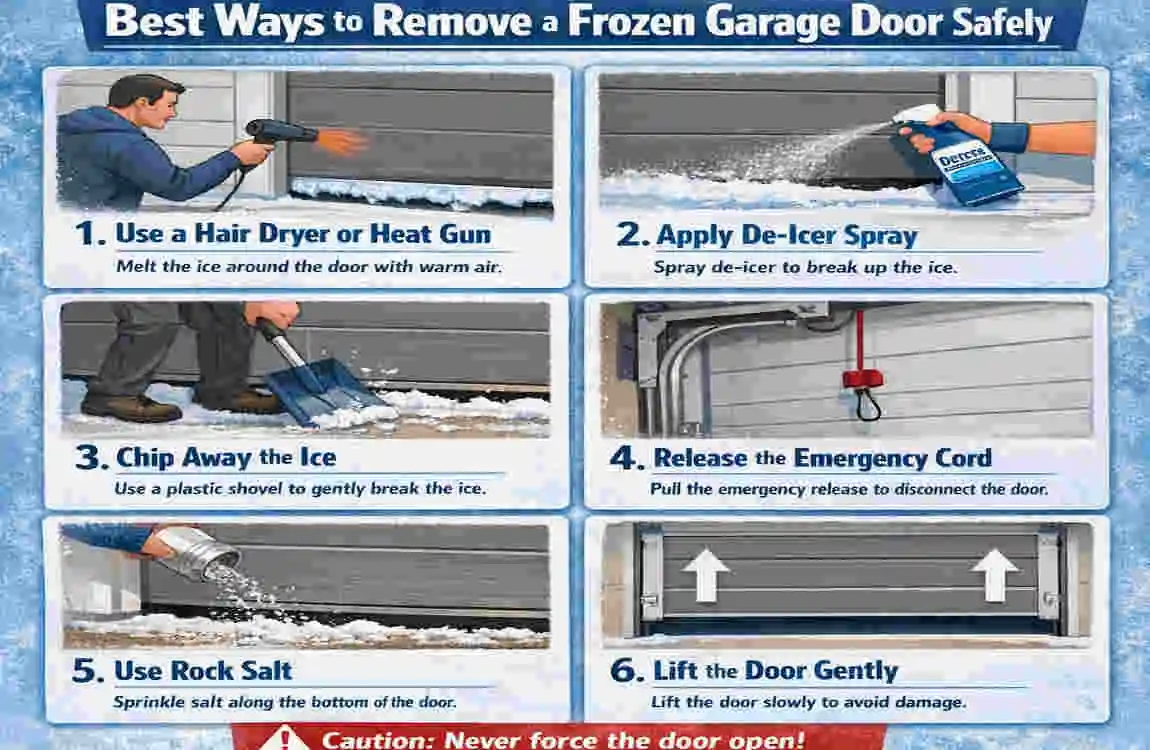
If the door feels stuck, do not yank it open. Forcing it can damage the opener, bend the tracks, strain the springs, or tear the bottom seal.
It is better to free the ice first than to create a bigger repair problem.
Break the Ice Layer Carefully
Use safe, gentle methods to loosen the door.
You can try:
- A plastic scraper to remove ice near the base
- Warm water in small amounts, if you are careful about refreezing
- Light tapping around frozen edges to loosen the bond
Be patient. Rushing usually causes more damage.
Use Garage Heat Carefully
A little heat can help, but safety matters. If you use a space heater or other heat source, keep it away from flammable materials and never leave it unattended.
The goal is to warm the area enough to melt the ice, not to create a fire risk.
Common Mistakes That Cause Garage Doors to Freeze
Ignoring Small Seal Damage
Even a tiny crack in the bottom seal can let in water. That water may freeze overnight, locking the door in place.
Small problems are easier and cheaper to fix early.
Using the Wrong Lubricant
Thick oils and heavy grease can stiffen in cold weather. That makes the door harder to move, not easier.
A winter-friendly silicone lubricant is usually the better choice.
Leaving Snow Against the Garage Door
If snow piles up against the door, it will melt and refreeze near the bottom. This can quickly create a frozen seal.
Keep snow pushed away from the door after each storm.
How to Prepare Your Garage Door Before Winter Arrives
Inspect the Garage Door Components
Before winter starts, take a quick look at the full system. Check the springs, cables, rollers, hinges, tracks, and weather seals.
If anything looks worn or loose, fix it early. Winter makes existing problems worse.
Test the Garage Door Opener
Make sure the opener works smoothly. Test the automatic reverse feature and replace weak batteries in remotes or keypads.
A well-tested opener is less likely to struggle in cold weather.
Schedule Professional Maintenance
If you notice broken parts, uneven movement, or loud noises, call a garage door professional. A trained technician can spot problems that are easy to miss.
That is especially helpful before deep winter sets in.
Additional Tips to Protect Your Garage Door in Freezing Weather
A few extra habits can make winter easier on your garage door:
- Keep snow removal tools nearby
- Avoid parking a vehicle with heavy snow buildup inside
- Improve ventilation to reduce condensation
- Keep the garage temperature as steady as possible
- Install a floor drain if your garage setup allows it
These small steps help reduce moisture and stop ice from building up.
Benefits of Preventing Garage Door Freezing Problems
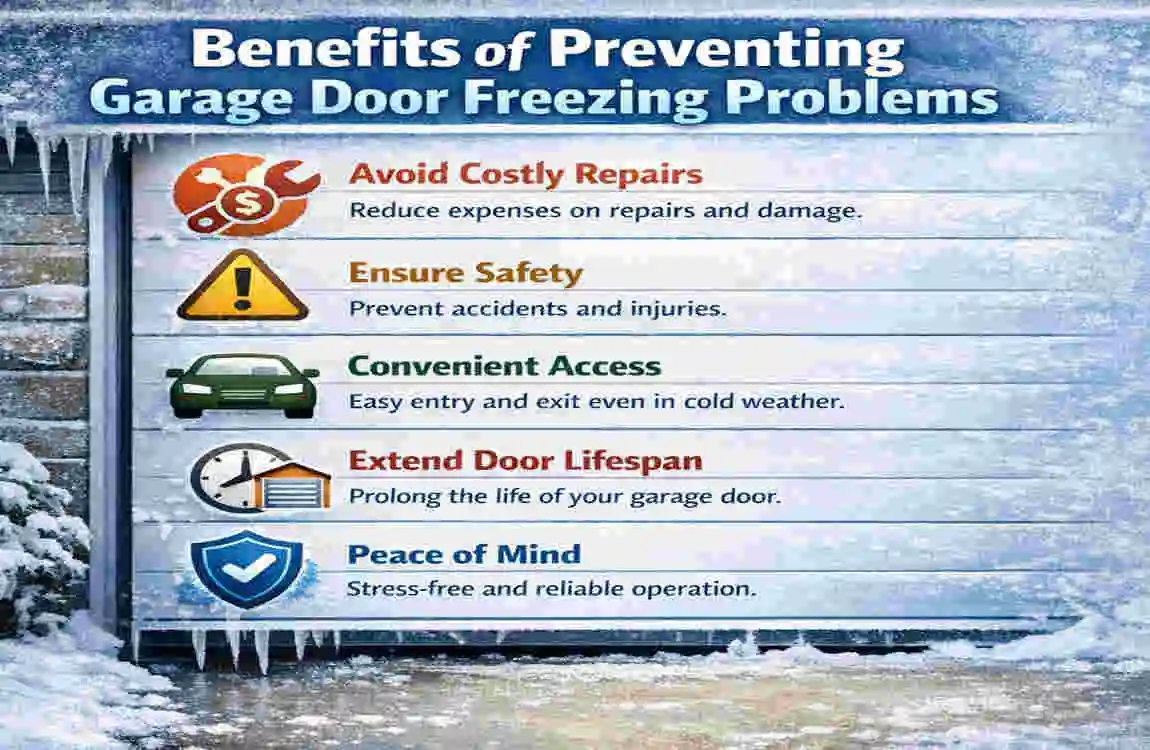
Taking care of the door before and during winter saves time and money. It also keeps your day running smoothly.
You can expect these benefits:
- Fewer repair bills
- Longer garage door life
- Better energy efficiency
- Easier access to your vehicle
- Better protection for stored items
When the door works well, winter feels much less stressful.
Frequently Asked Questions
Q: How do I keep my garage door from freezing to the floor?
Keep the area dry, remove snow regularly, replace damaged seals, and use good insulation to reduce moisture buildup.
Q: Can I use salt to stop my garage door from freezing?
Salt may melt ice, but too much can damage metal parts and concrete. Use it carefully.
Q: Why does my garage door stick during winter?
It usually sticks because of ice buildup, frozen seals, moisture, or poor maintenance.
Q: Should I use WD-40 on my garage door in winter?
Regular WD-40 is not the best long-term option. A silicone-based garage door lubricant is usually better in cold weather.
Q: How often should I maintain my garage door during winter?
Check it before winter and do quick inspections throughout the season.
| Tip | What to Do | Why It Helps |
|---|---|---|
| Lubricate Moving Parts | Apply cold-weather garage door lubricant to hinges, rollers, and springs. | Prevents parts from becoming stiff or noisy. |
| Keep the Door Seal Clean | Remove ice, dirt, and moisture from the bottom seal. | Stops the door from freezing to the ground. |
| Check Weather Stripping | Inspect and replace cracked or damaged seals. | Keeps cold air and moisture outside. |
| Clear Snow and Ice | Remove snow buildup around the garage door area. | Prevents damage and improves operation. |
| Avoid Force Opening | Do not pull a frozen door open aggressively. | Protects springs, cables, and the opener. |
| Test the Garage Opener | Check battery, sensors, and motor performance before winter. | Ensures reliable operation in cold temperatures. |
| Insulate the Garage | Add insulation to walls and the garage door. | Reduces freezing conditions inside the garage. |
| Drain Moisture Around Door | Keep the driveway and garage entrance dry. | Reduces ice formation near the door. |