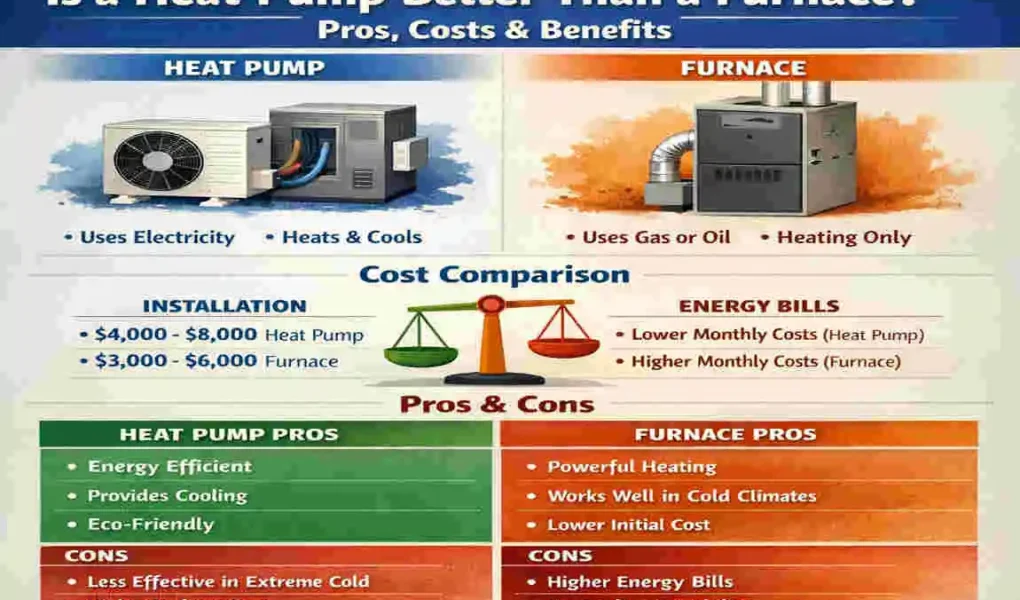
Choosing between a heat pump and a furnace is a big decision for any homeowner. Both can keep your home warm, but they work in different ways and fit different needs.
A heat pump is often seen as a modern, energy-saving choice because it can heat and cool your home. A furnace is often chosen for strong winter heating and simple performance. So, is a heat pump better than a furnace? The answer depends on your climate, your budget, and what you want from your system.
Heat Pump vs Furnace: How Do They Work?
Heat Pump
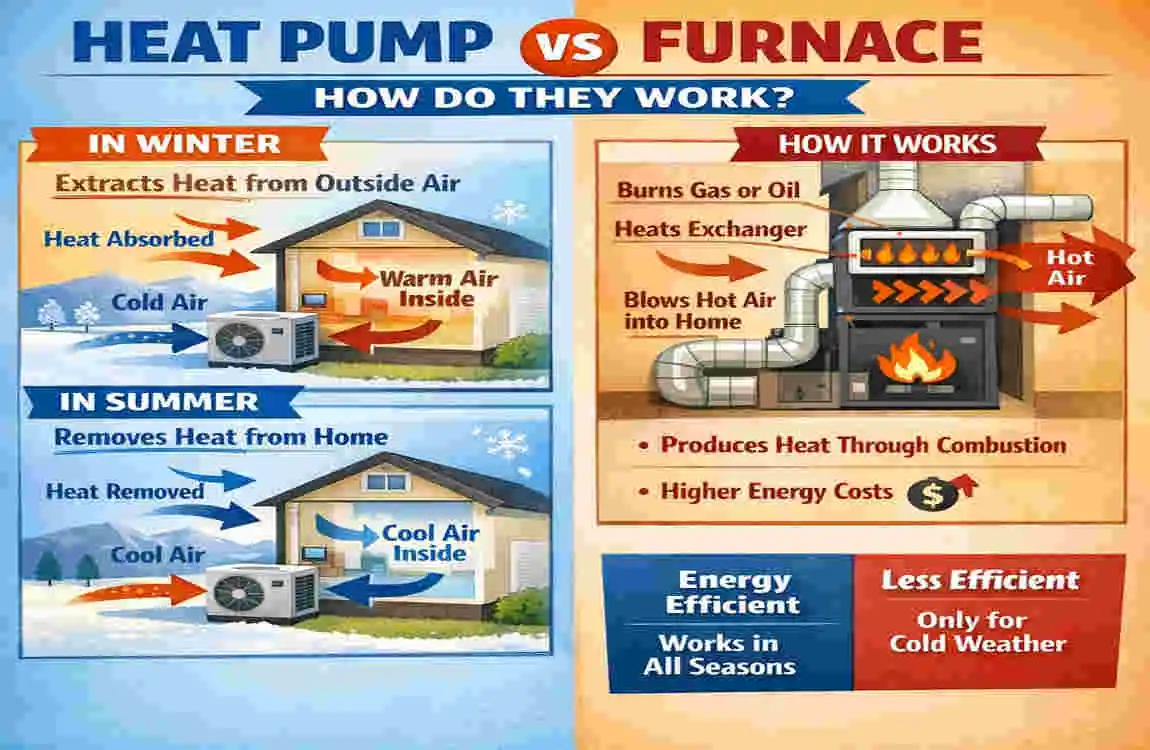
A heat pump does not create heat. Instead, it moves heat from one place to another. In winter, it pulls heat from outside air and brings it into your home. In summer, it works in reverse, removing heat from inside.
That means one system can handle both heating and cooling. For many homeowners, that is a big advantage.
Furnace
A furnace creates heat by burning natural gas or propane, or by using electricity. It then sends warm air through your duct system.
Furnaces are known for fast, powerful heating, especially in very cold weather.
FeatureHeat PumpFurnace
Heating method Moves heat Creates heat
Cooling ability Yes No
Energy source Electricity Gas, propane, or electricity
Best climate Mild to moderate Cold climates
Lifespan 10–15 years 15–20 years
Benefits of a Heat Pump
Higher Energy Efficiency
Heat pumps are very efficient because they transfer heat rather than generate it. This often uses less energy than a furnace.
That can help lower your monthly utility bills, especially if your winters are not too harsh.
Heating and Cooling in One System
A heat pump does the work of two systems. It heats your home in winter and cools it in summer.
This makes it a practical choice if you want one system for year-round comfort.
Lower Running Costs
Even if the upfront price is higher, a heat pump can cost less to run over time. That makes it attractive to homeowners who want to save on energy costs.
More Eco-Friendly
Because heat pumps use electricity and do not burn fuel directly, they can produce fewer emissions. If your home uses renewable electricity, the environmental benefit can be even better.
Benefits of a Furnace
Strong Cold-Weather Heating
A furnace is a solid choice for very cold areas. It can heat a home quickly and keep indoor temperatures steady.
If you live somewhere with harsh winters, this is a major advantage.
Lower Upfront Cost
Furnaces often cost less to install than heat pumps. That can matter if you want a system that fits a tighter budget.
Longer Lifespan
With proper care, furnaces often last longer than heat pumps. That can make them a dependable long-term option.
Heat Pump vs Furnace Cost Comparison
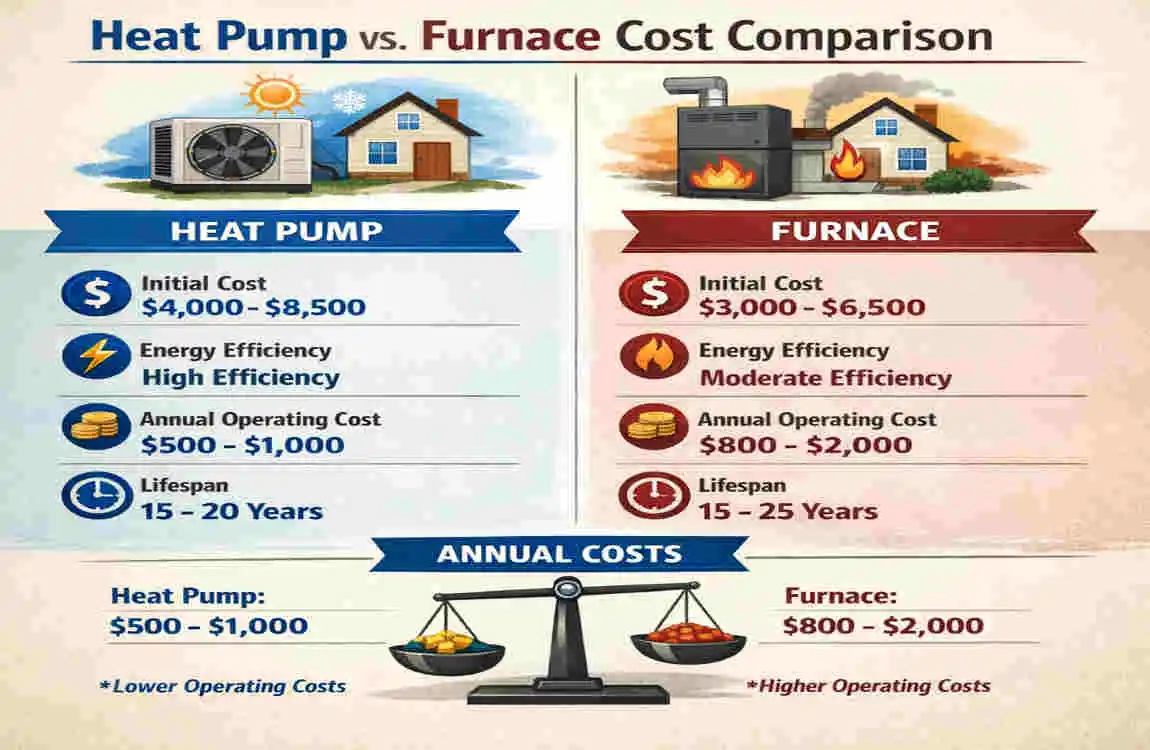
The right system also depends on cost. Installation prices vary based on home size, equipment type, and setup needs.
System Average Installation Cost
Heat Pump $4,000–$8,000
Gas Furnace $3,000–$7,000
Electric Furnace $2,000–$7,000
A heat pump may cost more at first, but it can save money later through lower energy use. A furnace may be cheaper to install, but fuel costs can be higher over time.
Which One Is Better for Your Home?
A Heat Pump May Be Better If:
- You live in a mild or moderate climate
- You want heating and cooling in one system
- You want lower energy use
- You care about lower emissions
A Furnace May Be Better If:
- You live in a very cold area
- You already have a gas connection
- You want strong heat fast
- You want lower upfront cost
Heat Pump and Furnace Maintenance
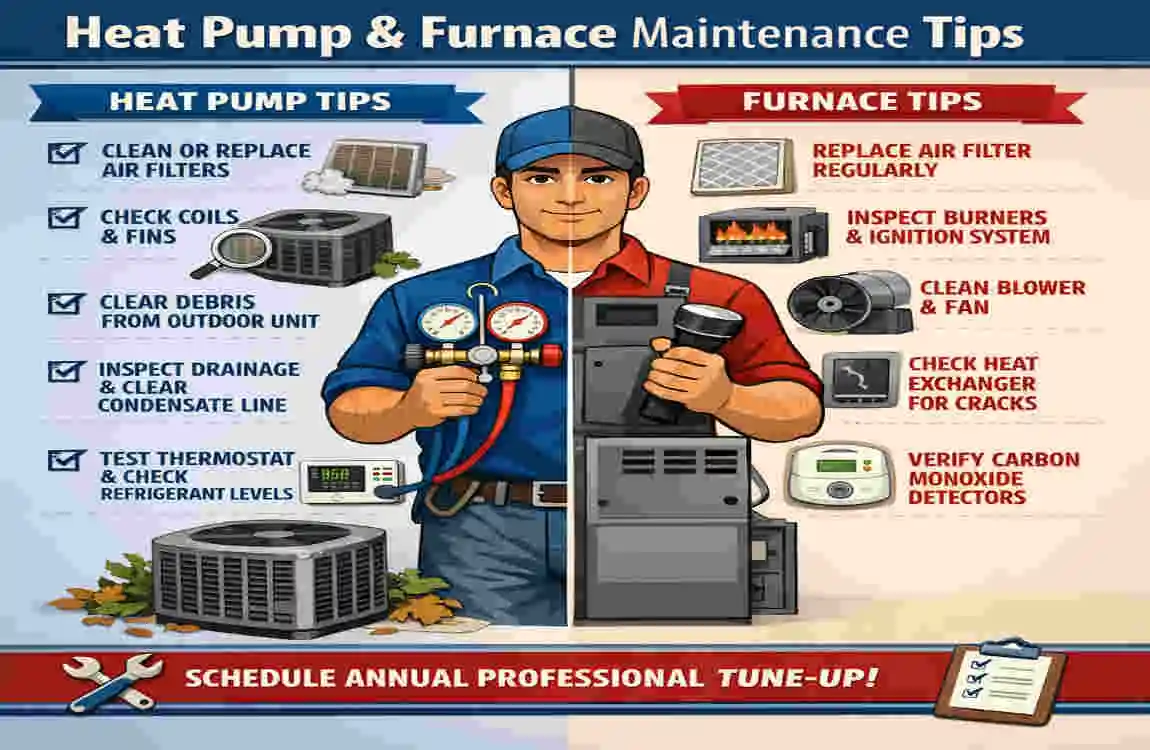
Both systems need regular care. Good maintenance helps them work better and last longer.
Heat Pump Maintenance Tips
- Clean or replace air filters often
- Keep the outdoor unit free from dirt and leaves
- Schedule yearly professional inspections
Frequently Asked Questions
Is a heat pump cheaper to run than a furnace?
Often, yes. Heat pumps usually use less energy because they move heat rather than generate it.
Can a heat pump replace a furnace?
Yes, in many homes. In colder regions, some homeowners use both in a dual-fuel setup.
Which lasts longer?
Furnaces usually last longer, often 15–20 years, while heat pumps usually last 10–15 years.
Do heat pumps work in freezing weather?
Yes, many modern heat pumps do. Still, furnaces are often stronger in extreme cold.
Is a heat pump worth it?
For many homeowners, yes. The energy savings, cooling feature, and eco-friendly design make it a good long-term choice.
| Feature | Heat Pump | Furnace |
|---|---|---|
| How It Works | Transfers heat from outside air into your home (also provides cooling) | Burns fuel or uses electricity to create heat |
| Heating Efficiency | Highly efficient, especially in mild climates | Provides powerful heat, ideal for very cold climates |
| Cooling Ability | Works as both heater and air conditioner | Requires a separate AC system |
| Average Installation Cost | Around $4,000–$8,000 depending on type and size | Around $3,000–$10,000 depending on fuel type and system |
| Energy Costs | Usually lower because it moves heat instead of creating it | Can have higher operating costs, especially electric models |
| Best For | Moderate climates and homeowners wanting one system for heating and cooling | Cold regions needing strong, reliable heat |
| Maintenance Needs | Regular filter changes and professional checks | Annual inspections and burner/fuel system maintenance |
| Lifespan | About 15–20 years | About 15–20 years |
| Environmental Impact | Lower emissions when powered by clean electricity | Higher emissions if using natural gas or oil |
| Main Benefit | Energy savings and year-round comfort | Fast, powerful heating in freezing temperatures |