
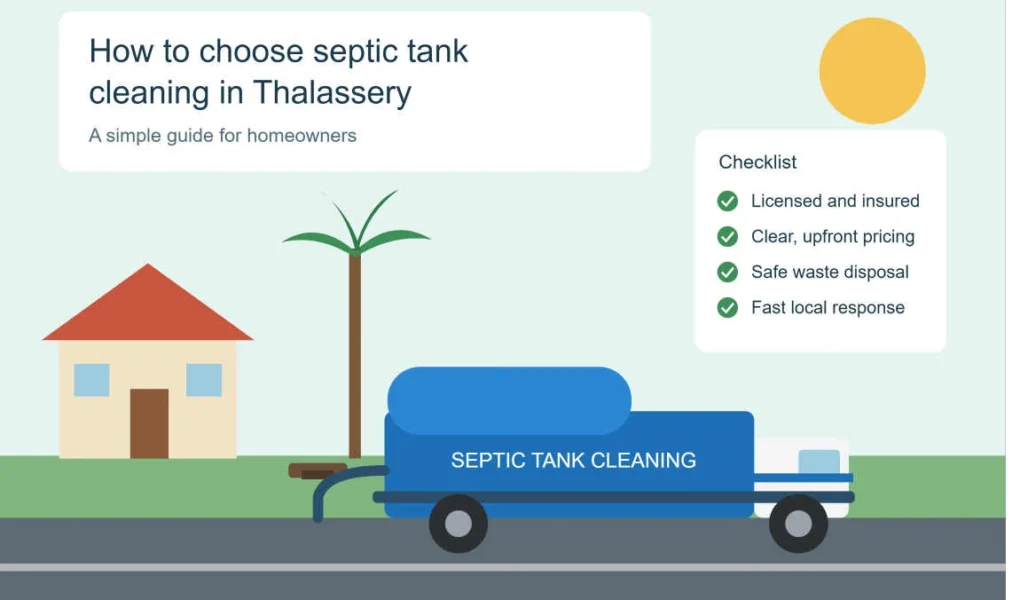
Few household chores are as easy to ignore as your septic tank, until it overflows. If you live in Thalassery, the combination of heavy monsoon rain, a high water table in many areas, and closely built neighbourhoods means a neglected tank becomes a problem faster than you might expect. Choosing the right provider for septic tank cleaning in Thalassery protects your family’s health, your property, and the groundwater your neighbours depend on.
Why Septic Tank Cleaning Matters More in Thalassery
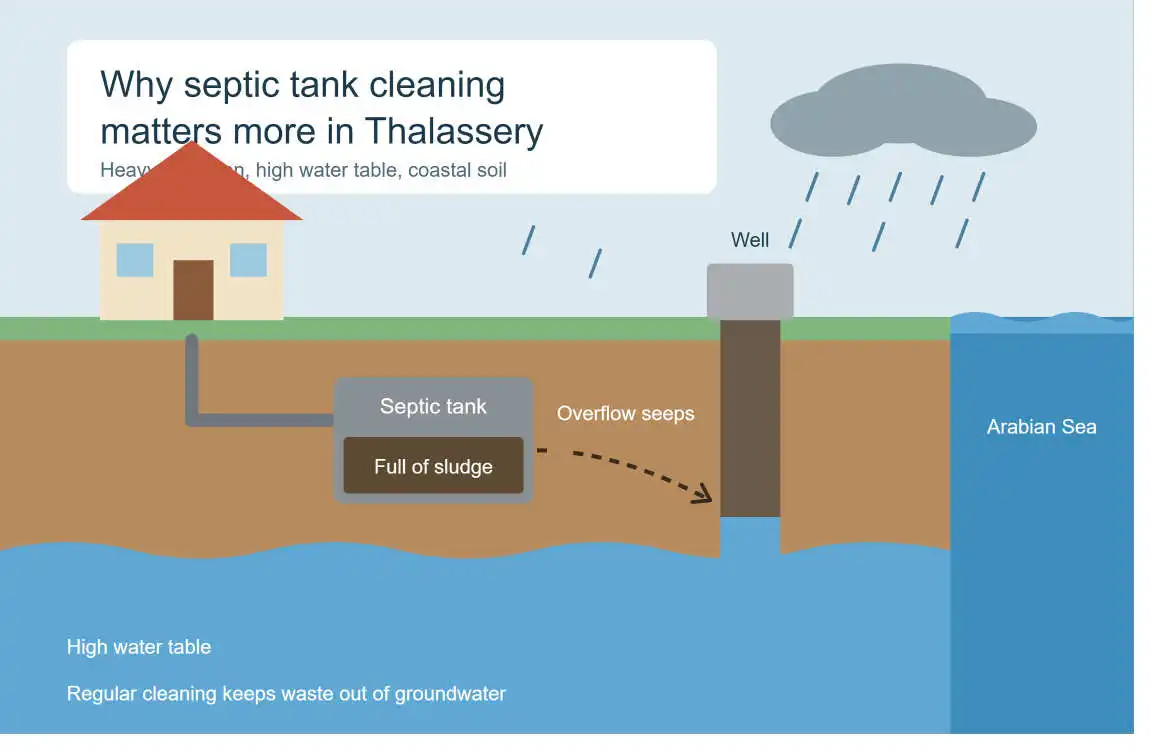
Thalassery sits on Kerala’s northern coast in Kannur district. Local conditions make regular maintenance especially important:
- Monsoon rains saturate the soil, so a tank that is already full has nowhere to sink drain. Overflows and backflow are most common between June and September.
- Shallow wells are still a drinking water source for many households. Leaking or overflowing tanks can contaminate them.
- Compact plots often put the tank close to the house, a well, or a boundary wall, so any failure is felt quickly.
Scheduling home cleaning before the rains is one of the simplest ways to avoid an emergency call at midnight.
Signs Your Septic Tank Needs Cleaning
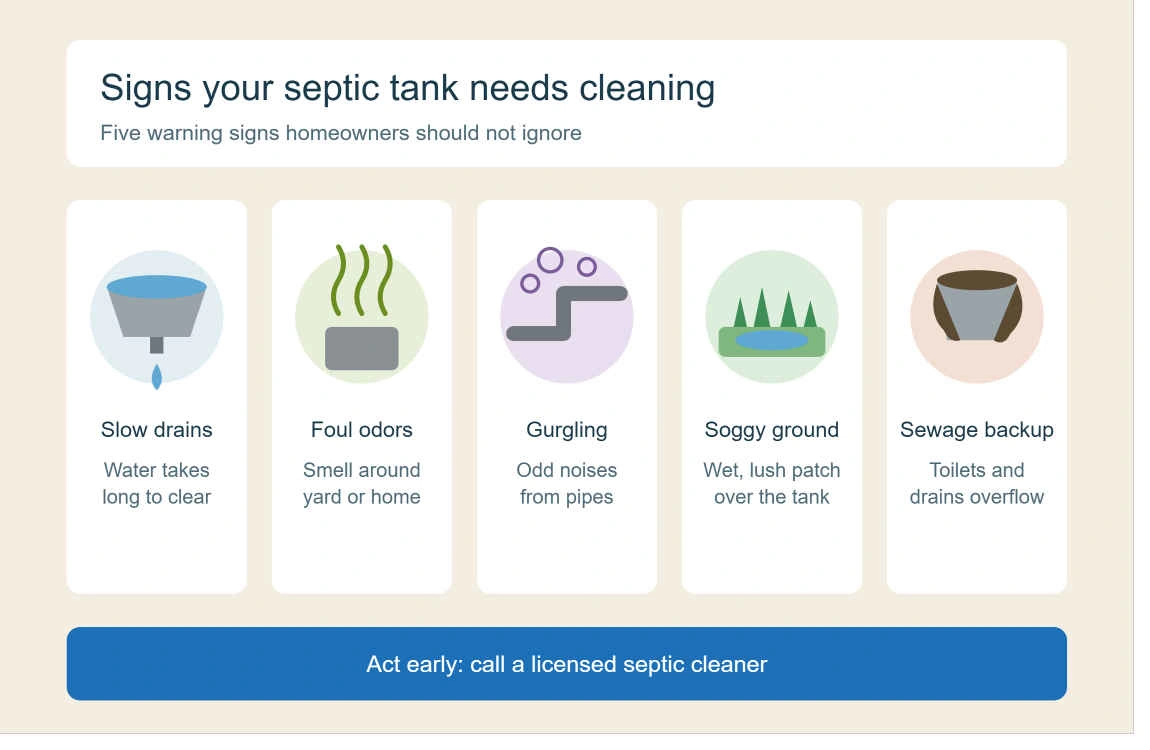
Don’t wait for a full overflow. Call a professional if you notice:
- Slow drains in sinks, showers, or toilets throughout the house, not just one fixture.
- Gurgling sounds from pipes when you flush or run water.
- Foul smells around the tank, garden, or bathrooms.
- Soggy or unusually green patches of ground near the tank or soak pit.
- Sewage backing up into floor drains or toilets.
- It’s been years since the last cleaning and you can’t remember when.
As a general rule, an average household tank needs pumping every 3 to 5 years. Larger families, small tanks, or heavy use (guests, a home business, a rental unit) may need it more often.
How to Choose a Septic Tank Cleaning Service in Thalassery
Check for Proper Equipment
Modern septic tank cleaning uses a vacuum tanker with a suction pump. Be wary of anyone who proposes manual cleaning. It is dangerous, and manual scavenging is prohibited under Indian law. A professional service should arrive with a proper truck, hoses, and protective gear for its crew.
Ask About Safe Waste Disposal
This is the question most people forget, and it matters most. Where does the sludge go? A responsible company transports waste to an authorised treatment or disposal facility. If a provider is vague, or dumps waste in open land, canals, or water bodies, you could share responsibility for the pollution. Ask directly and trust your instincts if the answer is evasive.
Look at Local Experience and Reviews
A provider that has worked in and around Thalassery will understand local soil, tank designs, and access challenges in narrow lanes. Check recent Google reviews, ask neighbours, and look for consistent comments about punctuality, cleanliness, and honest pricing.
Get a Clear, Upfront Quote
Prices vary with tank size, distance, and how easily the truck can reach your property. A good company will:
- Ask for tank capacity or house size before quoting
- Explain what’s included (pumping, travel, disposal)
- Tell you about extra charges, such as a hard-to-reach tank or a sealed manhole cover, in advance
Treat very low quotes with caution. They often come with corners cut elsewhere.
Confirm Availability and Response Time
Septic problems rarely happen at a convenient hour. A dependable service should offer same-day or next-day appointments and be reachable by phone or WhatsApp, especially during monsoon season.
Ask for a Receipt and Disposal Confirmation
Reputable operators give you a bill and are happy to confirm how the waste was handled. This paper trail is useful if a neighbour or local authority ever raises a complaint.
Questions to Ask Before You Book
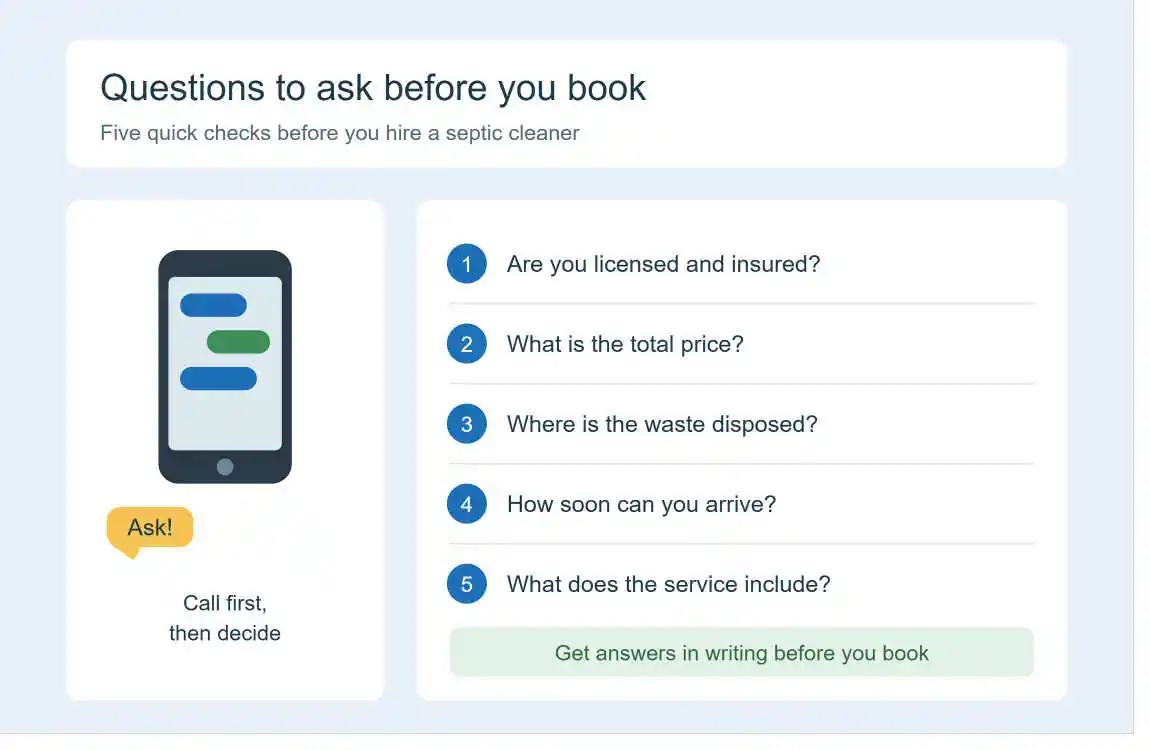
Keep this short checklist handy when you call:
- Do you use a vacuum tanker, and what is its capacity?
- Where do you dispose of the waste?
- Is the quote fixed, or could it change on arrival?
- How soon can you come, and how long will the job take?
- Do you inspect the tank for cracks, damaged baffles, or a blocked outlet while you’re there?
- Can I get a bill for the service?
What to Expect on Cleaning Day
A typical visit goes like this:
- The crew locates and opens the manhole cover.
- They check the sludge and scum levels.
- The vacuum pump removes liquid and solid waste.
- The tank is inspected for damage and the inlet and outlet pipes are checked.
- The cover is closed securely and the area is cleaned up.
The whole process usually takes about one to two hours for a standard household tank.
Simple Habits to Keep Your Tank Healthy
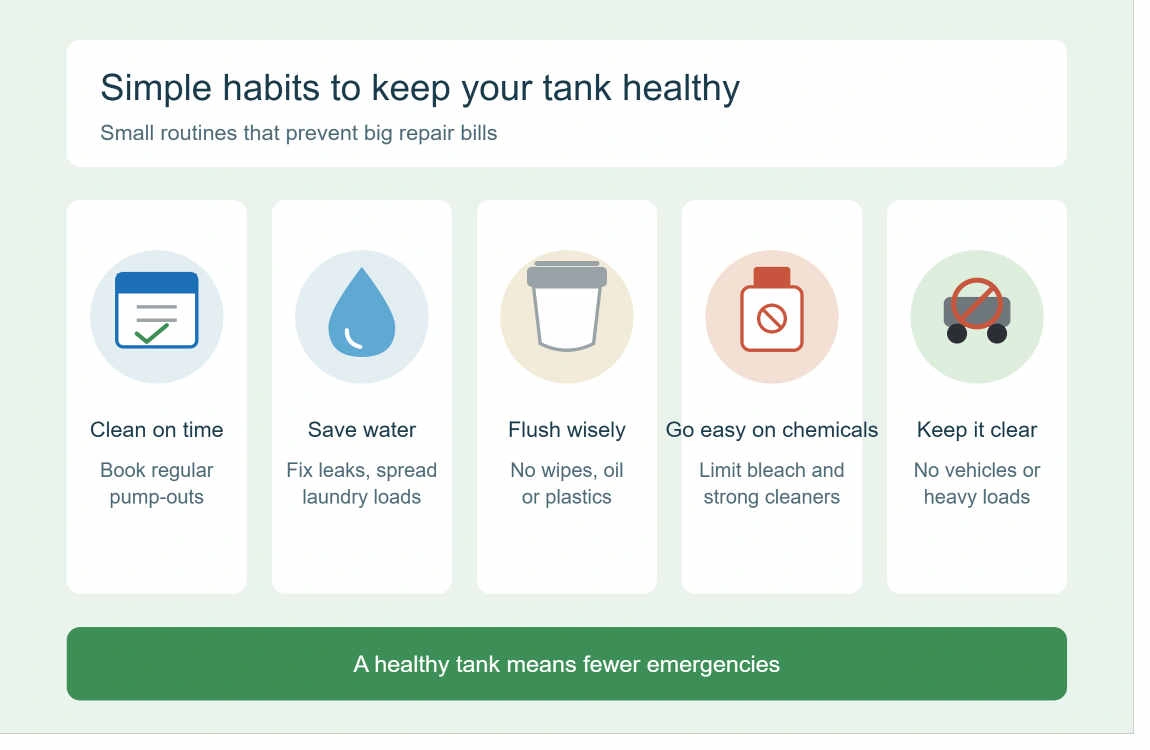
Between cleanings, a few habits go a long way:
- Don’t flush wipes, sanitary products, diapers, or cooking oil.
- Spread out laundry loads so the tank isn’t flooded with water at once.
- Use harsh chemical cleaners sparingly, since they can kill the helpful bacteria that break down waste.
- Keep vehicles and heavy loads off the tank area.
- Keep a record of the last cleaning date so you know when the next one is due.
Frequently Asked Questions
How often should I schedule septic tank cleaning in Thalassery?
Most homes need it every 3 to 5 years. If your household is large or the tank is small, check it more often, and always before the monsoon.
How much does septic tank cleaning cost?
Cost depends on tank size, access, and distance. Ask for a quote based on your specific tank rather than relying on a general figure.
Is it safe to clean the tank myself?
No. Septic tanks release toxic and flammable gases, and entering one can be fatal. Always use a trained professional with proper equipment.
Can I clean the tank during the rainy season?
Yes, and if your tank is already full it’s better not to wait. A professional can pump it safely even in wet weather.
What happens if I never clean my tank?
Solids build up, clog the outlet, and cause backflow, foul odours, and possible groundwater contamination. Repairs usually cost far more than regular cleaning.
Final Thoughts
The best septic tank cleaning in Thalassery comes from a provider that uses proper equipment, disposes of waste responsibly, quotes honestly, and responds when you need them. Spend ten minutes comparing two or three options, ask the questions above, and book before the rains arrive. A planned cleaning is cheaper, cleaner, and far less stressful than an emergency one.