
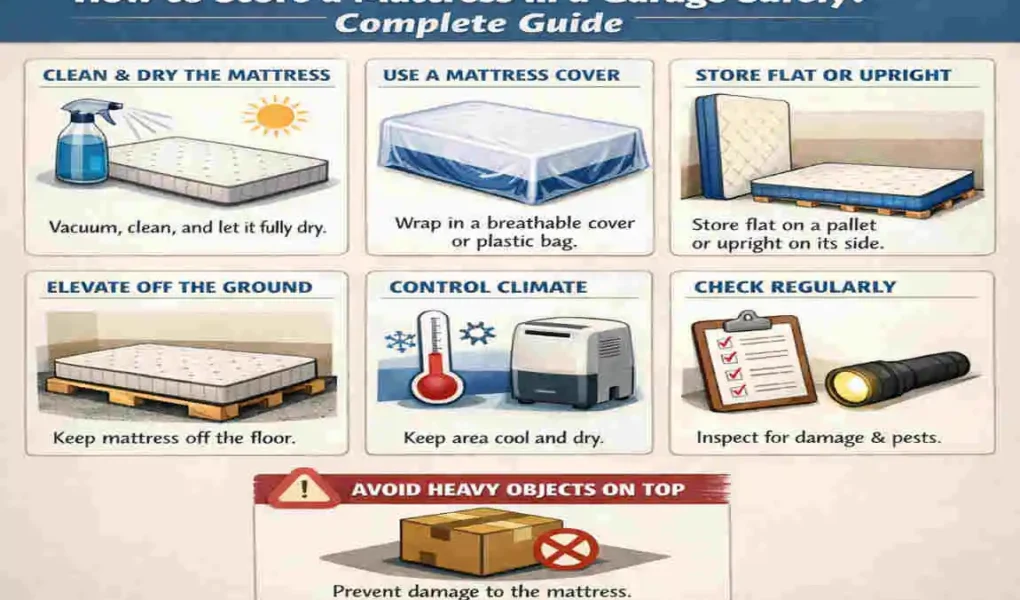
People store mattresses in garages for many practical reasons. You may be moving to a new home, clearing space for guests, or keeping a spare mattress until you need it again. In these cases, the garage can feel like an easy place to store things.
But a garage is not the safest place for a mattress unless you prepare it properly. Garages often have moisture, dust, pests, and temperature changes. These problems can lead to mold, odors, stains, and damage.
That is why learning how to store a mattress in a garage the right way matters. With a few simple steps, you can protect the mattress and keep it usable for later. The goal is to keep it clean, dry, covered, and elevated to keep it in good shape.
Can You Store a Mattress in a Garage?
Is a Garage Suitable for Mattress Storage?
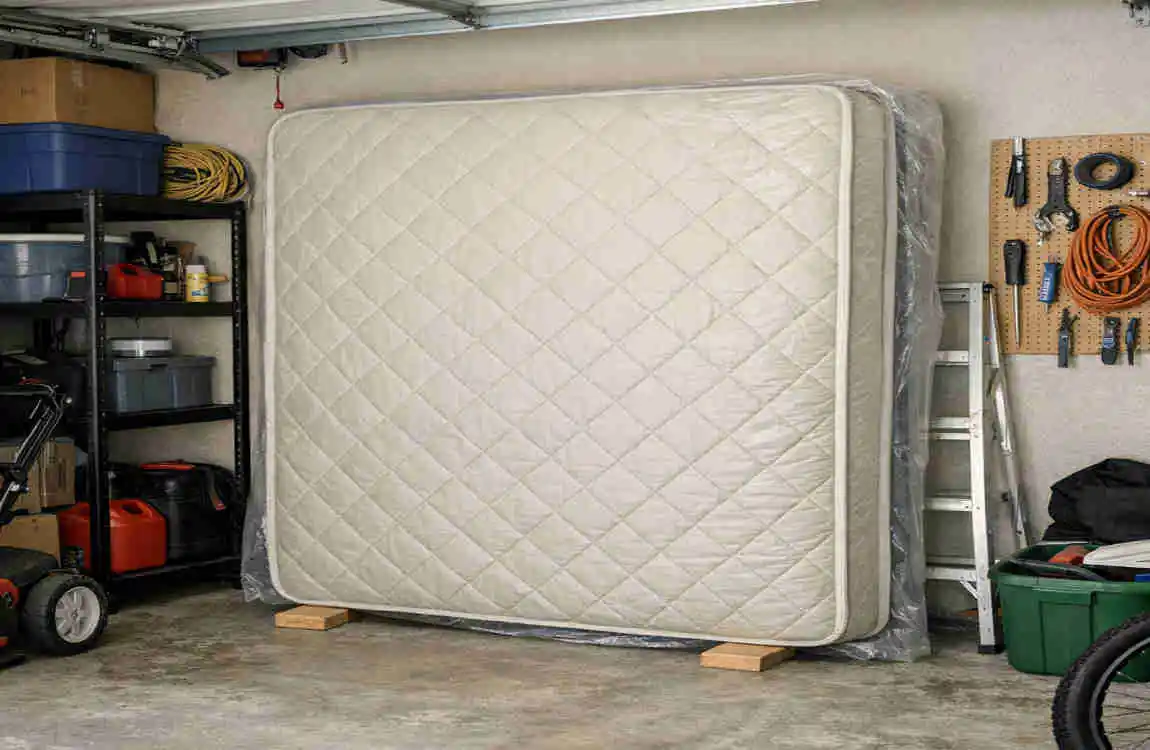
Yes, you can store a mattress in a garage, but only if you take the right precautions. A garage usually has more moisture and dirt than a bedroom or storage room.
Hot weather can damage foam. Cold weather can affect materials too. If the garage is damp or poorly sealed, the mattress may absorb moisture and develop mold. So while garage storage is possible, it is best for short-term storage or for mattresses that are fully protected.
How Long Can a Mattress Stay in a Garage?
A mattress can stay in a garage for a few weeks or several months if it is stored well. The exact time depends on the climate, the type of mattress, and how well you protect it.
If the garage is dry, clean, and ventilated, the mattress will last longer. If the garage is humid or leaky, even short-term storage can cause problems. That is why how to store a mattress in the garage safely depends as much on the space as on the mattress itself.
Prepare Your Mattress Before Garage Storage
Clean the Mattress Thoroughly
Before you store it, clean the mattress well. Vacuum both sides to remove dust, hair, and debris. If you see stains, clean them and let the mattress dry fully.
Never store a damp mattress. Moisture trapped inside can cause a bad smell or mold. A completely dry mattress is much safer.
Remove Bedding and Accessories
Take off all bedding first:
- Sheets
- Blankets
- Mattress protectors
- Pillow covers
Wash and dry them before storing them separately. Leaving bedding on the mattress can trap dirt and moisture.
Inspect for Damage or Pests
Check the mattress for tears, holes, smells, or signs of bugs. If you notice any damage, fix it before storage or replace the mattress if needed.
This step is important because once a damaged mattress is put in the garage, the problem can worsen.
Step-by-Step Guide: How to Store a Mattress in Garage Safely
Choose the Right Garage Location
Pick a dry area away from the garage door, water pipes, chemicals, and direct sunlight. Do not place the mattress near anything that could leak or spill.
A quiet corner with stable conditions is best. The more protected the spot, the better your mattress will stay.
Use a Protective Mattress Cover
A mattress cover is one of the most important parts of the process. It helps block dust, dirt, and moisture.
You can use:
- A plastic mattress bag
- A breathable storage cover
- A waterproof cover
Make sure the cover fits well and is sealed correctly. If the mattress is fully wrapped but cannot breathe at all in a wet garage, moisture may still become a problem. So the best choice is often a protective cover with some airflow.
Keep the Mattress Elevated
Never place the mattress directly on the concrete floor. Concrete can hold moisture, and that moisture can move into the mattress.
Use:
- Wooden pallets
- A storage rack
- A raised shelf system
This keeps the mattress off the floor and improves airflow underneath. It also helps protect against pests and dampness.
Store the Mattress Flat
A mattress should usually be stored flat. This helps it keep its shape and prevents pressure on the internal layers.
If you stand it upright for too long, especially a memory foam or hybrid mattress, it may bend or warp. Flat storage is usually the safest choice when learning how to properly store a mattress in a garage.
Add Extra Protection
You can provide the mattress with additional protection by keeping the area clean and dry. Moisture absorbers can help in humid garages. A clean storage area also lowers the risk of pests.
If space allows, avoid stacking heavy objects on top of the mattress. Pressure can damage the inside and leave long-term dents.
Best Mattress Storage Methods for a Garage

Using a Mattress Storage Bag
A mattress storage bag is a simple and useful option. It protects the mattress from dust and light moisture while keeping it easy to move.
Make sure the bag is the right size. A loose bag may not protect well, while an overly tight one may trap moisture. Always check that the cover is secure.
Using a Mattress Storage Rack
A rack is a great choice if you want better airflow. It also keeps the mattress away from the floor, which is important in a garage.
This method is especially helpful if you plan to store the mattress for more than a few weeks.
Storing a Mattress Inside a Storage Container
A storage container can work, but only if it has enough ventilation. If the space is sealed and humid, the mattress may trap moisture inside.
Use containers carefully and always check the conditions inside from time to time.
How to Protect a Mattress From Garage Moisture
Control Humidity Levels
Moisture is one of the biggest dangers in a garage. A dehumidifier can help reduce dampness. Moisture absorbers can also help in smaller spaces.
If your garage feels wet or sticky, fix that before storing the mattress.
Prevent Mold and Mildew
To prevent mold, make sure the mattress is clean and dry before storage. Do not wrap it while it is still damp. Also, inspect it regularly.
A mattress that stays sealed in a humid garage for too long can develop mold fast.
Improve Garage Ventilation
Good airflow matters. Open vents, use fans, or improve air movement in the garage if possible. Better ventilation helps keep the storage area dry and fresh.
Common Mistakes When Storing a Mattress in Garage
Placing the Mattress Directly on the Floor
This is one of the biggest mistakes. The floor can transfer moisture into the mattress and cause mold or odor.
Wrapping It Too Tightly
A mattress needs protection, but it should not be trapped in a way that holds moisture inside. Use protection that fits well without sealing in damp air.
Storing a Wet or Dirty Mattress
This almost always leads to problems. Dirt and moisture can damage the fabric and create permanent smells.
Leaving It Unprotected
Dust, insects, and temperature changes can all harm an unprotected mattress. Even a short time in the garage can be risky without coverage.
Pros and Cons of Storing a Mattress in Garage
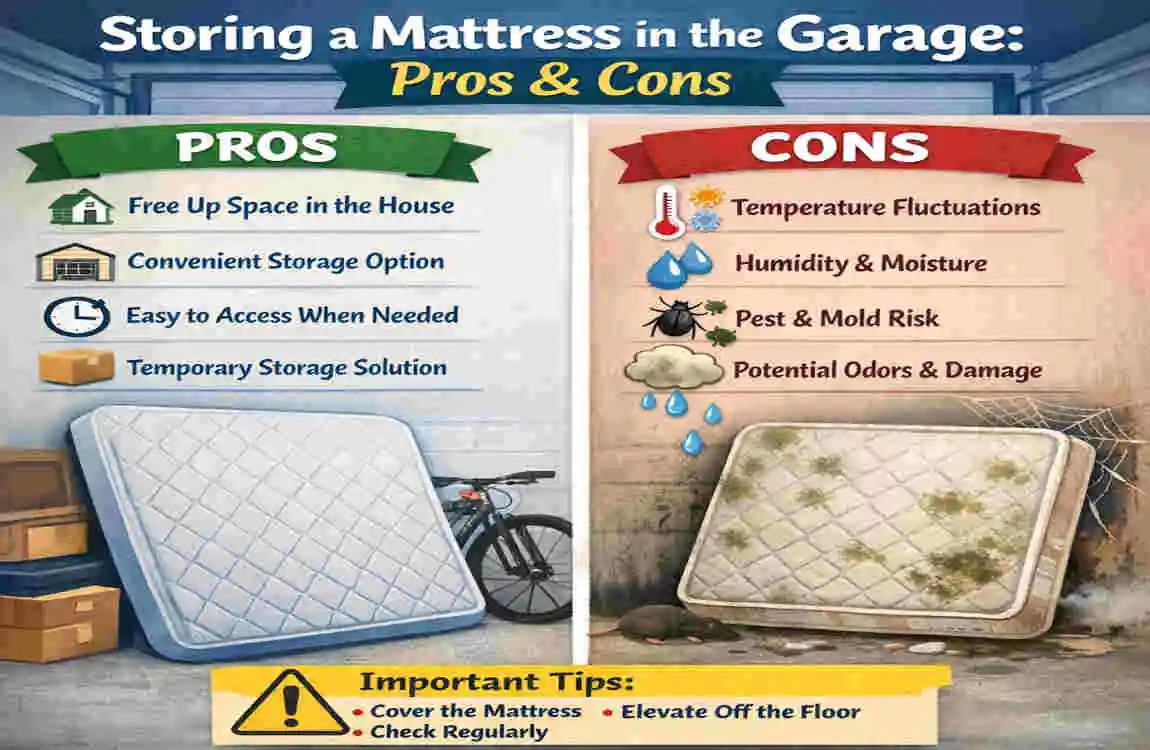
ProsCons
Saves indoor space Risk of moisture damage
Convenient for temporary storage Temperature changes
Easy access Possible pest problems
Helpful during moving Needs careful protection
How to Prepare a Mattress After Garage Storage
Remove the Cover Carefully
When you are ready to use the mattress again, slowly remove the cover and check for any damage, odor, or dampness.
Air Out the Mattress
Let the mattress sit in a fresh, ventilated room for a while. This helps remove any musty smell and lets the material breathe again.
Clean Before Sleeping
Vacuum the surface and use a clean mattress protector before putting it back on the bed frame.
Frequently Asked Questions
Q: Can I store a mattress in my garage?
Yes, you can store a mattress in a garage if it is properly cleaned, covered, elevated, and protected from moisture.
Q: How should I wrap a mattress for garage storage?
Use a breathable mattress storage bag or protective cover and seal it properly to prevent dust and moisture.
Q: Can a mattress get moldy in a garage?
Yes, mattresses can develop mold if exposed to humidity, leaks, or poor ventilation.
Q: Should a mattress be stored upright or flat?
A mattress should usually be stored flat to maintain its shape and prevent internal damage.
Q: How long can a mattress stay stored in a garage?
A properly protected mattress can last several months or longer, but regular inspections are recommended.