A garage door torsion spring is one of the most important parts of your garage door system. It helps lift the heavy door, keeps the movement smooth, and reduces the pressure on the opener. When the spring tension is off, the door may feel heavy, move unevenly, or stop working the way it should.
If you are searching for how to tighten a torsion spring on a garage door, it is important first to understand something very important: torsion springs are under extreme tension. That means they can be dangerous if handled improperly. A small mistake can cause serious injury or damage to the door system.
What Is a Garage Door Torsion Spring?
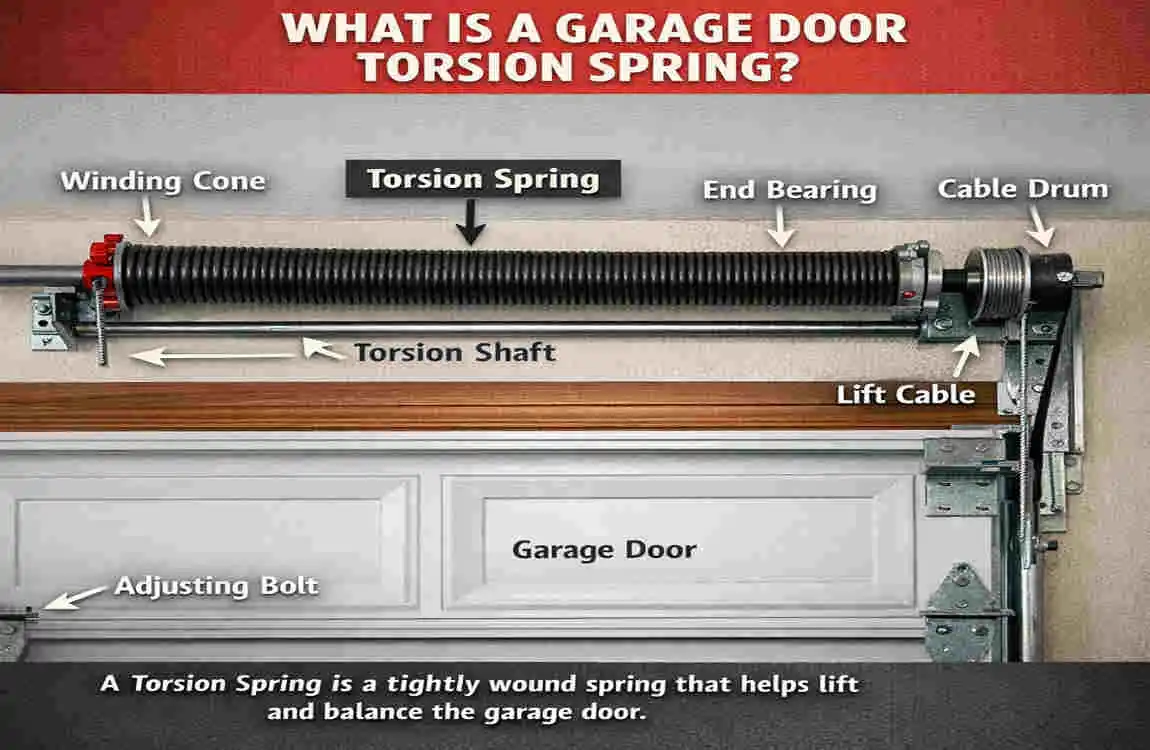
A torsion spring is a tightly wound spring mounted above the garage door opening. It stores energy when the door closes and releases that energy when the door opens. That is how it helps lift the door’s weight.
How Torsion Springs Work
When the garage door closes, the spring winds up and holds tension. When the door opens, that stored energy helps lift it.
This system makes the door feel much lighter than it really is. Without the spring, the opener would have to do all the work, and the door could be hard or even impossible to lift manually.
Torsion Spring vs. Extension Spring
Torsion springs and extension springs do the same basic job, but they work differently.
- Torsion springs twist and store energy above the door.
- Extension springs stretch and contract along the sides of the door.
Torsion springs are often preferred because they give smoother movement and better balance. They also tend to last longer in many homes.
Why Proper Spring Tension Matters
Proper tension is what keeps the garage door balanced. If the spring is too loose, the door may feel heavy and hard to open. If it is too tight, the door may rise too quickly or become unsafe to use.
Good spring tension helps protect the opener, the tracks, and the door itself. It also reduces wear on the whole system.
Signs Your Garage Door Torsion Spring Needs Adjustment
A garage door usually gives warning signs before the spring becomes a bigger problem. If you notice these issues early, you can avoid more damage later.
Garage Door Feels Heavy
If the door suddenly feels much heavier than usual, the spring may not be carrying enough load.
You may notice this when opening the door by hand, or you may see the opener struggling more than normal. This is often one of the first signs of a tension issue.
Door Won’t Stay Open
A properly balanced door should stay in place when lifted partway by hand. If it falls back down or keeps drifting closed, the spring tension may be too weak.
This is a common clue that the spring needs attention.
Uneven Door Movement
If the door rises unevenly, shakes, or seems to jerk during movement, the spring system may be out of balance.
Uneven movement can also point to track problems or other hardware issues, so it should not be ignored.
Loud Noises During Operation
A garage door should not make sharp, harsh, or unusual noises every time it moves.
Grinding, popping, or snapping sounds may signal a spring problem, especially if the noise started recently.
Gaps or Visible Wear in the Spring
Look at the spring carefully. If you see a visible gap, rust, or obvious wear, the spring may be damaged.
A broken or badly worn spring should not be adjusted casually. It may need replacement instead.
Can You Tighten a Loose Garage Door Torsion Spring Yourself?
This is the question many homeowners ask first. The honest answer is that it depends on your experience, your tools, and your comfort with risk.
Safety Risks
Torsion springs are not like regular hardware you can adjust without concern. They can hold a large amount of force, and that force can be released suddenly if the spring slips or the wrong tool is used.
That is why many garage door injuries happen during spring work. The danger is real, even if the job looks simple from a distance.
When DIY Is Appropriate
DIY adjustment may only be reasonable if:
- You fully understand garage door mechanics
- You have the right winding tools
- The spring is not broken or badly damaged
- You are only making a small, careful adjustment
- You feel calm and confident handling the process
If any of those points are missing, it is better to stop.
When You Should Call a Professional
You should call a professional if:
- The spring is broken
- You see rust, cracks, or obvious wear
- The door is very heavy or crooked
- You do not have winding bars
- You have never adjusted a torsion spring before
- The door still feels unbalanced after a small adjustment
For many homeowners, professional help is the safest choice.
Tools and Safety Equipment You’ll Need
If a spring adjustment is being considered, the right tools matter a lot. Using the wrong item can make the job dangerous.
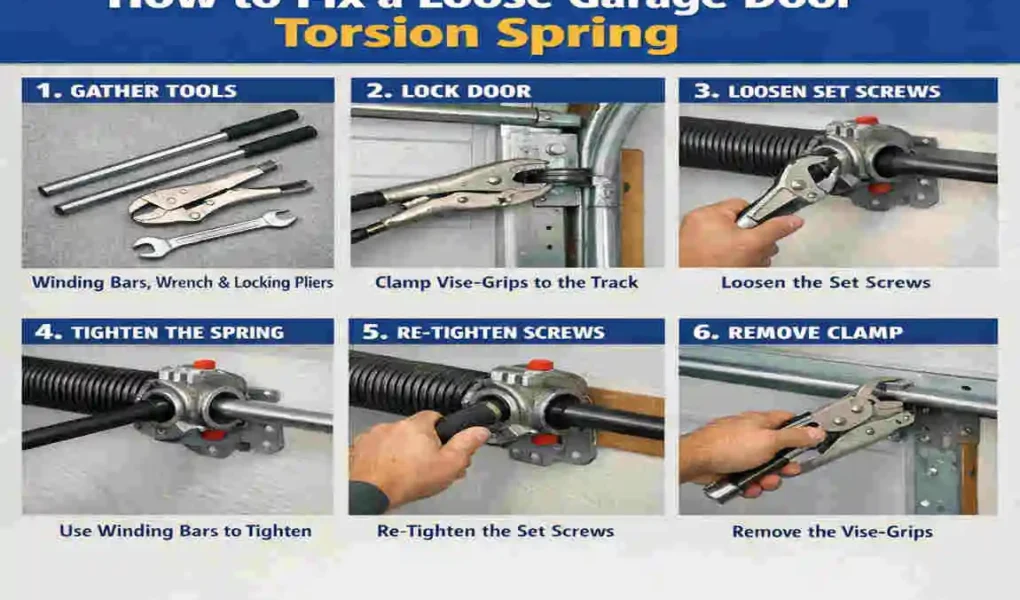
Winding Bars
Winding bars are the proper tools for safely handling torsion spring tension. They fit into the winding cone and give controlled movement.
Never use screwdrivers or random metal rods instead. Those can slip out and cause serious injury.
Locking Pliers
Locking pliers are used to keep the door from moving while work is being done. They help secure the door in place.
This adds one more layer of safety during the process.
Adjustable Wrench
An adjustable wrench may be needed to loosen or tighten certain hardware on the spring assembly.
It is a basic tool, but it should still be used carefully.
Ladder
A sturdy ladder helps you reach the spring area safely. Make sure it is stable and placed on level ground.
Do not stretch or lean too far while working above your head.
Safety Glasses and Gloves
Safety glasses help protect your eyes, and gloves can give better grip and some hand protection.
They do not remove the danger, but they do add helpful protection.
How to Tighten Torsion Spring on Garage Door: A Safety-First Overview
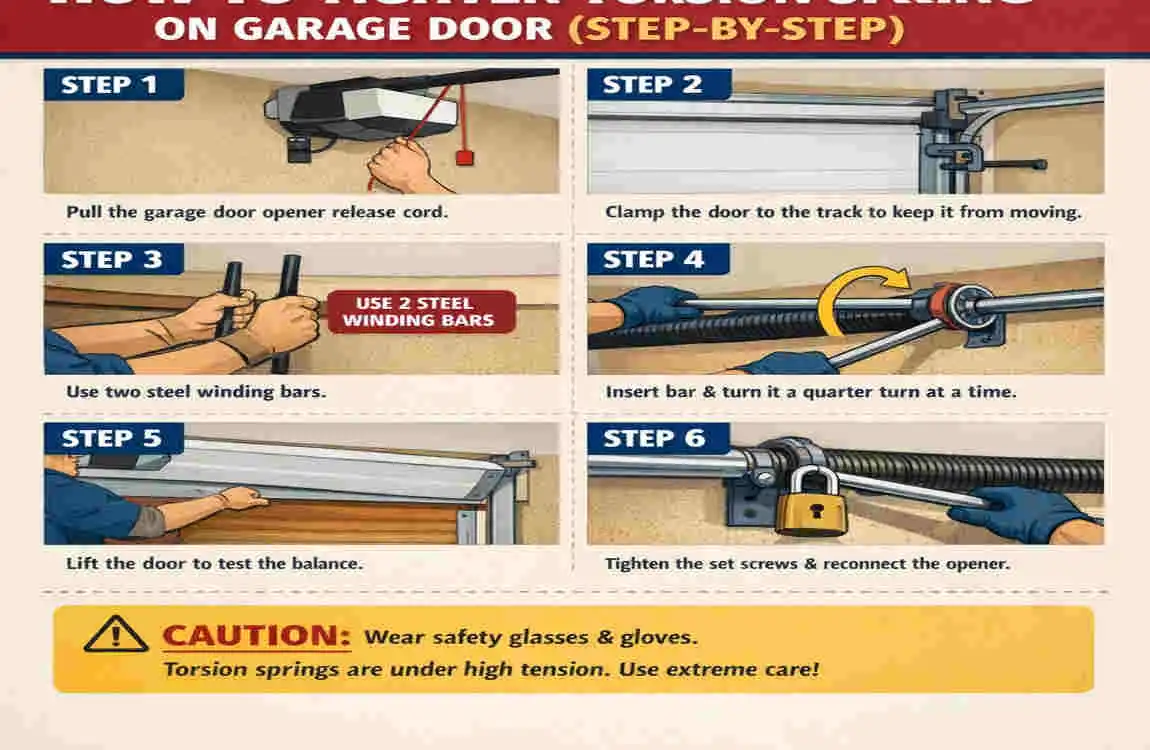
Because this task can be risky, the safest way to think about it is as a controlled adjustment, not a casual fix. If you are not fully sure of the process, stop and call a trained technician.
Disconnect the Garage Door Opener
Before anything else, disconnect the opener so the door does not move unexpectedly.
This is a basic but important safety step.
Secure the Door
Use locking pliers or another safe method to keep the door from moving while you work.
The door should stay fully closed and stable during the adjustment process.
Insert Winding Bars Properly
Only use the correct winding bars designed for torsion springs. They should fit properly into the winding cone.
This part requires calm, careful handling. A slip here can be dangerous.
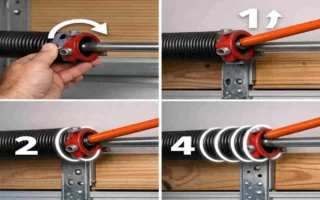
Add Quarter Turns Carefully
If an adjustment is truly needed, it is usually done in small increments.
The key point is careful control, not speed. Never make large, rushed movements.
Tighten Set Screws
After the spring is adjusted, the set screws must be secured properly so the spring stays in place.
Loose hardware can create future balance problems.
Test Door Balance
Once the adjustment is complete, test the door balance manually.
A balanced door should stay in place when opened partway and should not feel too heavy or too light.
Make Final Adjustments if Necessary
If the door still feels off, do not keep forcing more changes.
At that point, the safest option is to get a professional inspection.
Common Mistakes to Avoid
Many spring problems stem from simple mistakes. Avoiding them can keep you safer and save money.
Using Screwdrivers Instead of Winding Bars
This is one of the biggest mistakes homeowners make. Screwdrivers are not made for this job and can slip out under pressure.
Always use the proper tool.
Over-Tightening the Spring
Too much tension can cause the door to shoot up too fast or put extra strain on the opener.
More is not better here. Balance is the goal.
Ignoring Safety Precautions
Skipping eye protection, failing to secure the door, or rushing the process can all lead to trouble.
Do not cut corners on a job like this.
Adjusting a Damaged Spring
A spring that is rusty, cracked, or broken should not simply be tightened.
It may need replacement rather than adjustment.
Forgetting to Test Door Balance
If you do not test the door after adjustment, you may miss a bigger issue.
Balance testing is a key part of the process.
How to Check Garage Door Balance
Balance testing helps you understand whether the spring tension is close to right.
Manual Balance Test
With the opener disconnected, lift the door by hand to about halfway open.
A well-balanced door should stay in place or move very little.
If it falls quickly or rises too fast, the spring tension is likely off.
Signs of Proper Spring Tension
Here is what a balanced door usually looks and feels like:
- It opens smoothly
- It stays in place when halfway open
- It does not slam shut
- The opener does not struggle
When Rebalancing Is Needed
If the door does not pass the balance test, the spring system may need adjustment.
Sometimes the issue is small. Other times the spring may be too worn to fix safely.
Garage Door Torsion Spring Maintenance Tips
Good maintenance helps extend the life of your spring and keeps the whole system working better.
Lubricate Springs Regularly
Use a garage door-safe lubricant every few months to reduce friction and help prevent rust.
This simple step can make a big difference over time.
Inspect Hardware
Regularly inspect the cables, tracks, rollers, brackets, and spring area.
Catching wear early can prevent bigger repairs later.
Watch for Rust and Wear
Rust weakens metal parts. If you spot it early, you may be able to slow further damage with proper care.
Schedule Annual Maintenance
A yearly garage door checkup is a smart habit.
A professional can spot balance issues, spring wear, and other hidden problems before they become serious.
When Should You Replace the Spring Instead of Tightening It?
Sometimes tightening is not the right answer. In some cases, replacement is the safer and smarter choice.
Broken Spring
If the spring is broken, it cannot be tightened back into service.
A broken spring needs replacement.
Rust or Corrosion
Heavy rust can weaken the spring to the point that adjustment is no longer safe or useful.
If the metal is badly corroded, replacement is often the better option.
Worn-Out Spring Cycles
Garage door springs have a cycle life. Once they reach the end of that life, they are more likely to fail again.
If the spring is old and worn out, replacing it may save you from repeated repairs.
Repeated Balance Problems
If the door keeps going out of balance even after careful adjustment, the spring system may be nearing the end of its useful life.
That is a sign to stop adjusting and inspect the whole system.
DIY vs. Professional Garage Door Spring Adjustment
Here is a simple side-by-side look at the difference.
DIY Adjustment Professional Service
Lower cost Highest safety
Suitable for minor adjustments Best for damaged springs
Requires proper tools Includes inspection
Injury risk if done incorrectly Professional warranty
What This Means for You
DIY may look cheaper at first, but it comes with more risk.
Professional service often costs more upfront, but it gives you peace of mind, proper inspection, and safer results.
Garage Door Torsion Spring Safety Checklist
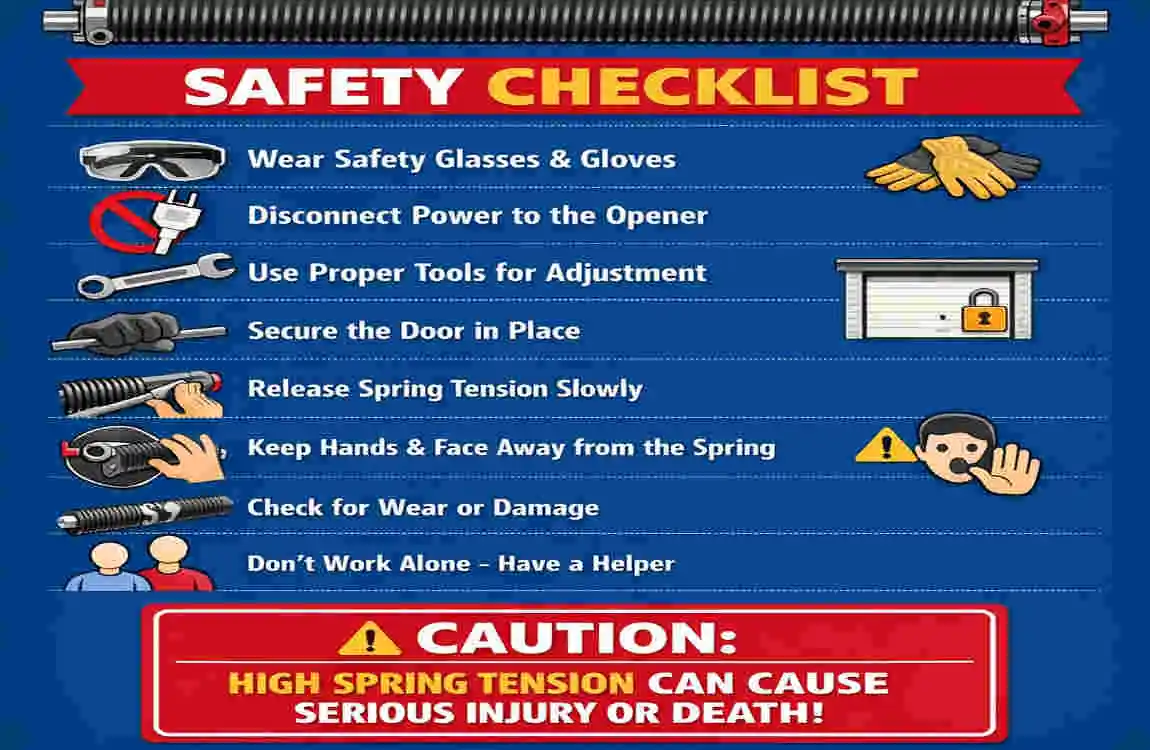
Before you do anything with the spring, make sure these safety steps are covered.
- Disconnect the opener
- Clamp the door securely
- Wear eye protection
- Use only winding bars
- Never stand directly in front of the spring
- Test balance after adjustment
- Replace garage damaged springs immediately
If you cannot complete all of these safely, stop and call a professional.
Frequently Asked Questions (FAQs)
How do I know if my garage door torsion spring is loose?
A loose spring often shows up as a heavy door, uneven movement, or a door that will not stay open on its own.
Can I tighten a garage door torsion spring by myself?
It is possible only with the right tools and experience, but it is risky. Most homeowners should call a professional.
What tools are required to tighten a torsion spring?
You usually need winding bars, locking pliers, an adjustable wrench, a ladder, and safety glasses.
How many turns should a torsion spring be tightened?
This depends on the door size and spring type, so it should follow manufacturer specifications. Guessing can be dangerous.
Is it dangerous to adjust a garage door torsion spring?
Yes. Torsion springs are under high tension and can cause serious injury if handled incorrectly.
How often should garage door torsion springs be inspected?
A quick visual check every few months and a professional inspection once a year is a smart routine.
| Topic | Information |
|---|---|
| Problem | A loose garage door torsion spring can cause the door to become unbalanced, difficult to open, or unsafe to operate. |
| Common Signs | Door feels heavy, opens unevenly, makes loud noises, or won’t stay open. |
| Main Cause | Spring tension has decreased due to wear, improper adjustment, or frequent use. |
| Tools Needed | Winding bars, locking pliers, adjustable wrench, ladder, safety glasses, and gloves. |
| Safety First | Disconnect the garage door opener and secure the door before making any adjustments. Never use screwdrivers instead of winding bars. |
| Basic Fix | Carefully tighten the torsion spring by adding the correct number of quarter-turns using winding bars. Tighten the set screws after adjustment. |
| Test the Door | Lift the door halfway. A properly balanced door should stay in place without rising or falling. |
| When to Replace | Replace the spring if it is cracked, stretched, rusted, or has reached its cycle life. |
| DIY Difficulty | High. Torsion spring repairs can be dangerous due to high spring tension. |
| Professional Recommended? | Yes. If you’re inexperienced or the spring is damaged, hire a qualified garage door technician for safe repairs. |