
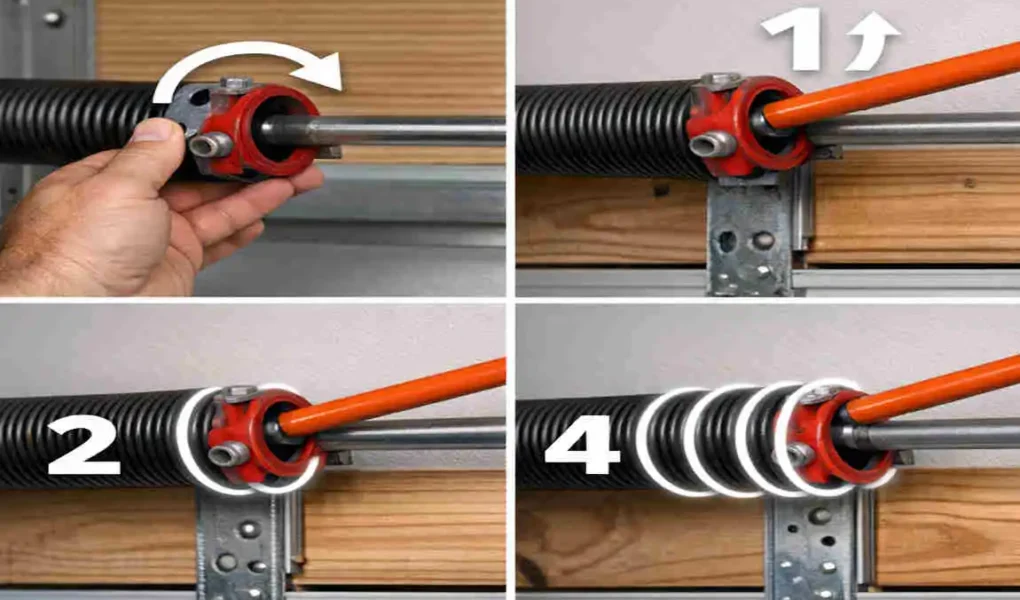
If you are trying to figure out how many turns on garage door springs are correct, the short answer is: it depends on the door height, spring type, and the manufacturer’s guidelines. For most standard torsion springs, the common rule is 7½ turns for a 7-foot door and 8½ turns for an 8-foot door.
That said, garage door springs are high-tension parts, so the correct number of turns matters a lot. Too few turns can make the door feel heavy and hard to lift. Too many turns can create a dangerous balance problem and put extra stress on the opener, tracks, and door panels.
What Are Garage Door Springs?
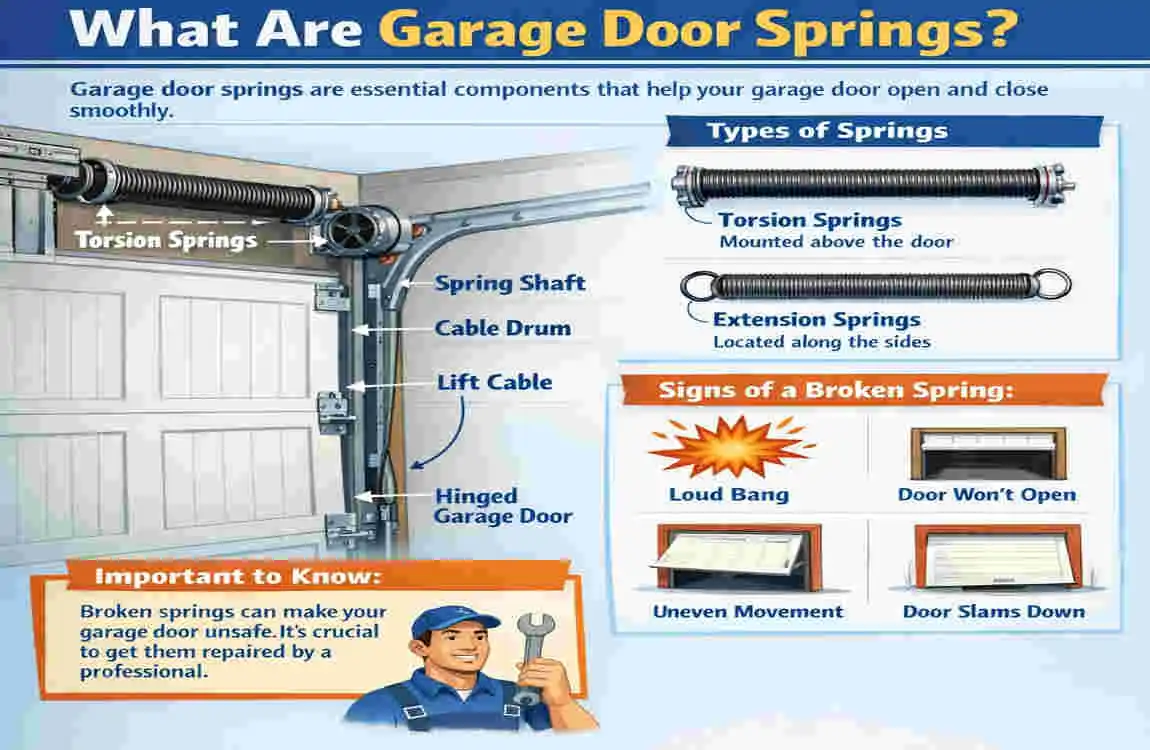
Garage door springs do the heavy lifting. They help balance the door’s weight so it opens and closes smoothly. Without them, your opener would have to do far more work, and lifting the door by hand would be difficult.
Torsion Springs Explained
Torsion springs sit above the garage door opening. They twist to store energy and release it when the door moves. These are the most common springs in many modern garage doors.
Because they work under strong tension, they must be adjusted carefully. This is why people often search for instructions on adjusting garage door springs before making changes.
Extension Springs Explained
Extension springs run along the sides of the door tracks. They stretch and contract as the door moves.
They do not use the same winding method as torsion springs, so when people ask how many turns on garage door springs, they are usually talking about torsion springs.
How Garage Door Springs Work
The springs offset the door’s weight. When the springs are set correctly, the door should feel light and balanced. That balance is what makes opening and closing smooth and safe.
How Many Turns on Garage Door Springs?
Standard Number of Turns
For most torsion spring systems, the standard number of turns depends on the door height. A good starting point is:
- 7-foot door: about 7½ turns
- 8-foot door: about 8½ turns
- 9-foot door: about 9½ turns
These numbers are general guidelines, not hard rules. Some doors may need small adjustments based on spring size, weight, and design.
Turns Based on Door Height
The taller the door, the more turns are usually needed. That is because a taller door has more travel distance and needs more spring force to stay balanced.
If your door height is unusual or custom-sized, the standard chart may not be exact. In that case, the spring maker’s instructions matter more than a general rule.
Quarter-Turn Method
Garage door spring winding is often measured in quarter turns.
Four quarter turns make one full turn.
So if a spring needs 7½ turns, that means 30 quarter turns in total. This is why people working on spring adjustment often count slowly and carefully.
Manufacturer Recommendations
Always check the spring or door manufacturer’s instructions if available. Different springs may have different tension needs, and using the wrong setting can cause poor balance or damage.
Recommended Spring Turns Table
Garage Door Height Recommended Turns
7 Feet 7½ Turns
8 Feet 8½ Turns
9 Feet 9½ Turns
How to Determine the Correct Spring Tension
Knowing how many turns on garage door springs is only part of the job. You also need to know whether the tension is actually right.
Measure Door Height
Start by checking the door height. This is the easiest way to estimate the correct number of turns. Most standard residential garage doors are 7 or 8 feet tall.
Check Spring Size
Different springs are designed for different door weights. If the spring is the wrong size, the door may never balance correctly, even if you set the turns properly.
Test Door Balance
A balanced garage door should stay in place when opened halfway. It should not rush upward or drop downward.
This simple test tells you a lot about the current spring tension.
Identify Signs of Incorrect Tension
If the tension is off, you may notice:
- The door feels too heavy
- The door rises too fast
- The opener strains
- The door won’t stay halfway open
These signs usually mean the springs need adjustment or replacement.
How to Adjust Garage Door Springs Safely
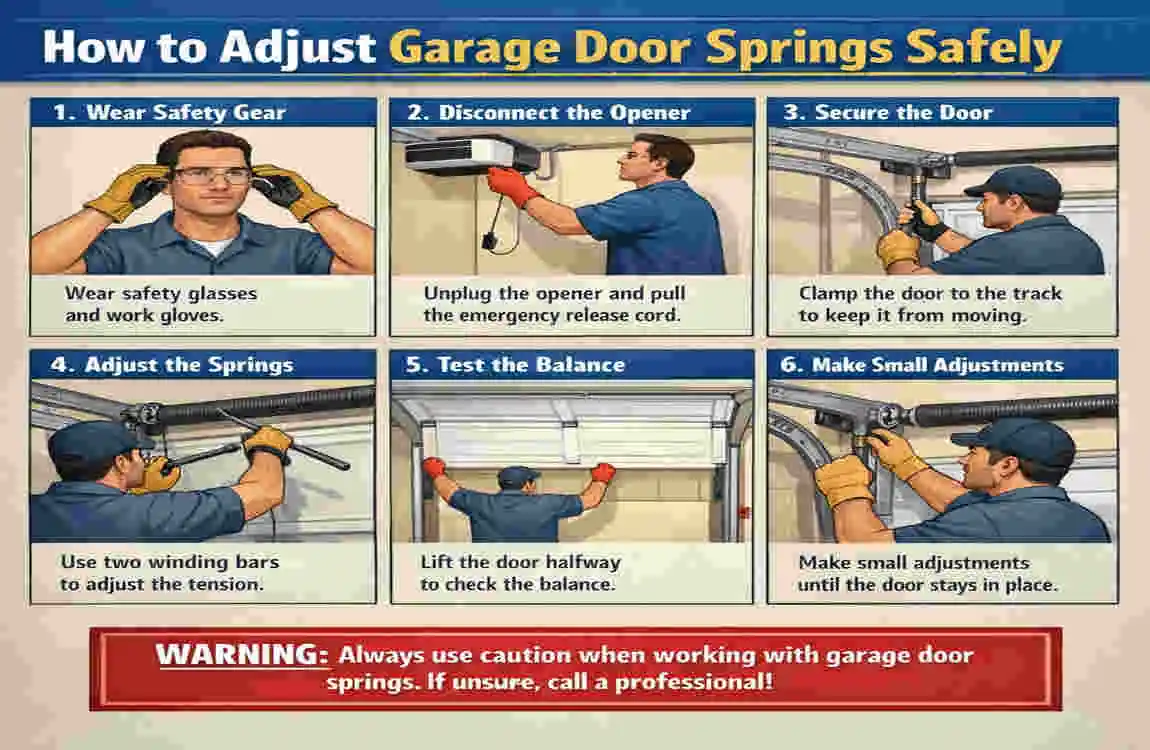
Tools You’ll Need
Before doing anything, gather the right tools. You usually need:
- Winding bars
- Safety glasses
- Gloves
- Ladder
- Wrench
- Marker or tape for counting turns
Do not use random rods or screwdrivers. That can be dangerous.
Step-by-Step Adjustment Process
I’ll keep this general because garage springs are risky.
- Close the garage door fully
- Unplug the opener
- Insert the winding bars properly
- Make small quarter-turn adjustments
- Check balance after each change
- Stop once the door feels balanced
The key is to go slowly. Small changes are safer than large ones.
Safety Precautions
This is the most important part. Garage door springs are under heavy tension and can cause serious injury if handled carelessly.
Always:
- Wear eye protection
- Keep your face and hands clear
- Use proper winding bars
- Stand to the side, not directly in front
- Stop if the spring looks damaged
When to Stop Adjusting
Stop as soon as the door opens smoothly and stays balanced. If you keep adding turns after that, you may over-tighten the spring.
Signs Your Garage Door Springs Need More or Fewer Turns
Door Opens Too Fast
If the door shoots upward too quickly, the springs may have too much tension.
Door Feels Heavy
If lifting the door feels hard, the springs may need more tension.
Door Won’t Stay Halfway Open
A balanced door should stay in place. If it drifts up or down, the spring tension may be off.
Loud Noises During Operation
Grinding, popping, or straining sounds can point to tension issues or worn parts.
Common Mistakes to Avoid
Many garage door problems stem from simple mistakes. Try to avoid these:
- Over-tightening springs
- Under-tightening springs
- Ignoring safety equipment
- Using incorrect winding bars
- Adjusting damaged springs
Even a small mistake can create a bigger repair problem later.
When to Replace Garage Door Springs Instead of Adjusting
Sometimes adjustment is not enough. In some cases, replacement is the better choice.
Broken Springs
If a spring is broken, do not try to wind it. It needs to be replaced.
Rust or Corrosion
Heavy rust weakens the spring and makes operation less safe.
Excessive Wear
If the spring looks stretched, worn, or misshapen, it may be near the end of its life.
Reaching Cycle Life
Most springs last around 10,000 to 20,000 cycles, depending on quality and use. Once they reach that limit, replacement is usually smarter than repeated adjustment.
Garage Door Spring Maintenance Tips

Lubricate Springs Regularly
A little lubricant can help reduce squeaking and wear.
Inspect Hardware
Check bolts, cables, rollers, and brackets for signs of damage.
Balance Testing
Test the door balance every so often. It is a quick way to spot problems early.
Annual Professional Inspection
A yearly inspection can catch spring issues before they turn into major repairs.
DIY vs Professional Garage Door Spring Adjustment
DIYProfessional
Lower cost Safer service
Good for minor adjustments Best for garage replacements
Requires proper tools Warranty protection
Higher injury risk Expert installation
If you are experienced and confident, small adjustments may be possible. But for many homeowners, professional help is the safer choice.
Frequently Asked Questions
How many turns on garage door springs for a 7-foot door?
Most standard 7-foot doors need about 7½ turns on torsion springs.
How many quarter turns equal one full turn?
Four quarter turns equal one full turn.
Can I over-tighten garage door springs?
Yes. Over-tightening can damage the door, opener, and spring system.
How do I know if my spring tension is correct?
The door should stay balanced when opened halfway.
Should I adjust garage door springs myself?
Only if you understand the risks and have the right tools; many homeowners prefer a professional.
How long do garage door springs last?
Most last around 10,000 to 20,000 cycles, depending on quality and use.
| Aspect | Information |
|---|---|
| What Are Spring Turns? | The number of full rotations applied to a garage door torsion spring to create the correct lifting tension. |
| Purpose | Balances the weight of the garage door, allowing it to open and close smoothly. |
| Typical Turns | Most residential garage doors require 7 to 8.5 turns, depending on door height and spring size. |
| 7-Foot Garage Door | Usually requires 7.5 turns (30 quarter-turns). |