Garage door springs may be small, but they do one of the hardest jobs in your home. They help lift and lower the door, which means they carry a lot of tension every single day. If they wear out, your garage door can stop working properly or become unsafe to use.
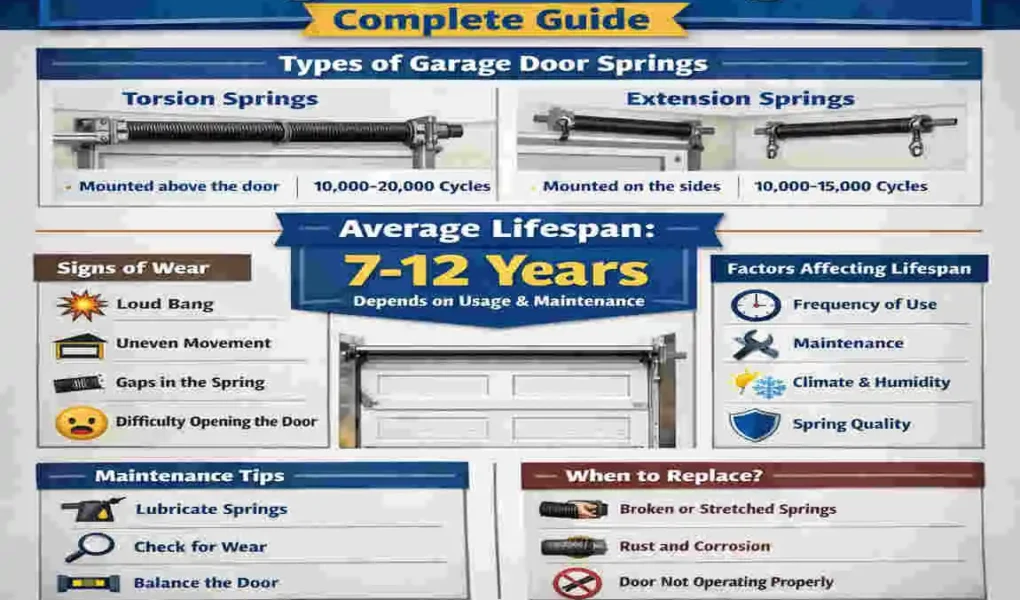
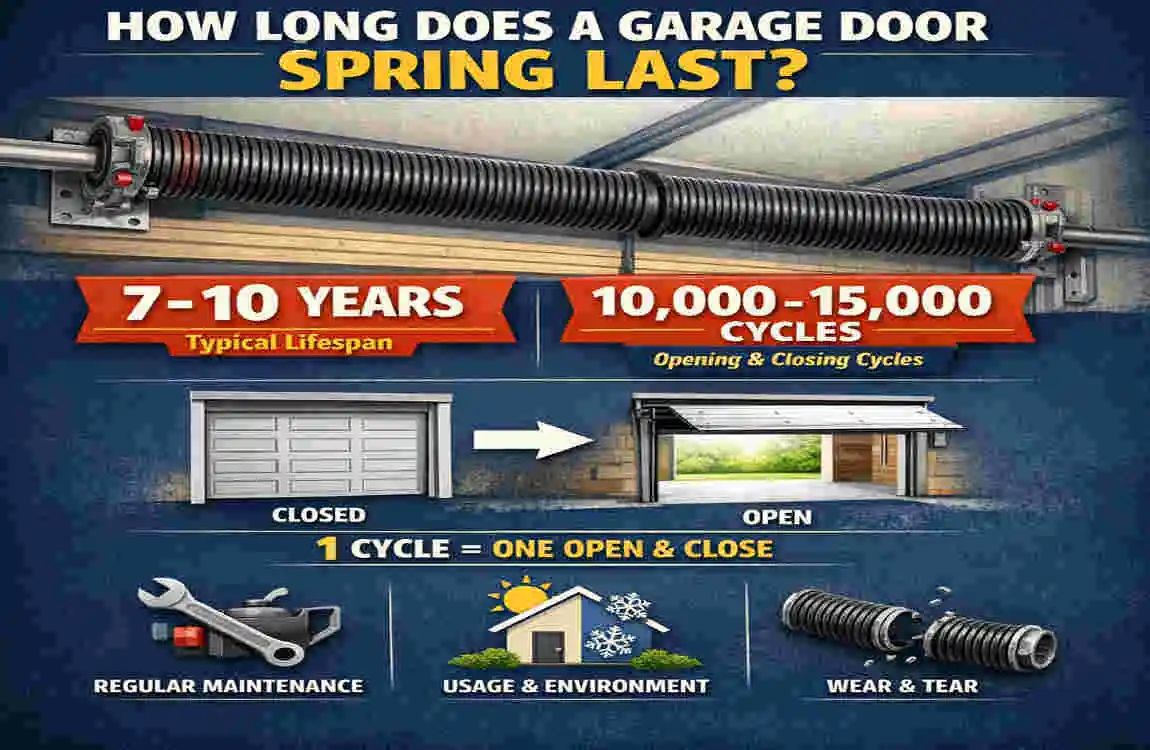
If you have ever wondered how long garage door springs last, the short answer is this: most last 7–10 years or around 10,000–15,000 door cycles. Some high-cycle springs can last much longer, especially when they are well maintained and used properly.
How Long Do Garage Door Springs Last?
The lifespan of a garage door spring depends on the type of spring, how often the door is used, and how well it is cared for. Not every spring wears out at the same speed.
Average lifespan of torsion springs
Torsion springs are the most common type in many modern homes. These springs are mounted above the garage door and twist tightly to help lift the door.
A standard torsion spring usually lasts about 7–10 years. In cycle count, that often means around 10,000 to 15,000 cycles.
A cycle means the garage door opens once and closes once. So if your family uses the garage door frequently, the spring will wear out faster.
Average lifespan of extension springs
Extension springs stretch and contract rather than twist. They are often found on older or lighter garage door systems.
These springs usually last about 5–7 years and often reach around 10,000 cycles. They can still work well, but they may wear out sooner than torsion springs in many homes.
Lifespan measured in door cycles
A lot of people think spring life is measured only in years, but cycles matter more. A spring that is used heavily will wear out faster, even if the garage is not very old.
For example, if your household opens the garage door 10 times a day, that adds up quickly. Over time, the spring loses strength from the repeated stress.
Typical years of service for most homeowners
For most homeowners, garage door springs last around 7–10 years. That is a useful average, but your own experience may be shorter or longer depending on usage and maintenance.
If you have a busy family, several vehicles, or a garage door that is the main entry point, the spring may wear out faster. If the door is used less often, it may last longer.
Types of Garage Door Springs
Not all garage door springs are the same. Knowing the type you have can help you understand how long it may last and what kind of care it needs.
Torsion springs
Torsion springs are installed above the garage door opening. They work by twisting under tension to lift the door smoothly.
These springs are popular because they tend to provide better balance and smoother motion. They also often last longer than extension springs.
Extension springs
Extension springs are placed along the sides of the door tracks. They stretch when the door closes and contract when the door opens.
They are usually less expensive, but they may not last as long as torsion springs. They also require careful handling because they are under strong tension.
High-cycle garage door springs
High-cycle springs are made to last longer than standard springs. They are designed for homes that use the garage door frequently.
These springs can last 20,000 to 50,000 cycles, which may mean 10–20 years or more in some homes. They cost more at first, but they may save money over time because you replace them less often.
Which spring lasts the longest?
In most cases, high-cycle torsion springs last the longest. They are built for more use and are often the best option if you want better long-term value.
If your garage door gets heavy daily use, this type is often worth considering.
Factors That Affect Garage Door Spring Lifespan
Several things can shorten or extend the life of your springs. If you understand these factors, you can make smarter choices and avoid early failure.
Daily usage frequency
The more you use the garage door, the faster the spring wears out. This is one of the biggest reasons spring life varies from home to home.
If the garage is your family’s main entry point, the spring may reach its cycle limit much sooner than expected.
Door weight
A heavier garage door puts more strain on the spring. Wood doors, insulated doors, and oversized doors often need stronger springs because they carry more load.
If the spring is not matched correctly to the door weight, it may wear out faster.
Climate and humidity
Weather can affect spring life in a big way. In humid or rainy areas, springs may rust more quickly. In cold climates, metal can become more stressed over time.
If you live in a place with major weather changes, your springs may need extra care.
Rust and corrosion
Rust weakens the metal surface. Once corrosion starts, the spring may lose strength and become more likely to snap.
Even a little rust can shorten spring life if it is ignored for too long.
Poor maintenance
Springs need simple care to stay in good shape. If they are never cleaned, lubricated, or inspected, they wear out faster.
A little maintenance can make a real difference over time.
Incorrect spring size
If the spring is the wrong size for the door, it may carry too much or too little tension. Both problems can cause early wear.
A correct match between the spring and the door is important for safe, smooth movement.
Professional vs. DIY installation
A spring installed by a trained professional is more likely to work as intended. Poor installation can create uneven tension and shorten the spring’s life.
Garage door springs are not simple parts. Installation mistakes can be dangerous and costly.
Signs Your Garage Door Spring Is Wearing Out
Garage door springs usually give warning signs before they break completely. If you pay attention early, you can avoid being stuck with a broken door.
Loud snapping noise
A spring that breaks often makes a sharp bang or snapping sound. This can sound like something hit the garage wall.
If you hear that noise and the door suddenly stops working, the spring may have broken.
Door feels heavy
A healthy spring helps lift most of the door’s weight. If the spring is failing, the door may feel much heavier than normal.
You may notice this when trying to open the door manually.
Uneven door movement
A worn spring can make the door move unevenly. It may rise at an angle, jerk during movement, or seem to struggle on one side.
This is a clear sign that something is not balanced.
Slow opening or closing
If the door suddenly opens slower than usual, the spring may be losing strength. The same thing can happen when the door closes more heavily than normal.
Speed changes often point to a problem with tension or balance.
Visible gaps in the spring
A broken torsion spring may show a visible gap in the coil. That is one of the clearest signs of failure.
If you see this, the spring is no longer intact and should be replaced.
Crooked garage door
A crooked or tilted door often means one spring is not doing its job. The door may hang unevenly or fail to open fully.
This can create extra strain on other parts of the system too.
Garage Door Spring Lifespan Comparison
Here is a simple look at the average lifespan of different spring types.
Spring TypeAverage CyclesTypical Lifespan
Extension Spring 10,000 cycles 5–7 years
Standard Torsion Spring 10,000–15,000 cycles 7–10 years
High-Cycle Torsion Spring 20,000–50,000 cycles 10–20 years
What the table means
This table shows why spring type matters so much. A standard spring may be fine for light use, but a high-cycle spring is often better for busy homes.
If your garage door is used many times a day, a stronger spring may save you from frequent repairs.
How to Make Garage Door Springs Last Longer
You cannot stop wear completely, but you can slow it down. A few simple habits can extend spring life and help your door work better.
Lubricate springs regularly
Garage door springs need the right lubricant to reduce friction and help protect against rust. A garage door-specific lubricant is the safest choice.
Lubricating every 3–6 months is usually a good routine.
Perform routine inspections
Take a few minutes every so often to look at the springs. Check for rust, gaps, uneven wear, or strange sounds.
You do not need to take anything apart. A simple visual check can help you catch problems early.
Keep springs clean
Dust, dirt, and moisture can build up on the spring over time. Wiping the area clean helps reduce buildup that may lead to damage.
Clean parts often last longer than neglected ones.
Balance the garage door.
A balanced garage door puts less strain on the springs. If the door is out of balance, the springs have to work harder than they should.
That extra stress can shorten their life.
Reduce unnecessary door cycles.
Every open-and-close movement counts as a cycle. Try to avoid using the garage door when you do not need to.
Small changes in daily habits can help preserve spring life.
Schedule annual professional maintenance.
A yearly checkup can reveal problems before they become serious. A professional can test balance, inspect for wear, and ensure the system is operating safely.
This is one of the best long-term habits for any homeowner.
When Should Garage Door Springs Be Replaced?
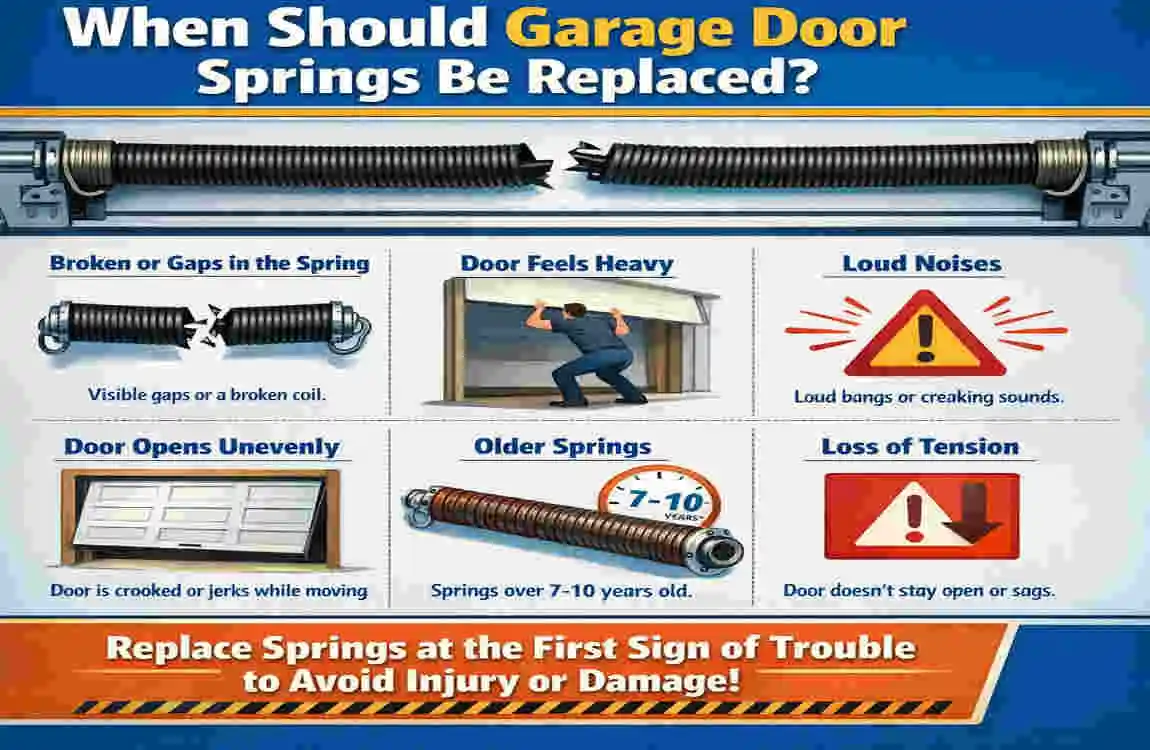
Springs do not last forever. The key is to replace them at the right time before they cause bigger issues.
Replace after reaching cycle limit.
If you know the spring’s cycle rating and it is near the limit, replacement is a smart move.
Waiting too long can lead to sudden failure, which may trap your car inside or leave the door unsafe to use.
Replace both springs together.
If your garage door uses two springs, it is usually best to replace both at the same time. Even if one is only slightly worn, the other may not be far behind.
Replacing both helps keep the door balanced and can reduce future service calls.
Safety reasons to avoid delaying replacement
A failing spring puts stress on the opener, tracks, and other hardware. It can also create a safety risk if the spring breaks suddenly.
If the spring looks worn or the door is acting strangely, do not wait too long.
Garage Door Spring Replacement Cost
The cost of replacement can vary depending on the spring type, labour, and local rates. It is helpful to know what to expect before you call for service.
Average replacement costs
In many homes, garage door spring replacement can cost anywhere from moderate to several hundred dollars, depending on the setup and service provider.
The exact price will depend on what needs to be replaced and how difficult the job is.
Cost differences by spring type
Standard springs usually cost less than high-cycle springs. However, high-cycle options may be better value if you want longer service life.
A more durable spring may cost more upfront but save money later.
Labor charges
Labour is often a large part of the total cost. This is because spring replacement takes skill, tools, and careful handling.
Garage door springs are under high tension, so the job is not a simple DIY project.
Factors affecting total cost
Several things can change the final price:
- Spring type
- Door size and weight
- Number of springs
- Emergency service needs
- Local labour rates
Can You Replace Garage Door Springs Yourself?
This is one job where most homeowners should stop and call a professional.
Safety risks
Garage door springs are under extreme tension. If something goes wrong, the spring can snap hard and cause serious injury.
That is why this repair is considered dangerous.
Required tools
Replacing springs usually requires special tools and a strong understanding of how the system works. It is not just a matter of removing one part and replacing it with another.
Without the right knowledge, the job can become unsafe very quickly.
Why professionals are recommended
A trained technician knows how to handle the tension, size the spring correctly, and balance the door properly.
Hiring a professional is usually the safest and most reliable choice.
Common Garage Door Spring Maintenance Mistakes
Many spring problems stem from simple mistakes that could have been avoided.
Ignoring rust
Rust does not fix itself. If you ignore it, the spring can weaken faster and break sooner.
Using the wrong lubricant
Not every lubricant is right for garage doors. Some products attract too much dirt or do not protect metal well enough.
Skipping annual inspections
Regular checks help catch wear early. Without them, problems may go unnoticed until the spring breaks.
Overusing the garage door
Using the garage door as your main entrance increases the number of cycles each day. That may be convenient, but it also shortens spring life.
Replacing only one spring
If your system uses two springs, replacing only one can create uneven wear. The other spring may fail soon after.
Expert Tips to Extend Garage Door Spring Life
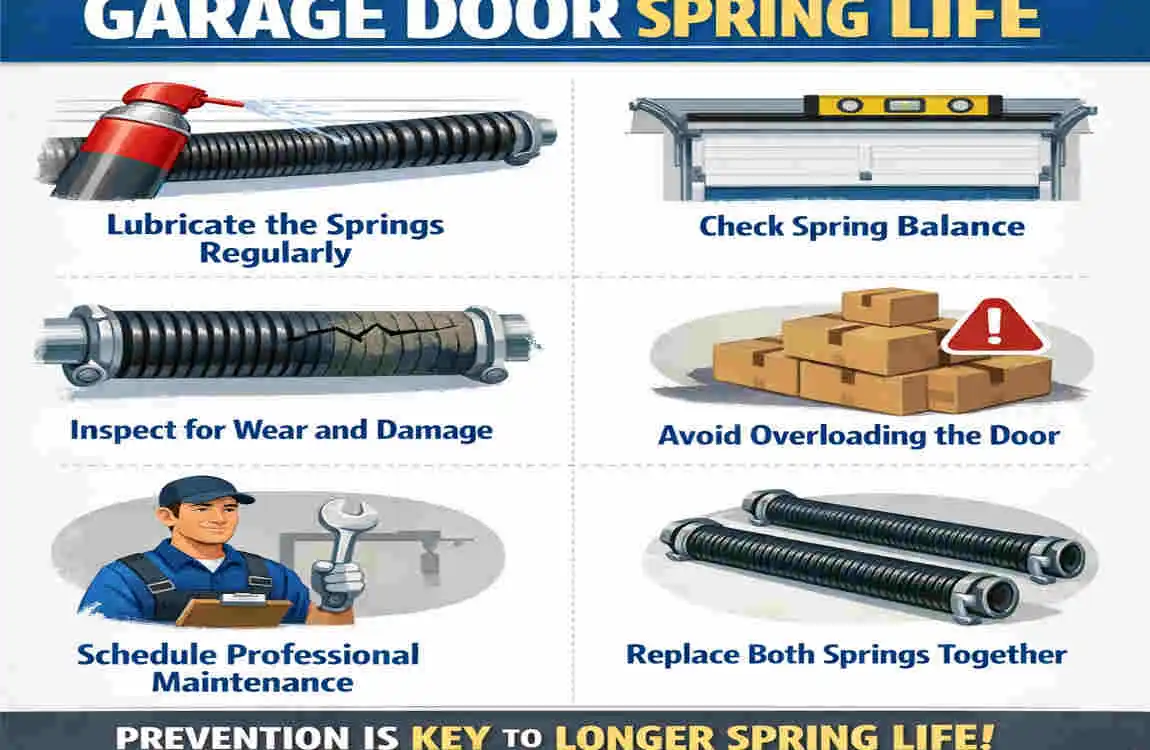
If you want your springs to last as long as possible, a few expert habits can help.
Buy high-cycle springs
If your garage door gets heavy use, high-cycle springs are a smart investment. They are built for more openings and closings.
Install the correct spring size.
The spring must match the door’s weight and size. A proper fit helps the whole system work more smoothly.
Keep tracks aligned
When the tracks are misaligned, the door does not move evenly. That can increase stress on the springs and other parts.
Test door balance regularly
A balanced door should stay in place when partly opened. If it falls or shoots up, the balance may be off.
Schedule yearly servicing
A yearly tune-up can go a long way. It keeps the door system healthy and helps you spot wear before it becomes a serious problem.
Frequently Asked Questions (FAQ)
How long do garage door springs last on average?
Most garage door springs last 7–10 years or around 10,000–15,000 cycles, depending on use and maintenance.
What causes garage door springs to wear out?
Frequent use, rust, heavy doors, poor maintenance, and harsh weather all shorten spring lifespan.
Should both garage door springs be replaced at the same time?
Yes. Replacing both springs together helps maintain balanced operation and reduces future repair costs.
How do I know if my garage door spring is broken?
Common signs include a loud bang, a heavy door, uneven movement, visible gaps in the spring, or the door failing to open.
Can garage door springs last longer than 10 years?
Yes. High-cycle springs, when properly maintained, can last 15–20 years under normal household use.
Is it safe to replace garage door springs yourself?
No. Garage door springs are under extreme tension and can cause serious injury. Professional replacement is the safest option.
How often should garage door springs be lubricated?
Lubricate them every 3–6 months with a garage-door-specific lubricant to reduce friction and prevent rust.
| Topic | Information |
|---|---|
| Average Lifespan | Most garage door springs last 7–12 years with normal use. |
| Standard Cycle Rating | Typically rated for 10,000 opening and closing cycles. |
| High-Cycle Springs | Premium springs can last 20,000–50,000 cycles or more. |
| What Affects Lifespan? | Daily usage, spring quality, door weight, climate, and regular maintenance. |
| Signs of Wear | Loud snapping noise, uneven door movement, gaps in the spring, or difficulty opening the door. |
| Maintenance Tips | Lubricate springs every 3–6 months, inspect for rust, and schedule annual professional inspections. |
| When to Replace | Replace springs if they break, become heavily worn, or reach the end of their cycle rating. |
| Safety Warning | Never attempt to replace garage door springs yourself, as they are under extreme tension and can cause serious injury. |
| Replacement Cost (U.S.) | Generally $150–$400, depending on the spring type and labor costs. |
| Best Way to Extend Lifespan | Keep springs lubricated, avoid overloading the door, and balance the garage door regularly. |