A pipe leak at home can feel stressful fast. Water spreads quickly, damages walls and floors, and can even reach electrical areas if you are not careful. That is why knowing what to do first during an emergency pipe leak at home matters so much.
What Is an Emergency Pipe Leak?
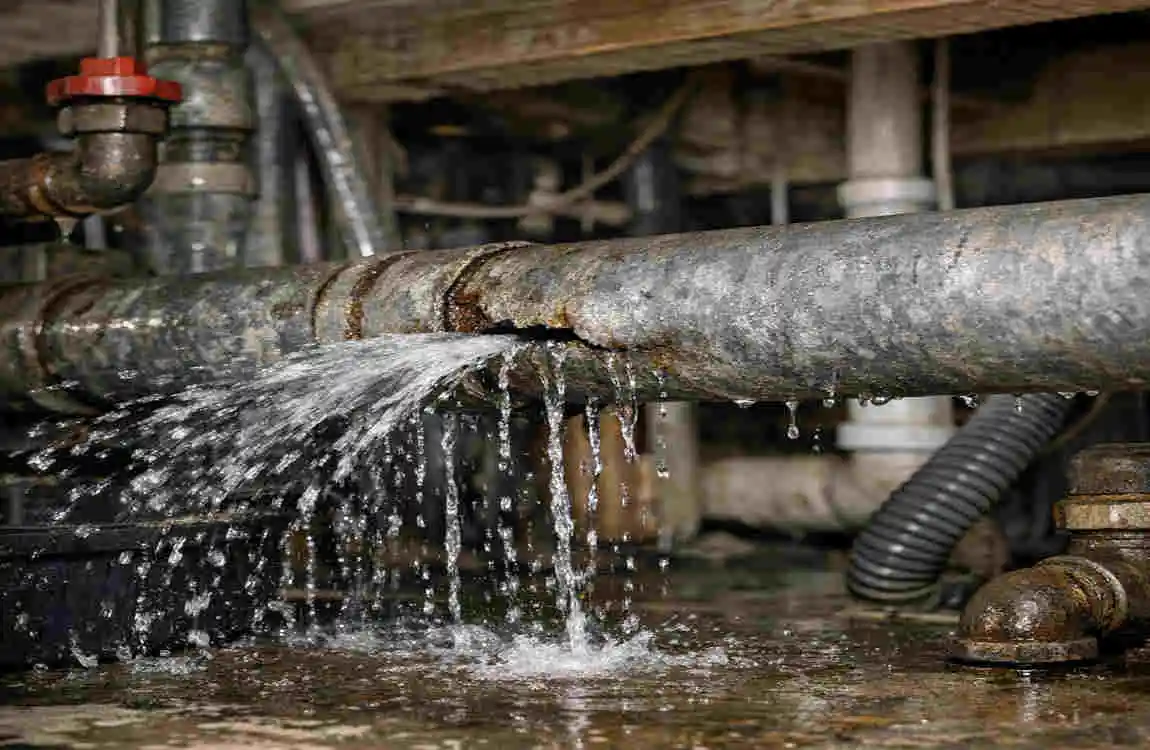
An emergency pipe leak is any plumbing problem that lets water escape in a way you cannot control. It may be small at first, but it can turn serious very quickly.
Common Signs of a Serious Leak
Watch for these warning signs:
- Water pooling on floors
- Sudden drop in water pressure
- Water stains on walls or ceilings
- Hissing, dripping, or rushing sounds
- Higher water bills without a clear reason
If you notice one or more of these signs, treat it like a real emergency. Even a small leak can grow into a bigger problem in a short time.
What to Do First During an Emergency Pipe Leak
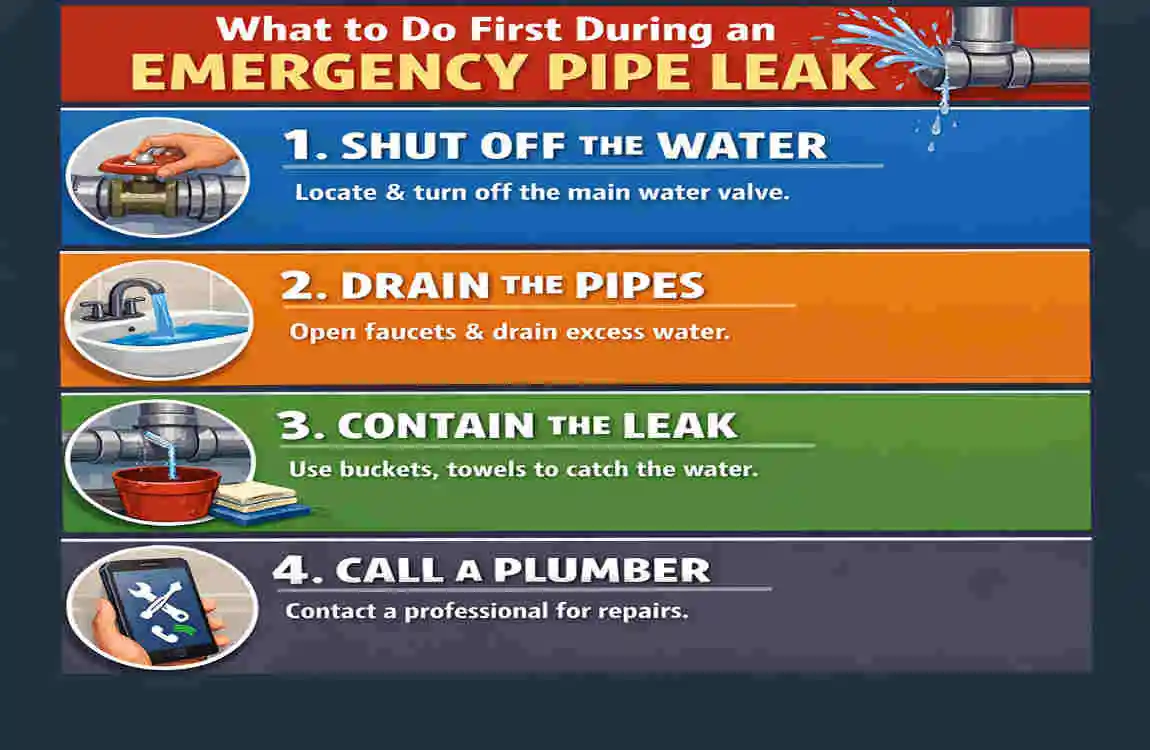
When a pipe starts leaking, your first goal is to stop the water and reduce damage. The steps below can help you do that safely.
Turn Off the Main Water Supply
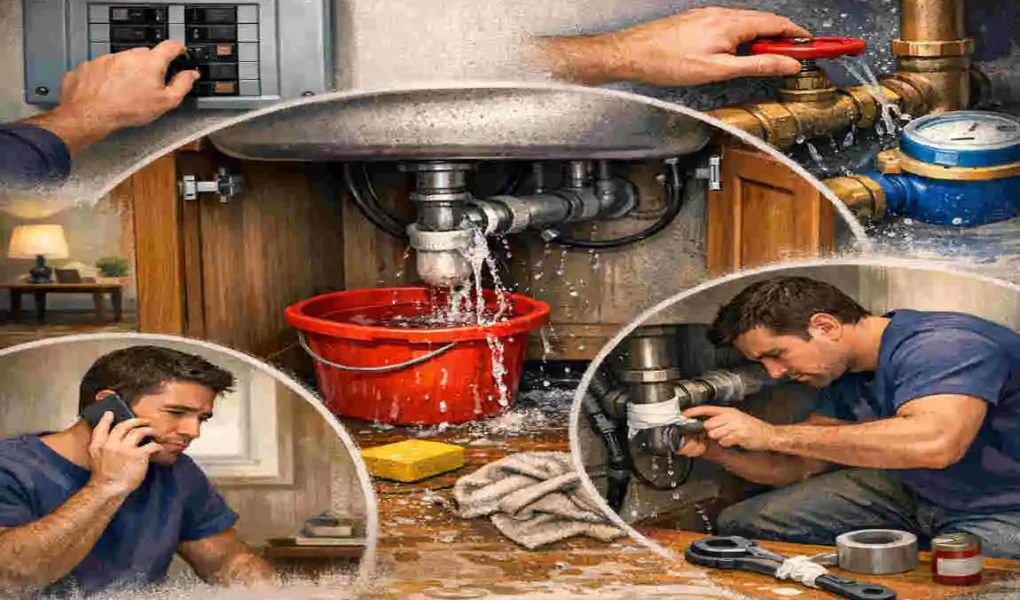
This is the most important first step. Turning off the main water valve stops water from flowing through your home’s pipes.
If you do nothing else, do this right away. It can prevent the leak from worsening while you figure out your next move.
Switch Off Electricity If Needed
If water is near outlets, appliances, or the breaker panel, turn off the electricity to that area.
Be careful here. Do not stand in water while handling electrical equipment. If the area is unsafe, stay away and call for help.
Drain the Remaining Water
Once the main water is off, open the faucets around the house to release any remaining water in the pipes. You can also flush the toilets once to help empty the system.
This step helps reduce pressure in the plumbing and may slow the escape of more water.
Contain the Leak
Use towels, buckets, or containers to catch dripping water. If the leak is small and you can reach it safely, you may use temporary repair tape or a clamp.
These are only short-term fixes, but they can help while you wait for a plumber.
Move Valuables Out of the Way
Protect what you can. Move furniture, electronics, rugs, papers, and other important items away from the leak.
The faster you move them, the less chance they have of being damaged by water.
Call a Licensed Plumber
Temporary fixes are not enough for long-term safety. A licensed plumber can identify the root cause and repair it properly.
The sooner you call, the better. Quick action often means lower repair costs and less damage overall.
Common Causes of Emergency Pipe Leaks
Pipe leaks usually happen for a reason. Knowing the cause can help you avoid the same problem again.
CauseDescription
Corroded pipes Older pipes wear down and develop weak spots
Frozen pipes Water expands when frozen and can burst pipes
High water pressure Too much pressure can crack fittings
Loose joints Connections loosen over time
Tree root intrusion Roots can damage underground lines
Accidental damage Drilling or construction can puncture pipes
Why These Causes Matter
Some leaks happen because pipes get old. Others occur due to weather, pressure, or damage from outside the home. When you understand the cause, it becomes easier to prevent it next time.
For example, frozen pipes are more common in cold weather, while high water pressure can slowly damage your plumbing over time. That is why regular checks are so useful.
How to Prevent Future Pipe Leaks
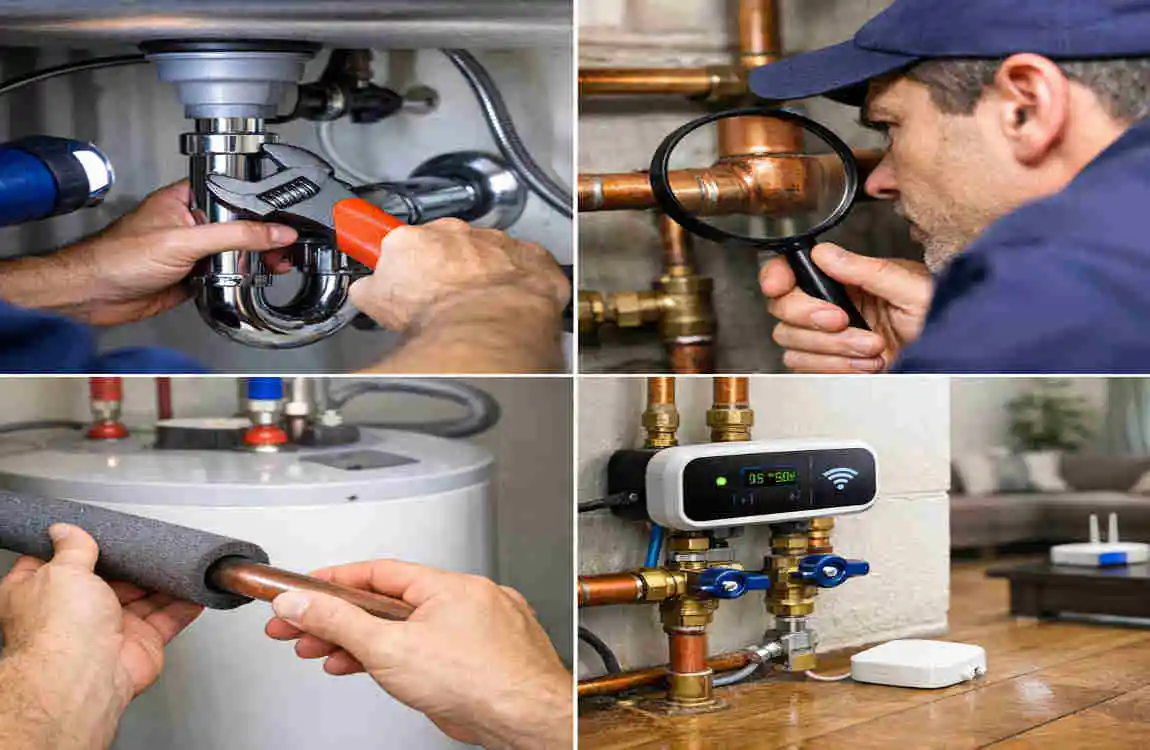
You cannot prevent every plumbing problem, but you can significantly reduce the risk with simple habits.
Inspect Visible Pipes Regularly
Look at pipes under sinks, in basements, and around appliances. Check for rust, moisture, or small drips.
A quick look every so often can help you catch a problem before it becomes an emergency.
Replace Old or Corroded Plumbing
If your pipes are very old or already showing signs of wear, replacement may be the safer choice. Waiting too long can lead to bigger leaks later.
Insulate Pipes During Winter
Cold weather can freeze exposed pipes and cause them to burst. Adding insulation helps protect them in colder months.
Monitor Water Pressure
If water pressure is too high, it can strain your plumbing. A plumber can test it and help keep it in a safe range.
Fix Small Leaks Quickly
A tiny leak may seem harmless, but it can get worse over time. Repairing it early is usually cheaper and easier than waiting.
Know Where the Main Shut-Off Valve Is
This is one of the best things you can do as a homeowner. If a pipe breaks, you do not want to waste time searching for the valve.
Make sure every adult in the house knows where it is located.
Frequently Asked Questions
What should I do immediately if a pipe starts leaking?
Turn off the main water supply, contain the leak with towels or buckets, and call a licensed plumber.
Can I temporarily repair a leaking pipe?
Yes. Pipe repair tape, epoxy putty, or a repair clamp can temporarily seal the leak.
How do I know if a pipe has burst?
Signs include flooding, sudden water loss, strange pipe noises, and water stains on walls or ceilings.
Should I turn off the electricity during a water leak?
Yes, if water is near outlets, wiring, or appliances. Only do this if it is safe to reach the electrical panel.
How can I prevent emergency pipe leaks?
Regular inspections, pipe insulation, pressure checks, and early repairs can significantly reduce the risk.
| Step | What to Do | Why It Matters |
|---|---|---|
| Stay Calm | Avoid panicking and quickly assess the leak. | Helps you respond safely and efficiently. |
| Shut Off the Water | Turn off the main water supply valve immediately. | Prevents further flooding and water damage. |
| Turn Off Electricity (If Needed) | Switch off power if water is near electrical outlets or appliances. | Reduces the risk of electric shock. |
| Drain Remaining Water | Open nearby faucets to empty the pipes. | Relieves water pressure and slows leaking. |
| Contain the Leak | Use buckets, towels, or containers to catch dripping water. | Minimizes damage to floors and furniture. |