
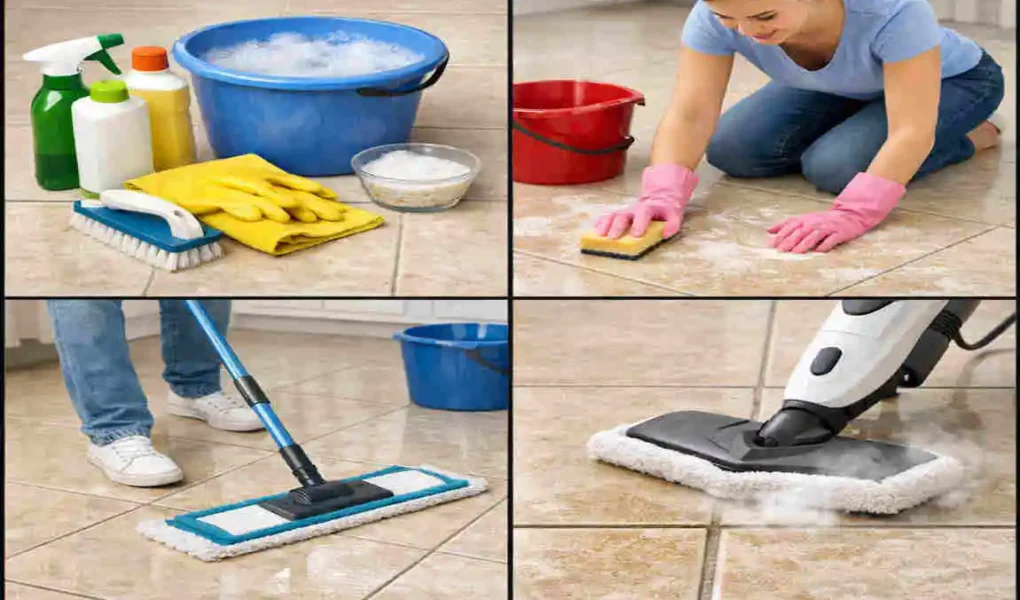
Tile floors are a great choice for busy homes. They look clean, feel fresh, and usually hold up well over time. But even strong floors need regular care. Dust, spills, and soap buildup can make tile look dull if you do not clean it properly.
The good news is that cleaning tile floors at home is simple. You do not need expensive products or complicated steps. With the right routine, you can keep your floors bright, clean, and easy to maintain.
Why Regular Tile Floor Cleaning Matters
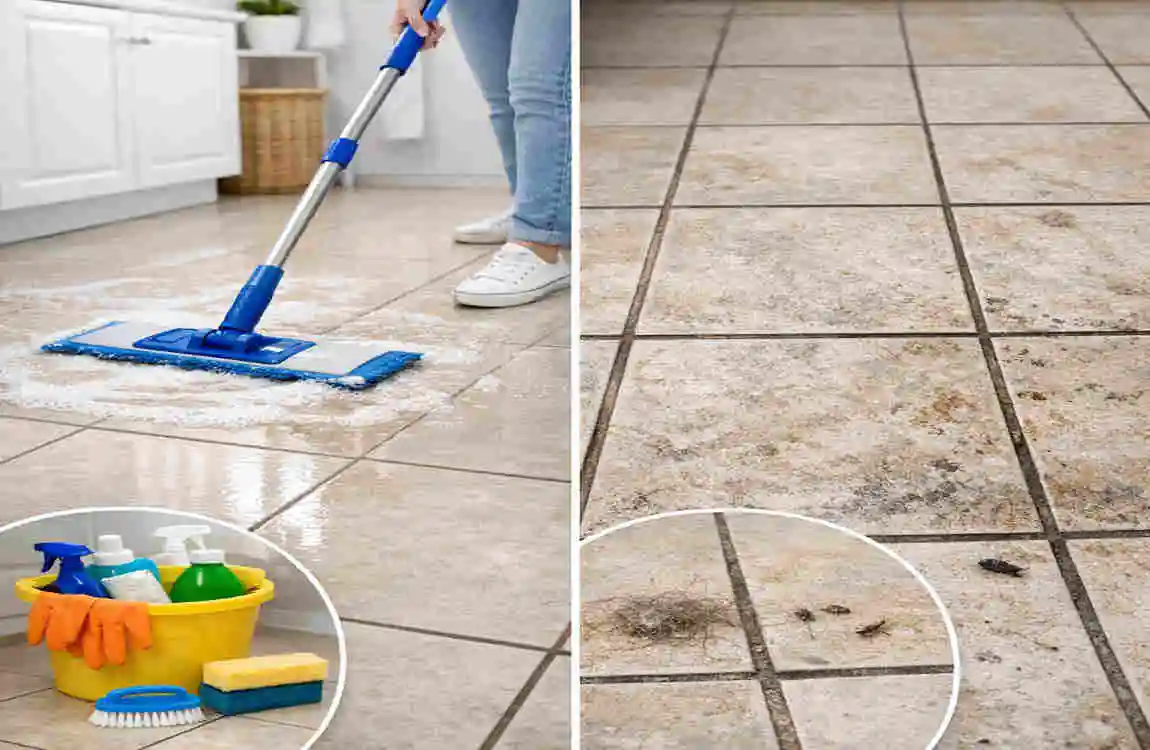
Regular cleaning does more than make your floor look nice. It also helps protect the tile and grout from long-term damage.
Keeps Dirt from Building Up
When dirt stays on the floor too long, it gets harder to remove. Over time, it can scratch the surface or make the floor look faded.
Helps Grout Stay Cleaner
Grout lines collect dust and spills quickly. If you clean often, the grout stays brighter and does not stain as easily.
Reduces Germs and Allergens
Tile floors can trap dust, pet hair, and small particles. Regular cleaning helps create a healthier home.
Extends Floor Life
A clean floor lasts longer. When you care for tile the right way, you help protect both the surface and the grout.
Tools You’ll Need
Before you start, gather a few simple tools. These basics are enough for most tile floors.
Cleaning Tool Purpose
Soft broom or vacuum Removes dust and debris
Microfiber mop Cleans without scratching
Warm water General cleaning
Mild dish soap Removes grease and dirt
Baking soda Helps with stubborn stains
White vinegar Good for ceramic tile only
Soft brush Cleans grout lines
Step-by-Step Guide to Cleaning Tile Floors
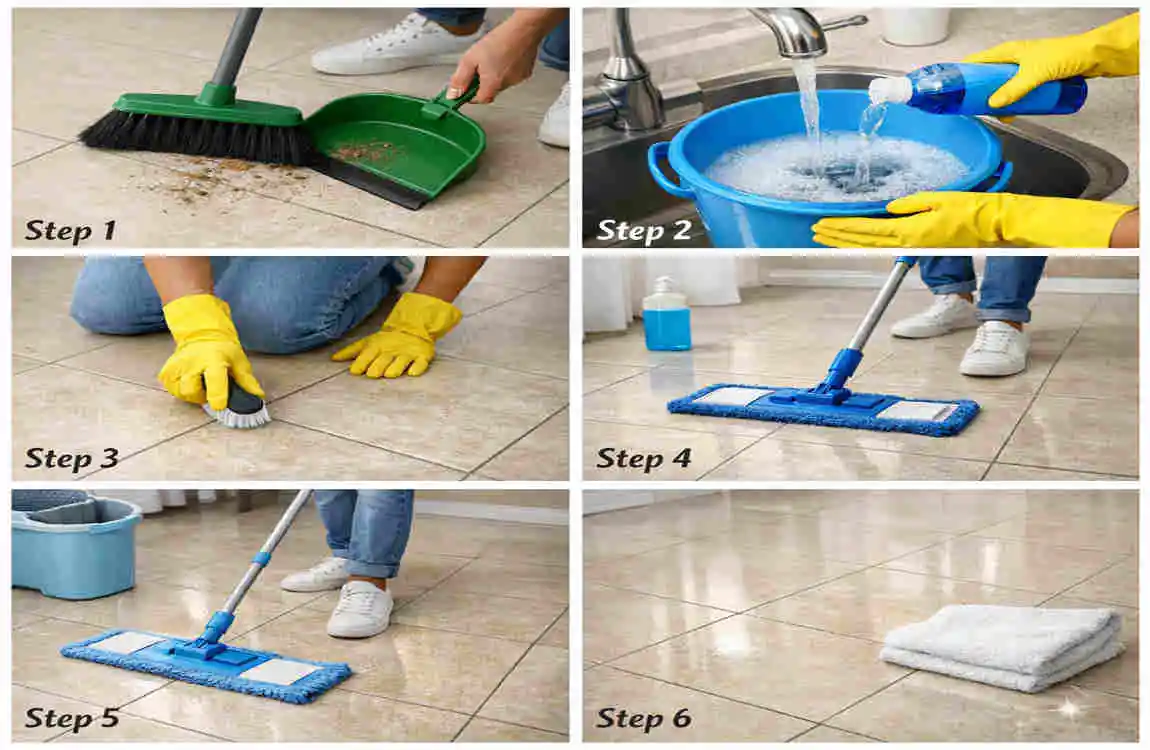
A steady routine works best. Follow these easy steps for a cleaner floor.
Sweep or Vacuum First
Always start by removing loose dirt. If you mop first, dirt can spread around and make the floor look worse.
A soft broom or vacuum works well. This step also helps prevent tiny particles from scratching the tile.
Mix a Gentle Cleaning Solution
For everyday cleaning, warm water and a few drops of mild dish soap are usually enough.
If you have ceramic or porcelain tile, you can add a small amount of white vinegar. But do not use vinegar on natural stone because it can damage the surface.
Mop the Floor with a Damp Mop
Use a microfiber mop and keep it damp, not soaking wet. Too much water can seep into grout and cause trouble later.
Work in small sections so you do not miss spots. Rinse the mop as needed so you are not spreading dirty water around.
Clean the Grout
Grout often needs extra attention. If it looks dirty, make a simple paste with baking soda and water.
Apply the paste to the grout lines, scrub gently with a soft brush, and rinse with clean water. This helps remove buildup without being too harsh.
Dry the Floor
After mopping, dry the floor with a clean towel or microfiber cloth. This helps prevent water spots and keeps the surface looking fresh.
Best Homemade Tile Floor Cleaner
A simple homemade cleaner can work very well for regular cleaning.
DIY Recipe
- 1 gallon of warm water
- 2–3 drops of mild dish soap
- ¼ cup white vinegar for ceramic and porcelain tile only
This mix helps remove dirt without leaving a sticky film behind. Keep in mind that less is usually better when it comes to soap.
Cleaning Tips for Different Tile Types
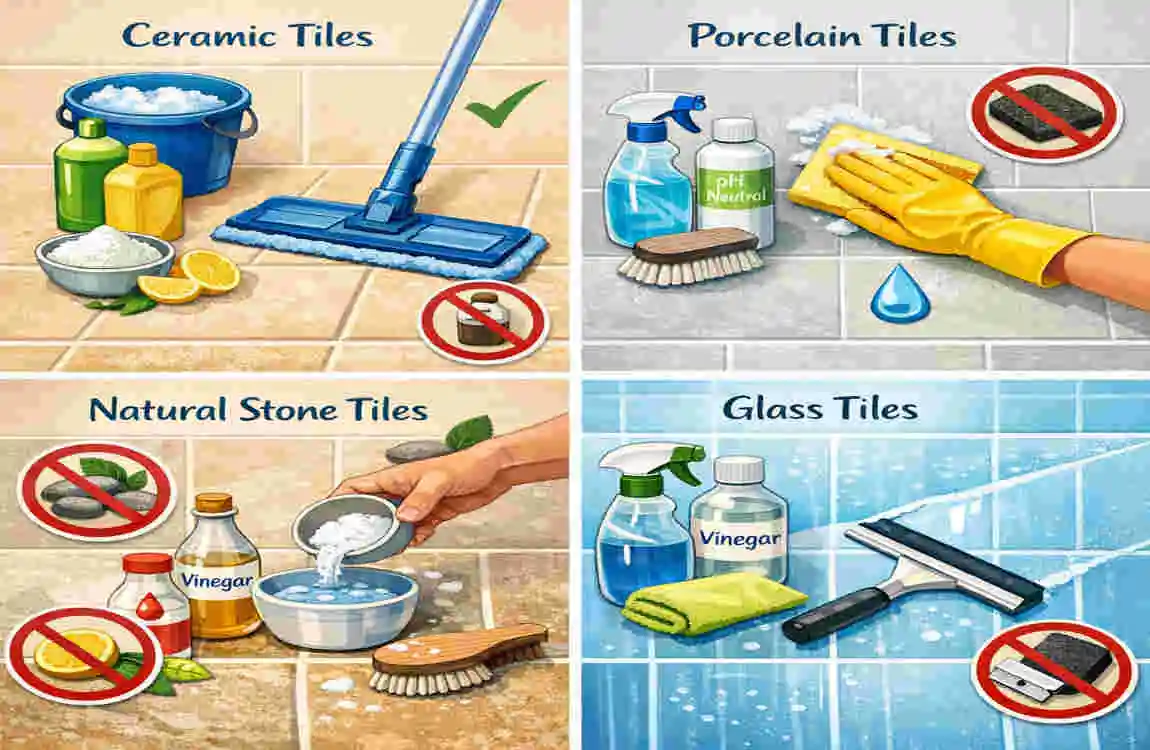
Not all tile is the same. The right cleaning method depends on the material.
Ceramic Tile
Ceramic tile is easy to care for. It handles mild soap and a small amount of vinegar well.
Try to mop it weekly if the area gets heavy use.
Porcelain Tile
Porcelain is strong and water-resistant. Warm water and gentle cleaners usually work best.
Avoid rough scrubbers, since they can dull the finish over time.
Natural Stone Tile
Stone tile needs special care. Never use vinegar or other acidic cleaners on it.
Use a pH-neutral stone cleaner and wipe up spills quickly to prevent stains or damage.
Common Mistakes to Avoid
A few cleaning habits can do more harm than good. Try to avoid these mistakes.
- Using too much bleach
- Scrubbing with steel wool
- Leaving standing water on the floor
- Using too much detergent
- Ignoring dirty grout lines
Too much cleaner can leave residue behind. That residue often makes tile look dull instead of clean.
Simple Maintenance Tips
A little regular care can save you a lot of work later.
Daily and Weekly Habits
- Sweep daily in busy areas
- Mop once a week
- Clean spills right away
- Use mats at entrances
- Add furniture pads to protect against scratches
These small habits help keep your floors looking good without much effort.
Frequently Asked Questions
How often should I clean tile floors?
Sweep or vacuum several times a week and mop once a week. High-traffic areas may need more frequent cleaning.
Can I use vinegar on all tile floors?
No. Vinegar is safe for ceramic and porcelain tile, but it should never be used on natural stone.
What is the best mop for tile floors?
A microfiber mop is usually the best choice because it cleans well without scratching the surface.
How do I make grout white again?
Use a paste of baking soda and water. Apply it to the grout, scrub gently, and rinse well.
Why do my tile floors look dull after mopping?
That usually happens because of soap residue. Use less detergent and rinse with clean water after mopping.