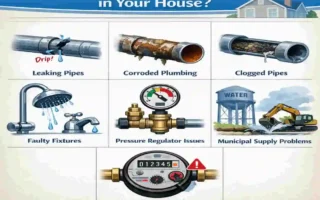
Imagine starting your day with a weak, sputtering shower or dealing with noisy, banging pipes every time you turn on the faucet. These are common signs of water pressure issues in your home. Whether it’s too high or too low, improper water pressure can disrupt your daily routine and even damage your plumbing system over time.
The ideal water pressure for a home typically ranges between 40 and 60 PSI (pounds per square inch). However, municipal water supplies often deliver pressure exceeding 100 PSI, which can strain your pipes and fixtures. On the other hand, low water pressure can make simple tasks like washing dishes or taking a shower frustratingly inefficient.
Why Regulate Water Pressure?
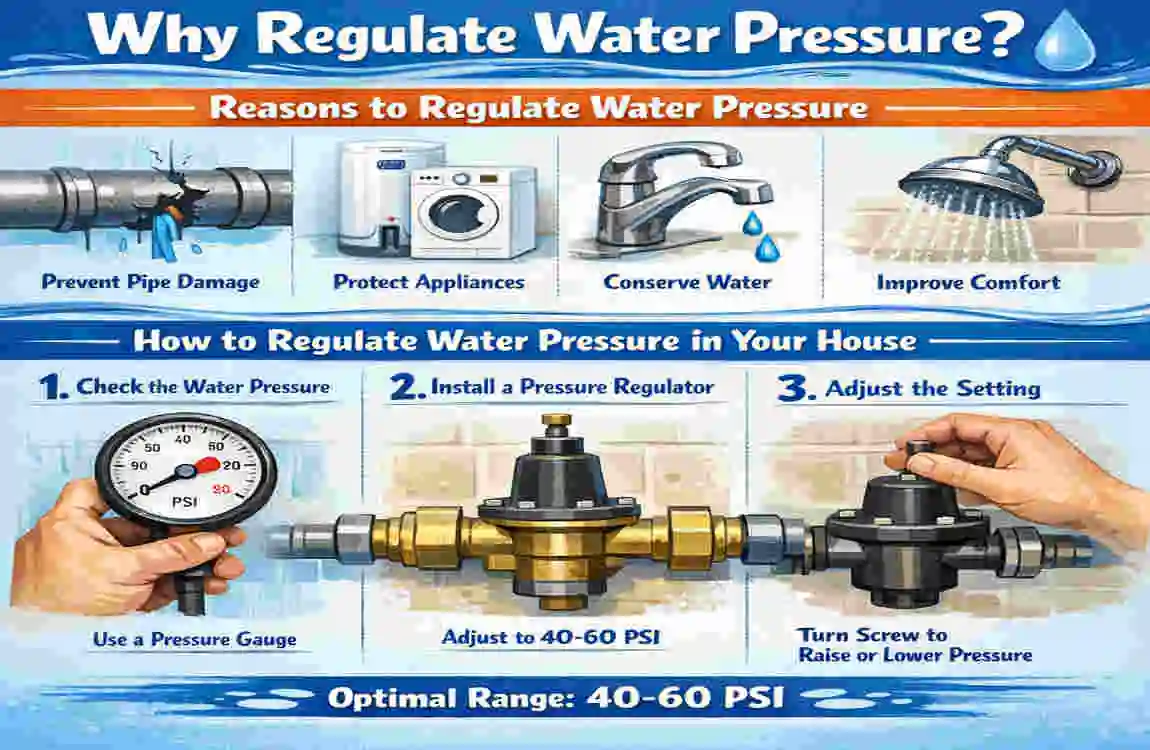
Water pressure that’s too high or too low can cause a host of problems. Understanding the risks and benefits of proper regulation is the first step toward maintaining a healthy plumbing system.
The Risks of High Water Pressure
- Damaged Fixtures: Excessive pressure can erode seals and gaskets, leading to leaks.
- Burst Pipes: Over time, high pressure can weaken pipes, leading to bursts.
- Increased Water Bills: High pressure often leads to water wastage, inflating your utility costs.
The Challenges of Low Water Pressure
- Weak Flow: Tasks like showering or filling a pot take longer than necessary.
- Appliance Inefficiency: Washing machines and dishwashers may not function optimally.
- Clogged Filters: Sediment buildup in pipes can exacerbate low-pressure issues.
Benefits of Regulating Water Pressure
- Save Money: Proper pressure reduces water waste and extends the lifespan of your fixtures.
- Improved Comfort: Enjoy consistent water flow for showers, cleaning, and other daily tasks.
- Prevent Damage: Protect your pipes and appliances from unnecessary strain.
Common Pressure Issues and Their Symptoms
Pressure Issue: Symptoms and Risks
Too High Noisy pipes, leaks, Burst pipes, eroded seals
Too low, weak flow, slow drains, clogged filters, poor appliance performance
Tools Needed
Before diving into the methods, gather the following tools to make the process easier and safer:
- Water Pressure Gauge: A simple tool costing $10–$20, essential for measuring pressure before and after adjustments.
- Adjustable Wrench and Screwdriver Set: For loosening and tightening valves.
- Flashlight: To inspect hard-to-reach areas.
- Plumber’s Tape: Ensures a tight seal when working with pipes.
Adjust the Pressure Reducing Valve (PRV)
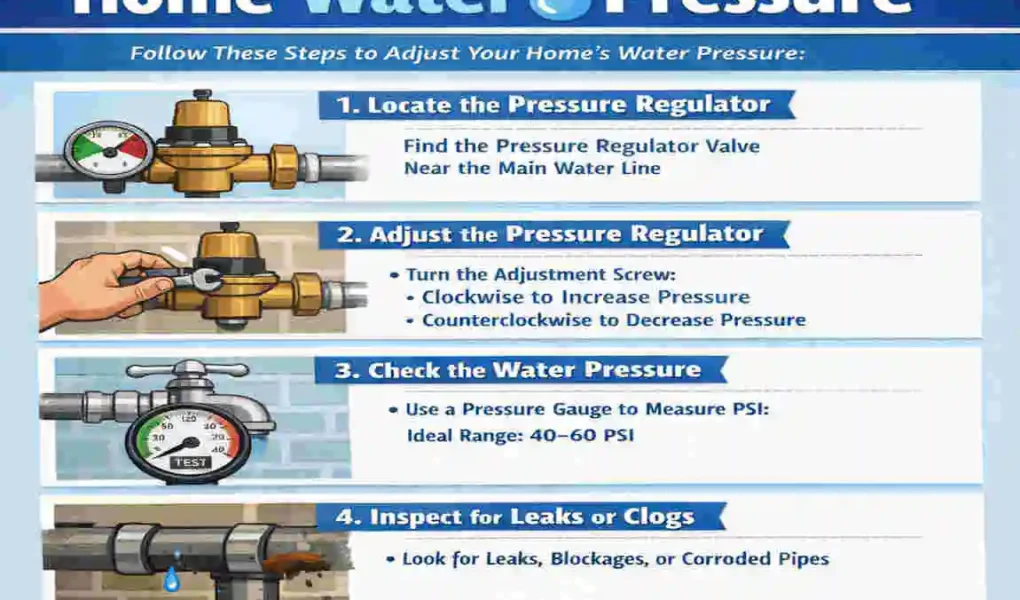
The Pressure Reducing Valve (PRV) is the primary tool for regulating water pressure in most homes. It’s typically located near the main water line, often in the basement, garage, or near the water meter.
Step-by-Step Guide
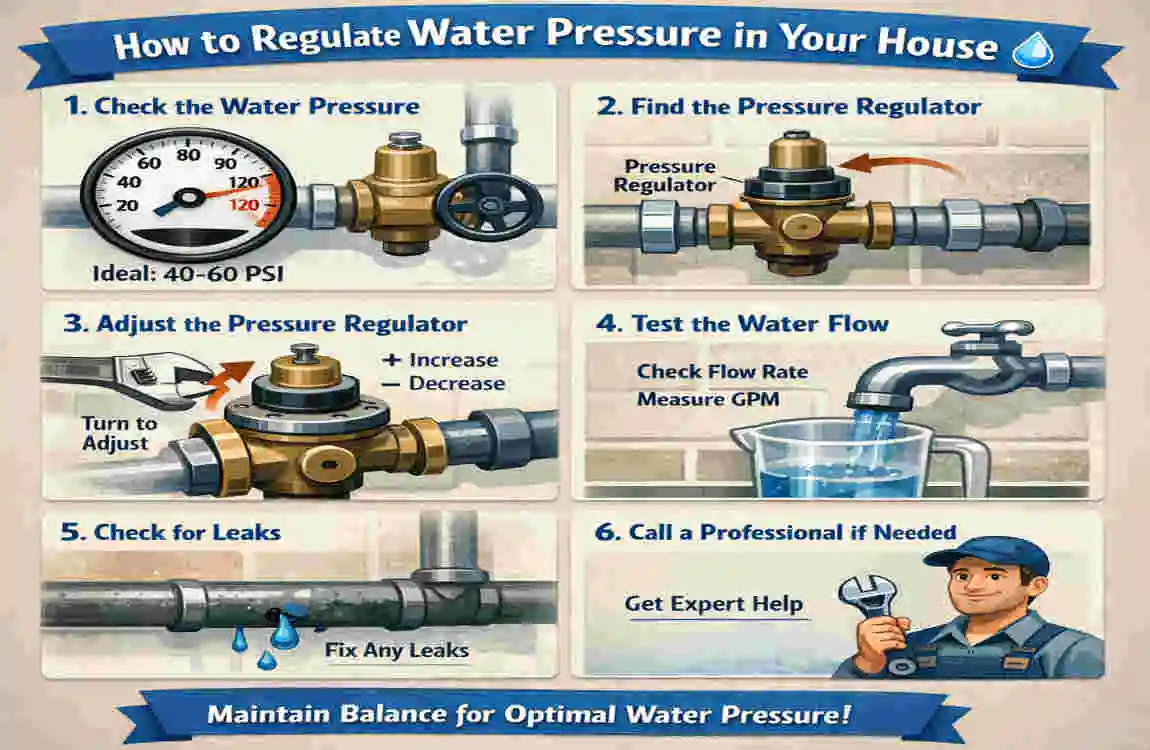
- Locate the PRV: Look for a brass, bell-shaped valve near your main water line.
- Turn Off the Main Water Supply: This ensures safety while making adjustments.
- Attach a Water Pressure Gauge: Connect it to an outdoor faucet to measure the current PSI.
- Adjust the PRV: Loosen the locknut and turn the adjustment screw:
- Clockwise: Increases pressure.
- Counterclockwise: Decreases pressure. Make small adjustments (1/4 turns) and retest the pressure after each change.
- Retighten the Locknut: Once the desired pressure is achieved, secure the locknut.
- Restore Water Supply: Turn the main valve back on and test your fixtures.
Inspect and Clean Aerators and Faucet Screens
Clogged aerators and faucet screens are a common cause of low water pressure. These small components can accumulate sediment and debris over time.
Steps to Clean Aerators
- Remove the Aerator: Unscrew it from the faucet using your hands or a wrench.
- Soak in Vinegar: Submerge the aerator in white vinegar for 30 minutes to dissolve mineral deposits.
- Scrub and Rinse: Use a small brush to remove any remaining debris.
- Reinstall and Test: Screw the aerator back onto the faucet and check the water flow.
Check the Main Shutoff Valve
Sometimes, low water pressure is simply due to a partially closed main shutoff valve. This often happens after plumbing repairs.
How to Check the Valve
- Locate the Valve: It’s usually near the water meter or where the main line enters your home.
- Turn Fully Open: Rotate the valve counterclockwise until it’s fully open.
- Test the Pressure: Run a faucet to see if the flow improves.
Flush the Water Heater
Sediment buildup in your water heater can reduce hot water pressure. Flushing the tank annually can resolve this issue.
Steps to Flush the Water Heater
- Turn Off the Heater: Shut off the power or gas supply.
- Connect a Hose: Attach a garden hose to the drain valve.
- Drain the Tank: Open the valve and let the water flow until it runs clear.
- Refill and Restart: Close the valve, remove the hose, and restore power or gas.
Examine Pipes for Leaks or Kinks
Hidden leaks or kinks in your pipes can cause significant pressure drops.
How to Detect Leaks
- Listen for Hissing Sounds: This can indicate escaping water.
- Check Your Water Bill: A sudden spike may signal a hidden leak.
- Inspect Visible Pipes: Look for damp spots or corrosion.
Fixing Leaks
- Use plumber’s tape or epoxy compounds for minor leaks.
- Call a professional for extensive damage.
Upgrade to High-Flow Fixtures
Low-flow fixtures are designed to conserve water but can sometimes feel inadequate. Upgrading to high-flow models can improve your experience without compromising efficiency.
Cost-Benefit Analysis
- Initial Cost: $50–$200 per fixture.
- Long-Term Savings: Reduced water waste and improved performance.
Install or Replace an Expansion Tank
An expansion tank works alongside your PRV to manage thermal expansion and prevent overpressure.
When to install an Expansion Tank
- If your home has a closed plumbing system.
- If you frequently experience pressure spikes.
When to Call a Professional
While many water pressure issues can be resolved with DIY methods, some situations require expert intervention:
- Faulty PRV that won’t adjust.
- Municipal water pressure exceeding 100 PSI.
- Complex well systems.
Prevention and Maintenance
Regular maintenance can prevent most water pressure issues:
- Quarterly Checks: Use a pressure gauge to monitor PSI.
- Annual Inspections: Schedule a professional plumbing checkup.
FAQs
- How to regulate water pressure in the house without tools? Start by checking and fully opening all valves.
- What is the ideal water pressure for a home? Between 40–60 PSI.
- How much does it cost to fix water pressure issues? Typically, it ranges from $150 to $500, depending on the problem.