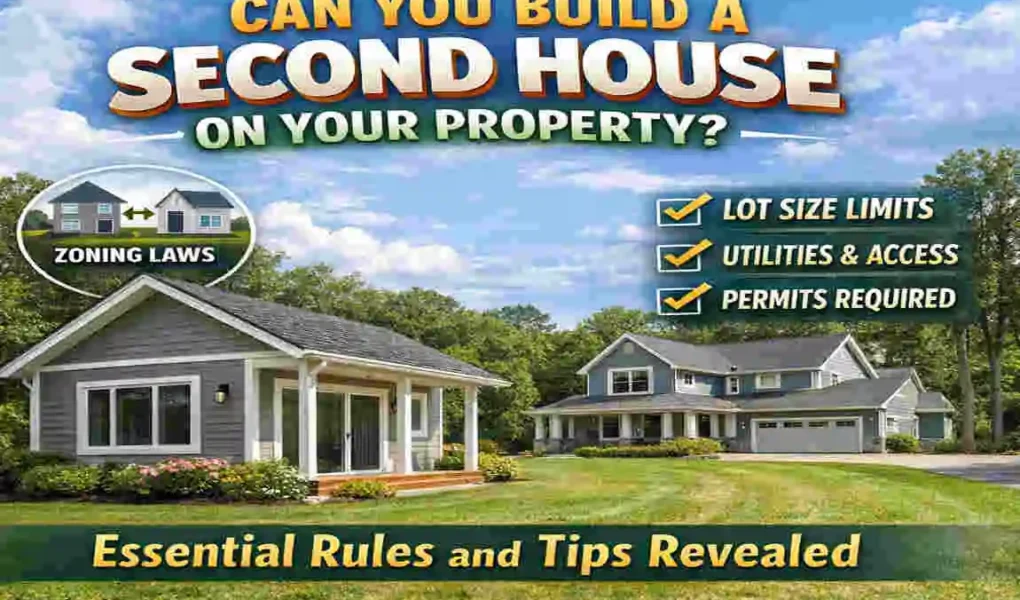
Can you build a second house on your property to boost income or house, family? This is a question millions of homeowners are asking right now. As the cost of living continues to climb and the housing market becomes increasingly competitive, maximising the space you already own is one of the smartest financial moves you can make.
We are seeing a massive, rising demand for extra living spaces. From young adults struggling to afford their first homes to ageing parents needing close-by care, the housing shortage has fundamentally changed how we view our backyards.
By adding an extra living unit to your land, you are not just solving a space issue. You are actively stepping into the world of real estate investment. A well-planned backyard home can generate steady monthly rental income. Furthermore, it can significantly increase your overall property value.
Creating a valuable new living space requires careful planning and research, much like a professional content writer researching and editing content for a specific audience. You cannot just guess your way through the process.
| Factor | Typical Allowance | Key Check |
|---|---|---|
| Zoning | Residential lots usually permit 1 ADU | Verify via county GIS or planning dept. |
| Lot Size | Minimum 7,000+ sq ft | No strict minimum in some areas like CA/MA |
| Max Size | 600-900 sq ft | Varies; e.g., 70-90m² in NZ districts |
| Permits | Always required | 30-60 days; costs $1k-$5k |
| Setbacks | 5-10 ft from boundaries | Plus parking/utilities rules |
What Is a Second House on Your Property?
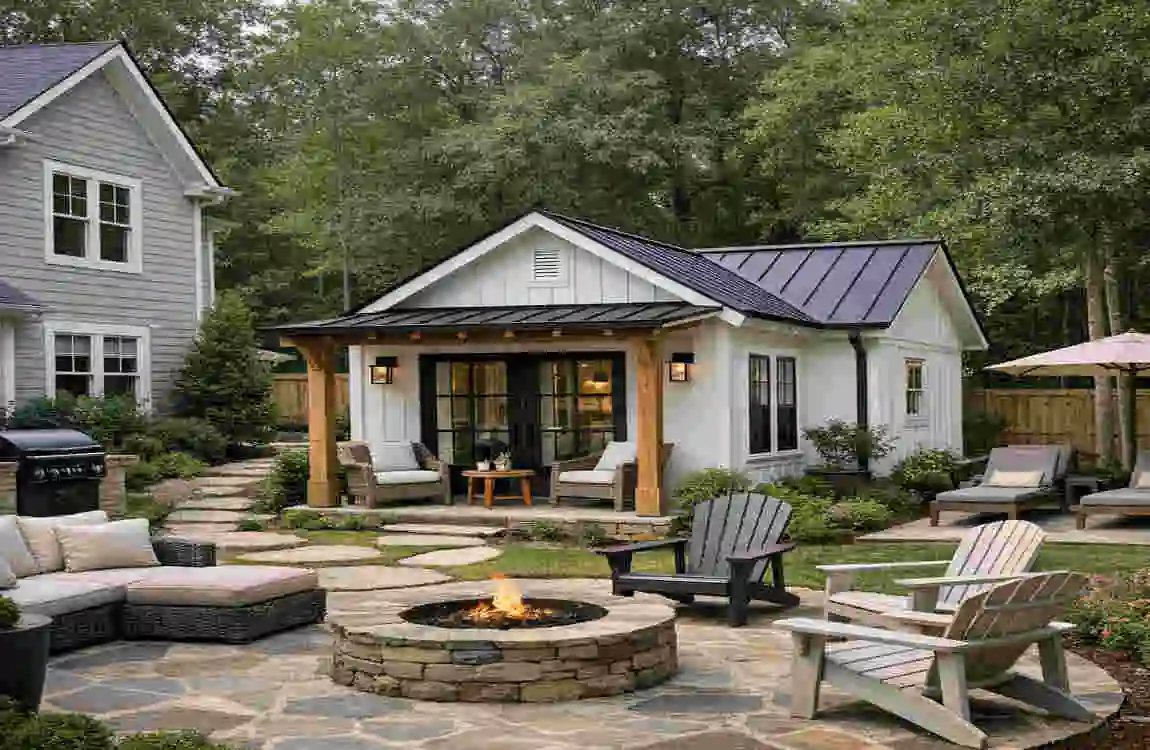
Before we dive into the complex world of legalities and construction, let’s clarify what we are actually talking about. When we ask, “Can you build a second house on your property?” we are usually referring to an Accessory Dwelling Unit, or ADU for short.
However, these structures go by many different names depending on where you live. You might know them as granny flats, in-law suites, backyard cottages, or carriage houses. No matter what you call them, they serve the same core purpose: providing a fully functional, secondary living space on a single-family residential lot.
Just as a creator must adapt their style and tone to suit each project, you need to choose the right type of structure to suit your specific property and lifestyle needs.
Types of Second Houses
When planning your new space, you have a few architectural paths to choose from. Understanding these options is critical because your local government will likely have different rules for each. You need to study the form, structure, and overall style of each type to ensure you make a well-researched decision.
Detached Accessory Dwelling Units (ADUs). These are standalone structures built entirely separate from your primary residence. Think of a tiny house or a small cottage in your backyard. They offer the highest level of privacy, making them incredibly popular for rental properties.
Attached Units: An attached unit shares at least one wall with your main house. This might look like an extension built onto the side or back of your home. Because they tie into your existing structure, they can sometimes be more affordable to build. However, they offer a bit less privacy.
Basement or In-Law Suites This involves converting an existing space inside your home—like a basement, large attic, or attached garage—into a separate apartment. Since you are not building a new exterior structure, this is often the most budget-friendly route.
Here is a quick breakdown of how these options compare:
TypeSize Limit, Separation from Main House, Best For
Detached ADU , usually 600-900 sq ft , entirely separate structure , high rental privacy, and premium income potential
Typically, up to 50% of the primary house size shares a common wall. Close family use and multi-generational living
Basement/In-law Suite No new build required (uses existing footprint) Contained within the existing home. The budget-conscious homeowner looking for a fast solution
Why Build One?
So, why go through all the trouble of construction? The benefits are monumental.
First and foremost is the incredible boost to your property value. Real estate studies routinely show that adding an ADU can increase a property’s value by 20% to 30%. That is a massive return on investment. If you ever decide to sell, buyers are highly attracted to properties with built-in income potential.
Speaking of income, the rental yields are hard to ignore. A secondary dwelling can generate hundreds, or even thousands, of dollars in passive income every month. This money can easily cover your original mortgage, fund your retirement, or pay off the construction loan.
Beyond the financial perks, there is a strong emotional and practical pull. Multigenerational living is trending upward. Families are choosing to keep their ageing parents close to home rather than moving them to expensive care facilities. A backyard unit gives families the perfect balance of closeness and independence.
Zoning Laws: Can You Build a Second House on Your Property?
You have the vision. You have the backyard space. But the biggest hurdle you will face is local legislation. You cannot simply decide to build a guest house on a lot without first checking the legal frameworks governing your neighbourhood.
Zoning laws dictate exactly what you can and cannot do with your land. They are designed to keep neighbourhoods looking somewhat uniform and to prevent overcrowding. Ensuring your plan meets these laws requires extreme attention to detail, much like a meticulous editor identifying errors to keep a project perfectly concise and to the point.
Generally speaking, properties zoned “residential” will have different rules than those zoned “agricultural” or “commercial.” In recent years, many states and municipalities have relaxed their residential zoning laws to combat housing shortages. Because of this, most single-family residential lots now allow for at least one ADU. However, this is not a universal rule.
Check Your Local Zoning for a Second Dwelling
How do you find out what is allowed on your specific patch of dirt? You have to do a little digging. Getting involved from the very beginning and understanding the project’s specific purpose are vital for success.
Your first step should be visiting your county or city’s official website. Look for their Geographic Information System (GIS) maps. These interactive maps let you enter your address and instantly see how your property is zoned.
Once you know your zoning code (for example, “R-1” for single-family residential), you can look up the specific ordinances tied to that code.
If reading legal jargon is not your idea of a good time, pick up the phone. Call your local planning department or building authority. Tell them your address and ask point-blank, “What are the zoning rules for building a second dwelling on my property?”
As a general rule of thumb, rural lots with large acreage almost always say yes to secondary structures. Urban and heavily populated suburban lots, on the other hand, may cap your building density to prevent neighbourhood congestion.
Common Zoning Restrictions
Even if your zoning allows for a secondary home, there will be strict boundaries you must stay within. City planners love their rules.
Lot Size Minimums: Your town might say, “Yes, you can build a guest house, but only if your total lot is larger than 7,200 square feet.” If you live on a tiny urban lot, you might be out of luck.
Property Setbacks: You cannot build your new structure right on the edge of your property line. Setbacks dictate how far away your building must be from the fences. Common setbacks require you to keep your structure 5 to 10 feet away from the side and rear boundaries.
Height Limits Nobody wants their neighbour’s new two-story guest house towering over their backyard fence, blocking out the sun. Because of this, many municipalities restrict backyard homes to a single story, usually capping the height at around 16 to 18 feet.
Global Variations: Insights
It is important to note that property rules vary wildly across the globe. Let’s look at a quick international perspective to understand how diverse these regulations can be.
If you are looking to build in premium overseas markets, like , the rules are highly specific. Construction bylaws there heavily limit extra standalone structures without rigorous prior approval from the authorities. If you own a plot larger than 1 kanal (a local unit of measurement roughly equal to 500 square yards), you must consult the Development Authority (LDA) rules. Multi-unit structures in these planned communities require specialised permits to maintain the neighbourhood’s aesthetic harmony.
Permits and Legal Requirements
Let’s assume your zoning allows for the project. Congratulations! The next major phase is tackling the permits.
You might be asking, “Do I really need a permit? Can’t I build it quietly?” The answer is an absolute, undeniable no. Building without a permit is a recipe for disaster.
Building Permits Process
Securing a building permit proves to the city that your new structure will be safe, structurally sound, and up to modern standards. Getting this right requires structural integrity and smooth transitions from one phase to the next, much like repairing and structuring a high-quality script.
The Timeline Patience is key here. Once you submit your application, do not expect an answer the next day. The approval timeline typically takes anywhere from 30 to 60 days. If the city finds issues with your plans, they will send them back for revisions, further extending the timeline.
The costs of permits are not free. Depending on your location and the size of your build, you should budget between $1,000 and $5,000 for paperwork and city approvals alone.
Required Documents: You cannot just hand the city a sketch you drew on a napkin. You will need professional documentation. This usually includes detailed site plans showing exactly where the structure will sit on the property. You will also need comprehensive blueprints and, in many cases, engineering reports to demonstrate that the foundation and framing will withstand local weather conditions.
Compliance Checklist
As you move through the legal hoops, you will need to check off several major compliance boxes. Your project must adhere to strict fire codes. This means specific types of drywall, safe escape windows in bedrooms, and proper smoke detectors.
Furthermore, all plumbing and electrical work usually must be completed by, or at least signed off by, licensed professionals. This is not the time for amateur hour.
The good news? In almost all cases, building an ADU does not require you to subdivide your property officially. You are just adding to your existing lot.
Here is a look at typical compliance requirements:
Requirement, Typical Rule, Penalty for Non-Compliance
Utilities: Separate water/electric meters are optional but highly recommended for rentals. Fines can reach up to $10,000 if the city discovers illegal hookups.
Parking: You may be required to add 1 to 2 extra off-street parking spaces to your lot, and immediate permit denial until the parking situation is resolved on the site plan.
Occupancy Local laws often limit backyard homes to a maximum of 2 bedrooms. Heavy fines and the severe risk of tenant eviction if over-occupied.
Costs to Build a Second House
We have reached the million-dollar question—though thankfully, it won’t cost quite that much. How much does it actually cost to build a second house on your property?
The truth is, building a secondary dwelling is a major financial undertaking. You are essentially building a brand-new, miniature home from the ground up. It requires a foundation, a roof, plumbing, HVAC, and all the interior finishes.
To help you visualise the budget, let’s look at a breakdown for a standard, 800-square-foot detached unit.
Item Estimated Cost
Construction (Labour and Materials) $150,000 – $300,000
Permits, Surveys, and Architectural Plans $5,000 – $15,000
Utilities Hookups (Trenching lines to main house) $10,000 – $20,000
Total Estimated Investment $200,000+
Understanding the Variations: Why is the construction range so wide? It comes down to your taste and your geographic location. If you live in an area with high labour costs, you will pay a premium. If you want luxury finishes like granite countertops, hardwood floors, and custom cabinets, your costs will skyrocket to the top of that range.
If you opt for a simpler design, standard builder-grade materials, or even prefabricated modular units, you can keep your costs closer to the lower end.
Calculating Your ROI While spending $200,000 might sound terrifying, you must view this through the lens of Return on Investment (ROI).
Let’s say you spend $200,000 to build your new unit. You then put it on the rental market and secure a tenant paying $1,500 a month in rent. That equals $18,000 in gross income per year. At that rate, you will completely recover your initial construction investment in roughly 11 to 15 years, depending on taxes and maintenance.
After that recovery period? It is pure profit. Not to mention, your overall property is now worth substantially more than it was before you broke ground.
Design and Construction Tips
Designing your new space is arguably the most exciting part of the journey. This is where your vision finally starts to take shape. But because you are dealing with a smaller footprint, smart design choices are absolutely critical.
You need to craft a captivating space that functions perfectly, much like a writer weaving words into an engaging narrative to inspire their readers. Every square inch matters.
Best Layouts for a Small Space
In many areas, zoning caps the maximum size of these units at around 70 to 90 square meters (roughly 750 to 950 square feet). When you have limited space, walled-off rooms can make the home feel dark, cramped, and claustrophobic.
The secret to a successful small layout is the open-plan concept. Combine your kitchen, dining, and living areas into a single, continuous space. Eliminate unnecessary hallways.
Focus heavily on natural light. Install large windows, sliding glass doors, or even skylights. Natural light tricks the brain into perceiving a space as much larger than it actually is.
Additionally, get creative with storage. Build storage into the stairs, use tall cabinets that reach the ceiling, and consider built-in seating that doubles as hidden trunks.
Hiring the Right Pros
Unless you are a master carpenter with a background in structural engineering, you are going to need help. You want to maintain an informal, engaging, and collaborative relationship with your team while ensuring they follow active, expert practices.
Architects and Designers: Do not just hire any architect. Look for professionals who have specific, proven experience designing ADUs. Designing a small space requires a unique skill set. They will know how to navigate the strict city codes while maximising your livable area.
Experienced Builders. Similarly, you want a general contractor who has built these secondary units before. They will be familiar with the logistical challenges of building in a backyard, such as getting heavy machinery down narrow driveways without destroying the main house’s landscaping.
Eco-Friendly Tips: While you are in the design phase, think about the future. Consider making your new build solar-ready. Ensure the roof pitch and structural strength can handle solar panels down the line. Use high-efficiency spray foam insulation to keep energy bills incredibly low. Opt for energy-efficient windows and water-saving plumbing fixtures. These small upfront choices will save you thousands of dollars in utility costs over the lifespan of the home.
Pros, Cons, and Financing
Deciding to undertake a massive backyard project is not a choice you should make lightly. It requires looking at the full picture—both the wonderful advantages and the potential headaches.
The Ultimate Benefits
We have touched on these, but they are worth repeating. The benefits of adding a secondary dwelling are life-changing for many homeowners.
- Income: You gain an immediate, passive revenue stream.
- Flexibility: You have a space that can evolve as your life evolves. It can be a rental today, a home office tomorrow, and a cosy space for your ageing parents in ten years.
- Equity Growth: You recognise your property’s market value, giving you greater leverage and financial security.
The Inevitable Risks
It is not all sunshine and rental checks. There are real risks involved.
- HOA Bans: If you live in a neighbourhood governed by a strict Homeowners Association (HOA), it might completely ban secondary structures, regardless of what the city zoning says.
- Neighbour Issues: Construction is loud, messy, and disruptive. Your neighbours might complain about the noise or that a new building is altering their view.
- Tax Hikes: Because you are increasing the value of your property, your local government will notice. Expect your annual property taxes to increase once construction is complete.
Funding Options for Your Build
If you don’t have a quarter of a million dollars sitting in a checking account, you will need financing.
The most popular route is a Home Equity Line of Credit (HELOC) or a Home Equity Loan. Since you already own your primary house, you can borrow against the equity you have built up over the years to fund the new construction.
Alternatively, some banks offer specialised construction mortgages. These loans pay out in “draws” at different stages of the building process, ensuring the contractor is only paid as the work is completed.
Case Studies: Real Examples
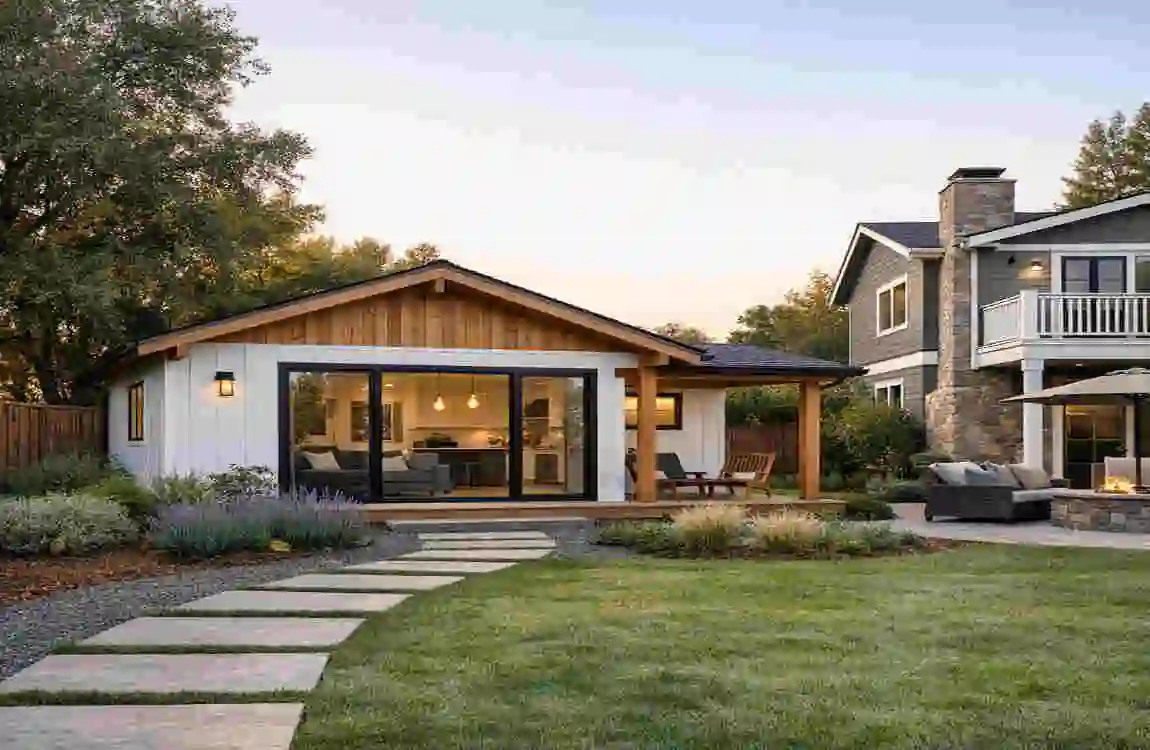
Sometimes the best way to understand a project’s potential is to look at real-world success stories.
The Suburban Family ADU: Consider the Miller family in suburban Oregon. They had a large, unused backyard and an ageing mother who was struggling to maintain her own large house. Instead of paying thousands a month for an assisted living facility, the Millers used a HELOC to build a beautiful 600-square-foot detached granny flat.
The build took about five months. Today, their mother lives safely just a few steps away. She maintains her complete independence with her own kitchen and living space. Still, the family has total peace of mind knowing she is right there. The property value surged, and the family saved a fortune on elder care.
The Rental Investment. On the other side of the world, a property owner had a large plot of land that was underutilised. After navigating the strict approval process with the local development authorities, they constructed a high-end, attached secondary unit. Because the plot was located in a highly desirable, secure sector, the owner was able to rent the new unit to corporate expats immediately. The rental income now fully covers the owner’s living expenses, turning their primary residence into a powerful cash-flowing asset.
The Lessons Learned: If you talk to anyone who has completed this journey, you will hear a common theme. Expect delays. Whether it is a backup at the city permitting office or a shortage of specific building materials, the timeline will likely stretch longer than you originally hoped. Flexibility and patience are your most valuable tools.
Frequently Asked Questions
Can you build a second house on your property without permits? Absolutely not. You must always secure the proper building permits before starting construction. Building an illegal structure can result in massive fines, forced demolition, and the inability to sell your property in the future legally. Always play by the rules.
What is the maximum size allowed for a secondary dwelling? The maximum size varies significantly from city to city. However, a very common restriction is capping detached ADUs at 900 to 1,000 square feet. If you are building an attached unit, many cities require it to be no more than 50% of the total square footage of your primary home. Always check with your local zoning office.
Are there specific rules for building in planned communities like ? Yes. In highly planned residential zones like DHA or LDA-controlled sectors, adding a multi-unit or secondary structure is strictly regulated. You must obtain special approvals, and the rules often apply specifically to larger properties (such as plots over 1 kanal) to maintain community aesthetics and prevent density issues.