Have you ever found yourself standing in the middle of a home improvement store, staring at rolls of bright red and blue tubing, wondering what PEX plumbing is? Or perhaps you are planning a massive home renovation in 2026, and your contractor keeps tossing the word “PEX” around as if it were the greatest invention since sliced bread.
If you are curious about why this colourful tubing is rapidly replacing traditional metal pipes in modern homes, you have come to the right place.
For decades, homeowners have battled freezing copper pipes, corroding galvanised steel, and the messy, toxic glue used for PVC. Traditional plumbing systems, while effective for their time, often come with a high price tag, invasive installation methods, and a ticking clock on their lifespan. But the plumbing industry is experiencing a massive shift. Today, flexible, cost-effective, and highly durable water systems are completely transforming how we build and renovate our houses.
| Aspect | Details |
|---|---|
| Definition | Cross-linked polyethylene (PEX) tubing for hot/cold water lines in houses; flexible plastic replacing rigid metal pipes. |
| Key Benefits | Cost savings (25-50% less than copper), kink-resistant flexibility, freeze-tolerant expansion, quieter flow, faster hot water delivery. |
| Types | PEX-A (most flexible, expandable), PEX-B (affordable, stiff), PEX-C (irradiated, least common). |
| Common Uses | Residential supply lines, radiant floor heating; runs from manifold to fixtures without many joints. |
| Installation Methods | Crimp, clamp, expansion, push-fit fittings; tools needed for most except push-fit. |
| Lifespan & Cost | 50+ years; $0.50-$1 per foot vs. $2-$4 for copper. |
| Drawbacks | UV-sensitive (not outdoor), rodent vulnerability, some code restrictions. |
What Is PEX Plumbing?
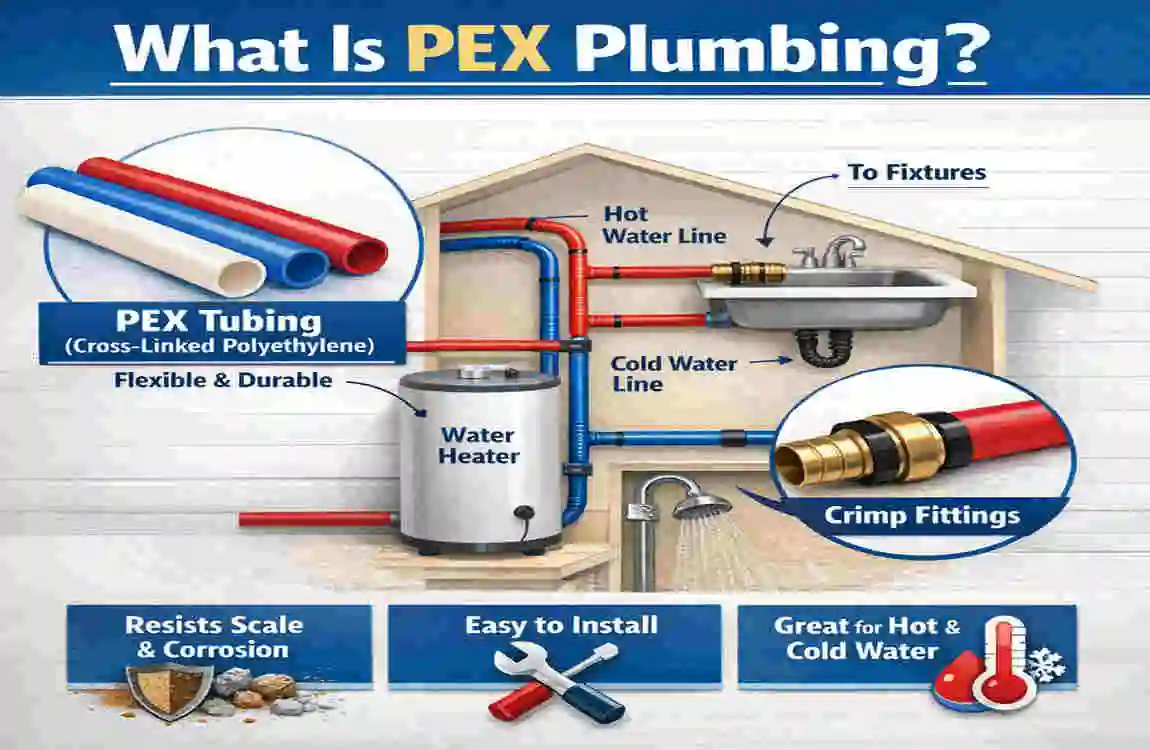
To truly appreciate the modern marvel behind your drywall, we need to answer the primary question: What is PEX plumbing?
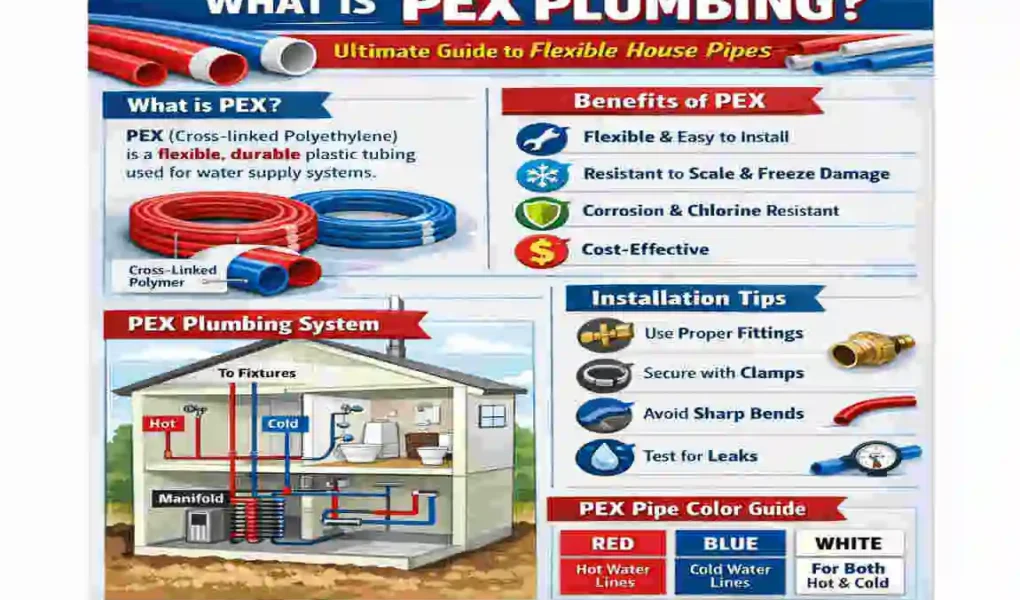
In simple, everyday language, PEX stands for cross-linked polyethene. It is a highly engineered, robust plastic tubing used primarily to supply hot and cold water throughout your home. Think of it as a heavy-duty, industrial-strength garden hose that is designed to withstand extreme temperatures, high water pressure, and decades of continuous use without ever breaking down.
The history of this material might surprise you. While it feels like a 2026 boom, the technology actually originated in Europe in the late 1960s. Scientists figured out that by altering the chemical structure of standard polyethene plastic—creating “cross-links” between the polymer chains—they could make the material incredibly strong, heat-resistant, and flexible. It slowly made its way across the globe, and today, it is the absolute standard for residential water supply, actively replacing outdated copper and galvanized steel in almost all new home builds.
When we talk about PEX house pipes, we are talking about the circulatory system of your luxury home. It delivers fresh water to your kitchen sink, fills your bathtub, and keeps your washing machine running, all while hiding quietly behind your walls.
Core Properties of PEX House Pipes
What makes this material so special? Let’s look at the core properties that make these pipes the go-to choice for modern plumbers and savvy homeowners alike.
Extreme Flexibility and Kink Resistance: Unlike rigid metal, this tubing can literally bend around corners. You do not need to cut the pipe and install an angled fitting every time you need to change direction. It weaves through the wooden framing of your house like wiring. This flexibility also makes it highly resistant to kinking and snapping under pressure.
Smart Colour Coding: One of the most visually distinctive features of this system is its vibrant colours. Generally, you will see red tubing and blue tubing. This is an incredibly simple but effective system for home plumbing. Red is always used for hot water lines, and blue for cold water lines. (Sometimes, you will see white tubing, which can be used for either!). This makes future maintenance and repairs an absolute breeze.
Perfect Residential Sizes. For standard homes, these pipes typically come in diameters ranging from 1/2 inch to 1 inch. The smaller 1/2-inch pipes are perfect for branching off to individual fixtures, such as your toilet or bathroom sink. In comparison, the larger 3/4-inch or 1-inch pipes serve as the main trunk lines bringing water into the house.
PEX vs Traditional Pipes
To really understand the value of this modern tubing, you need to see how it stacks up against the old guard. Let’s compare PEX, copper, and traditional PVC.
FeaturePEX PlumbingCopper PipesPVC / CPVC
Flexibility High (bends easily around obstacles) Low (completely rigid) Medium (slight give, mostly rigid)
Cost per Foot $0.50 – $1.00 $2.00 – $4.00 $0.30 – $0.80
Corrosion Risk None (immune to rust) , High (can pit and corrode over time) , Chemical limits (can degrade)
Install Speed 50% faster (fewer connections) Very slow (requires soldering with open flame) Moderate (requires messy chemical glue)
As you can see from the breakdown above, the advantages are incredibly clear. You save time, you save money, and you eliminate the risk of rust. These traits make this flexible tubing absolutely ideal for house retrofits. If you are updating an older home, you no longer have to tear down entire walls just to fit stiff metal pipes inside.
[Image Concept: A detailed cutaway graphic showing PEX’s layered, cross-linked molecular structure, highlighting how it enhances durability inside home walls without corroding.]
Types of PEX Plumbing
Now that you understand the basics, we need to get a little bit technical—but do not worry, we will keep it simple. Not all of this tubing is created perfectly equal. The manufacturing process creates different grades of the material. When shopping for materials or talking to your plumber, you will usually hear about three main types: PEX-A, PEX-B, and PEX-C.
Here is what you need to know about each one.
PEX-A: The Gold Standard
This is manufactured using the “Engel” method, which creates the highest degree of cross-linking. What does that mean for you? It means PEX-A is the most flexible and the most resilient type on the market. It can expand significantly, making it incredibly resistant to bursting if the water inside it freezes. Even better, if it gets kinked during installation, a plumber can apply heat to the kink with a heat gun, and the pipe will magically return to its original shape. It is the absolute best choice for homes, though it comes with a slightly higher price tag.
PEX-B: The Budget-Friendly Workhorse
Manufactured using the “Silane” method, PEX-B is slightly stiffer than its A-grade counterpart. It is incredibly common in big-box hardware stores and is very popular for budget installations. While it is not quite as flexible, it boasts incredibly strong seams and high bursting strength. The main drawback is that if you kink it, you cannot repair it with heat; you have to cut out the damaged section and install a fitting.
PEX-C: The Rare Alternative
This type is made using an irradiation method (electron beam processing). It is the least common type used in modern residential plumbing. While it is functional, it can sometimes be more brittle than A or B, leading to potential weaknesses over long periods. You will rarely see this used in 2026 home builds.
Let’s summarise these types in a quick, easy-to-read table:
PEX Type Best For Houses Key Benefit Drawback
PEX-A Freezing climates & radiant heat Highly flexible; kink repairable Higher initial cost
PEX-B Budget-conscious installs Strong seams; very affordable Less flexible; kinks require cutting
PEX-C Rare/niche use , Cheaper manufacturing , Potential structural weaknesses
Homeowner Pro-Tip: If you are building a modern home in 2026—especially in the US or in rapidly developing areas in PK—PEX-A completely dominates the market. It is also the exclusive choice if you are installing radiant floor heating (where warm water pumps through pipes under your floorboards to heat the room).
Key Benefits of PEX Plumbing for Homes
Why should you specifically ask your contractor for this material? The PEX plumbing benefits are vast, directly impacting your wallet, your comfort, and the longevity of your home. Let’s break down the top 10 house-focused advantages of making the switch.
Incredible Cost Savings
Let’s talk about your budget. Renovating a home or building a new one is expensive. Fortunately, choosing modern plastic tubing over copper is one of the easiest ways to save money without sacrificing quality. On average, the materials are 25% to 50% cheaper than copper piping. Furthermore, because it is so DIY-friendly and fast to install, labour costs drop significantly. You are keeping more money in your pocket right from day one.
Unmatched Flexibility
Imagine trying to manoeuvre a rigid, ten-foot metal pole through a small hole in a wooden wall stud. Now imagine doing the same thing with a garden hose. That is the difference we are talking about here. Because the tubing can bend, plumbers use drastically fewer elbows and fittings. Fewer joints mean there is a significantly reduced risk of leaks. In fact, systems with flexible routing experience up to 70% fewer joint failures over their lifespan!
Ultimate Durability and Freeze Resistance
Copper pipes are notorious for bursting during cold winter nights. When water freezes, it expands. Rigid metal cannot expand, so it cracks. Cross-linked polyethene, however, can stretch. If the water inside freezes, the pipe gently expands to accommodate the ice. Then it shrinks back to its original size when the ice thaws. Combine this with a lifespan that easily exceeds 50 years, and you have a plumbing system built to last a lifetime.
A Quieter Home Environment
Have you ever turned off a faucet and heard a loud “BANG” inside your walls? That is called “water hammer,” and it happens when fast-moving water suddenly stops inside metal pipes, causing them to shudder against the wood framing. Flexible plastic inherently absorbs this shockwave. Water flows much more quietly, meaning you can finally run the dishwasher at night without waking up the whole house.
Superior Energy Efficiency
Traditional metal pipes are excellent heat conductors. This means that as hot water travels from your water heater to your shower, the metal pipe actively pulls heat from the water and radiates it into the walls. PEX, on the other hand, acts as a natural insulator. It keeps hot water hotter for longer, which means you waste less water waiting for the shower to warm up, ultimately reducing your monthly energy and water bills.
Improved Water Pressure
Over the years, copper and galvanised steel pipes accumulate scale and mineral deposits on the inside. This rough interior creates friction, slowing water flow and reducing water pressure. The interior of cross-linked tubing is exceptionally smooth and stays that way. Minerals cannot easily adhere to the plastic surface, ensuring a strong, consistent flow of water throughout the system’s life.
Highly Eco-Friendly
We are all trying to be more conscious of our environmental footprint in 2026. Mining copper requires massive amounts of energy, destroys land, and produces heavy carbon emissions. Manufacturing cross-linked polyethene has a vastly smaller carbon footprint. Furthermore, because these pipes are lighter, they require less fuel to transport. At the end of their very long life, certain types of plastic can even be repurposed.
Effortless Retrofitting
If you own a historic or older home, updating the plumbing usually involves a nightmare scenario of tearing out massive sections of drywall and plaster. Because this tubing is flexible, plumbers can use a technique called “fishing.” They can snake the new lines through the walls from the basement or attic with minimal demolition, preserving the integrity of your older home while giving it a modern upgrade.
Scalding and Corrosion Resistance
Old PVC pipes can sometimes fail catastrophically if exposed to excessively hot water, leading to dangerous bursts. Metal pipes corrode when exposed to highly acidic or alkaline water. Modern cross-linked tubing ignores both of these issues. It will not corrode, pit, or scale, and it is rated to safely handle high-temperature water without degrading or posing a risk to your family.
A Significant Home Value Boost
When you go to sell your home, prospective buyers are looking for modern, worry-free utilities. Having a freshly installed, state-of-the-art water distribution system is a massive selling point. It tells buyers that the “guts” of the house are in perfect working order, which can easily boost your home’s appraisal value and speed up the sale process.
Drawbacks and Risks to Consider
While we love talking about how amazing this technology is, a truly ultimate guide must look at the complete picture. You need to be aware of a few realities and potential risks before you start ripping out your old pipes.
Extreme UV Sensitivity: The absolute biggest enemy of cross-linked polyethene is the sun. Direct ultraviolet (UV) light breaks down the molecular bonds in the plastic incredibly fast. If you leave this tubing sitting out in the sun for just a few weeks, it will become brittle and shatter. Therefore, you can never use this material for exposed outdoor plumbing. It must remain inside walls, under floors, or buried in the dark.
The Rodent Chew Risk. It is not a pleasant thought, but if you have a mouse or rat problem in your home, you may have a plumbing problem. Rodents love to chew on things to file down their teeth, and they have been known to chew through plastic water lines. The best mitigation strategy here is proper pest control. In high-risk areas, plumbers can sleeve pipes with protective metal armour.
High Heat Limitations: While great for standard residential hot water (which usually peaks around 120-140°F), it cannot be connected directly to the output of a high-heat water heater without a buffer. Building codes usually require the first 18 inches coming out of a water heater to be metal (like copper) before transitioning to plastic, to prevent melting from continuous, intense heat.
Local Code Restrictions: Always check your local regulations! While approved almost everywhere in 2026, some highly specific local building codes might restrict its use for certain applications. For example, you can never use this specific water tubing for natural gas lines (though a different, yellow tubing exists for that).
PEX Plumbing Installation Guide
Are you the handy type? Or do you want to know what your hired contractor is doing behind those walls? Let’s walk through exactly how to install PEX plumbing. This step-by-step guide is geared towards residential homes, emphasising safety and proper technique.
Plan Your Layout Thoroughly
Before making a single cut, you need a plan. Modern installations often use a “manifold” system. Think of a manifold like the electrical breaker box for your water. The main water line enters the manifold. Then individual, unbroken lines run directly from the manifold to each fixture (one line to the kitchen sink, one to the toilet, etc.). Map this out beforehand. Many professionals use layout software to calculate exactly how many feet of tubing they need.
Gather the Right Tools
You cannot do this job with standard wrenches. Depending on your connection method, you will need a specific tool. If you are using crimp rings, you need a heavy-duty crimper tool. If you are using PEX-A, you need an expansion tool. You also need a specialised pipe cutter (never use a hacksaw) and high-quality fittings. Brass fittings are generally considered the best and most durable for home use.
Cut and Prep the Tubing
Accuracy is key. Use your specialised cutter to make perfectly straight, clean cuts. If you cut the pipe at an angle, the fitting will not sit flush, and you will leak. After cutting, quickly deburr the ends (wipe away any tiny plastic shavings) so the interior is perfectly smooth.
Connect the Fittings
This is where the magic happens.
- The Crimp Method: You slide a copper ring over the pipe, insert the brass fitting, and use your crimp tool to crush the ring down tightly.
- The Expansion Method (PEX-A only): You use a specialised tool to stretch the end of the pipe. You quickly slide the fitting in. Because the plastic has “memory,” it instantly shrinks back down, crushing itself around the fitting to create a watertight seal.
Mount the Manifold
Find a central, accessible location in your home—like a basement wall or a dedicated utility closet—and mount the manifold bracket securely. This will be the heart of your home’s water zoning, allowing you to turn off the water to the main bathroom without shutting off the kitchen!
Route the Pipes
Now, you run the lines. When routing through wooden wall studs, you must drill holes at least 1.5 times the pipe’s diameter to allow for natural expansion and contraction. Secure the long runs of tubing with plastic suspension clips every 32 inches to prevent sagging.
Test the Pressure
Do not close up your walls yet! Once everything is connected, you must run a pressure test. Cap off the ends and fill the system with air or water to about 80-100 PSI. Leave it for at least 30 minutes. If the pressure gauge drops even a little, you have a leak that needs to be found and fixed.
Insulate the Lines
Finally, wrap your hot water lines (and, if you live in an unheated space, your cold water lines) with foam insulation sleeves. This prevents condensation and significantly improves your home’s energy efficiency.
Common Mistakes to Avoid
When taking on this task, watch out for these two critical errors:
- Over-Bending (Kinks): While flexible, there is a limit to how far it can bend. If you bend the pipe too tightly around a corner, it will kink. A kink severely restricts water flow and creates a weak point that will eventually burst.
- Ignoring Local Codes: Never route plastic pipes closer to recessed lighting or heat sources than your local fire and building codes allow. Always follow the rules!
Cost Breakdown for House Projects
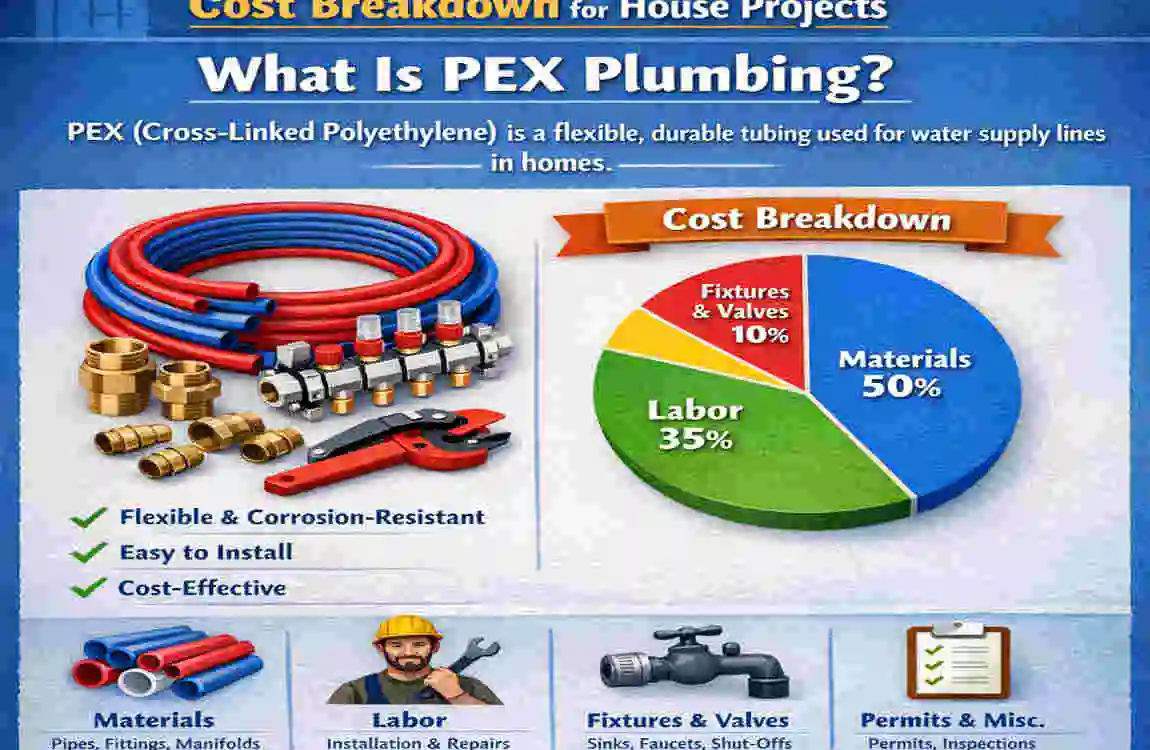
Let’s talk numbers. How much does it actually cost to repipe a home using this modern marvel?
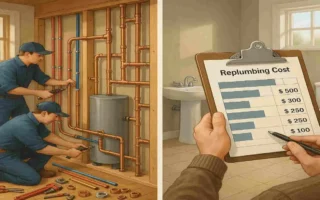
When looking at the materials alone, the tubing typically costs between $1.00 to $2.00 per foot, including the necessary fittings and mounting hardware. If you are repiping an average-sized 2,000-square-foot home with two bathrooms, you are looking at a material cost of roughly $2,000 to $4,000.
Labour varies by location, but professional installation generally runs about $1.50 to $3.00 per foot.
When you compare this directly to a copper installau are looking at roughly a 40% savings in total cost. But the financial benefits do not stop at installation. The Return on Investment (ROI) is fantastic. Thanks to improved energy efficiency and reduced heat loss, a fully upgraded system often pays for itself through energy savings within 5 to 7 years.
Frequently Asked Questions (FAQs)
We hear many questions from curious homeowners. Here are the fastest, most straightforward answers to the most common voice searches regarding this plumbing revolution.
What is PEX plumbing made of? It is made from high-density polyethene (HDPE) plastic that has been chemically altered to form cross-linked bonds between the polymer molecules, making it incredibly strong and heat-resistant.
Is it safe for drinking water? Absolutely. It is rigorously tested and heavily certified by national sanitation foundations for safely transporting potable (drinking) water. It does not leach toxic chemicals or heavy metals like old piping can.
Can I use it for outdoor applications? Generally, no. Because it is highly sensitive to UV light, leaving it exposed to the sun will cause the plastic to become brittle and shatter. It must be buried underground or kept inside walls.
How long does it typically last? When installed correctly behind drywall and kept away from direct sunlight, it has a proven lifespan of 50 years or more.
Will mice actually eat my pipes? They won’t “eat” them, but rodents do chew on hard plastics to wear down their ever-growing teeth. If you have a severe rodent infestation, they can chew through these lines, causing leaks.
Can I connect it to my existing copper pipes? Yes! You do not have to replace everything at once. Plumbers can easily install special brass transition fittings that connect fresh plastic tubing directly to your existing copper lines.