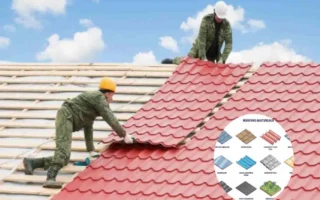
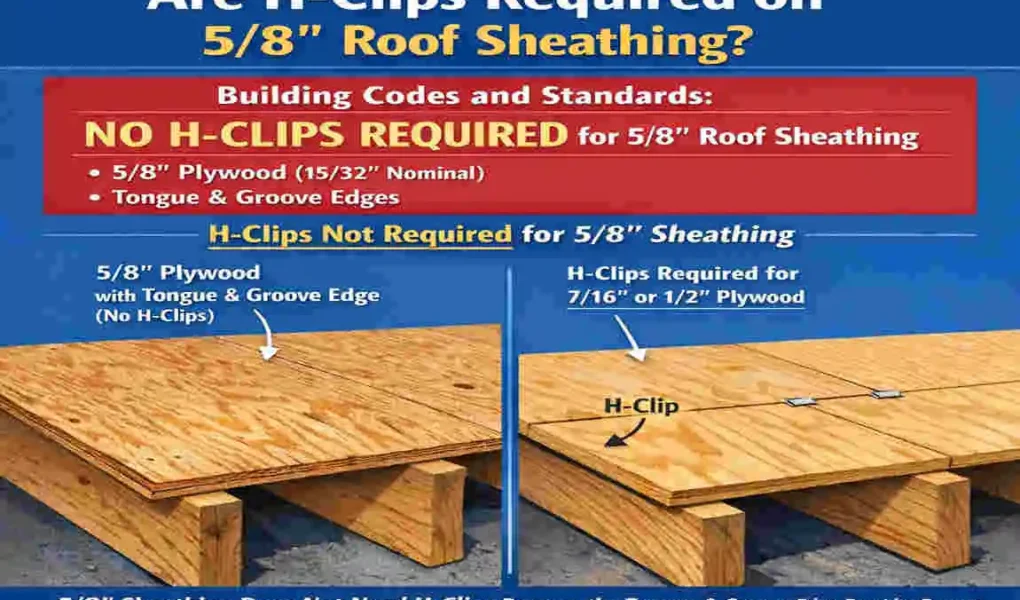
If you are planning to install a brand-new roof, you have a lot of decisions to make. You have to pick the right shingles, choose the best underlayment, and make sure your wood framing is solid. During this process, you might find yourself asking a very specific question: do building codes require H-clips on 5/8-inch sheathing?
The answer is not a simple yes or no. It actually depends on several different factors. These include the specific type of wood sheathing you use, how far apart your roof rafters sit, your local city building codes, and what the wood manufacturer tells you to do.
What Are H Clips?
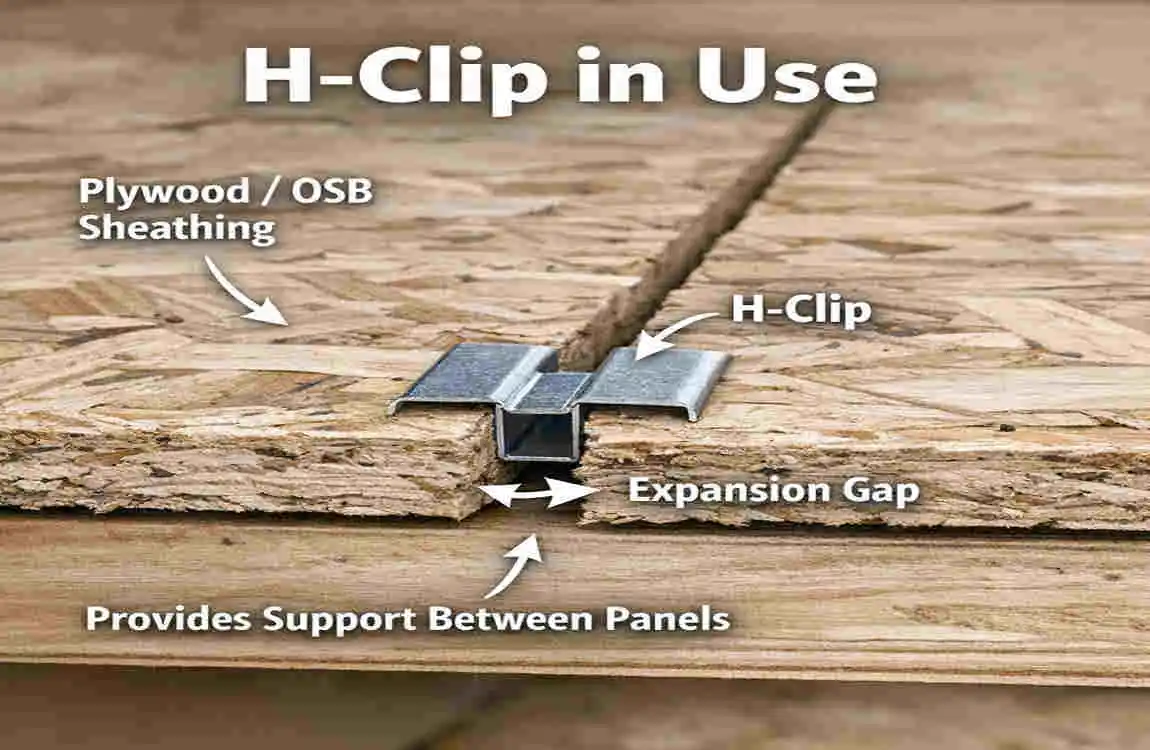
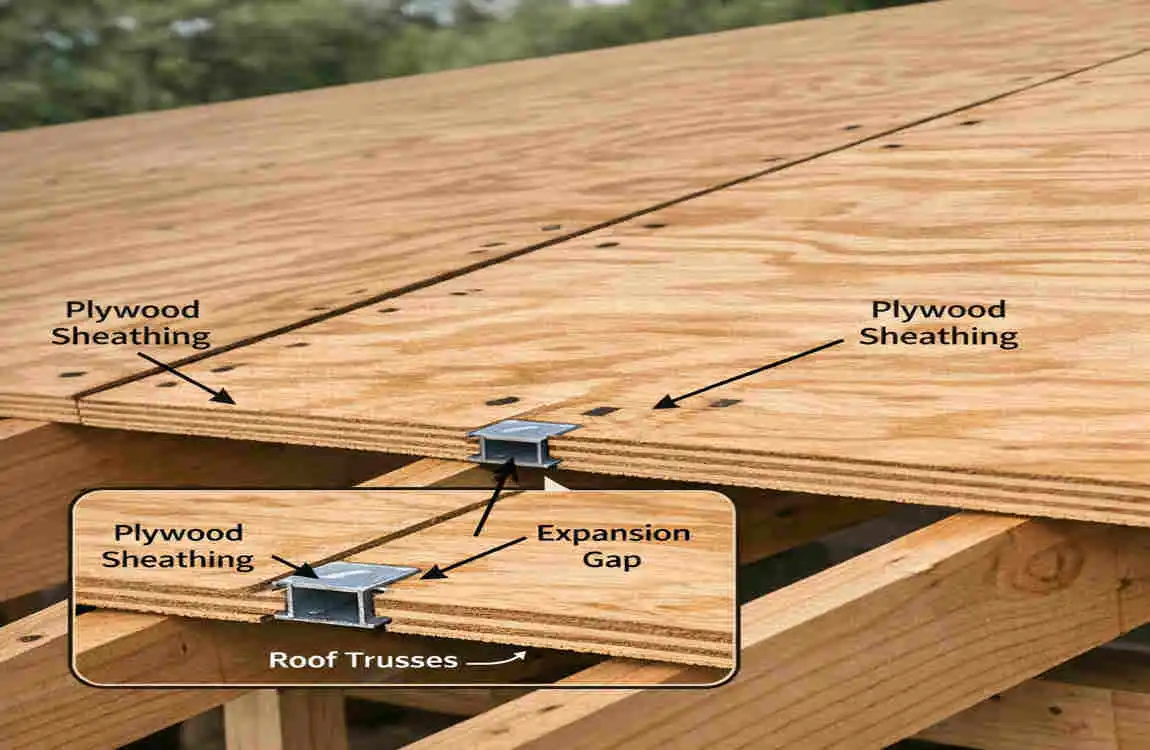
Before we talk about rules, let us explain what these little tools actually do. H clips are small metal connectors. Builders often call them panel edge clips.
When you look at one closely, it looks just like the letter “H”. You slide these clips onto the edges of your plywood or OSB (oriented strand board) roof panels right where two panels meet. They hold the unsupported edges of the wood together.
Why do builders love them? Their main benefits include:
- Reducing panel deflection: They stop the wood from bending or sagging when you step on it.
- Improving roof strength: They tie the wood panels together to create a unified, solid surface.
- Preventing uneven roof surfaces: They keep the edges flush, so your shingles lay perfectly flat.
- Helping distribute roof loads: They spread out the weight of heavy snow or roofers walking around.
Do Building Codes Require H Clips on 5/8 Sheathing?
The short answer is: not always.
Most modern building rules, including the famous International Residential Code (IRC), do not specifically require H clips for every 5/8-inch roof sheathing installation.
Instead of a blanket rule, the requirement depends on a few moving parts. Take a look at this simple breakdown:
Factor Effect on H Clip Requirement
Roof framing spacing Wider gaps between your rafters make clips much more necessary.
Sheathing thickness Thicker wood panels naturally bend less, which may reduce the need for clips.
Manufacturer instructions You must always follow the rules printed on the wood panels.
Local building code Some strict city or county inspectors make H clips completely mandatory.
Roof load (snow/wind) Areas with heavy snow or high winds often require extra structural support.
When Are H Clips Usually Required?
Even though the national code book might not demand them for every single house, you will find that H clips are commonly recommended or required in specific situations.
You usually need to grab a box of H clips when:
- Your roof trusses or rafters are spaced 24 inches on centre.
- You use standard OSB or plywood for your roof deck.
- You build a home in heavy snow regions where the roof carries extra weight.
- Your local city building inspector tells you they are required.
- The company that made your sheathing specifies them in their installation guide.
Even when the rules say they are optional, many smart contractors install them anyway. They provide substantial additional structural support at a very low cost.
A Closer Look: Are H Clips Required for 5/8-Inch Sheathing?
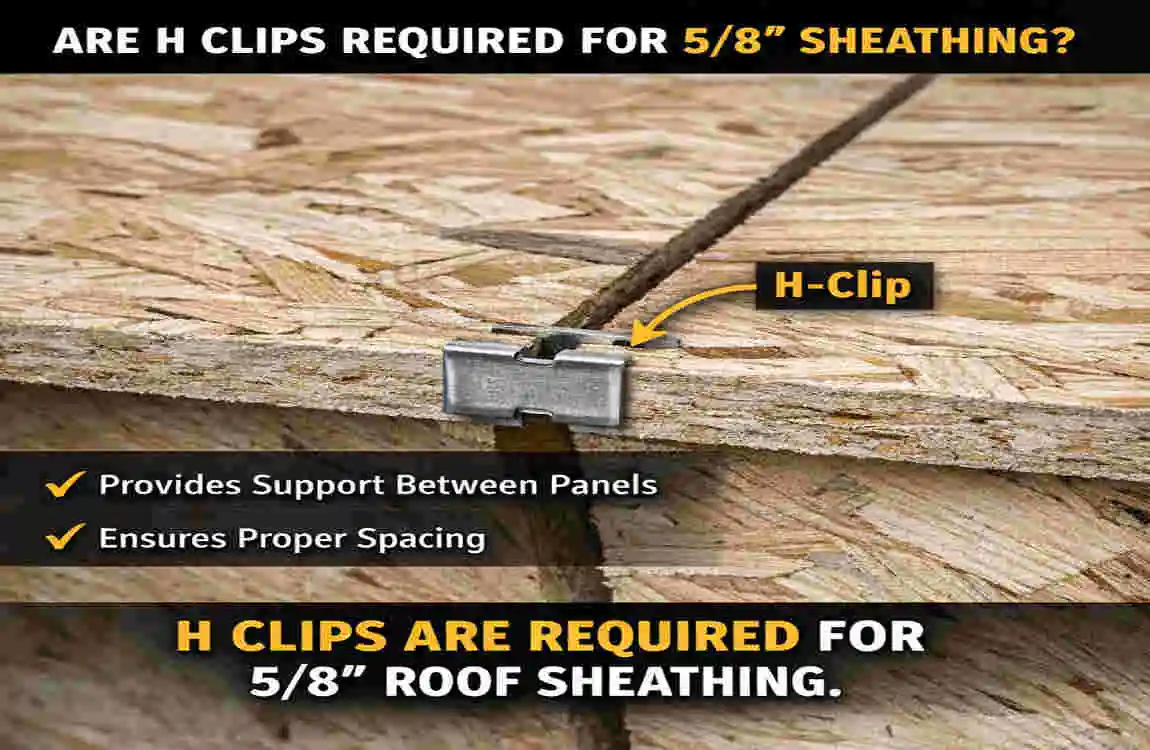
Let us get specific about your 5/8-inch plywood or OSB. This thickness is quite strong. Because it is thicker and stiffer than standard 1/2-inch wood, it naturally bends a lot less.
Therefore, in many residential roofing projects, H clips may not be required for 5/8-inch wood. However, you must meet a few conditions first.
Checking Your Roof Framing and Span
You can usually skip the clips if your roof framing meets all standard code requirements and the gap between your rafters is relatively small. The wood manufacturer will print a “span rating” right on the board. As long as your rafter spacing stays within that approved span limit, you are generally in the clear.
Verifying Local Regulations
You also need to make sure your local building codes do not require them. City rules always override national guidelines. Before you nail down a single board, call your local permit office. Always verify your local code to avoid tearing up your hard work later!
The Real Benefits of Installing H Clips
Why should you care about these tiny metal clips? Using H clips offers several fantastic advantages for your home.
Building a Stronger Roof Deck
First, they create a much stronger roof deck. When you lock the panels together with clips, the whole roof acts as one solid unit. This offers much better load distribution. If a heavy branch falls, or heavy snow piles up, the weight spreads across multiple panels instead of breaking just one.
Creating a Smoother Finish
They also give you a smoother finished roofing surface. Without clips, the edges of the wood can swell from humidity and push up against your shingles. This creates ugly lines on your roof. Clips hold everything perfectly flat. They also reduce sagging between rafters, improving your roof’s overall durability.
Because they are so incredibly inexpensive, many builders install them on every single job, even when they are totally optional.
Should You Install H Clips Anyway?
For most homeowners and roofing contractors, the answer is a resounding yes.
You might discover that your local codes do not force you to use them on your thick 5/8-inch wood. However, H clips provide valuable additional support that easily improves your roof’s long-term performance.
Think about the cost. A box of clips costs almost nothing compared to the price of new wood and shingles. They are especially valuable if you live in areas with high wind or heavy snow loads. Do yourself a favour and spend a few extra dollars to make your roof as strong as possible!
Frequently Asked Questions
Do all roofs need H clips?
No, they do not. Their requirement depends heavily on your framing span, the thickness of your wood sheathing, your local city codes, and the wood manufacturer’s recommendations.
Are H clips required for 24-inch roof truss spacing?
In many cases, yes. They are highly recommended or required for wider 24-inch gaps, especially when specified by the sheathing manufacturer or your local building inspector.
Can I install roof sheathing without H clips?
Yes, you certainly can, provided that your specific roofing system complies with all local building codes and the manufacturer’s written installation instructions.
Do H clips make a roof stronger?
Yes, they do! They significantly reduce panel movement, improve the support at the wood’s edges, and help distribute heavy loads much more evenly across the roof.
Are H clips expensive?
Not at all. H clips are very inexpensive little components. Even though they cost just pennies, they can significantly improve your roof sheathing’s performance and overall durability.
| Topic | Information |
|---|---|
| Are H Clips Required? | Not always. Building codes do not universally require H clips for 5/8-inch roof sheathing. |
| Code Basis | Requirements depend on the local building code and the engineered roof design. |
| Main Purpose of H Clips | H clips support panel edges between rafters or trusses and help reduce panel deflection. |
| When They Are Commonly Used | On roofs with wider rafter or truss spacing, or when specified by the sheathing manufacturer. |
| When They May Not Be Needed | If the roof uses edge blocking, thicker panels, or an engineered design that does not require them. |
| Roof Sheathing Thickness | 5/8-inch plywood or OSB is commonly used for residential roof decking. |
| Manufacturer Instructions | Always follow the panel manufacturer’s installation guidelines, as they may require H clips for certain applications. |
| Local Building Codes | Local jurisdictions may adopt different code requirements, so always verify with your building department. |
| Benefits of H Clips | Improve roof strength, reduce sagging, keep panels aligned, and enhance long-term roof performance. |
| Best Practice | Even if not required by code, installing H clips is often recommended for added structural support and durability. |