

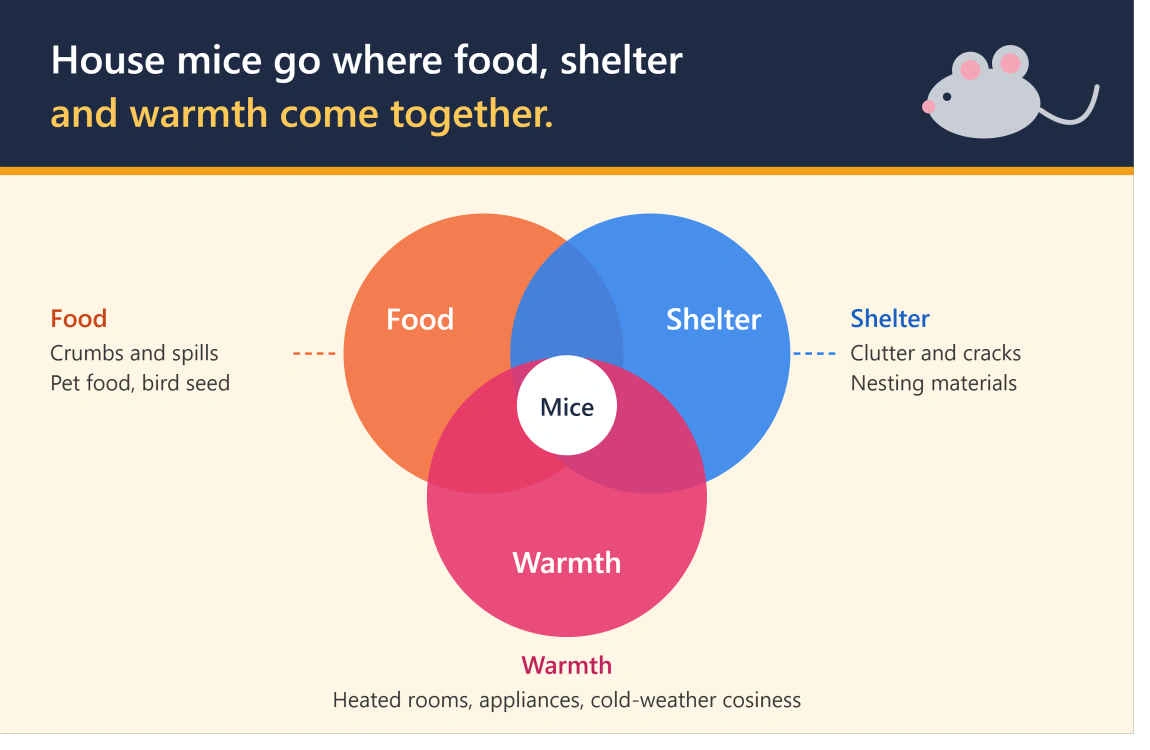
You hear a faint scratching in the wall at night, or you spot a few tiny droppings behind the toaster, and the same question hits: what attracts house mice in the first place? The honest answer is usually boring. Your home is warm, dry, full of hiding places and, most likely, full of snacks.
Easily Accessible Food
This is the number one magnet. Mice are opportunistic nibblers that sample many foods, but they lean toward seeds and grain, according to the Prevention and Control of Wildlife Damage handbook (University of Nebraska–Lincoln and USDA). That means cereal, flour, rice, pasta, oats, birdseed and pet kibble are all prime targets home cleaning.
The surprising part is how little they need. University of Arizona Cooperative Extension reports that a mouse needs only about one-tenth of an ounce of food per day. A few crumbs under the stove can support a mouse for a long time.
Open Pet Food and Bird Seed
Utah State University Extension points out that cat and dog food are favorites for mice. If you leave a bowl out overnight or keep kibble in the original paper bag in the garage, you are running a buffet. UC IPM recommends feeding pets only what they will eat in one sitting and keeping food and home garbage containers sealed.

Clutter and Hiding Places
When it comes to what attracts house mice, shelter is just as powerful as food. In a USDA research study, wild house mice were exposed to a range of lures, including odors, food, water and a den. The most common first reaction was to head for the shelter box rather than the other options.
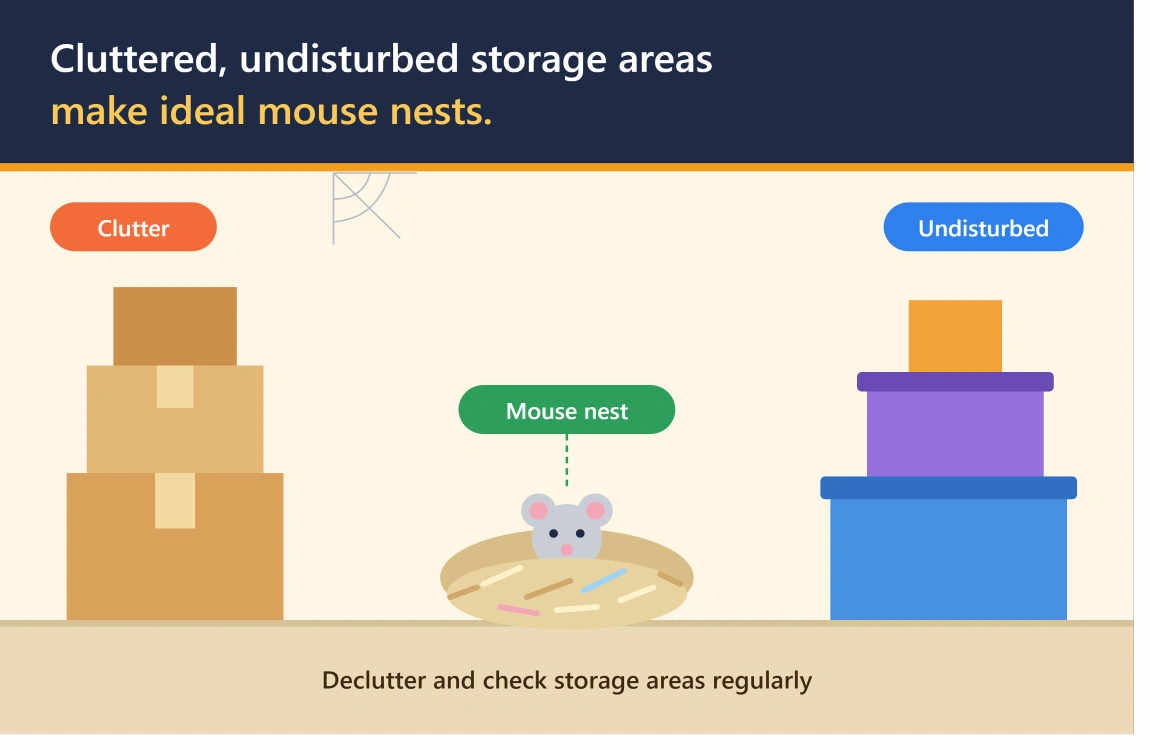
In real homes, that translates to stacked cardboard boxes, piles of laundry area, cluttered garages, storage under stairs and anything that sits undisturbed for months. The University of Nebraska–Lincoln Extension lists debris, rarely moved inventory, stacked wood and insulation as typical mouse habitat.
Soft Nesting Material
Mice prefer dark, secluded spots with nesting material close by. University of Arizona Extension names cotton, packing material, insulation, cardboard and fabric as common choices. Old blankets in a shed, shredded paper in a drawer and the insulation inside a wall void all qualify.
Warmth, Especially When Temperatures Drop
This is why mouse complaints spike in autumn and winter. Utah State University Extension has noted that cold weather pushes mice indoors in search of food and shelter, and the CDC likewise warns that falling temperatures send rodents looking for a way inside.
Warm appliances are especially appealing. Nebraska Extension says that refrigerators, water heaters and furnaces are favorite den sites, so check behind and beneath them.
Tiny Gaps and Cracks in Your Home
Mice do not need an open door. UC IPM says they can enter through openings as small as a quarter inch, roughly the width of a pen. Common weak spots include gaps around pipes, utility lines, dryer vents, door sweeps and the point where the foundation meets the ground. The CDC recommends checking these areas and sealing holes with steel wool, then caulk or spray foam to hold it in place.
Overgrown Plants Against the House
Mice are excellent climbers, and UC IPM advises you to thin or remove plants growing next to, or climbing up, your walls. Ivy, dense shrubs and woodpiles stacked against the house work like a ladder and a hiding spot rolled into one.
Unsealed Trash and Dirty Bins
Garbage smells like food, and mice follow smells. The CDC advises keeping food and garbage inside the home sealed tightly and food sources outdoors kept away from the house. Use lidded bins, take out kitchen waste regularly and rinse bins occasionally so residue does not build up.
Water (Less Important Than You Think)
Many people assume a leaky tap is what attracts house mice. It helps, but it is not essential. The University of Nebraska–Lincoln and USDA handbook explains that mice can survive with little or no free water because they get moisture from their food, though they will happily drink when water is available. In the USDA study mentioned earlier, the water box drew some of the fewest visits. Still, fixing drips is smart housekeeping, because it removes one more comfort.
Common Myth: Ultrasonic Repellers Will Fix It
Plug-in sound devices are heavily marketed, but the evidence is not on their side. UC IPM states plainly that high-frequency electronic devices are not effective, and Utah State University Extension specialists have said the same about noise and electromagnetic gadgets. Save your money for sealing materials and good storage containers.
Signs You Already Have Mice
- Droppings along walls, in drawers or behind appliances
- Gnaw marks on food packaging, wood or wiring
- Scratching or rustling at night, since mice are mostly nocturnal
- Nests made from shredded paper, fabric or insulation
- Daytime sightings, which can suggest a larger population
That last point matters. Utah State University Extension warns that seeing mice in daylight may mean several are in the house, and that a pair can produce multiple litters within months. Act early.
How to Stop Attracting House Mice: A Simple Checklist
The CDC summarizes prevention as seal up, trap up and clean up. Here is how that looks in practice:
- Store food in thick plastic, glass or metal containers with tight lids, including pet food and bird seed.
- Wipe up crumbs and spills daily, and sweep under appliances regularly.
- Seal gaps larger than a quarter inch with steel wool, caulk, spray foam or metal flashing, and fit door sweeps.
- Declutter garages, basements and storage areas, and swap cardboard for plastic bins with lids.
- Cut back vegetation and move woodpiles away from the house.
- Use lidded trash cans and home clean them periodically.
- Trap, do not just repel. Snap traps placed along walls where you find droppings are the standard recommendation, and Nebraska Extension notes mice rarely travel far from their shelter and food supply, so place traps close to activity.

UC IPM also cautions against indoor poison baits, because mice can die in hidden places, causing odors and making them hard to find. If you do consider rodenticides, the EPA offers guidance on safe use and on hiring a rodent control professional.
Frequently Asked Questions
What attracts house mice the most?
Accessible food and safe shelter. Crumbs, pet food, grains and clutter give mice everything they need, and warm weather-sealed homes make them even more appealing in cold months.
Do house mice need water to survive?
Not necessarily. They can get enough moisture from their food, although they will drink water when they find it.
Why do I suddenly have mice in a clean house?
Cleanliness helps, but access matters too. A tiny gap, a cold snap, or construction nearby can push mice indoors even when your kitchen is spotless. Sealing entry points is the fix a clean house cannot replace.
Can mice squeeze through really small holes?
Yes. A gap of around a quarter inch is enough, according to UC IPM and the CDC’s public guidance.
When should I call a professional?
If droppings keep appearing after you have sealed, cleaned and trapped, or if activity is inside walls you cannot reach, a licensed pest control professional is worth the cost. The CDC also advises contacting your local health department if you are concerned about an infestation and a specialist for areas you cannot reach to clean.
Final Thoughts
So, what attracts house mice? Food they can reach, places to hide, soft material to nest in, warmth in cold weather, and a gap big enough for a pen to fit through. Fix those five things and most infestations never take hold. Start with food storage and sealing, because those two steps do the most work for the least money.