Let us be completely honest for a moment. We all have that one dreaded corner, closet, or spare room in our house where random items seem to multiply. Keeping your home completely free from clutter makes it significantly more comfortable, highly organized, and much easier to maintain.
Why Removing Junk Matters
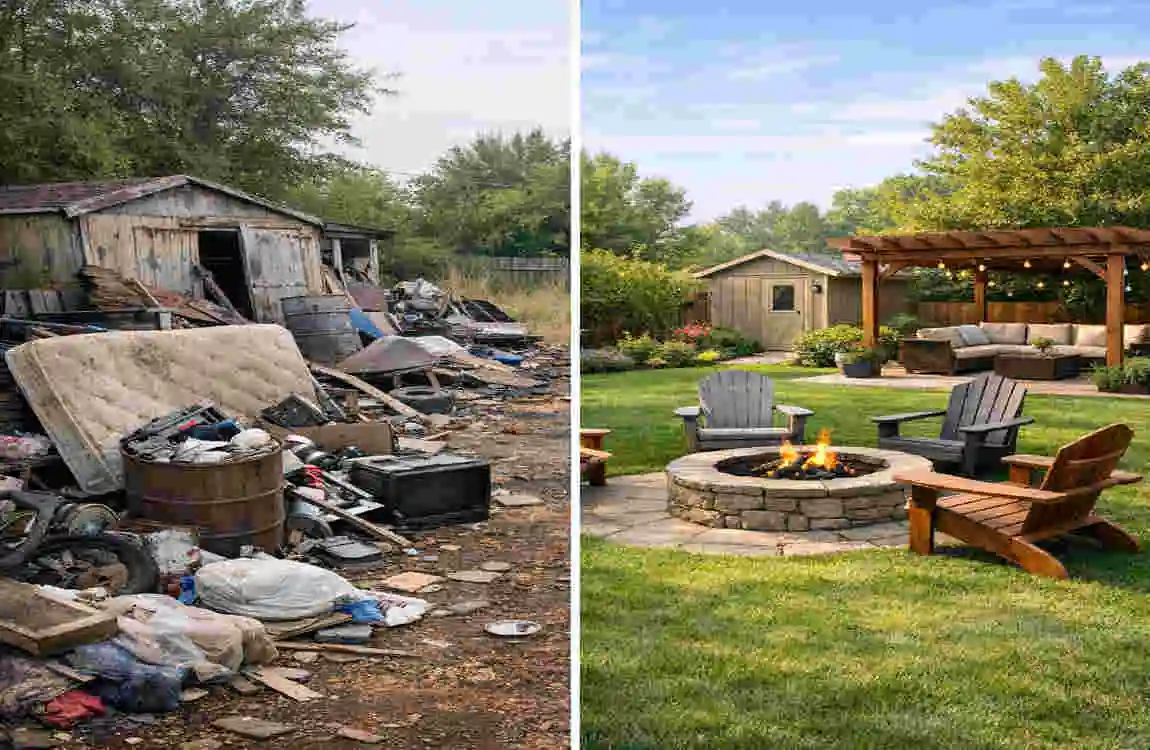
Before you start hauling heavy boxes, it helps to understand why this process is so important. A clutter-free home offers incredible benefits that go far beyond simply having clean floors.
When you remove the junk from your life, you actively:
- Create more usable living space: You finally get to use that spare bedroom or park your car in the actual garage!
- Reduce your daily stress: Studies show that looking at clutter spikes your anxiety. Clearing it out drastically improves your mental well-being.
- Make cleaning much easier: You no longer have to move ten random items to dust a single table.
- Help prevent household pests: Bugs and mice love to hide in piles of old cardboard and dusty clothes.
- Increase your home’s appearance: A tidy home looks bigger, brighter, and inherently more valuable.
Start with One Area
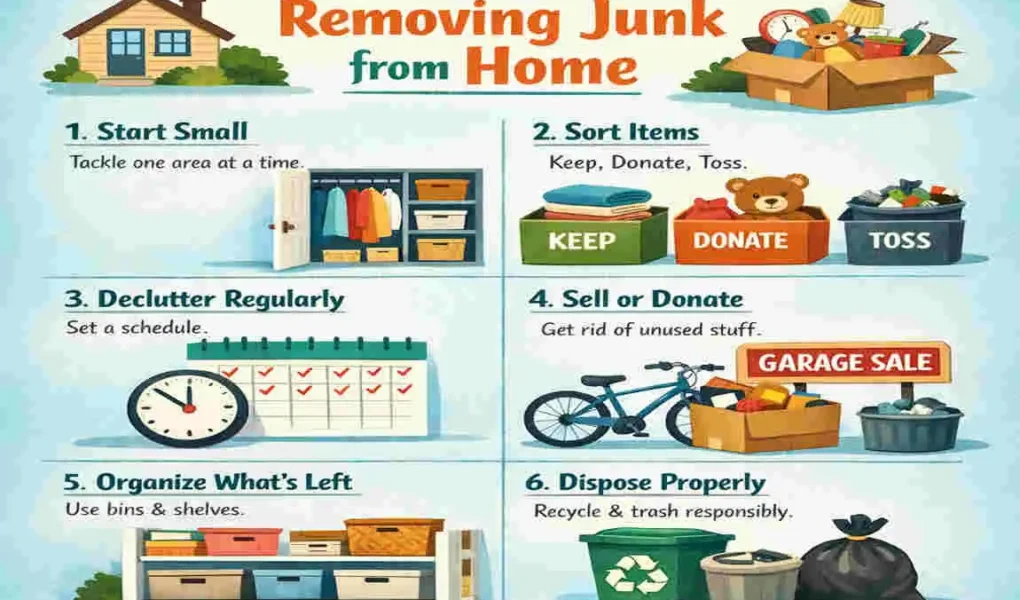
The biggest mistake people make is trying to clean the entire house in a single weekend. This usually leads to immediate burnout. Instead, you need to focus on one single room, or even just one small section of a room, at a time.
Breaking the massive project into smaller, bite-sized tasks makes it so much easier to stay motivated. Begin with the specific areas that collect the absolute most clutter.
Conquer the Garage
The garage is the ultimate dumping ground for items we do not know what to do with. Start by clearing off your workbench or organizing just one wall. Once you see a little bit of clean floor space, you will feel inspired to keep going!
Tackle the Basement and Attic
These hidden spaces easily swallow decades of forgotten memories and broken furniture. Because they are out of sight, they get messy quickly. Try committing to just one hour a week in the basement. Grab a flashlight, put on some good music, and pull out one box at a time.
Refresh Your Closets
Look at your bedroom closet. If you have not worn a shirt in two years, you probably will not wear it again. Pull everything out of the closet, wipe down the shelves, and only put back the items you genuinely love and wear.
Sort Your Items
Once you pick your starting zone, you need a system in place. Do not just move piles of junk from one room to another.
To stay incredibly organized, create four simple categories using large cardboard boxes or heavy-duty trash bags. Sorting everything first saves you a massive amount of time and helps you avoid throwing away perfectly useful belongings.
Category What to Do With It
Keep Items you use regularly and absolutely need in your daily life.
Donate Good-condition items that others can still use, like old clothes or toys.
Sell Valuable items that are worth your time to sell online or at a garage sale.
Trash Broken, expired, or completely unusable items that need to go away.
The “Keep” Box
Be ruthless here! Place items in this box only if you actively use them. If you are holding onto something “just in case,” it is time to let it go.
The “Donate” and “Sell” Boxes
Your old junk might be exactly what someone else desperately needs. Donating gives your items a second life. If you have high-value items, setting them aside to sell can even put a little extra cash in your pocket to reward your hard work!
Recycle Whenever Possible
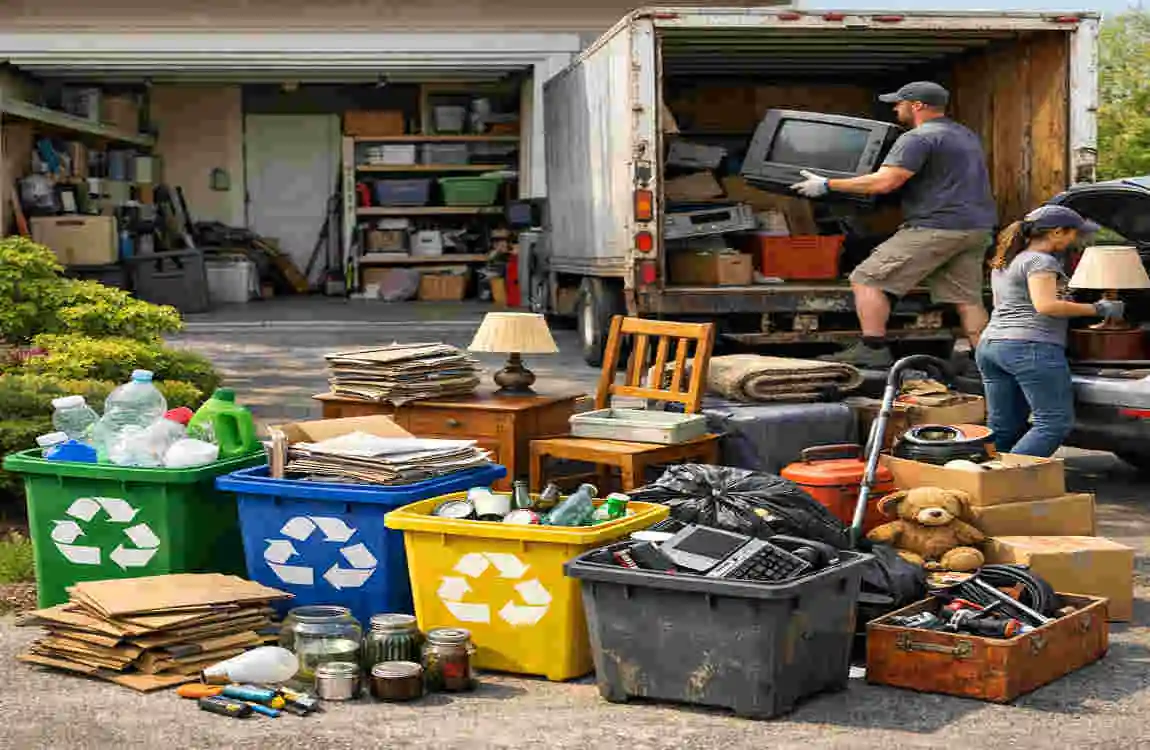
As you sort through your belongings, remember that many common household items absolutely do not belong in the regular trash can. You want to be kind to the earth while you clean your house.
Whenever possible, you should actively consider recycling:
- Old cardboard boxes
- Junk mail and scrap paper
- Plastic food containers
- Scrap metal and wire
- Outdated electronics
- Broken old appliances
Protecting the Environment
Recycling directly helps reduce massive landfill waste and heavily protects our fragile environment. Instead of tossing that old broken toaster or ancient laptop in the garbage, take a quick drive to your local recycling center. Many cities even offer free drop-off bins for old electronics right in your neighborhood!
Remove Large Items Safely
You can easily throw away small trinkets, but what do you do with a broken sofa or a rusted refrigerator? Old furniture, heavy mattresses, and massive appliances always require special disposal methods.
Depending on your location and budget, you have a few great options for safely removing heavy items from your property.
Schedule a Bulk Waste Pickup
Many city trash departments offer free or low-cost bulk pickups a few times a year. Call your local waste management office, tell them what you have, and drag the item down to your curb on the scheduled morning.
Rent a Dumpster
If you are doing a massive whole-house cleanout, renting a roll-off dumpster is a fantastic idea. A company drops the large bin right in your driveway. You take your time filling it up over the weekend, and they drive it away when you are done.
Hire a Professional Junk Removal Service
Do you have a bad back or zero free time? Hire the pros! A professional junk removal service will literally carry the heavy items right out of your house for you. You point at the junk, and they make it disappear.
Prevent Future Clutter
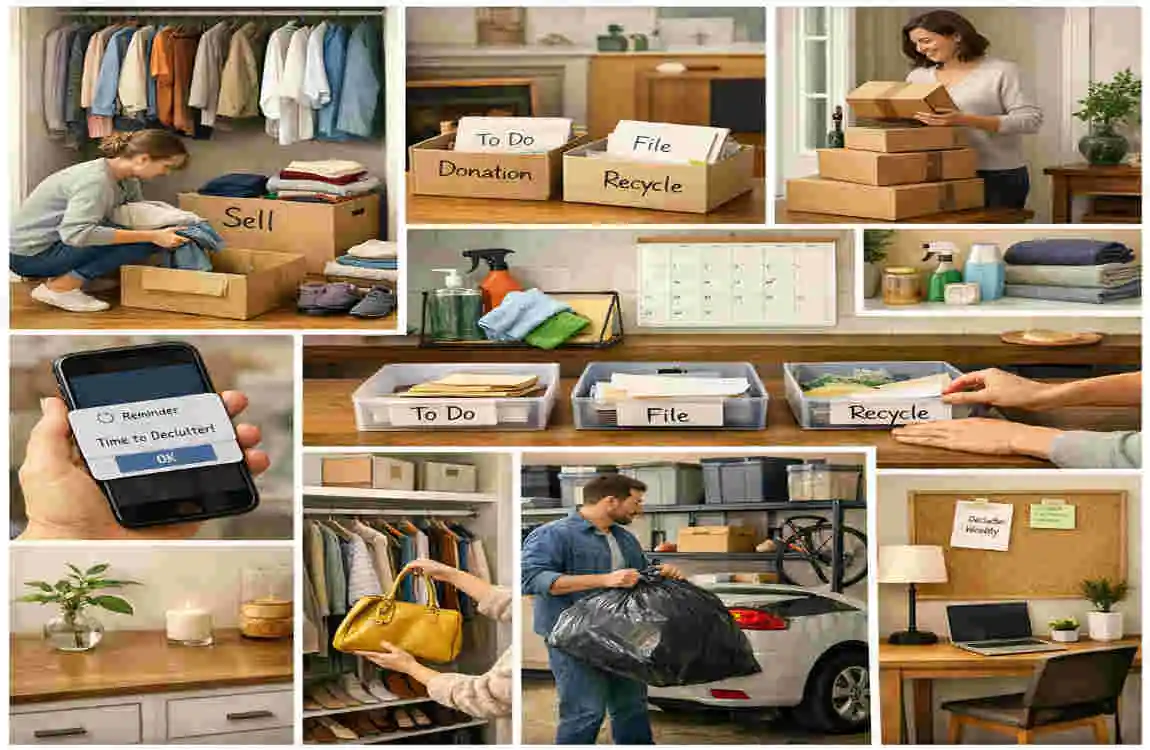
Congratulations, you finally cleaned your space! Now, how do you keep it that way? Keeping your home junk-free is actually much easier than repeatedly cleaning it. You need to develop a few simple daily habits.
Adopt the “One In, One Out” Rule
If you buy a brand new pair of shoes, you must donate an old pair. This simple rule prevents your closets from ever overflowing again. Try to avoid making unnecessary impulse purchases at the store.
Maintain Your Hard Work
Declutter every few months instead of waiting for years. Take five minutes every Sunday to organize your storage spaces and throw away the junk mail on the kitchen counter. These incredibly small daily habits easily prevent massive clutter from building up again.
Frequently Asked Questions (FAQ)
How often should I remove junk from my home?
To keep your home looking its best, a full decluttering session every 6 to 12 months is ideal. However, doing very small, 10-minute cleanups every single month heavily helps prevent bad clutter from accumulating in the first place.
What items should I donate instead of throwing away?
You should always donate items that still have life left in them! Furniture, outgrown clothing, old books, extra kitchenware, children’s toys, and working electronics that are still in good condition can always be donated to local charities.
Can I recycle old electronics?
Yes, you absolutely can, and you should! Many modern electronics, including old computers, broken cell phones, and cracked televisions, contain heavy metals. You should always take them to certified e-waste recycling centers to protect the environment.
Should I hire a junk removal company?
If you have incredibly heavy furniture, massive amounts of construction waste, or simply very limited free time, hiring a professional junk removal service is highly recommended. It saves your back from heavy lifting and ensures proper, legal disposal.
What is the easiest way to start decluttering?
The best trick is to begin with one very small area, such as a single messy kitchen drawer or your bathroom medicine cabinet. Completing a tiny task first quickly builds your mental momentum and makes the larger projects feel much more manageable.
| Topic | Information |
|---|---|
| What Is Junk Removal? | The process of clearing unwanted, broken, or unused items from your home. |
| Why Remove Junk? | Creates more space, improves cleanliness, enhances safety, and reduces stress. |
| Best Time to Declutter | During seasonal cleaning, before moving, renovating, or selling a home. |
| Items to Remove | Old furniture, broken appliances, worn-out clothes, papers, electronics, and household clutter. |
| Sort Into Categories | Keep, Donate, Sell, Recycle, and Dispose. |
| Donation Ideas | Donate usable furniture, clothing, books, and household items to local charities. |
| Recycle When Possible | Recycle paper, cardboard, glass, metal, plastic, and approved electronics. |
| Safe Disposal | Dispose of hazardous waste (paint, batteries, chemicals) through local collection programs. |
| Helpful Tools | Trash bags, storage bins, labels, gloves, cleaning supplies, and a dolly for heavy items. |
| Room-by-Room Method | Start with one room or area at a time to avoid feeling overwhelmed. |
| Benefits of Junk Removal | Better organization, improved indoor air quality, easier cleaning, and increased home value. |
| Maintenance Tips | Declutter monthly, avoid unnecessary purchases, and donate unused items regularly. |