You don’t need a sprawling lawn to grow something lovely. A windowsill, a balcony, a bare wall or a spare corner of the kitchen is enough. Small-space gardening is also having a moment. The RHS has made balcony and container gardens a regular feature at Chelsea, and two new categories celebrating urban green spaces made a big impression in 2021.
What Is the Best Indoor Garden System?
There is no single winner, because the best system depends on your space, budget and what you want to grow. NBC Select’s 2026 roundup is a useful starting point. It names Click & Grow The Smart Garden 9 as best for beginners, Rise Gardens Personal Rise Garden as best for small spaces, and Gardyn Home Kit 4.0 as best for vegetables. The same list picks the Tower Garden FLEX as its best tower system and the iDOO Hydroponics Growing System as its budget pick.
A quick way to choose:
- Total beginner: go for a pre-seeded, all-in-one kit with built-in lights.
- Very little space: choose a compact countertop or vertical model.
- You want vegetables as well as herbs: pick a larger hydroponic system. NBC Select notes that the Gardyn can hold up to 30 plants and works best with Wi-Fi.
- You prefer soil: a shelf-style system is worth a look. NBC Select lists one that holds up to 72 seedlings.
- You want low effort: timed LED lights, self-watering and app-controlled settings make a garden easier to look after.
Start With a Countertop Smart Garden
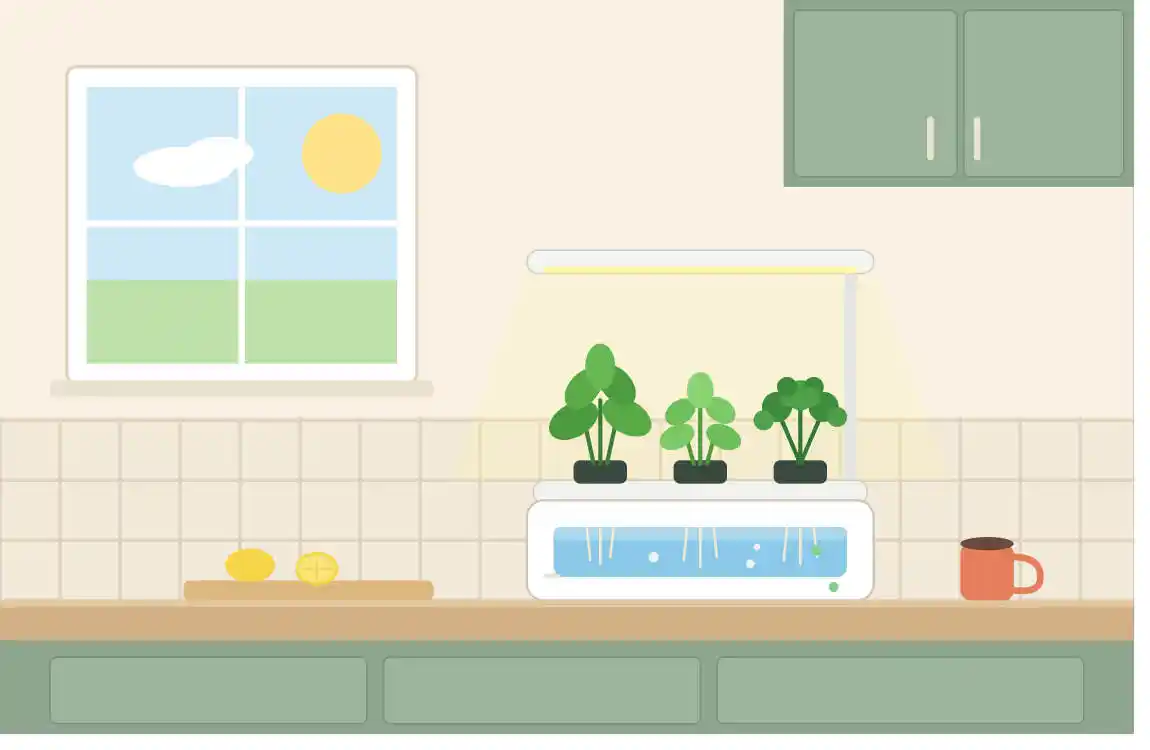
If you want the simplest route, put a self-contained system on a worktop. These kits combine a water reservoir, lights and plant pods, so you can grow herbs, salad leaves and even microgreens without soil or a sunny window. NBC Select says its top picks can grow herbs, fruits, vegetables and microgreens.
Make the Most of Your Windowsill
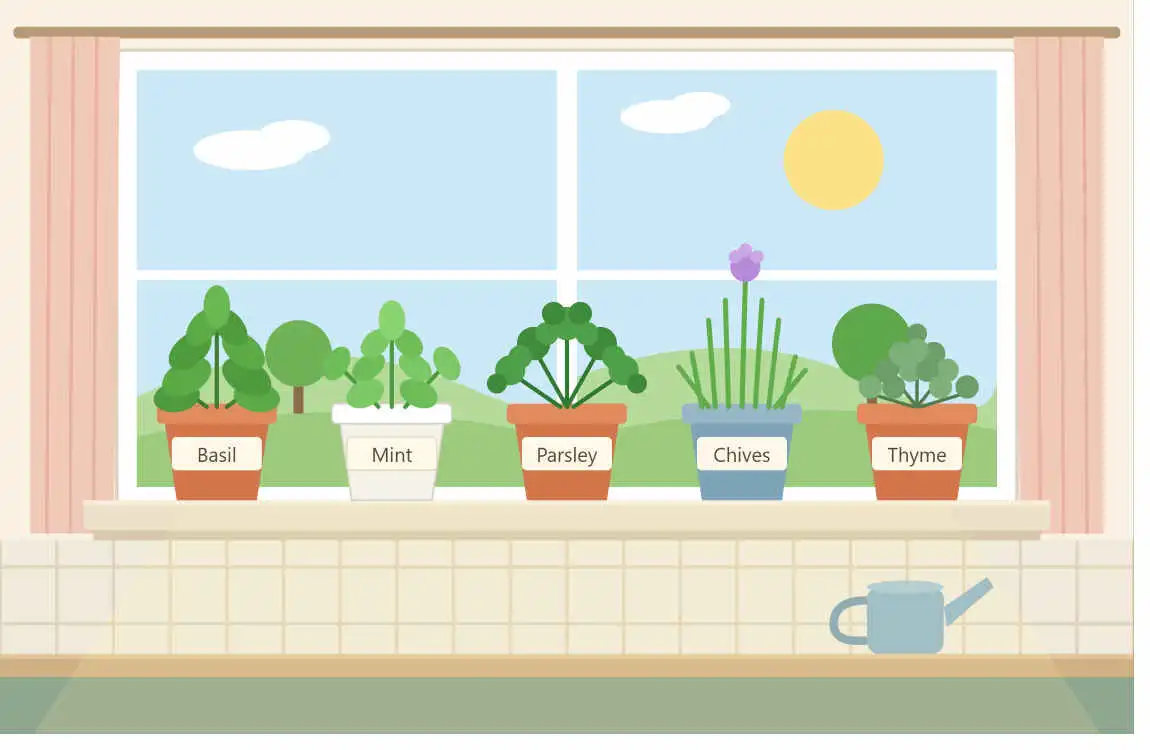
A sunny sill is the classic small space garden. According to NDSU Extension, basil, chives, parsley, mint and oregano all grow well indoors. The same source says a window with about five hours of light a day is ideal.
Grow Up With a Vertical Wall Planter
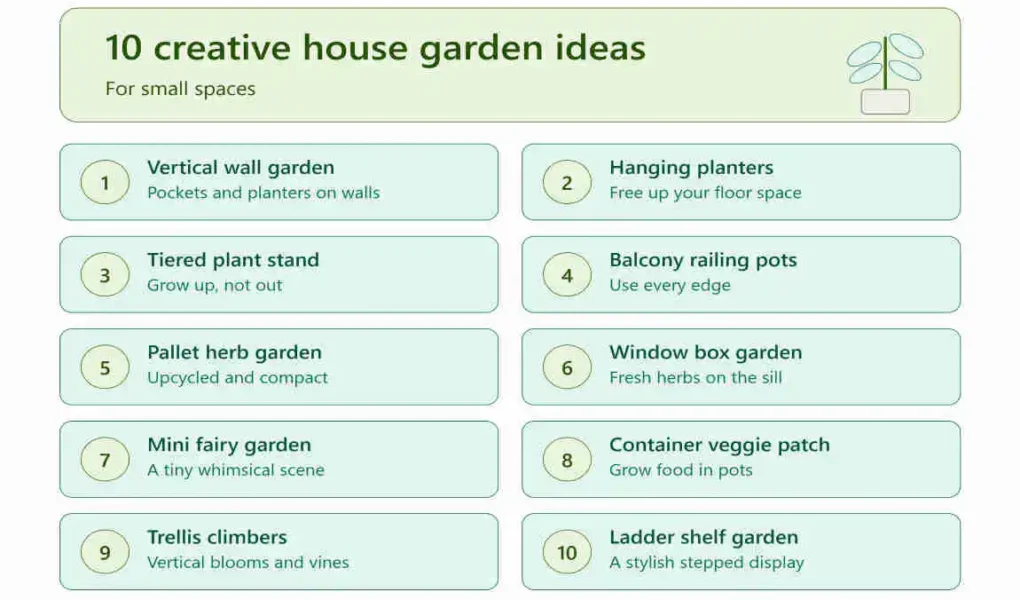
When floor space runs out, use the wall. A living wall or a set of wall-mounted pots adds greenery without taking up any room. Homes & Gardens points out that if you have a smaller ground plan, using walls or fences is a great way to maximise space. Indoors, lightweight pocket planters work well for trailing plants and herbs.
Build a Shelf Garden With Grow Lights
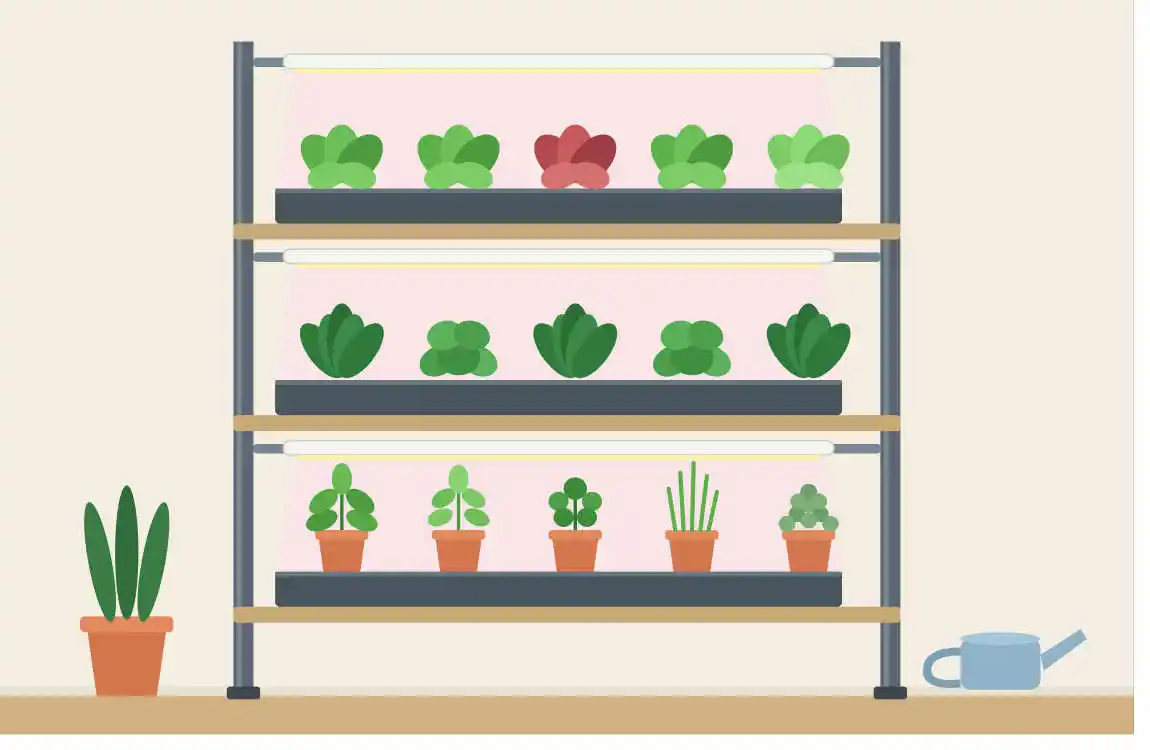
A narrow, tiered shelf with lights fitted underneath each level can turn a dark corner into a mini harvest zone. The University of Tennessee Extension advises using thin-profile fluorescent or LED lights so as much light as possible reaches crops on a table or windowsill. University of Idaho Extension recommends full-spectrum LED grow lights positioned 6–12 inches above herbs , adjusted as plants grow. A timer takes care of the daily routine for you.
Try a Hydroponic Tower
A tower stacks plants in a column, so a lot of growing happens in very little floor space. UT Extension notes that some indoor hydroponic systems allow lights to be installed vertically to give even lighting in a tower. Towers suit leafy greens and herbs best, and they can double as a feature in a living room or kitchen.
Layer a Balcony With Pots at Different Heights
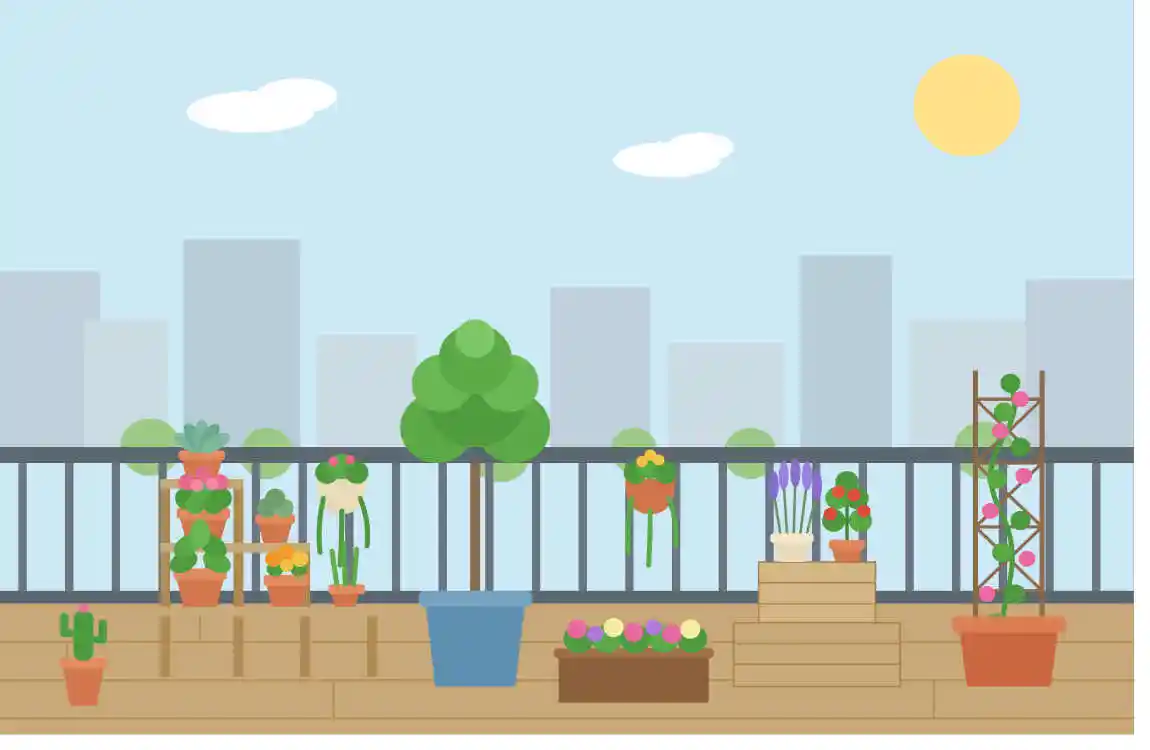
On a balcony, how you arrange containers matters as much as what you plant. RHS Chelsea designers recommend using different container heights to create a layered effect, which adds depth. Their other tips include choosing a bigger container than you think you need, and a few large statement pots rather than lots of small ones.
Upcycle Tin Cans and Troughs
You can garden on a tight budget. The RHS shares small-space DIY planters, including tin cans of different sizes arranged to create a cascade effect, and a stacked vertical planter made from a series of troughs. They suit a window ledge, balcony or porch.
Go Modular and Movable
Flexible gardens are a growing trend, especially for renters. The Transient Garden at RHS Chelsea 2026 shows a compact balcony with a modular home design, container planting and vertical accents for modern, mobile living. The RHS also highlights container planting, folding furniture and vertical structures that add height without overwhelming a space. Pots on wheels, stackable planters and folding furniture all make it easy to rearrange when you need to.
Grow Microgreens and Sprouts on a Shelf
Microgreens are quick, compact and ideal for tiny kitchens. University of Idaho Extension describes herbs, microgreens and sprouts as fantastic ways to bring life indoors during cold winters. All you need is a shallow tray and a bright spot or a small light.
Bring Your Outdoor Herbs Indoors for Winter
If you already grow herbs outside, don’t let them go to waste. University of Illinois Extension suggests you divide and repot herbs for indoor winter gardening before the growing season ends. Anoka County Master Gardeners add that you’ll need grow lights unless you have a spot that gets several hours of direct sun.
Quick Tips to Keep Small Indoor Gardens Healthy
- Watch the water. University of Idaho Extension warns that too much water can cause root rot.
- Think about placement. Indoor growing needs attention to light, air movement, nearby heating or air-conditioning vents, and the risk of leaking water.
- Choose efficient lighting. Anoka County Master Gardeners note that clip-on LED grow lights use less energy than traditional fluorescent bulbs.
- Pick soil or hydroponics to suit you. Herbs can be grown hydroponically, or in potting medium with supplemental grow lights.
FAQs
What is the best indoor garden system for beginners?
A pre-seeded, all-in-one kit with built-in lights is the easiest place to start. NBC Select’s 2026 roundup picks the Click & Grow Smart Garden 9 for beginners.
What is the best indoor garden system for small spaces?
A compact countertop or vertical system. The same roundup picks the Rise Gardens Personal Rise Garden for small spaces.
Do I need grow lights for an indoor garden?
Not always. A bright windowsill can be enough for herbs, but supplemental LED lights help in winter or in darker rooms.
Final Thoughts
A small space isn’t a limit. It’s an invitation to be creative. Start with one idea, such as a windowsill of herbs or a compact indoor garden system, and build up from there. When you’re choosing a system, pick the one that fits your space, your routine and what you actually want to eat.