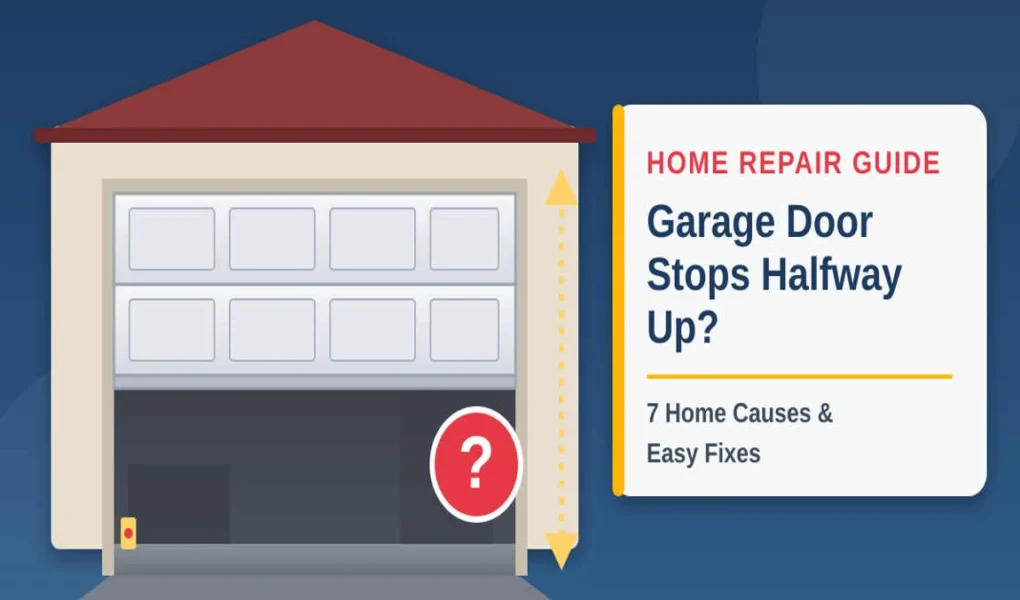
A garage door that stops halfway up is usually dealing with one of three things: a broken or worn spring, a door that is binding in its track or rollers, or opener force and travel-limit settings that have drifted out of adjustment. Photo-eye sensors rarely cause it, because they only act while the door is closing.
You press the button, the motor hums, the door climbs about knee height or waist height, and then it just stops. It is frustrating, and it is also your garage door telling you something specific. Where it stops, and what it sounds like, narrows down the cause quickly.
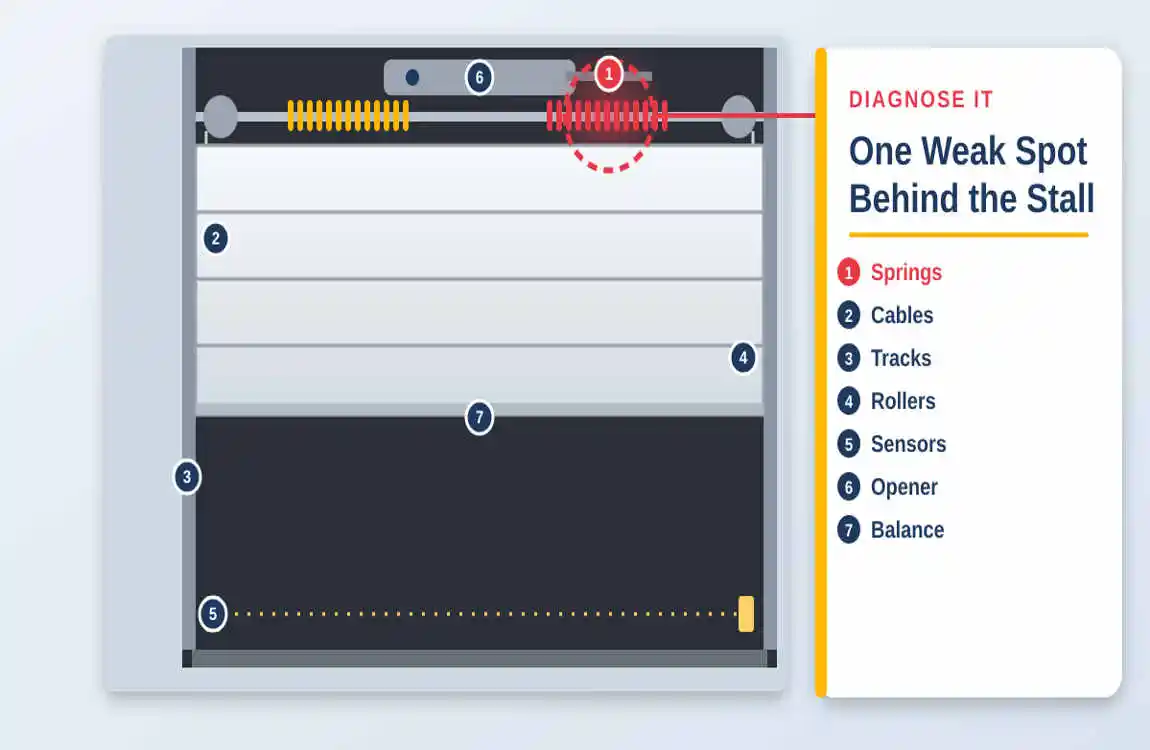
At a glance: what the symptom usually means
A weak or broken garage door spring
The springs, not the motor, do the heavy lifting. The opener mostly guides the door. When a spring weakens or snaps, the opener suddenly has to lift the full weight of the garage door, and it often gives up partway. The Door & Access Systems Manufacturers Association (DASMA) describes springs as arguably the most important and most dangerous part of your door.
A simple balance check: with the door closed, pull the red emergency release cord to disconnect the opener, then lift the door by hand to about halfway. A properly balanced door stays roughly where you leave it. If it slams down or feels very heavy, the springs are the problem.
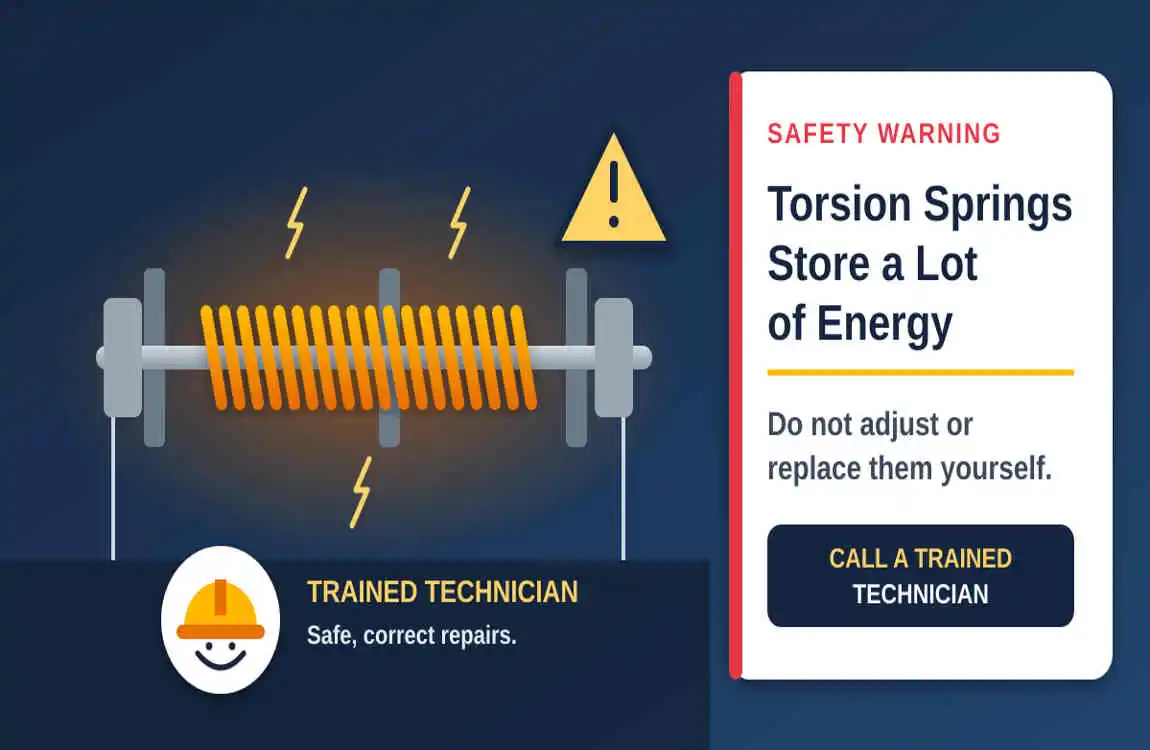
Do not attempt spring replacement yourself. Bob Vila’s home-repair guide notes that spring replacement is a DIY job best left to the pros, and This Old House points out that torsion springs are more complex and potentially more dangerous than extension springs.
Dirty, dry or damaged rollers and hinges
A single stiff roller or seized hinge can create just enough drag to stall a door at the same height every time. Look for rollers that do not spin freely, cracked or flattened wheels, loose hinges, and dried-out grease. Wipe the tracks and rollers clean, then apply a garage-door-specific lubricant to the rollers and hinges. DASMA also recommends trying a spray-on lubricant before calling a technician for noisy doors.
Bent, dented or misaligned tracks
Tracks should be clean garage, straight and level. A bump from a car, a loose bracket or a small dent can pinch a roller and bring the door to a halt. Check each track visually from bottom to top. Tighten loose mounting bolts, and wipe away dirt, but do not hammer a bent track back into shape. Heavily bent or misaligned tracks need a technician, because the door is under tension.
Opener force set too low
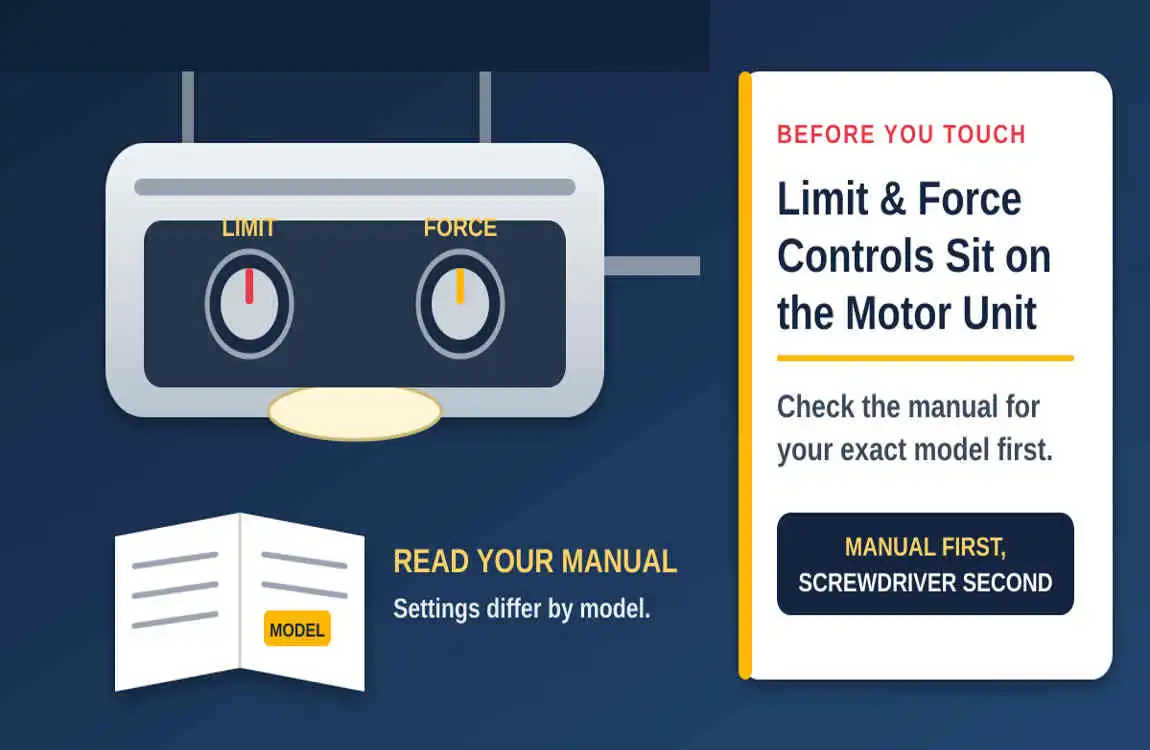
Openers have force settings that control how much power they use to open and close the door. Chamberlain’s installation guidance explains that force adjustment should be made in small steps, running a full travel cycle after each one. If the up force is set too light, the door can stop when it meets normal resistance, and that resistance can grow as parts age.
One warning matters more than any other here: opener manufacturers say never to use force adjustments to make up for a binding or sticking door. Chamberlain’s manuals state that too much force can interfere with the safety reversal system. If the door only opens when you crank up the power, the real problem is mechanical, so fix that instead.
Travel limits set incorrectly
Travel limits tell the opener where the door should stop going up and going down. If the up limit is set too short, the door may appear to stop “halfway” even though the opener thinks it has finished. On openers with limit screws, one turn of the limit screw changes the travel by about 2 inches (5 cm) on many Chamberlain models. After any limit change, Chamberlain says to check the safety reversal system again.
Worn cables or uneven lifting
If one side of the door rises faster than the other, or the door looks crooked as it moves, a cable may be frayed, slipped off its drum, or stretched. Uneven lifting puts strain on the opener and can jam the door in the track. Cables are under high tension, so stop using the door and call a technician.
Safety sensors (mostly a closing problem)
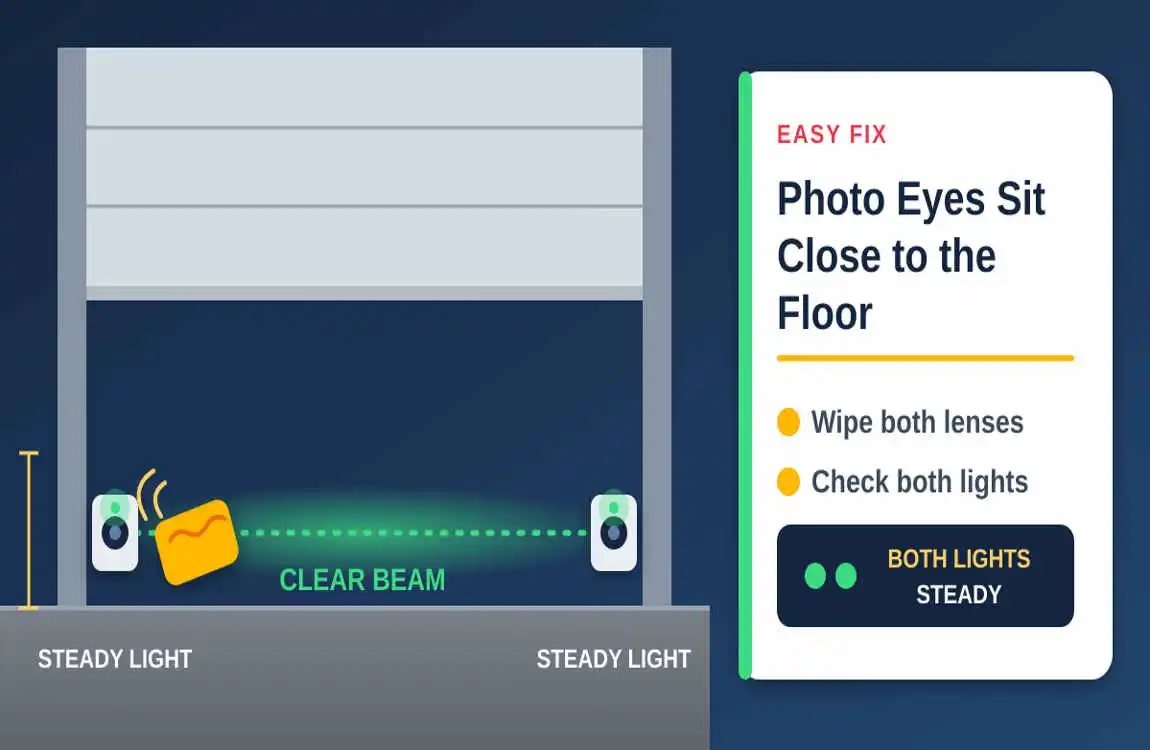
People often blame the photo-eye sensors, and they are a classic cause when a door stops or reverses on the way down. Under U.S. rules, residential openers must have at least two entrapment protection systems, including an inherent reversal system and an electric eye or edge sensor. The eye watches the doorway while the door closes, so it is usually not the reason a door quits on the way up.
Still, clean the lenses and check the alignment. DASMA’s technical data sheet says photo eyes should be installed no higher than 6 inches above the garage floor and tested monthly. On many myQ-enabled Chamberlain openers, lights that flash 10 times point to misaligned or obstructed sensors.
Step-by-step: what to check, in order
- Look and listen. Note exactly where the door stops and whether the motor hums, clicks, or strains.
- Clear the path. Remove anything in or near the tracks and check for debris or ice.
- Disconnect the opener with the emergency release and lift the door by hand. If it is very heavy or will not stay halfway, stop and call a pro about the springs.
- Inspect the rollers, hinges and tracks. Clean them, tighten loose hardware and lubricate.
- Check the opener settings in your manual. Make small adjustments only, and run a full cycle after each one.
- Test the safety reversal after any change to force or limits.
- Call a technician for springs, cables, bent tracks or anything that still fails.
When to call a professional
Call a qualified garage door technician if you notice any of the following: a loud bang followed by a door that will not lift, a visible gap in a spring, frayed or slack cables, a crooked door, or a door that only opens when force is turned up. These parts hold a lot of stored energy, and a mistake can cause serious injury or damage to your home and car.
How to stop it happening again
- Lubricate rollers and hinges a couple of times a year, and keep tracks clean.
- Test the balance of the door every few months by lifting it by hand with the opener disconnected.
- Test the photo eyes and the reverse function monthly, as DASMA recommends.
- Keep the owner’s manuals for the door and opener near the door, as DASMA suggests.
- Book a yearly inspection, especially for doors more than a few years old.
Frequently asked questions
Why does my garage door stop halfway up?
Usually because of a weak or broken spring, a door binding in a track or roller, or opener force and limit settings that need adjusting. Safety sensors typically affect closing, not opening.
Why does my garage door stop halfway down?
Check the safety sensors first. A dirty lens, a knocked-out alignment or an object in the beam path can make the door stop or reverse while closing.
Can I fix it myself?
You can clean, lubricate, clear debris and make small opener adjustments by following your manual. Leave springs and cables to a professional.
Is it safe to keep using a door that stops halfway?
It is better not to. A struggling door puts strain on the opener and can fall unexpectedly if a spring or cable has failed. Stop using it until the cause is found.
Should I increase the opener force?
No. Chamberlain’s manuals warn against using force settings to compensate for a binding or sticking door, because it can interfere with the safety reversal system.
Final thoughts
A garage door that stops halfway up is almost never random. Start with the simple, safe checks: clear the path, clean and lubricate, and look at the settings. If the door feels heavy when you lift it by hand, or you see damaged springs or cables, stop and call a professional. A small repair done early costs far less than a failed spring or a burned-out opener.
Sources
- DASMA (Door & Access Systems Manufacturers Association): Garage Door Safety Tips
- DASMA Technical Data Sheet #364: Photoelectric Sensor Installation
- ULSE: Automatic Garage Door Standards
- Chamberlain Group Support: Adjusting Limit or Travel
- Chamberlain Group Support: Adjusting Force
- Chamberlain Group Support: Programming Travel on myQ Openers
- Bob Vila: Garage Door Spring Replacement Risks
- This Old House: Replacing Garage Door Springs