
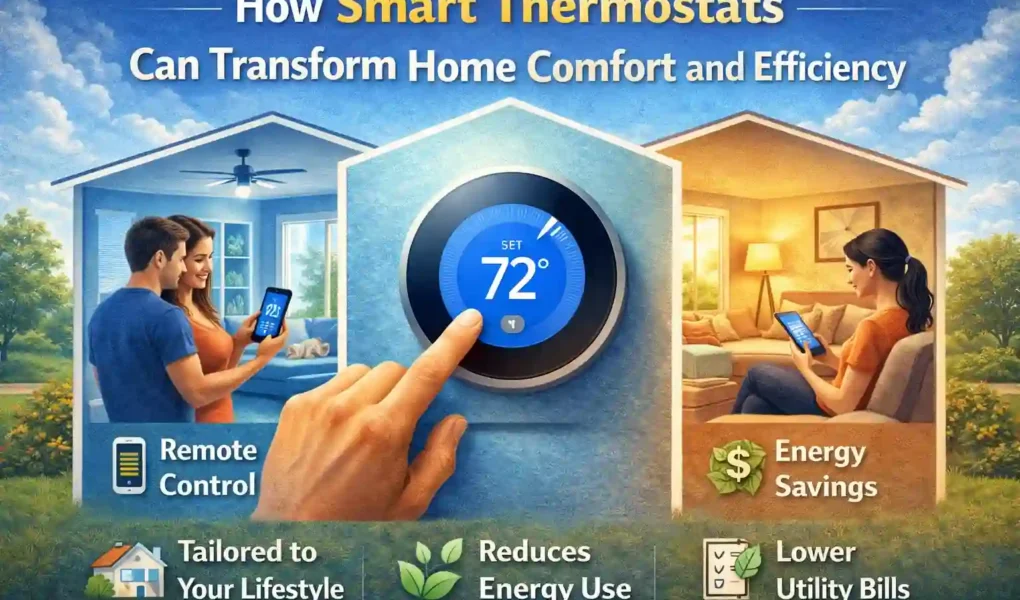
Technology has changed the way people manage their homes. Lighting, security systems, and even kitchen appliances can now be controlled digitally. Heating and cooling systems are also part of this shift. One of the most impactful innovations in modern homes is the smart thermostat.
At first glance, a smart thermostat may look like a small device mounted on the wall. However, it performs a powerful role in managing indoor comfort and energy use. Instead of simply turning heating or cooling systems on and off, smart thermostats analyse patterns, adjust temperatures automatically, and provide valuable information about household energy use.
Homeowners are increasingly searching for reliable solutions that improve comfort while reducing energy costs. This is where your guide to smart thermostats becomes important. Understanding how these devices work helps homeowners make informed decisions and maximise the benefits of modern heating and cooling technology.
What Is a Smart Thermostat?
A smart thermostat is a digital device that controls a home’s heating and cooling system through intelligent automation. Unlike traditional thermostats, which require manual adjustments, smart thermostats can learn user preferences and adjust temperatures automatically.
Most smart thermostats connect to home Wi-Fi networks. This allows homeowners to control temperature settings remotely using smartphone apps or voice assistants. Whether someone is at home, at work, or travelling, they can easily adjust indoor temperatures.
Smart thermostats also gather information about how heating and cooling systems operate. Over time, the device learns daily routines and automatically adjusts temperatures to match household schedules. For example, it may reduce heating when everyone leaves for work and restore comfort before they return home.
This ability to learn and adapt is one of the main reasons smart thermostats have become popular in modern homes.
How Smart Thermostats Improve Home Comfort
Comfort is one of the most noticeable benefits of smart thermostat technology. Traditional thermostats often create uneven temperatures because they operate with limited information. A smart thermostat, however, monitors environmental conditions more carefully.
Many smart thermostats track indoor temperature, humidity levels, and usage patterns. By analysing this data, the system maintains a more stable indoor climate throughout the day.
For example, during colder months, the thermostat may gradually increase heating during the early morning hours. Instead of waking up to a cold home, residents experience comfortable temperatures when they wake up.
During warmer seasons, the thermostat may adjust cooling gradually to prevent rooms from becoming too hot. These subtle adjustments improve overall comfort without requiring constant manual changes.
Because smart thermostats manage heating and cooling more precisely, households experience fewer temperature swings and greater comfort.
Energy Savings Through Intelligent Temperature Management
Energy efficiency is another key reason homeowners install smart thermostats. Heating and cooling systems are responsible for a large portion of household energy consumption. When these systems operate inefficiently, energy costs increase quickly.
Smart thermostats reduce energy waste by adjusting temperatures automatically when cooling or heating is unnecessary. For example, when a home is empty, the thermostat may reduce heating levels. When residents return, the system restores comfortable temperatures.
Many devices also provide energy reports showing how much energy the household is using. These insights help homeowners understand how temperature settings affect monthly utility bills.
Over time, small temperature adjustments can result in significant savings. Even reducing heating or cooling by a few degrees during unoccupied hours can lower energy use.
Understanding these benefits is an important part of your guide to smart thermostats, especially for homeowners focused on improving efficiency.
Remote Control and Convenience
One of the most practical features of smart thermostats is remote access. Traditional thermostats require physical adjustments at the device itself. Smart thermostats remove this limitation.
Through smartphone applications, homeowners can control their heating or cooling system from almost anywhere. This flexibility is particularly useful for people with changing schedules.
For example, if someone forgets to adjust the thermostat before leaving home, they can simply open an app and change the settings instantly. Likewise, if outdoor temperatures change suddenly, homeowners can respond quickly.
Remote access also benefits families returning from vacations or long trips. Instead of entering a cold or overheated house, they can prepare the home environment before arriving.
These conveniences make smart thermostats one of the most practical upgrades for modern living spaces.
Smart Learning Features and Automated Scheduling
Many smart thermostats include learning features that observe household routines. Instead of programming complex schedules manually, the device gradually learns patterns and adjusts temperatures automatically.
For instance, if a household typically lowers temperatures at night and raises them in the morning, the thermostat will begin to replicate this behaviour automatically. This eliminates the need for repeated adjustments.
Automated scheduling also improves comfort during seasonal changes. As outdoor temperatures shift, the thermostat adjusts heating or cooling cycles to maintain indoor stability.
These intelligent features help reduce energy waste while ensuring that the home environment remains comfortable at all times.
Learning technology is one of the reasons smart thermostats are viewed as a long-term investment in home efficiency.
Smart Thermostats and Modern Smart Homes
Smart thermostats also play a central role in connected home systems. Many devices integrate seamlessly with smart home platforms that manage lighting, security, and other automation features.
For example, when a smart home system detects that residents have left the house, it may automatically reduce heating or cooling. When someone returns, the system restores comfortable temperatures.
Voice assistants also allow hands-free temperature control. Residents can adjust the thermostat simply by speaking a command.
Integration with other smart devices helps create a coordinated home environment where multiple systems work together efficiently.
This level of connectivity represents a major step forward in home automation technology.
In Conclusion:
Smart thermostats may appear simple, but their impact on home comfort and efficiency is significant. By combining automation, learning technology, and remote control, these devices transform how heating and cooling systems operate.
Instead of relying on manual adjustments, homeowners benefit from intelligent temperature management that adapts to daily routines. Energy use becomes more efficient, comfort improves, and managing indoor temperatures has never been easier.
For homeowners exploring ways to modernise their living space, your guide to smart thermostats highlights one of the most effective solutions available today. As smart home technology continues to evolve, smart thermostats will remain a key component of comfortable, energy-efficient homes.