
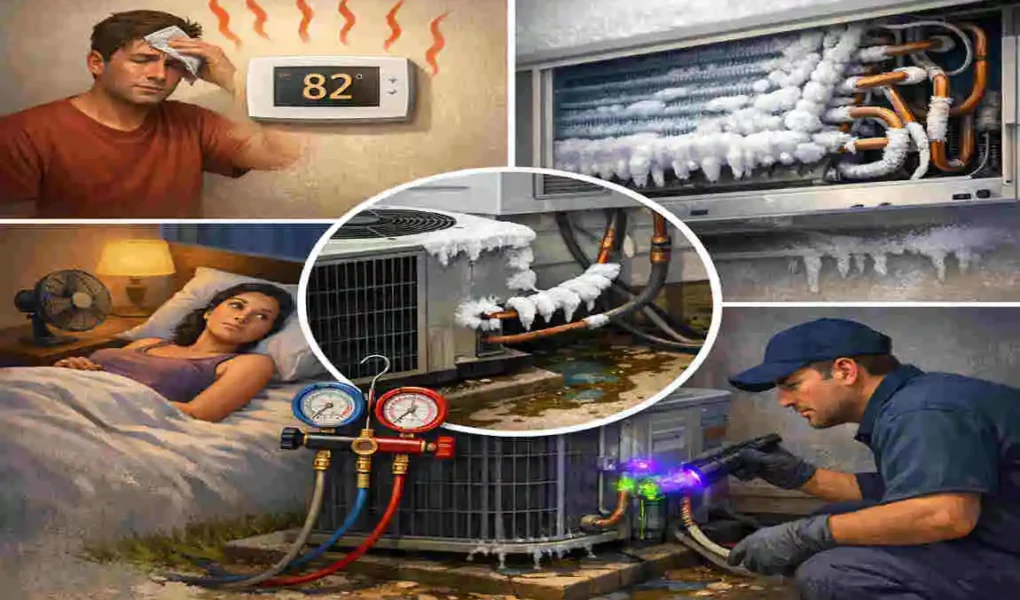
A properly working air conditioner depends on the right amount of refrigerant. This is the special fluid that helps your system remove heat from your home and keep indoor air cool.
When refrigerant gets low, it usually means there is a leak somewhere in the system. That is important because refrigerant is not consumed like fuel. If the level drops, something is wrong.
If you notice cooling problems early, you can avoid bigger repair costs later. Let’s look at the most common warning signs.
Why Low Refrigerant Matters
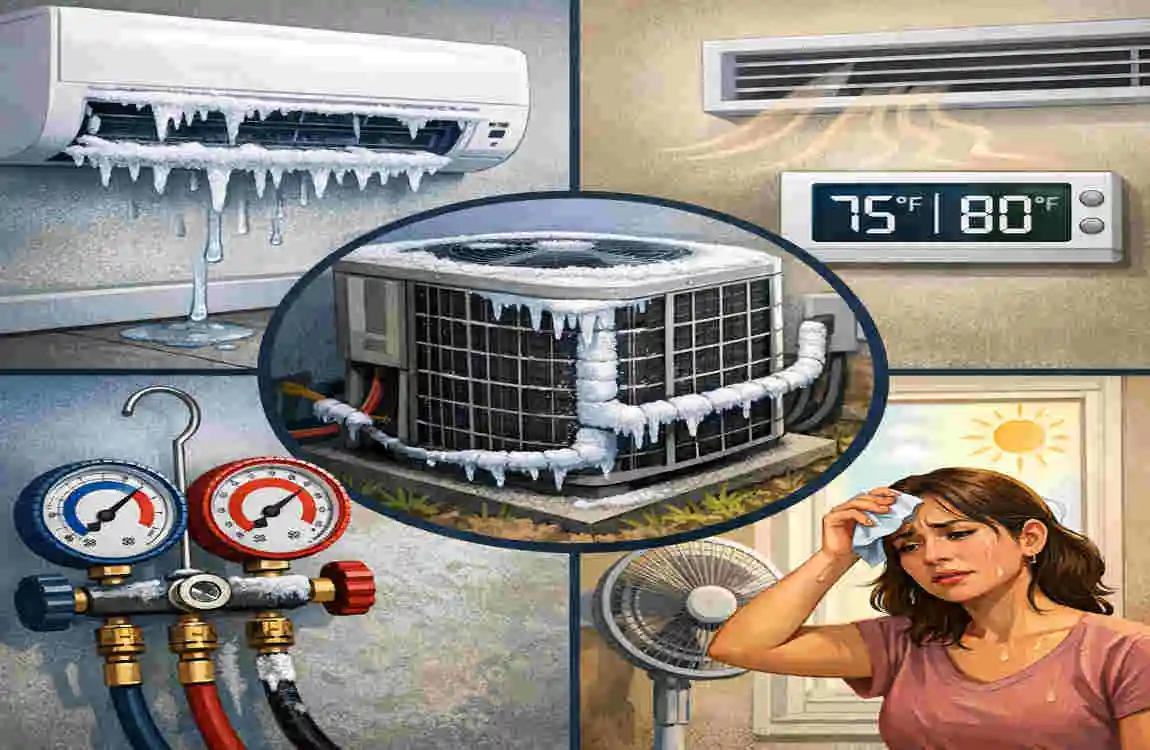
Your A/C needs refrigerant to move heat from inside your home to the outside. When the level is too low, the entire cooling process weakens.
Your system works harder.
A low refrigerant charge makes the unit strain more than normal. That extra stress can wear out parts faster, especially the compressor.
Your home feels less comfortable.
You may notice that rooms stay warm, cooling takes longer, or the temperature never feels quite right. In other words, the A/C is running, but it is not doing its job well.
Repairs can get more expensive.
If you ignore the problem, a small leak can turn into major damage. That is why quick attention matters.
Signs Your A/C Has Low Refrigerant
Warm Air Coming From Vents
One of the clearest signs is warm or weak air coming from the vents. Even if the thermostat is set correctly, the air may not feel cold enough.
If your A/C is on but your home still feels hot, low refrigerant may be the reason.
Longer Cooling Cycles
A healthy system should cool your home in a reasonable amount of time. When refrigerant is low, the unit has to run much longer to reach the same temperature.
That means more wear on the system and higher electricity use.
Ice Buildup on Parts of the System
Low refrigerant can cause the evaporator coil or refrigerant lines to get too cold. That can lead to ice or frost buildup on the indoor unit or copper lines.
This may look strange, but it is actually a warning sign. It means the system is not working properly.
Higher Energy Bills
If your cooling costs suddenly rise without a clear reason, low refrigerant could be the issue. The unit is using more energy because it is trying harder to cool your home.
A higher bill is often one of the first signs homeowners notice.
Hissing or Bubbling Sounds
A leak can sometimes make unusual noises. A small leak may create a hissing sound, while a larger one can sound like bubbling.
These sounds should not be ignored, as leaks often worsen over time.
Uneven Indoor Comfort
You may notice that one room feels cool while another feels warm. Low refrigerant often causes uneven cooling throughout the house.
If your home no longer feels balanced, it is worth having the system checked.
Common Causes of A/C Refrigerant Leaks
CauseDescription
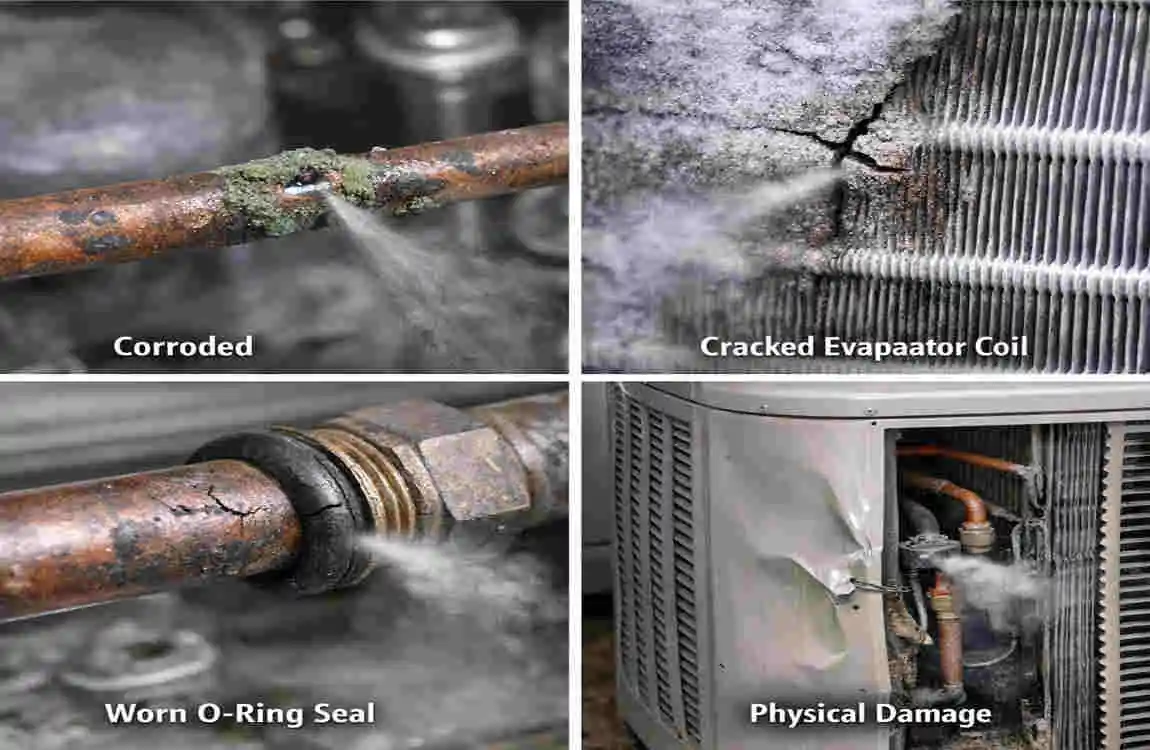
Corrosion Older coils can rust and develop tiny holes.
Damaged refrigerant lines Cracks or wear can allow refrigerant to escape.
Loose connections Poor seals at joints may cause slow leaks.
Aging equipment Older systems are more likely to leak.
Why leaks happen
Over time, metal parts wear down, seals weaken, and small openings can form. Even a tiny leak can affect how well your A/C works.
Why Professional Leak Repair Is Important
Adding more refrigerant is not a real fix if the leak is still there. The system will lose refrigerant again, and the same problem will come back.
What a technician can do
A professional HVAC technician can:
- Find the leak source
- Repair damaged parts
- Test the system
- Recharge the refrigerant correctly
Why this matters
Proper repairs help your A/C run more efficiently and extend the unit’s life. They also protect you from repeated breakdowns and higher bills.
How to Prevent Refrigerant Problems
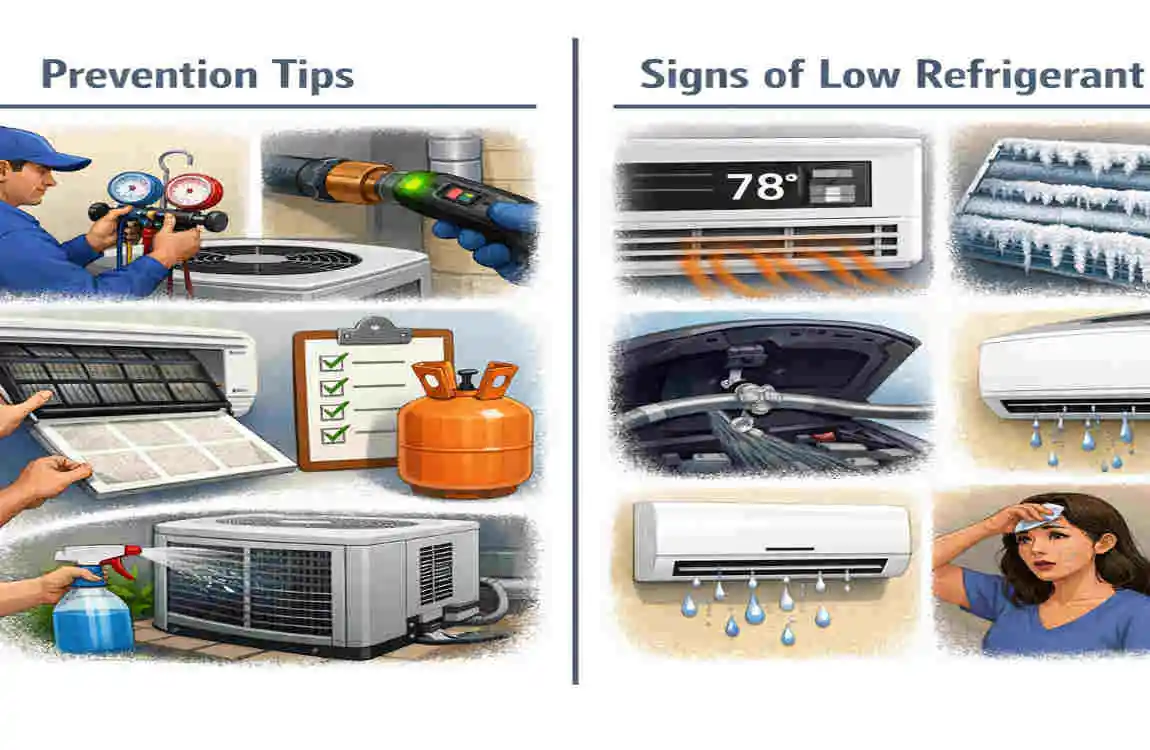
The best way to avoid refrigerant trouble is to stay ahead of small issues.
Helpful habits to follow
- Schedule regular A/C inspections
- Replace air filters on time
- Watch for strange sounds
- Notice changes in cooling performance
- Call for service early if something feels off
Catch problems early
If you spot warning signs quickly, you can often prevent bigger and more expensive repairs. That saves money and keeps your home comfortable during hot weather.
Frequently Asked Questions
Can an A/C run with low refrigerant?
Yes, but it will not cool properly. It may also damage the compressor over time.
How often should A/C refrigerant be replaced?
It usually does not need replacement. If levels are low, there is likely a leak that needs to be repaired.
How do I know if my A/C has a refrigerant leak?
Common signs include warm air, ice buildup, higher bills, long cooling cycles, and strange noises.
Can I fix a refrigerant leak myself?
No. Refrigerant repairs need special tools and training. A licensed HVAC professional should handle it.
Is a refrigerant leak dangerous?
Small leaks are usually not an immediate danger, but they can harm your system and should be repaired by a professional.
| Sign of Low A/C Refrigerant | What It Means |
|---|---|
| Warm Air from Vents | Your A/C may blow warm or less cool air because there is not enough refrigerant to absorb heat properly. |
| Long Cooling Cycles | The system runs longer than normal but struggles to reach the desired temperature. |
| Ice on Refrigerant Lines | Frozen coils or ice buildup on copper lines can indicate low refrigerant levels. |
| Higher Energy Bills | A low refrigerant level forces the A/C unit to work harder, increasing electricity costs. |
| Hissing or Bubbling Sounds | Strange noises near the indoor or outdoor unit may signal a refrigerant leak. |
| Water Leaks Around Unit | Ice caused by low refrigerant can melt and create excess water leakage. |
| Poor Airflow and Uneven Cooling | Rooms may feel warmer because the system cannot cool air efficiently. |
| A/C Shuts Down Frequently | Low refrigerant can cause the compressor to overheat and trigger safety shutdowns. |