
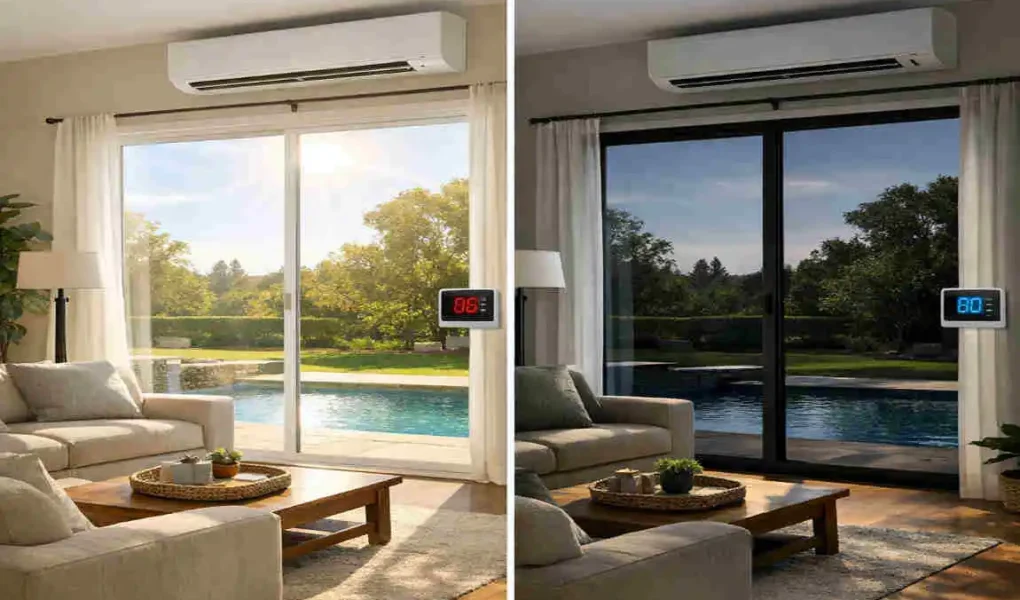
Window tinting is a simple home upgrade that can make a big difference. It helps block excess heat, reduces glare, and makes your rooms feel more comfortable without completely changing your windows.
If your home gets a lot of sun, this small change can help you enjoy cooler rooms and better privacy. It is an easy idea, but the benefits can be very useful.
How Window Tinting Saves Energy
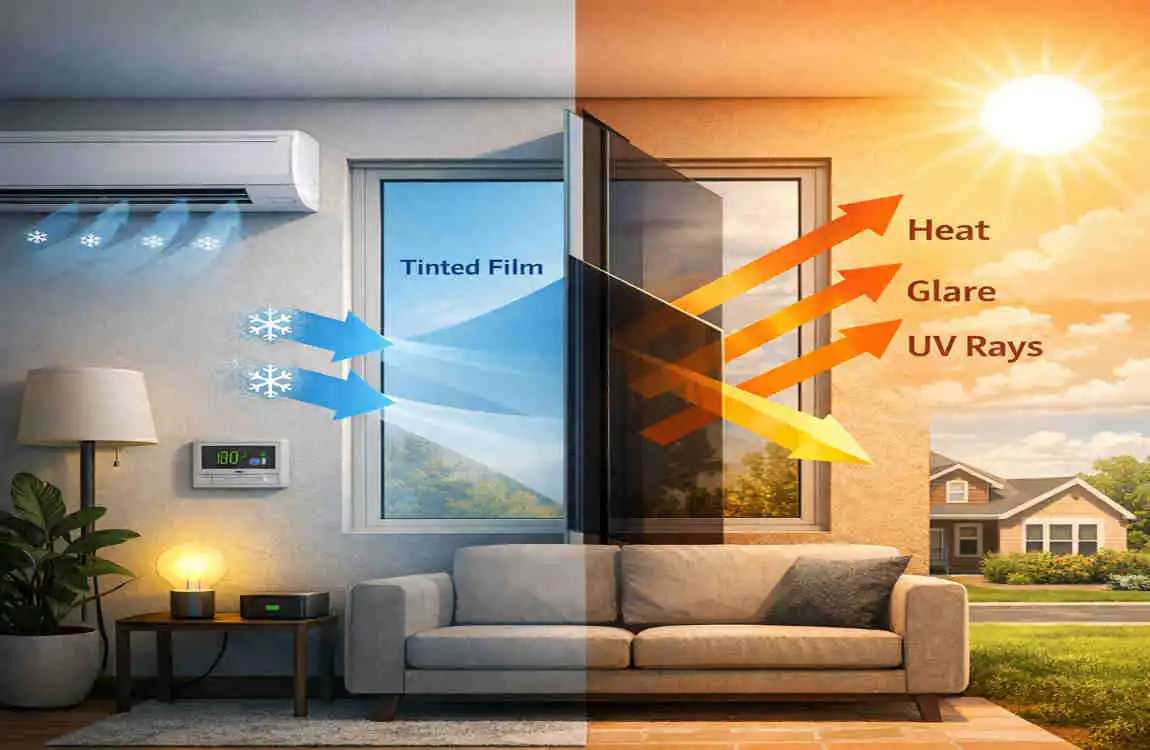
It helps block extra heat.
Sunlight can warm up a room very quickly, especially through large windows. When too much heat enters your home, your cooling system has to work harder to keep the temperature steady.
Home window tinting helps reduce that heat before it gets inside. That means your air conditioner may not need to run as often.
It supports better indoor comfort.
Tinted windows can also help create a more even temperature in your home. Rooms near sunny windows often feel hotter than the rest of the house.
With window film, those hot spots can feel less intense. That makes everyday living more comfortable, especially during bright summer days.
Benefits of Home Window Tinting
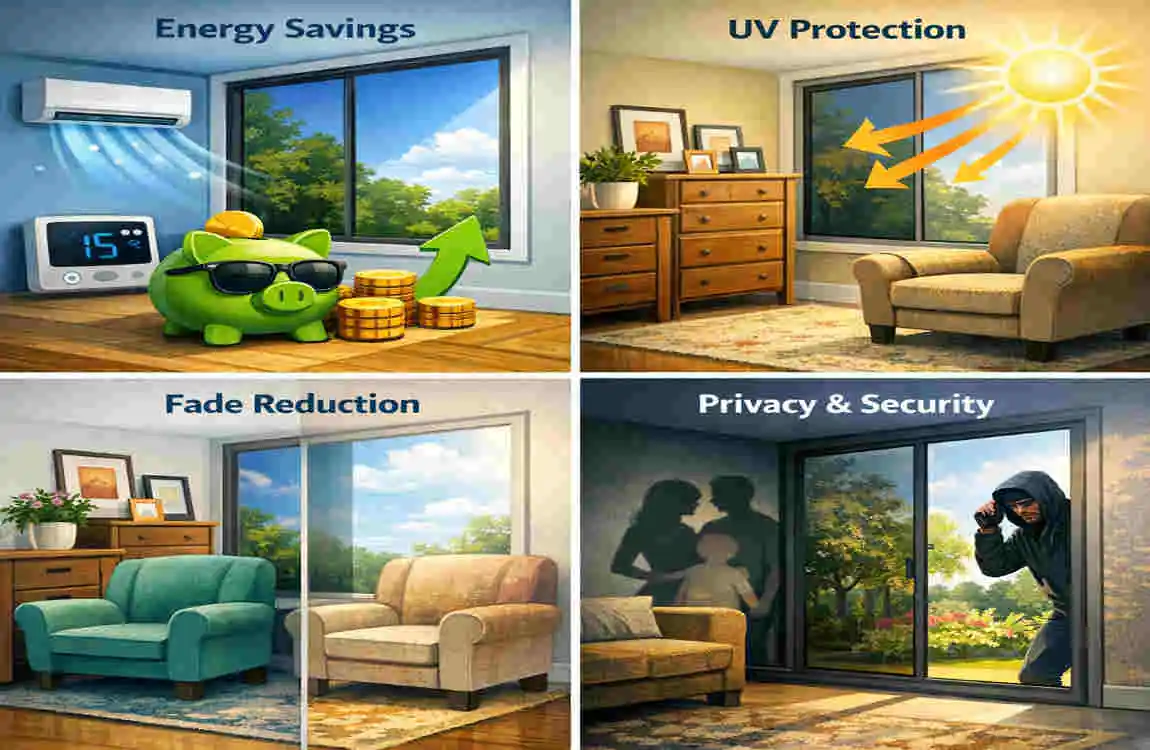
Reduces solar heat
One of the biggest benefits is lower heat gain. This can help keep your rooms cooler during hot weather.
Improves comfort
When less heat comes through the glass, your home can feel more balanced and pleasant.
Protects furniture
Sunlight can fade curtains, rugs, sofas, and flooring over time. Tinting helps limit that damage.
Reduces glare
If you work on a computer or watch TV during the day, window tint can make screens easier to see.
Adds privacy
Some films make it harder for people to see inside from the outside, which can make your home feel more private.
Is Window Tinting Worth It?
A practical option for many homes
For many homeowners, energy-efficient window tinting is a smart and cost-friendly upgrade. It can be a good choice if you do not want to replace your windows but still want better performance.
This is especially helpful for homes with large windows or rooms that receive strong, direct sunlight.
What affects the results
The savings and comfort benefits depend on a few things:
- Your climate
- How much sun your windows get
- The type of glass in your home
- The quality of the tint
- How well it is installed
If these factors line up well, the results can be very noticeable.
Choosing the Right Window Tint
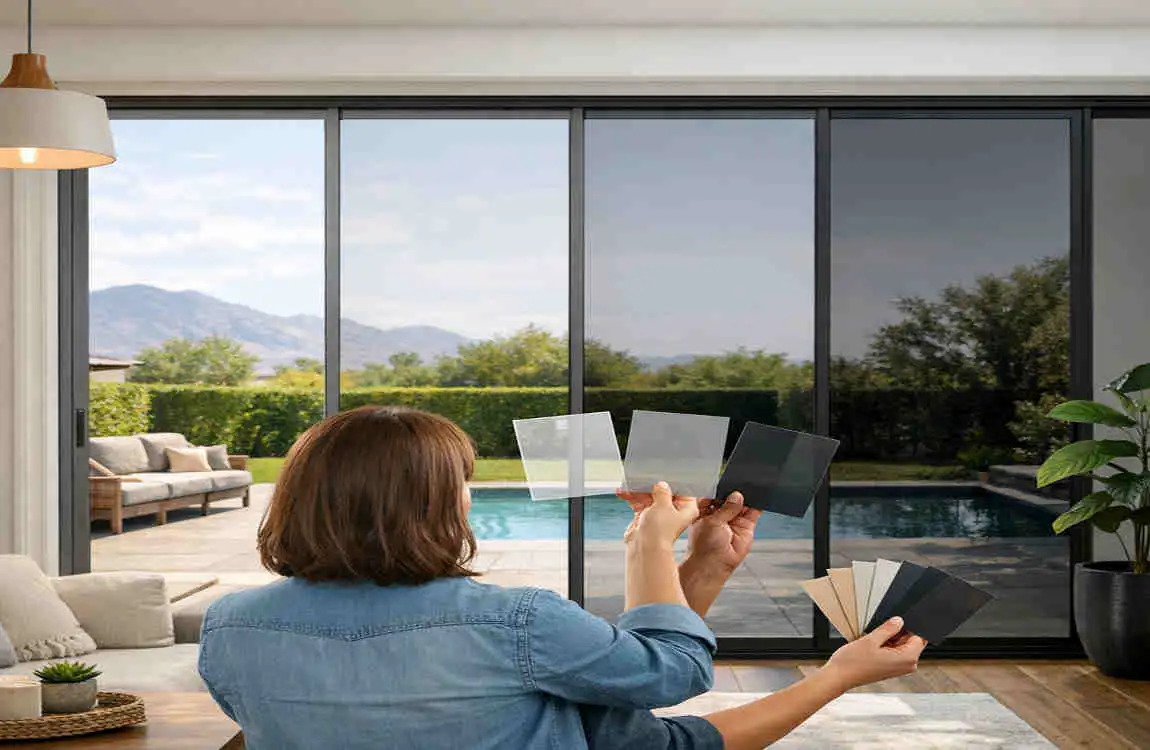
Think about your goals.
Not all window films do the same job. Some are made mainly for heat control, while others focus more on privacy or glare reduction.
Before choosing one, think about what matters most in your home. Do you want less heat, less glare, or more privacy? Knowing your goal makes the choice easier.
Look at the key features.
Here are the main things to consider:
Feature Why It Matters
Heat rejection Helps block solar heat
Visible light transmission Controls how much natural light comes in
Privacy Makes it harder to see inside
Durability Helps the film last longer
Appearance Affects how the windows look from inside and outside
Ask for professional advice.
A professional installer can help you choose the best film for your windows and climate. This matters because the wrong tint may not perform well or may not suit your glass type.
When Window Tinting Makes the Most Sense
Homes with strong sunlight
If your home gets bright sun for much of the day, tinting can help reduce heat buildup. This is common in living rooms, bedrooms, and upstairs spaces with wide windows.
Homes where cooling costs are high
If your energy bill rises a lot in summer, window tinting may help reduce some of that strain. It works best as part of a bigger comfort plan that may also include shades, insulation, and good air sealing.
Homes that need more privacy
If you want privacy without having to keep your curtains closed all day, some window films can help. They let in light while making it harder for others to look inside.
Frequently Asked Questions
Does window tinting reduce energy bills?
Yes, it can help reduce cooling demand by reducing the amount of heat entering your home. The savings depend on your home, climate, and the film you choose.
Does window tint make a house cooler?
Yes. By blocking solar heat, quality window film can help keep indoor spaces cooler.
Can window tint be used on all home windows?
Not always. Some glass types work better than others, so it is smart to check compatibility first.
Does window tint block natural light?
Some films do reduce light, but many are designed to let in daylight while still cutting heat.
Is professional installation necessary?
Professional installation is usually recommended for the best fit, finish, and long-lasting results.
| Window Tinting Benefit | How It Saves Home Energy |
|---|---|
| Reduces Solar Heat | Blocks a portion of the sun’s heat from entering your home. |
| Lowers Cooling Costs | Helps air conditioners work less during hot weather. |
| Improves Indoor Comfort | Keeps rooms cooler and reduces hot spots near windows. |
| Reduces UV Rays | Helps protect furniture, flooring, and curtains from fading. |
| Adds Privacy | Limits outside visibility while still allowing natural light. |
| Works Year-Round | Some window films can also reduce heat loss during cooler months. |
| Supports Energy Efficiency | Reduces the workload on heating and cooling systems. |