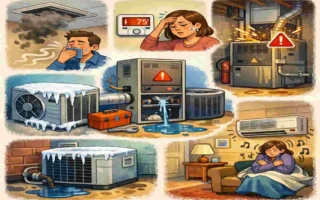
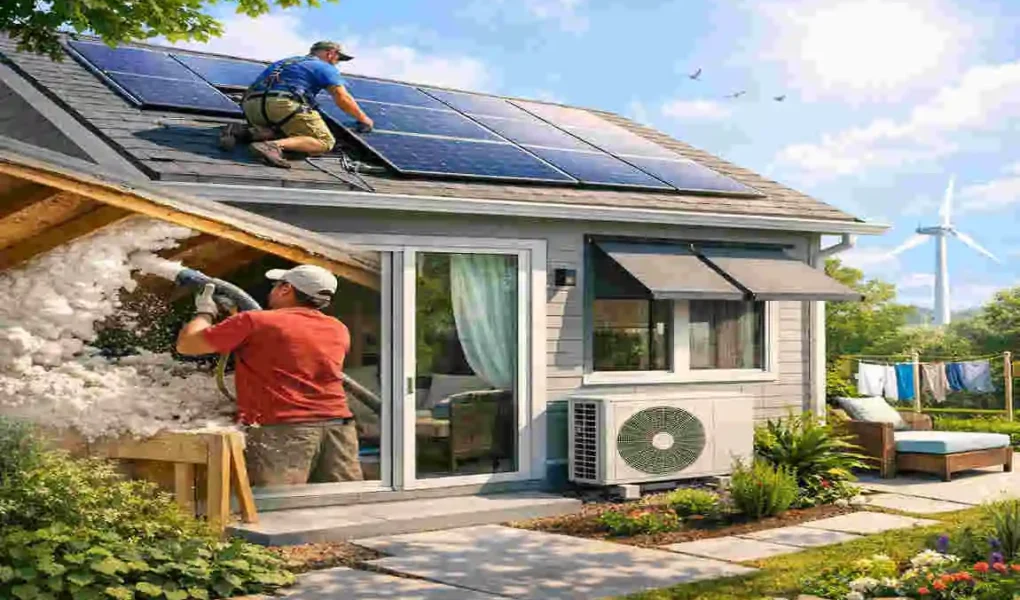
Keeping your home cool in hot weather does not have to mean paying more on electricity bills. With a few smart changes, you can make your home feel more comfortable, use less energy, and stay cooler for longer.
The best part is that many of these fixes are simple. You do not need a big renovation to start saving energy. Small improvements like sealing gaps, using ceiling fans, and keeping sunlight out can make a real difference.
Why Home Energy Efficiency Matters
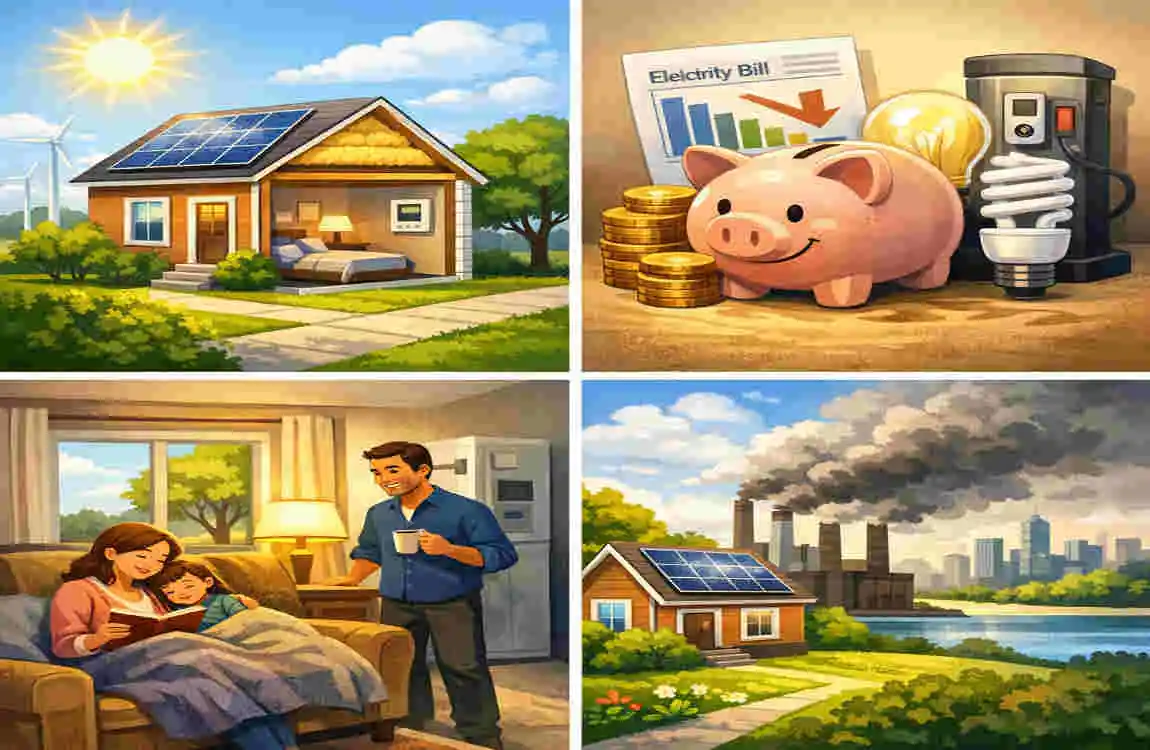
An energy-efficient home uses less power to stay comfortable. That means your cooling system does not have to work as hard, and your bills stay more manageable.
It also helps your home feel better overall. Rooms stay cooler for longer, and your HVAC system may last longer because it is under less stress.
Benefits of a More Efficient Home
- Lower monthly energy bills
- Improved indoor comfort
- Reduced carbon footprint
- Longer lifespan for HVAC systems
- Increased home value
When you improve efficiency, you help both your wallet and your home.
Seal Air Leaks
Small air leaks can let cool air escape and hot air enter. These leaks often appear around doors, windows, vents, and baseboards.
Even tiny gaps can make your air conditioner work harder than it should. That means more energy use and less comfort.
Use caulk or weatherstripping to close those openings. This is one of the easiest ways to improve cooling at home.
Where to Check for Leaks
- Around window frames
- Under doors
- Around vent openings
- Near attic access points
A careful check can help you find problem areas fast.
Upgrade Your Insulation
Insulation helps keep heat out and cool air in. It works like a protective layer for your home.
If your attic or walls lack sufficient insulation, heat can build up much faster. That means your cooling system has to run more often.
Good insulation reduces that problem. It helps your home stay cooler in summer and more comfortable year-round.
Best Places to Insulate
- Attic
- Walls
- Floors
- Crawl spaces
If you only improve one area, the attic is often a smart place to start because heat rises and builds up there.
Use Energy-Efficient Windows
Windows can let in a lot of heat, especially if they face direct sunlight. Old windows may also let cool air leak out.
If you are ready for an upgrade, double-pane or Low-E windows can help block heat while still allowing natural light into your home.
If replacing windows is not an option right now, you still have good alternatives.
Simple Window Improvements
- Install reflective window film
- Use thermal curtains
- Close blinds during hot afternoons
- Add exterior shades if possible
These small changes can reduce indoor heat without altering the entire window system.
Install Ceiling Fans
Ceiling fans do not actually lower the room temperature, but they make the room feel cooler by circulating air.
That airflow creates a comfortable wind-chill effect. Because of that, you may not need to set your thermostat as low.
For summer use, make sure your fan spins counterclockwise. This pushes air down and improves the cooling effect.
Why Ceiling Fans Help
- Improve air circulation
- Make rooms feel cooler
- Help reduce air conditioner use
- Work well in bedrooms, living rooms, and kitchens
If you want a low-cost way to improve comfort, ceiling fans are a smart choice.
Choose LED Lighting
Old light bulbs can create more heat than you might expect. In a warm home, that extra heat adds to the problem.
LED bulbs use less energy and give off far less heat. They also last longer, which makes them more practical over time.
If you still use older bulbs in several rooms, switching to LED can help reduce both heat and energy use.
Why LED Bulbs Are Better
- Use less electricity
- Produce less heat
- Last longer than traditional bulbs
- Lower replacement costs over time
This is a simple upgrade that gives you two benefits at once: a cooler home and lower bills.
Maintain Your Air Conditioner
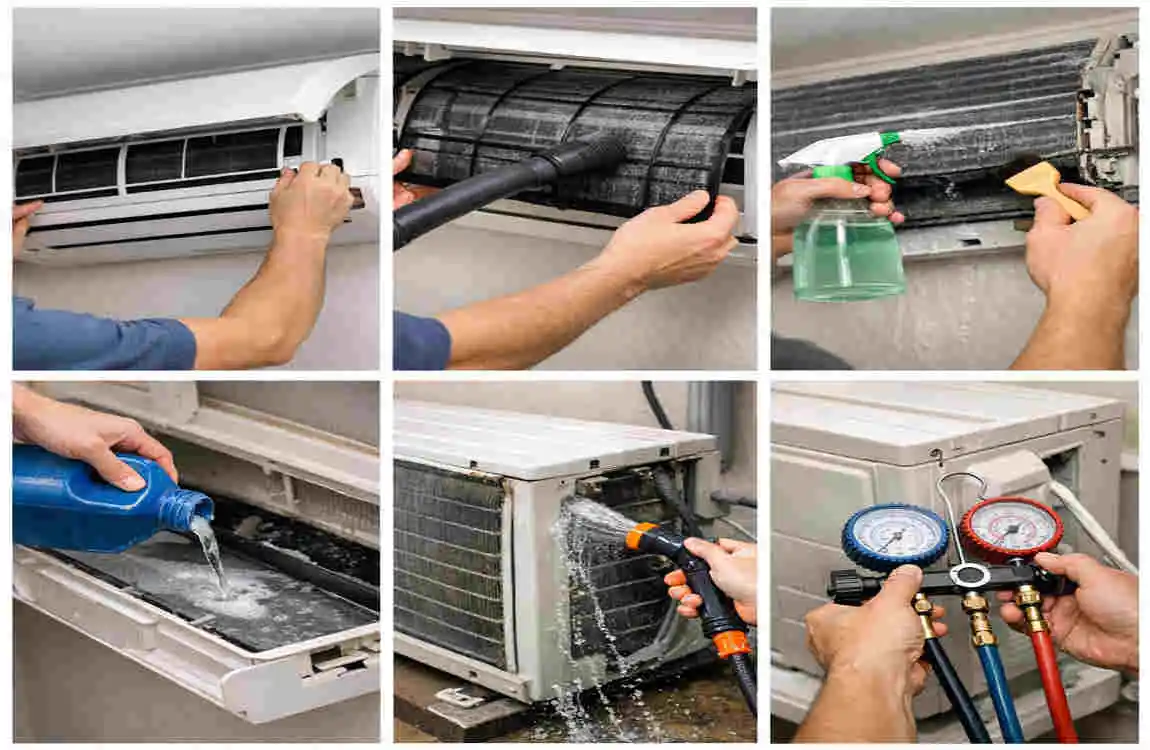
Your air conditioner works hard during hot weather. If it is dirty or poorly maintained, it will use more electricity and cool less effectively.
One of the easiest things you can do is clean or replace the air filter regularly. A dirty filter blocks airflow and makes the system work harder.
It is also a good idea to schedule annual maintenance. A technician can check for problems before they become costly repairs.
AC Care Checklist
- Replace or clean filters on time
- Clear debris around the outdoor unit
- Schedule yearly servicing
- Keep vents open and unobstructed
A well-maintained AC unit cools better and usually lasts longer too.
Block Direct Sunlight
Sunlight can heat your home quickly, especially through windows that get strong afternoon sun. Blocking that heat before it enters is a smart move.
Close curtains or blinds during the hottest part of the day. That alone can help reduce indoor heat.
You can also use more effective shading options if needed, such as awnings, exterior shades, or even shade trees outside your home.
Good Ways to Block Sunlight
- Close curtains in the afternoon
- Use blackout or thermal curtains
- Install window shades
- Add outdoor shading where possible
The less heat that enters your modern home, the less work your cooling system has to do.
Quick Energy-Saving Tips
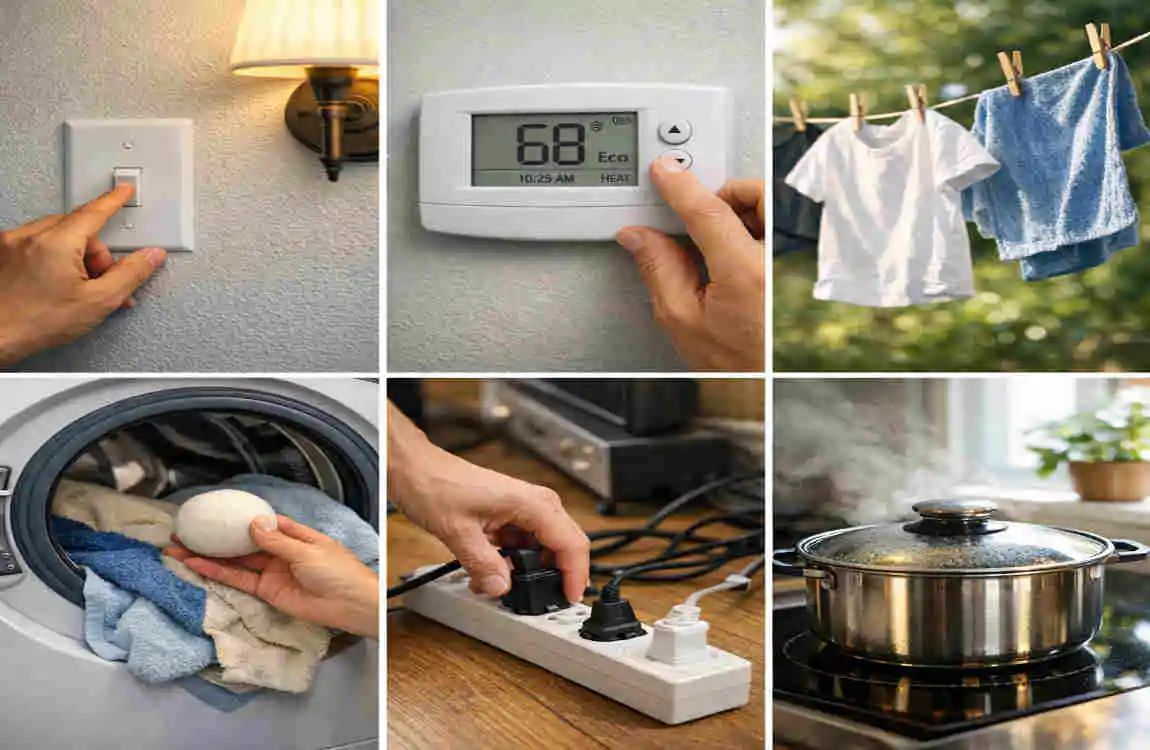
TipBenefit
Seal windows and doors Prevents cool air loss
Add attic insulation Reduces heat transfer
Use LED bulbs Less heat and lower energy use
Install ceiling fans Better airflow and comfort
Service your AC yearly Improves cooling efficiency
Close curtains during the day Blocks solar heat
These small steps may seem simple, but they add up quickly.
Frequently Asked Questions
How can I cool my home without increasing energy bills?
Seal air leaks, use ceiling fans, block sunlight with curtains, and maintain your air conditioner to improve cooling without using extra electricity.
What is the most effective way to make a home energy efficient?
Improving insulation, sealing drafts, upgrading to energy-efficient windows, and using energy-saving appliances provide the strongest long-term benefits.
Do ceiling fans reduce room temperature?
No. Ceiling fans do not lower the actual temperature, but they make you feel cooler by moving air around.
Is upgrading insulation worth the cost?
Yes. Good insulation can reduce heating and cooling costs all year, making it one of the best long-term energy-saving investments.
What temperature should I set my thermostat in summer?
A setting of around 78°F (26°C) at home is often recommended to balance comfort and energy efficiency.