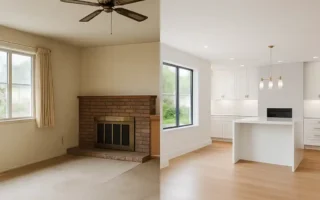
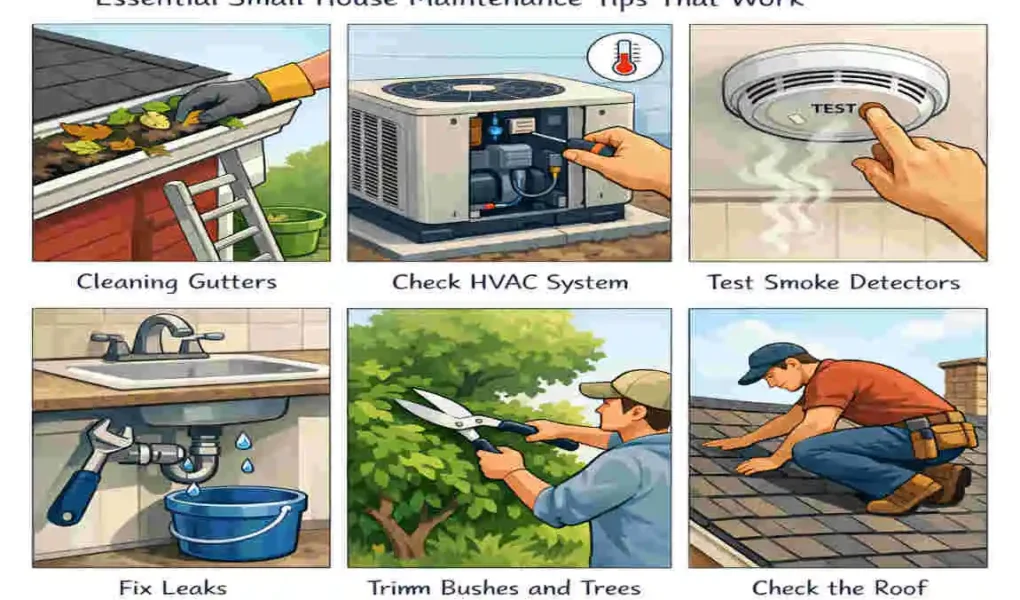
Keeping a small house in good shape does not have to feel overwhelming. In fact, smaller homes are often easier to care for when you stay consistent and pay attention to little things before they grow into bigger problems.
The best approach is simple: inspect regularly, clean often, and fix small issues early. When you do that, your home stays safer, more comfortable, and easier to manage all year long.
Why Small House Maintenance Matters
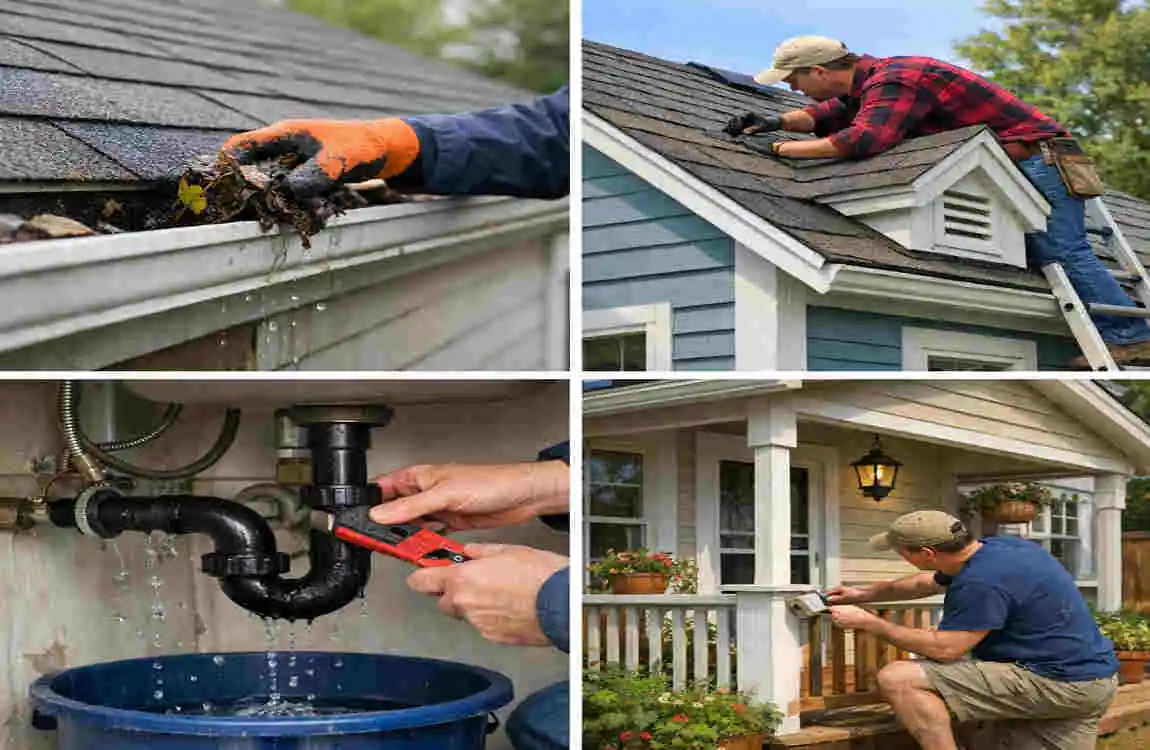
A small house may have fewer rooms, but it still has many parts that need care. Roofs, plumbing, heating systems, windows, and appliances all wear down over time.
It helps you avoid bigger repair bills.
A tiny leak today can become a damaged wall tomorrow. A dirty filter can turn into a costly HVAC problem later. Regular care helps you stop problems before they spread.
It improves comfort and safety.
When your home is well maintained, it feels better to live in. The air is cleaner, the temperature is more stable, and safety features work as they should.
It supports long-term value.
If you ever decide to sell, a well-kept home often stands out. Buyers notice when a house has been cared for with attention and consistency.
Essential Small House Maintenance Tips
Inspect Your Roof Regularly
Your roof is one of the most important parts of your home. It protects everything underneath it, so it deserves regular attention.
What to look for
Check for missing shingles, cracked areas, moss, loose pieces, and any signs of water damage. These small issues can lead to leaks if you ignore them.
When to check it
A quick inspection twice a year is a smart habit. It is also wise to check after heavy storms or strong winds.
Clean Gutters and Downspouts
Gutters help water flow away from your house. When they clog, water can back up and cause damage around the roof and foundation.
Why this matters
Blocked gutters can lead to overflow, damp walls, and even basement moisture. In a small house, water damage can spread quickly.
Best times to clean
Clean them in spring, fall, and after storms. That keeps water moving the way it should.
Check for Plumbing Leaks
Small plumbing leaks often go unnoticed, but they can waste water and lead to mold growth.
Places to inspect
Look under the kitchen sink, around bathroom fixtures, near the water heater, and behind the washing machine. Even a slow drip should be fixed right away.
Why quick action helps
Leaks can damage cabinets, floors, and walls. Catching them early protects both your home and your water bill.
Replace HVAC Filters
Dirty filters make your heating and cooling system work harder. That uses more energy and puts extra strain on the system.
How often to replace them
Most homes should change filters every 1 to 3 months. If you have pets, you may need to do it more often.
Extra benefit
Clean filters also improve indoor air quality, which matters even more in a smaller home where air moves through fewer spaces.
Seal Doors and Windows
Small gaps around doors and windows can let conditioned air escape. That makes your home less comfortable and raises energy costs.
Simple materials to use
Weatherstripping, caulk, and door sweeps can all help seal openings. These are affordable fixes that often make a noticeable difference.
Why this is important in a small house
A small home can lose heat or cool air quickly if it is not sealed well. Good sealing helps keep indoor temperatures steady.
Test Smoke and Carbon Monoxide Detectors
Safety devices should always work properly. They protect you and your family from danger.
What to do
Test alarms once a month, replace batteries once a year, and swap out old units according to the manufacturer’s instructions.
A simple habit with big value
This only takes a few minutes, but it can save lives. It is one of the most important maintenance tasks you can do.
Keep Your Home Clean
Regular cleaning does more than improve appearance. It also helps prevent common household problems.
Focus on problem areas.
Pay extra attention to kitchen grease, bathroom mold, dust buildup, and air vents. These spots can affect air quality and create wear over time.
Why cleaning matters in a small space
In a smaller house, dirt and clutter show faster. A regular cleaning routine helps the whole home feel fresh and easier to live in.
Inspect Exterior Walls
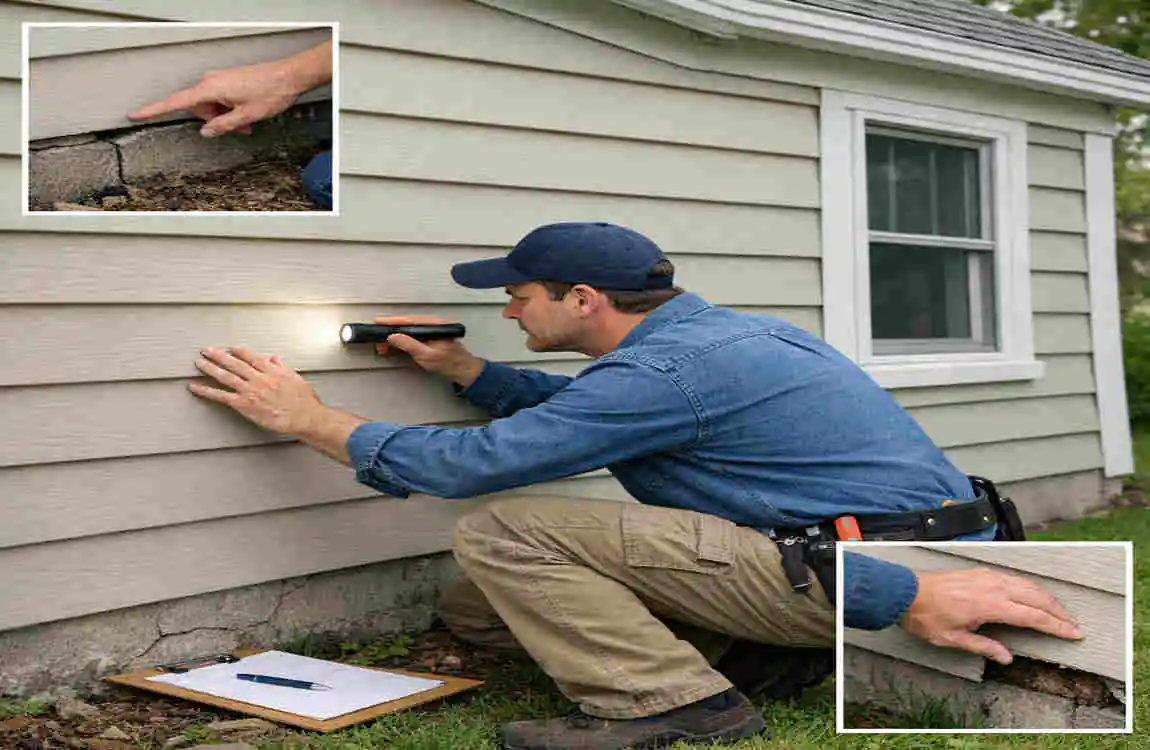
The outside walls of your home protect it from weather and moisture. If they crack or peel, damage can slowly move inside.
What to check
Look for cracks, peeling paint, damaged siding, or soft spots. These signs often mean the wall needs attention.
Why early repairs help
Fixing these issues quickly prevents water from getting inside and causing larger damage later.
Trim Trees and Shrubs
Plants can make a home look beautiful, but overgrown branches can cause trouble.
Problems to watch for
Branches can scrape the roof, block gutters, and attract pests. Shrubs that grow too close to the house can also trap moisture.
Best practice
Keep plants trimmed back from the house so air can move freely and the exterior stays dry.
Maintain Appliances
Appliances last longer when they are cleaned and checked regularly. This also helps them run more efficiently.
Key appliances to maintain
- Refrigerator coils
- Dryer vent
- Dishwasher filter
- Range hood filter
Why this saves money
When appliances work better, they use less energy and break down less often. That means fewer repairs and lower utility costs.
Seasonal Maintenance Checklist
Different seasons bring different problems. A simple checklist helps you stay organized.
Seasonal Maintenance Tasks
Spring Clean gutters, inspect roof, check plumbing
Summer Service air conditioner, inspect exterior paint
Fall Seal windows, trim trees, clean gutters
Winter Test heating system, check insulation, inspect pipes
Use the seasons to stay ahead.
Instead of waiting for something to break, use each season as a reminder. This makes maintenance feel less stressful and more manageable.
Simple Maintenance Habits That Save Money
Small daily and weekly habits can prevent bigger repair costs later.
Easy habits to build
- Fix leaks immediately.
- Clean your home weekly.
- Inspect the roof after storms.
- Keep drains free of debris.
- Change HVAC filters on time.
- Watch for pest activity.
- Organize storage areas.
- Maintain outdoor landscaping.
Why small habits matter
When you stay ahead of problems, you avoid emergency repairs. That is usually the cheapest and least stressful way to care for a home.
Common Maintenance Mistakes to Avoid
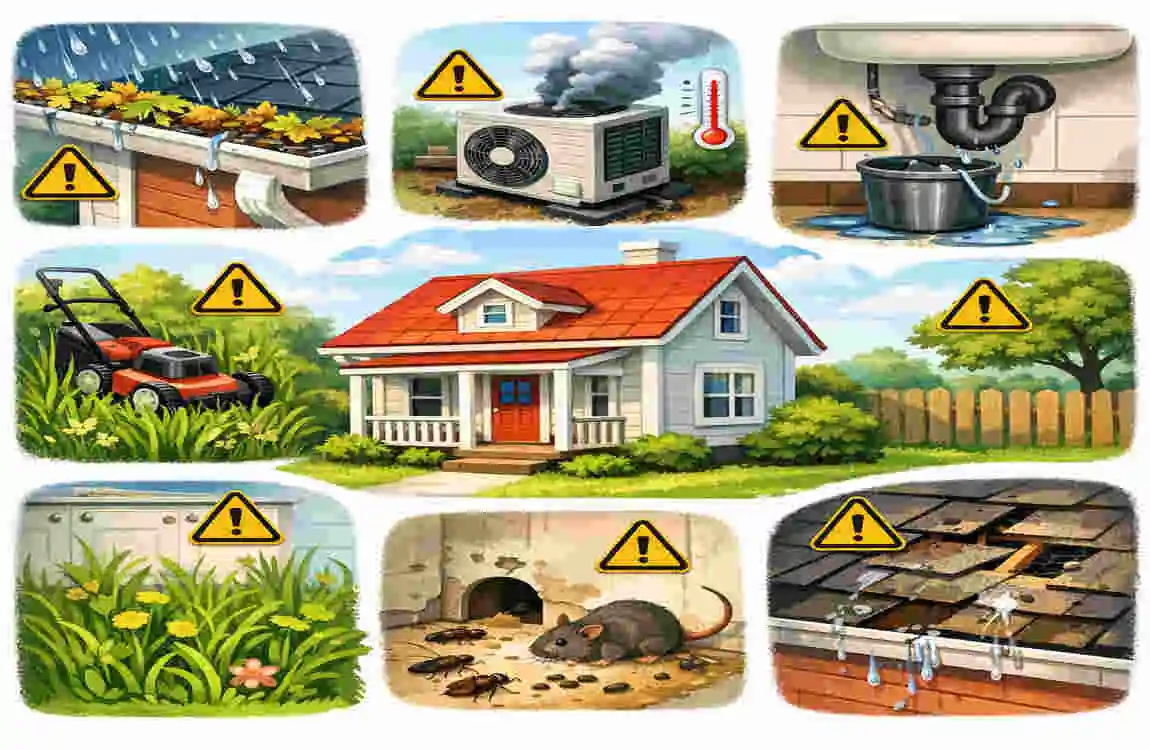
Even good homeowners sometimes miss important tasks. Try to avoid these common mistakes.
Mistakes that cause trouble
- Ignoring small home leaks
- Skipping seasonal inspections
- Forgetting to clean gutters
- Delaying roof repairs
- Blocking air vents with furniture
- Not testing smoke detectors
A better approach
Be proactive instead of reactive. A little attention now usually costs far less than fixing serious damage later.
Frequently Asked Questions
How often should I inspect my small house?
A basic monthly inspection and a more detailed check each season are a good routine.
What is the most important home maintenance task?
Roof checks and plumbing leak inspections are among the most important because they can prevent expensive damage.
How can I reduce home maintenance costs?
Stay consistent with inspections, clean gutters, replace HVAC filters, and repair small issues early.
How often should HVAC filters be changed?
Most filters should be replaced every 1 to 3 months, depending on use and whether you have pets.
Why is seasonal home maintenance important?
Seasonal maintenance helps your home handle changing weather and reduces the chance of damage.
| Maintenance Task | Why It Matters | Recommended Frequency |
|---|---|---|
| Check Roof for Damage | Prevents leaks and costly repairs | Twice a year |
| Clean Gutters | Avoids water damage and foundation issues | Every 6 months |
| Replace HVAC Filters | Improves air quality and system efficiency | Every 1–3 months |
| Inspect Plumbing Leaks | Saves water and prevents mold growth | Monthly |
| Test Smoke & CO Detectors | Keeps your family safe | Monthly |
| Seal Doors & Windows | Improves energy efficiency and comfort | Annually |
| Clean Dryer Vent | Reduces fire risk and improves dryer performance | Every 6–12 months |
| Inspect Electrical Outlets | Prevents electrical hazards | Every 6 months |
| Check Caulking in Kitchen & Bathroom | Prevents moisture damage and mold | Annually |