Why are modern Norwegian homes getting so much attention around the world? The answer is simple: they do more than look beautiful. They feel practical, calm, warm, and deeply connected to nature.
Norway is known for shaping homes that balance functionality, sustainability, and clean design. These homes are not crowded with decoration. Instead, they focus on open space, natural light, and smart use of materials. That is what makes Norway’s modern homes stand out.
The Concept of Modern Homes in Norway
What Does “Modern” Mean in the Norwegian Context?
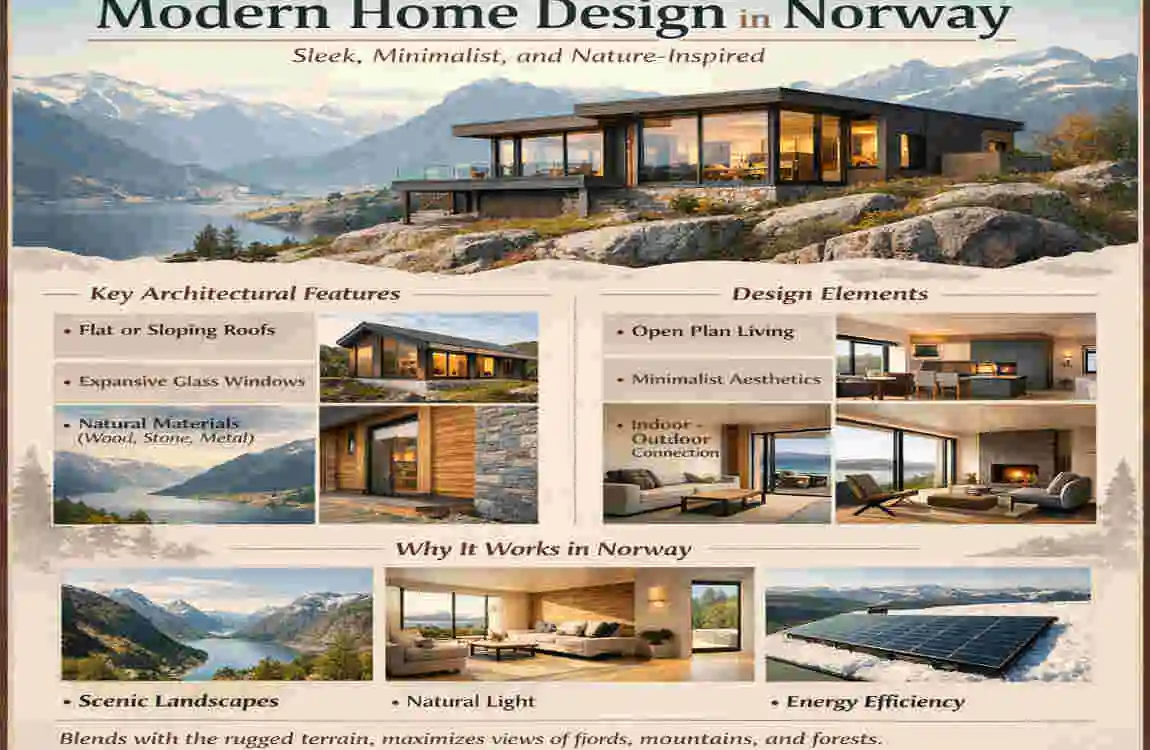
In Norway, modern does not only mean new or trendy. It means simple, useful, and elegant. The design style often follows Scandinavian thinking, which values clean lines, calm spaces, and practical details.
Norwegian homes usually avoid heavy decoration. Instead, they use natural wood, stone, light colors, and open rooms. This creates a sense of peace and order. The idea is not to impress with excess. The idea is to make daily life easier and more enjoyable.
Modern homes in Norway also reflect the country’s lifestyle and climate. Winters are long and dark, so houses are built to feel bright and inviting. Families want homes that are warm, efficient, and comfortable year-round.
The Role of Sustainability in Norway’s Modern Homes
Green Building Practices
Sustainability is key to defining Norway’s modern homes. In fact, many homes are designed with the environment in mind from the very beginning.
Builders often use:
- Energy-efficient systems such as heat pumps
- Solar panels for clean energy
- Eco-friendly materials like wood and stone
- Strong insulation to reduce heat loss
These choices help reduce energy use and lower long-term costs. They also fit Norway’s strong focus on protecting nature.
Passive House Design Trends
A major trend in Norway is the Passivhus, or passive house, concept. This type of home is built to use very little energy.
A passive house usually includes:
- Thick insulation
- Airtight construction
- High-quality windows
- Smart ventilation systems
These features keep the indoor temperature stable. That means the home stays warm in winter and cool in summer without needing too much energy. For Norwegian families, this is both practical and environmentally responsible.
Architectural Features of Modern Norwegian Homes
Blending Nature with Architecture
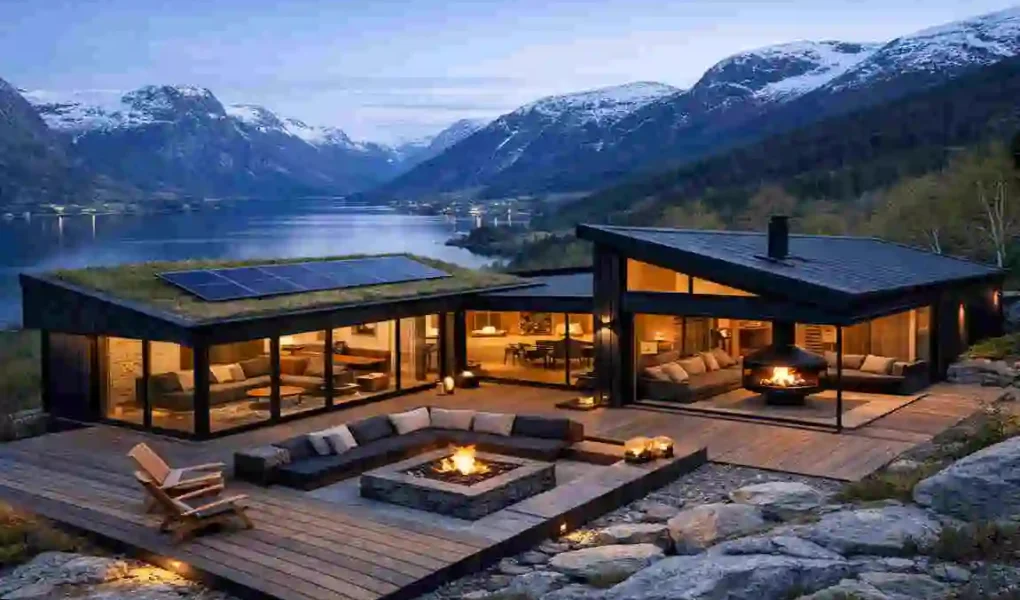
One of the most beautiful things about Norway’s modern homes is how well they connect with the outdoors. Nature is not treated as something separate. It becomes part of the home itself.
Large windows are common because they bring in natural light and offer views of forests, mountains, lakes, or coastal scenery. This is especially important in Norway, where daylight can be limited in the colder months.
Many modern homes also include:
- Rooftop gardens
- Green roofs
- Wooden facades
- Outdoor living spaces
These features help homes feel more natural and less detached from their surroundings.
Functional Aesthetics
Modern Norwegian design is not just about beauty. It is about beauty with purpose.
Open floor plans are popular because they make a home feel larger and more connected. A living room, dining area, and kitchen may flow into one another without strong walls in between. This supports family life and makes social gatherings easier.
Many homes also use multi-functional spaces. For example, a room may serve as both a guest room and a home office. This kind of flexibility is very useful, especially in smaller homes.
Smart Home Technology in Norway: Modern Homes
Integration of Technology
Modern homes in Norway often include smart technology that makes life easier. These systems are designed to be useful, not flashy.
Common features include:
- Smart lighting
- Smart heating controls
- Security systems
- Remote-controlled blinds
- Smart thermostats
Because Norway has cold winters, heating control is especially important. Smart systems help families manage warmth efficiently and reduce waste.
User-Friendly Design
The best technology is the kind you barely notice. In Norwegian homes, smart features are usually simple to use and built around comfort. The goal is not to overload the home with gadgets. The goal is to make everyday living smoother.
This user-friendly approach fits well with the Norwegian design style. It keeps the home clean, practical, and easy to maintain.
Cultural Influences on Norway’s Modern Homes
Hygge and Koselig: The Scandinavian Way of Life
Norwegian homes are shaped by more than architecture. They also reflect cultural values like koselig, a word that describes coziness, warmth, and comfort.
This idea is similar to the Danish concept of hygge. In both cases, the home should feel safe, welcoming, and calm. That is why you often find soft lighting, warm textiles, and simple but comfortable furniture in Norwegian homes.
These details help create a space where people can relax and enjoy time together. A modern home in Norway is not cold or sterile. It is modern, yes, but also deeply personal and inviting.
Emphasis on Functionality
Norwegian families value practical living. That is why storage solutions matter so much. Modern homes often include built-in cupboards, hidden storage, and smart room layouts to reduce clutter.
Flexibility is also important. A room may change with the family’s needs over time. This makes the home more useful in the long run and supports a simpler lifestyle.
Challenges and Opportunities in Building Modern Homes in Norway
Challenges
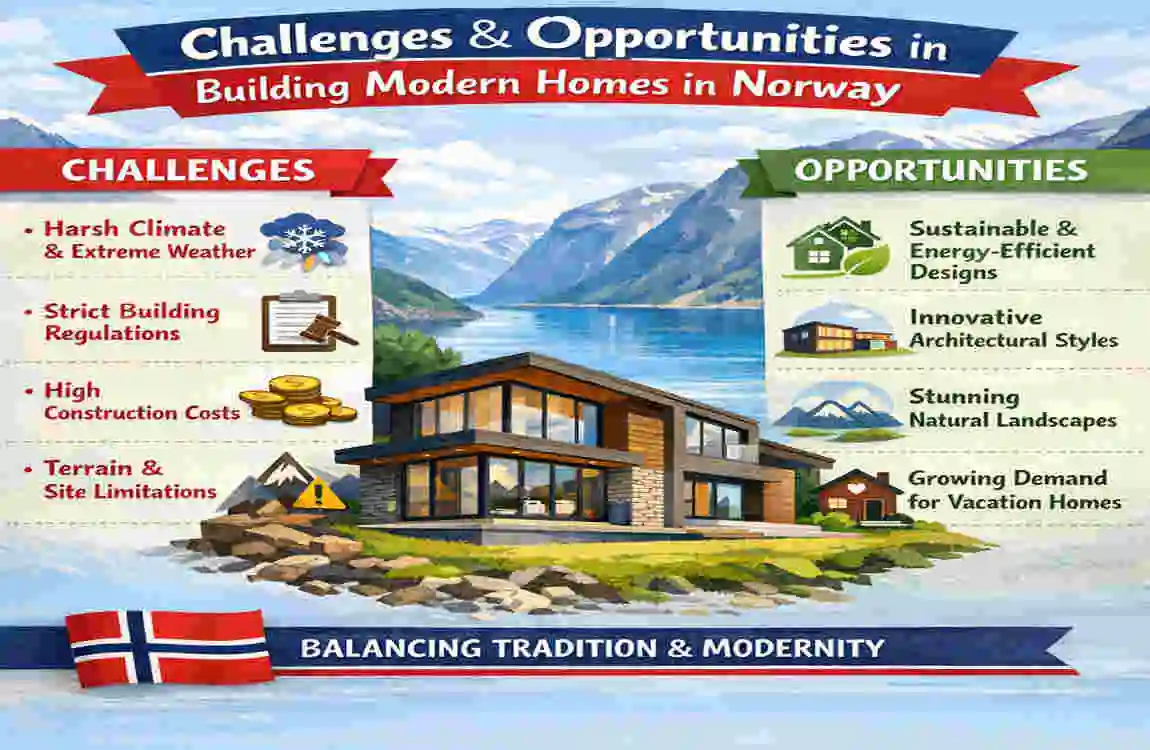
Building modern homes in Norway is not always easy. There are a few major challenges:
- High construction costs
- Good materials, skilled workers, and energy-efficient systems can be expensive.
- Strict building rules
- Norway has strong standards for safety, insulation, and environmental performance.
- Harsh weather
- Homes must handle snow, wind, and cold temperatures, which adds to the design challenge.
These factors can make building slower and more costly, but they also lead to better and more durable homes.
Opportunities
At the same time, there are many exciting opportunities.
Norway is becoming a leader in:
- Eco-friendly construction
- Prefab and modular housing
- Smarter energy systems
- Low-impact building methods
Prefab homes, for example, can be built faster and with less waste. Modular design also gives families more flexible options. These trends are helping shape the next generation of modern homes in Norway.
Future Trends in Norway Modern Homes
Predictions for Modern Home Designs in Norway
The future of modern Norwegian homes looks even more sustainable and intelligent.
Some likely trends include:
- More carbon-neutral homes
- Better use of recycled materials
- Advanced AI for home energy control
- More IoT devices for comfort and safety
Homes will likely become even more efficient without losing their simple and natural feel. Designers will continue to focus on comfort, sustainability, and smart living.
How Norway is Setting Global Standards
Norway is not only following global design trends; it is also shaping them. In many ways, it is helping shape them.
Its homes show that modern design can be beautiful, practical, and environmentally responsible at the same time. That message is powerful. It proves that good design is not only about style. It is also about how people live and how they care for the world around them.
FAQ
What is unique about Norway’s modern homes?
Norwegian modern homes combine Scandinavian minimalism, eco-friendly materials, and smart technology. They are designed to be simple, comfortable, and sustainable.
How do Norwegian homes integrate sustainability?
They use strong insulation, solar panels, heat pumps, passive house design, and natural materials to reduce energy use and support eco-living.
What are the key architectural features of modern Norwegian homes?
The most common features are large windows, open floor plans, natural materials, green roofs, and a strong connection to nature.
Why are Norwegian homes expensive to build?
They can be costly because of strict building regulations, high-quality materials, and the need to withstand harsh weather conditions.
What future trends can we expect in Norwegian modern homes?
Future homes will likely focus more on carbon-neutral design, modular construction, AI-powered systems, and smarter energy management.
| Category | Description |
|---|---|
| Architecture Style | Simple, clean lines with strong influence of Scandinavian minimalism |
| Materials Used | Wood, stone, glass, and eco-friendly natural materials |
| Color Palette | White, soft gray, beige, and natural wood tones |
| Design Philosophy | “Less is more” – focus on simplicity, function, and comfort |
| Lighting | Large windows for natural light; warm indoor lighting for long winters |
| Energy Efficiency | Highly insulated homes with solar panels and energy-saving systems |
| Interior Style | Minimal furniture, open spaces, clutter-free layouts |
| Connection to Nature | Strong indoor-outdoor connection, often with mountain or fjord views |
| Smart Features | Modern smart home systems for heating, lighting, and security |
| Lifestyle Focus | Cozy living (Hygge-like comfort), practicality, and sustainability |