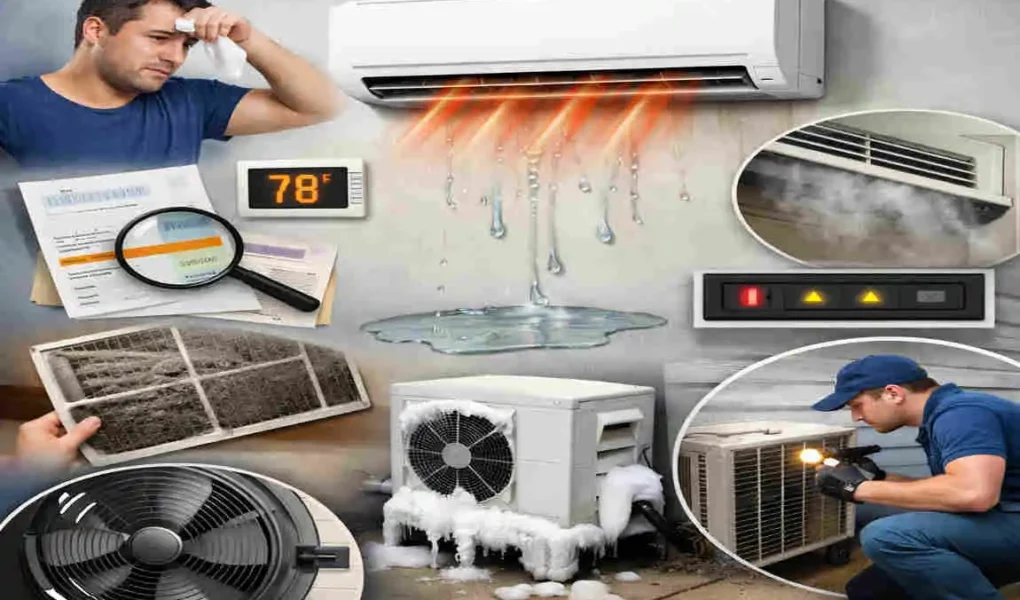
If you are asking, “How do I know if my AC needs maintenance?”, the answer usually starts with a few clear warning signs. Your air conditioner often shows small problems before it breaks down. You may notice weak airflow, warm air, odd noises, or higher energy bills.
These signs may seem small at first. But if you ignore them, they can turn into bigger and more expensive repairs. The good news is that a little attention early can help your AC run better, last longer, and cool your home more comfortably.
Why Regular AC Maintenance Matters
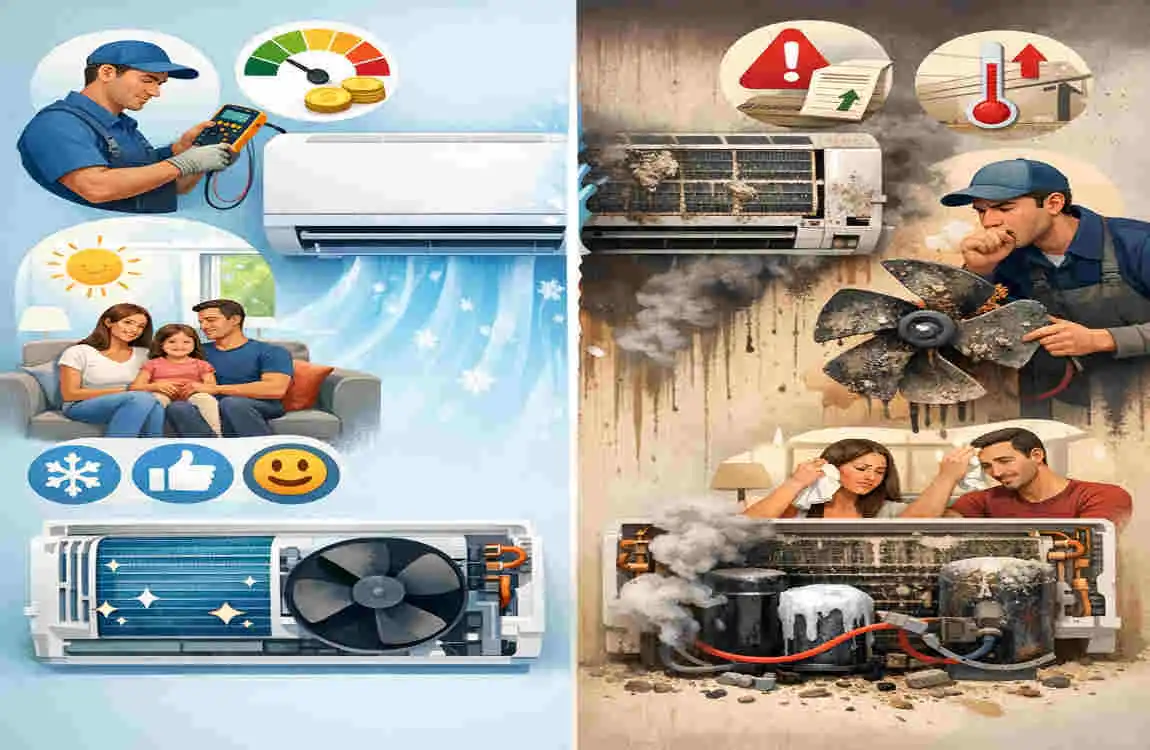
Regular AC maintenance is not just about keeping the system home clean. It helps your entire cooling setup work the way it should.
Improves cooling performance
When your AC gets regular care, it can cool your home more evenly. Clean parts and proper settings help the system move air more efficiently and maintain steady temperatures.
Reduces energy bills
A well-maintained AC does not have to work as hard. That usually means lower electricity use and less strain on the system.
Extends AC lifespan
Like any machine, an air conditioner lasts longer when it is cared for properly. Regular maintenance helps prevent wear and tear from turning into major damage.
Prevents expensive repairs
Small issues are much easier to fix than big ones. If you catch a problem early, you can often avoid a costly breakdown later.
How Do I Know If My AC Needs Maintenance?
This is the main question many homeowners ask, and there are several signs to look for.
Weak airflow
If the air coming from your vents feels weak, your AC may need attention. Weak airflow can make your home feel warmer than it should.
Warm air instead of cool air
If your AC is running but blowing warm or lukewarm air, something is wrong. This could point to a filter issue, a thermostat problem, or a larger system fault.
Strange noises
A healthy AC should not make loud banging, rattling, grinding, or squealing sounds. Unusual noise often means a part is loose, worn out, or damaged.
Unpleasant odors
Bad smells coming from your vents are another warning sign. A musty smell may mean mould or moisture, while a burning smell could point to electrical trouble.
Higher electricity bills
If your bill goes up but your cooling habits stay the same, your AC may be losing efficiency. That often happens when the system is dirty or struggling to run.
Frequent on-and-off cycling
Your AC should not turn on and off all the time. Short cycling can mean the system is oversized, dirty, or having a mechanical issue.
Water or refrigerant leaks
Leaks around your AC are never a good sign. Water leaks may come from a blocked drain line, while refrigerant leaks need professional help right away.
Excess humidity indoors
Your AC should help remove moisture from the air. If your home feels sticky or damp, your system may not be working properly.
Common Causes of AC Problems
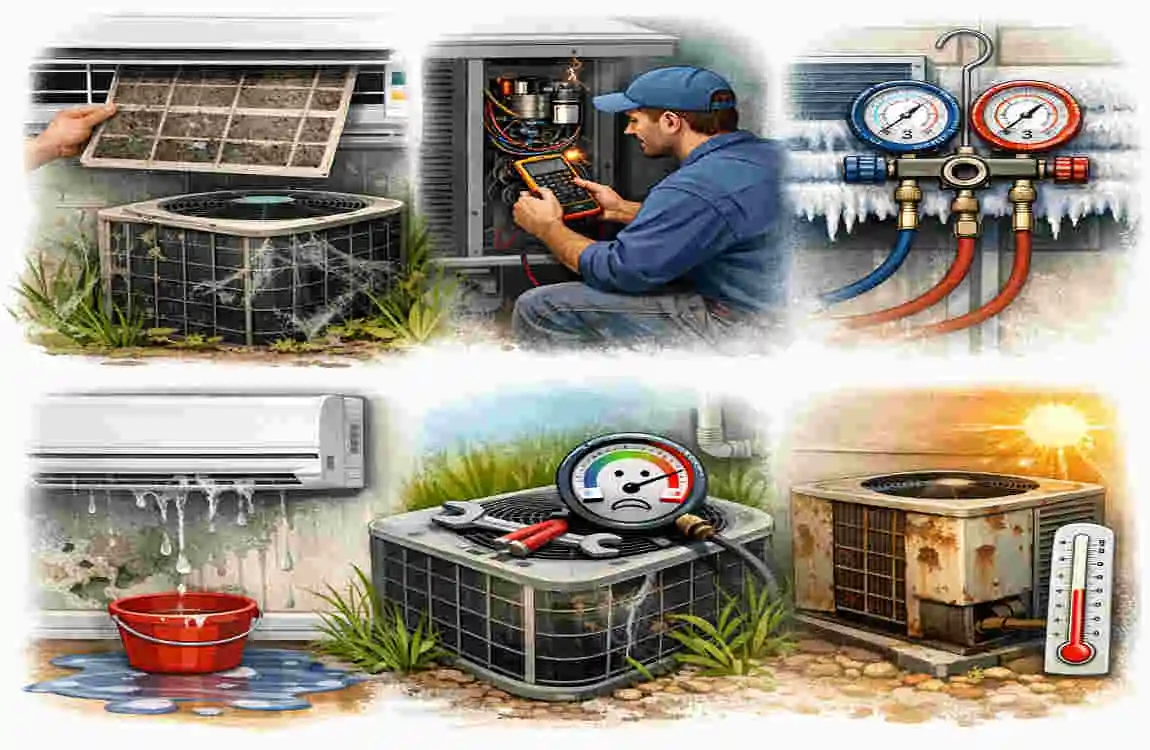
Many AC issues come from simple causes that build up over time.
Dirty air filters
A clogged air filter blocks airflow. This makes the system work harder and can reduce cooling power.
Clogged condenser coils
Outdoor coils can collect dirt, dust, and debris. When that happens, the unit cannot release heat as well.
Low refrigerant levels
Refrigerant helps your AC cool the air. If the level is too low, the system may stop cooling properly.
Faulty thermostat
Sometimes the problem is not the AC itself. A faulty thermostat can send incorrect signals, causing the system to behave oddly.
Blocked drain line
Your AC removes moisture as it cools. If the drain line is blocked, water can back up and cause leaks or shutdowns.
Simple AC Maintenance Checklist
Here is a quick checklist to help you stay on top of basic care.
Maintenance TaskRecommended FrequencyBenefit
Replace air filter Every 1–3 months Better airflow
Clean outdoor unit Every 3 months Improved efficiency
Check thermostat Monthly Accurate cooling
Clean vents Every 2–3 months Better air circulation
Schedule professional tune-up Once a year Prevents major issues
DIY AC Maintenance Tips
You can handle a few simple tasks on your own.
Replace dirty filters
This is one of the easiest and most helpful things you can do. A fresh filter helps air move freely through the system.
Keep the outdoor unit clean.
Clear away leaves, dirt, and grass around the outside unit. The unit needs open space to work properly.
Inspect air vents
Make sure vents inside your home are open and not blocked by furniture, rugs, or curtains.
Remove debris around the unit.
Keep at least a little space around the outdoor unit so air can flow without obstruction.
Check thermostat settings
Sometimes the issue is as simple as the wrong setting. Make sure your thermostat is set to cooling mode, and the temperature is correct.
When to Call an HVAC Professional
Some AC problems need expert help.
AC stops cooling
If your system runs but never cools the luxury house, a professional should inspect it.
Refrigerant leak
A trained HVAC technician should always handle refrigerant problems.
Electrical problems
If you notice tripped breakers, burning smells, or power issues, do not try to fix them yourself.
Compressor issues
The compressor is a major part of the AC system. If it fails, the repair is usually not a DIY job.
Persistent strange noises
If the noise keeps coming back, there is likely a deeper problem that needs professional repair.
Benefits of Annual AC Maintenance

A yearly tune-up can make a big difference.
- Lower repair costs
- Improved indoor air quality
- Longer equipment life
- Better energy efficiency
- Reliable cooling during summer
Regular service helps your AC stay ready when you need it most.
Mistakes Homeowners Should Avoid
Some common habits make AC problems worse.
- Ignoring warning signs
- Skipping annual maintenance
- Never changing air filters
- Blocking vents with furniture
- Attempting complex repairs yourself
These mistakes can reduce performance and lead to breakdowns.
Frequently Asked Questions
How do I know if my AC needs maintenance?
Common signs include weak airflow, warm air, unusual noises, unpleasant smells, higher bills, frequent cycling, leaks, and poor humidity control.
How often should an air conditioner be serviced?
Most HVAC professionals recommend once a year, usually before the cooling season starts.
Can a dirty air filter affect AC performance?
Yes. A dirty filter blocks airflow and makes the system less efficient.
Why is my AC running but not cooling?
Possible reasons include dirty filters, low refrigerant, thermostat problems, frozen coils, or compressor trouble.
Is AC maintenance worth it?
Yes. It can improve efficiency, reduce repair costs, extend system life, and keep your home more comfortable.
| Sign | What It Means | Recommended Action |
|---|---|---|
| Weak Airflow | Dirty filter, blocked vents, or blower issues | Replace the filter and inspect vents |
| Warm Air Instead of Cool | Low refrigerant or compressor problem | Schedule a professional AC inspection |
| Strange Noises | Loose, worn, or damaged components | Turn off the unit and have it serviced |
| Bad Odors | Mold growth or burnt electrical parts | Clean the system and inspect electrical components |
| Frequent Cycling | Thermostat, airflow, or refrigerant issues | Check thermostat settings and call a technician |
| Higher Energy Bills | AC is working harder due to poor efficiency | Perform routine maintenance and tune-up |
| Water Leaks | Clogged drain line or frozen evaporator coil | Clear the drain line and inspect for damage |