If you are planning to buy or build a modular home, you may be asking one very common question: can a modular home have a basement? The short answer is yes.
A modular home is built in sections in a factory, then delivered to the building site and set on a foundation. That foundation can be a slab, crawl space, or even a full basement. So if you want extra storage, more living space, or better storm protection, a basement can be a smart option.
Can a Modular Home Have a Basement?
The Simple Answer
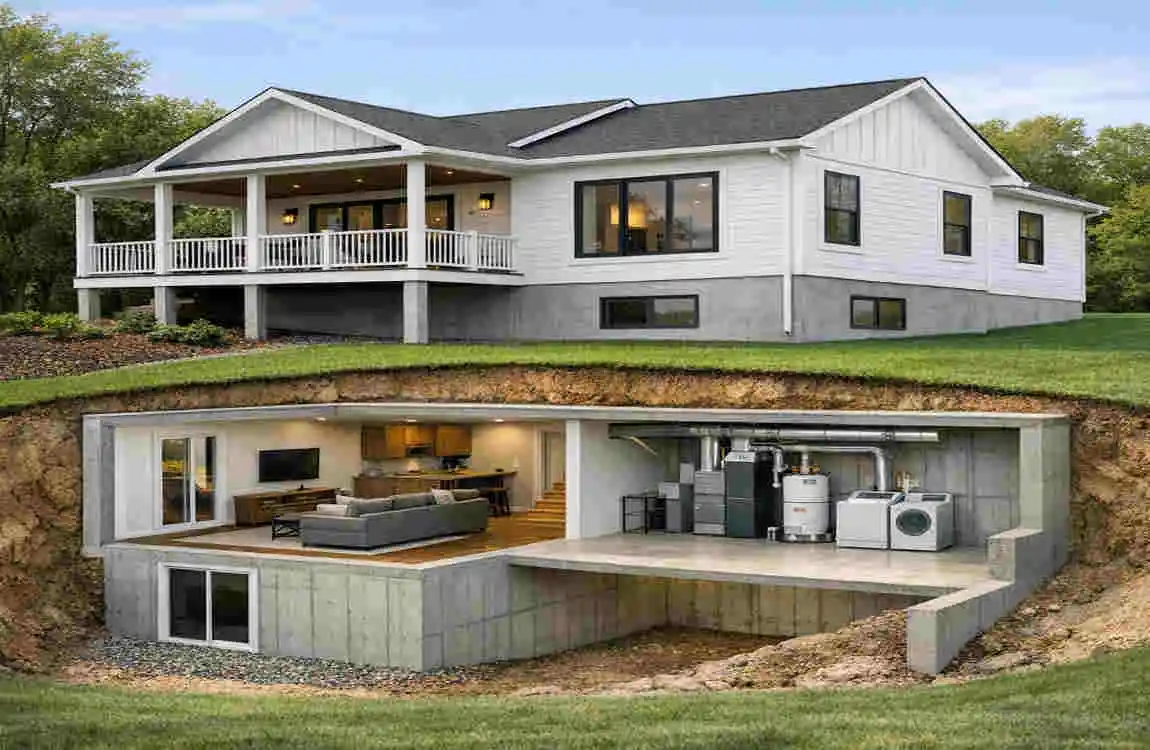
Yes, a modular home can absolutely have a basement. In fact, many modular homes are placed on full basements just like traditional homes.
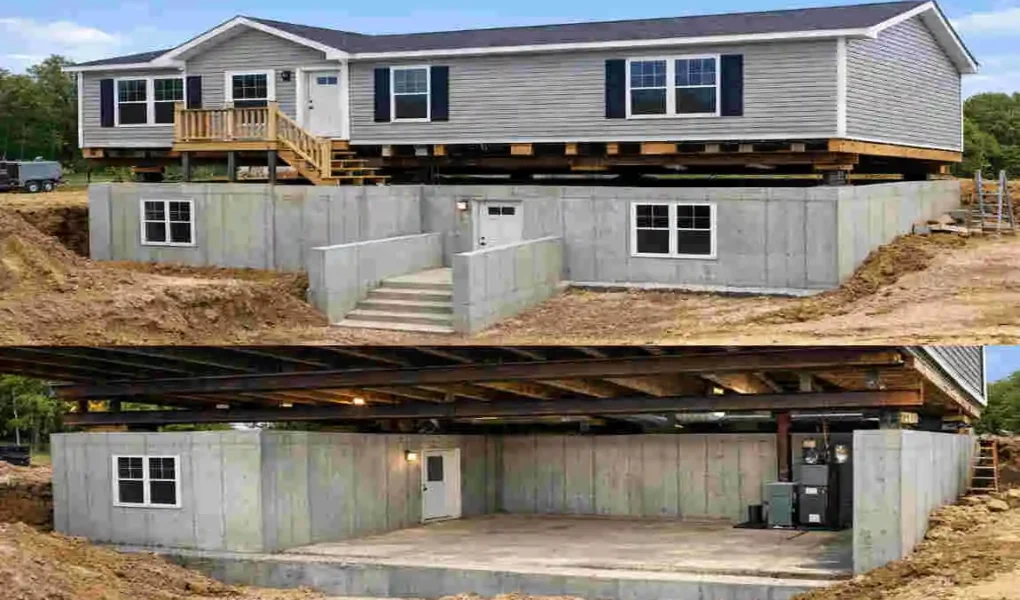
The basement is built first, and then the modular home sections are delivered and placed on top. Once the home is set, the basement becomes part of the full structure.
How the Process Works
The process usually looks like this:
- Excavate the land for the basement.
- Build the concrete foundation walls and floor.
- Deliver the modular sections to the site.
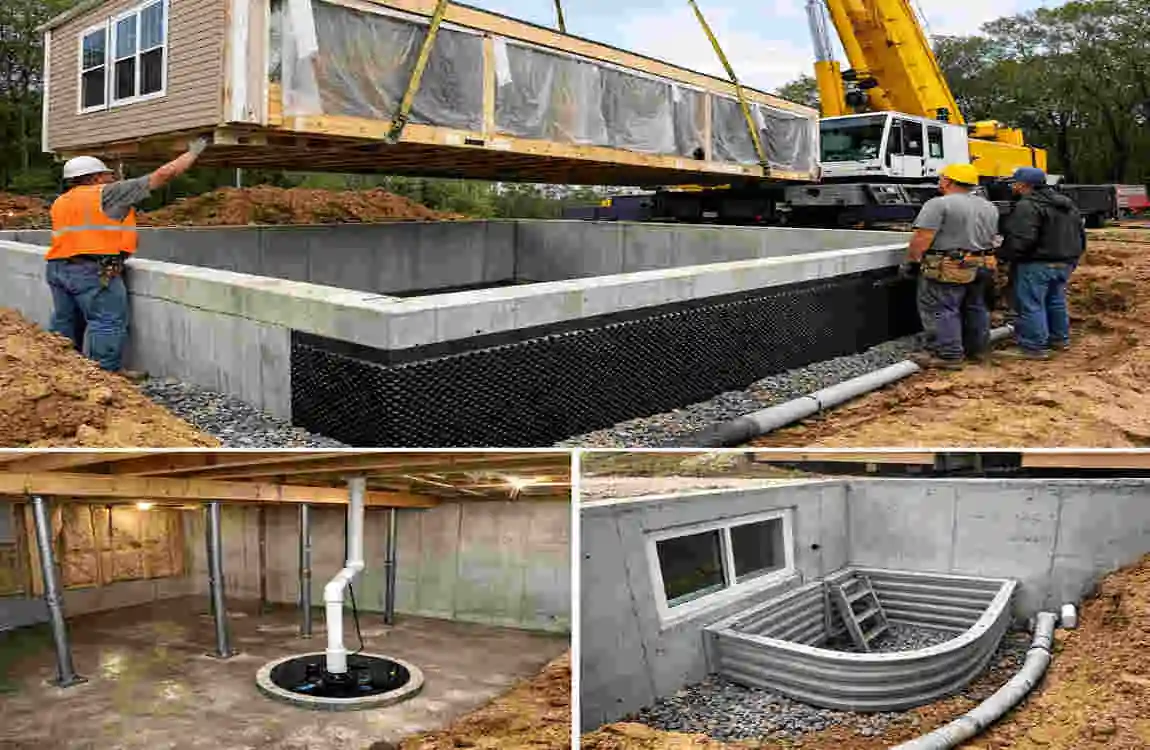
- Use a crane to place the sections on the foundation.
- Connect the home to plumbing, electrical, and HVAC systems.
This process is efficient, but it still requires careful planning and skilled work.
Types of Foundations for Modular Homes
Full Basement
A full basement gives you the most usable space. It can be left unfinished for storage or finished later into living space.
Crawl Space
A crawl space raises the home a little off the ground. It gives some access to pipes and wiring, but it does not offer much storage or living space.
Concrete Slab
A slab is a flat concrete base. It is usually the least expensive option, but it gives no extra room underneath the home.
Walkout Basement
A walkout basement is built on sloped land and has an outside entrance. This is a great choice if you want easy access and more natural light.
Benefits of Having a Basement Under a Modular Home
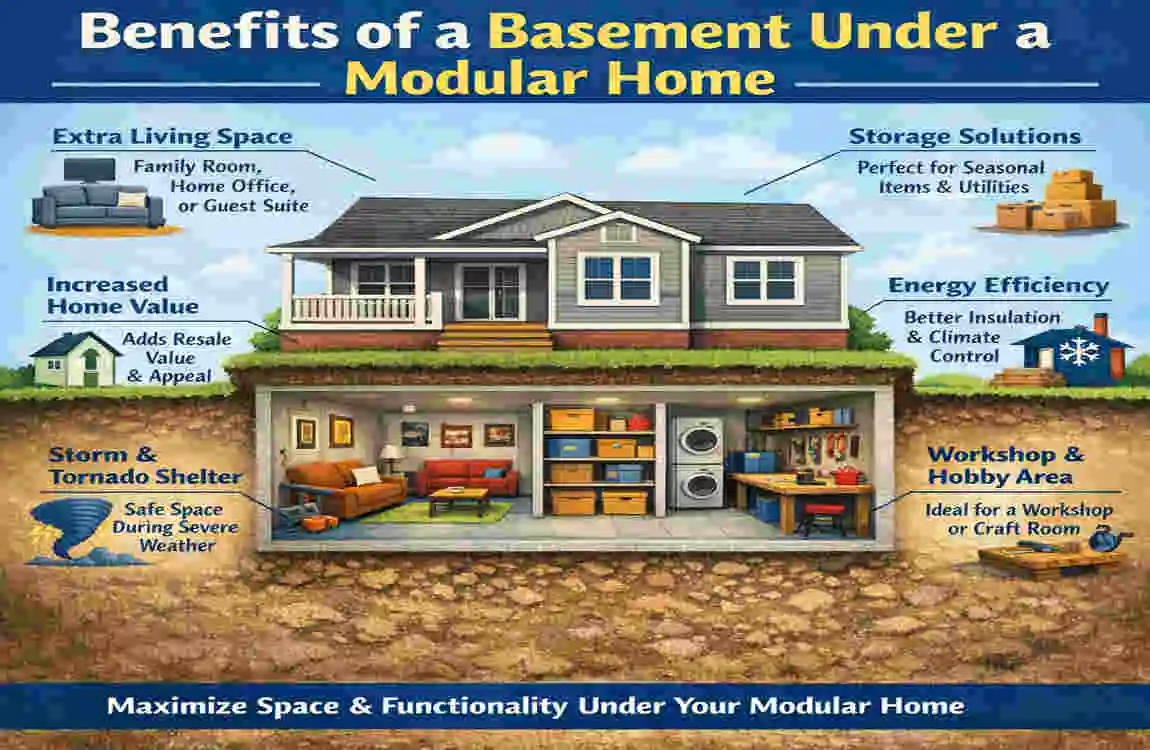
More Living Space
A basement gives you extra room for bedrooms, a family room, a home office, or a play area. If your family needs more space later, this can be very helpful.
Extra Storage
If you have seasonal items, tools, or boxes you do not use every day, a basement gives you a safe place to store them.
Higher Property Value
In many areas, a home with a basement can be more attractive to buyers. A finished basement may also improve resale value.
Better Storm Protection
A basement can provide added safety during severe weather, especially in areas where storms or tornadoes are a concern.
Easier Utility Access
Basements often make it easier to reach plumbing, wiring, water heaters, and HVAC equipment. This can make repairs and maintenance simpler.
Things to Consider Before Building a Basement
Soil Conditions
The type of soil on your land matters. Some soil is strong and stable, while other soil may shift or hold too much moisture. A soil test helps you understand what kind of foundation is best.
Water Table
If groundwater is close to the surface, basement construction can be more difficult and expensive. A high water table may increase the risk of leaks or flooding.
Local Building Codes
Building rules change from one place to another. You need to check local codes before planning a basement under your modular home.
Drainage Requirements
Proper drainage is very important. Without it, water can collect around the foundation and create serious problems later.
Budget Planning
A basement adds cost to the project. You should plan for excavation, concrete work, waterproofing, and possible finishing costs in the future.
How Much Does It Cost?
The cost of building a basement under a modular home depends on several things. These include:
- Excavation
- Concrete foundation work
- Waterproofing
- Drainage systems
- Basement finishing
- Local labor rates
A basement usually costs more than a slab or crawl space because it takes more material and more labor. Still, many homeowners feel the extra space is worth the price.
If you want the basement finished later, you can save money upfront and complete the space in stages.
Can You Finish the Basement Later?
Yes, You Often Can
Many homeowners build the basement first and leave it unfinished for a while. Later, they turn it into useful space as their needs and budget grow.
Common Basement Uses
You can finish a modular home basement into:
- Future bedrooms
- Home office
- Gym
- Entertainment room
- Rental suite, where local rules allow
This makes the basement a flexible part of the home, not just space.
Common Challenges
Moisture Problems
One of the biggest basement concerns is moisture. If water gets in, it can damage walls, floors, and stored items.
Solution: Use proper drainage, sump pumps if needed, and good waterproofing from the start.
Waterproofing Needs
A basement must be sealed properly to stay dry. Poor waterproofing can lead to mold and structural damage.
Solution: Invest in quality waterproofing materials and work with an experienced builder.
Construction Delays
Basement work takes time, especially if weather is bad or the site needs extra preparation.
Solution: Build a realistic timeline and plan for possible delays.
Permit Requirements
Basement construction usually requires permits and inspections.
Solution: Handle the paperwork early so the project does not get delayed later.
Is a Basement Worth It?
Pros
- More space
- Better resale value
- Flexible use
- Extra storage
Cons
- Higher upfront cost
- Longer construction time
- Waterproofing maintenance
For many homeowners, the benefits outweigh the downsides. If you want more room and long-term value, a basement can be a smart choice.
Tips for Building a Basement Under a Modular Home
- Choose an experienced modular builder.
- Test the soil before construction.
- Install proper drainage.
- Waterproof the foundation walls.
- Plan future basement use.
- Obtain all required permits.
These steps can help you avoid expensive problems later.
Frequently Asked Questions
Can a modular home have a basement?
Yes. Most modular homes can be installed on a full basement foundation if it is properly designed and built.
Is a basement stronger than a crawl space?
A well-built basement gives you more usable space and can offer strong structural support and storage.
Does adding a basement increase the cost?
Yes. Excavation, concrete, drainage, and waterproofing all add to the total cost.
Can I finish my modular home’s basement later?
Yes. Many homeowners finish it later when they are ready financially.
Does a basement increase home value?
In many markets, yes. A finished or usable basement can make the home more attractive to buyers.
Are modular homes with basements safe?
Yes. When built to code with proper waterproofing and drainage, they are safe and durable.
| Topic | Information |
|---|---|
| Can a modular home have a basement? | Yes. Most modular homes can be installed on a full basement foundation. |
| Purpose of a Basement | Adds living space, storage, utility rooms, or extra bedrooms. |
| Foundation Type | A poured concrete or concrete block basement is the most common option. |
| Construction Process | The basement is built first, then the modular home sections are placed on top by a crane. |
| Structural Support | The basement foundation is engineered to support the weight of the modular home. |
| Benefits | More square footage, higher property value, better storage, and easier access to plumbing and electrical systems. |
| Potential Drawbacks | Higher construction costs, longer build time, and possible drainage or waterproofing requirements. |
| Typical Cost | Generally $30,000–$70,000+, depending on size, location, soil conditions, and finishes. |
| Building Permits | Required in most areas before basement construction begins. |
| Best For | Homeowners who need additional living space, a workshop, or long-term storage. |