Have you ever stood in your kitchen, bumped elbows with a family member, and thought, “We desperately need more space”? You are certainly not alone. Whether you are a homeowner in a leafy UK suburb or navigating the bustling, property-conscious neighbourhoods , the dream of expanding your living area is a common one.
With property prices continuing to rise in 2026, moving to a larger house often feels out of reach. Stamp duty, moving fees, and the sheer hassle of packing up your life make relocating a daunting prospect. This is exactly why extending your current home has become the ultimate solution. You get to keep the neighbourhood you love, avoid moving costs, and design a space that fits your exact lifestyle.
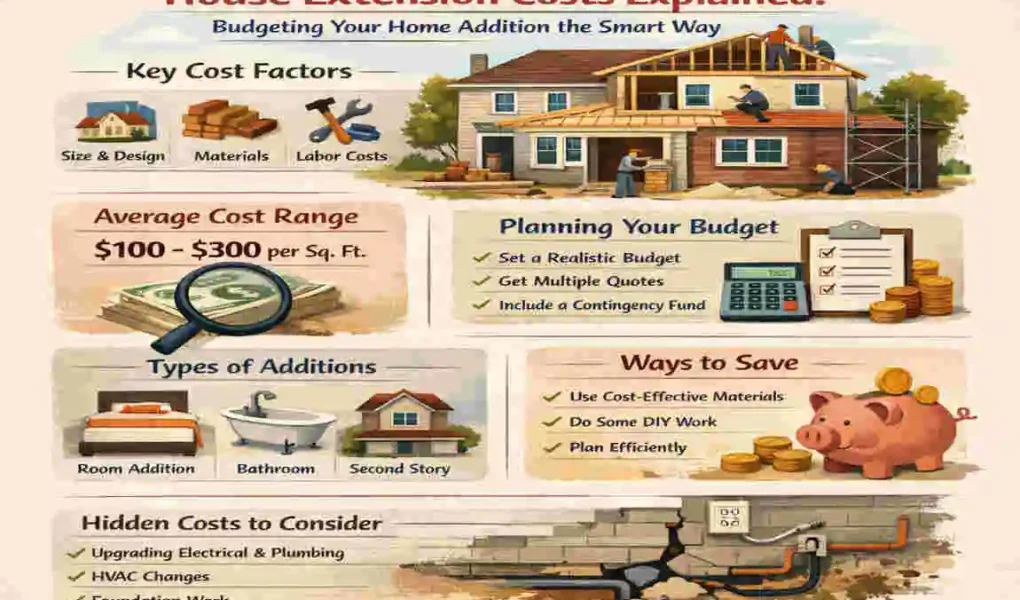
If you are currently wondering how much a house extension costs, you need realistic, up-to-date numbers. In 2026, you can generally expect to pay between £1,800 and £3,000 per square metre (m²) on average.
To put that into perspective, a standard 30m² extension could cost anywhere from £60,000 to £84,000. It is a significant investment, but when executed correctly, it pays incredible dividends in both your daily comfort and your property’s market value.
Types of House Extensions: Finding Your Perfect Fit
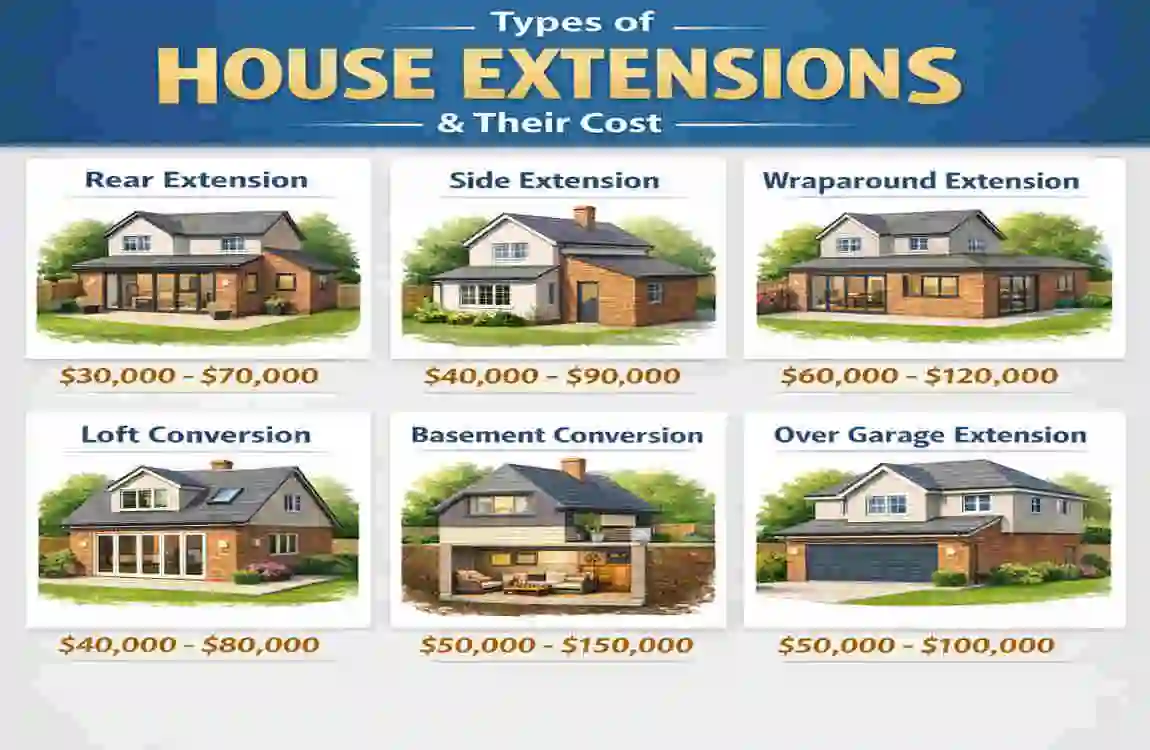
Not all house extensions are created equal. The type of addition you choose will drastically influence your overall budget, the build timeline, and how you use your home moving forward.
Let’s compare the most popular types of extensions so you can make an informed decision about which route is best for your family and your wallet.
Single-Storey vs Two-Storey: Cost Comparison
When most people think of an extension, they immediately picture a single-storey addition at the rear or side of their property. These are incredibly popular, and for good reason.
The Single-Storey Extension A single-storey extension typically costs between £1,800 and £3,000 per m². If you are planning a medium-sized project, a single-storey extension usually costs between £40,000 and £120,000, depending on your finishes.
These extensions are absolutely ideal for creating large, open-plan kitchen and dining areas. Imagine a bright, airy space with bifold doors opening directly onto your garden. It completely transforms how you live and entertain. Because you are only building one level, the structural requirements are less demanding than a multi-level build, which keeps your timeline relatively short.
The Two-Storey Extension. If you need both living space downstairs and sleeping space upstairs, a two-storey extension is the way to go. You might be surprised to learn that two-storey extensions often offer better value for money per square metre.
Why? Because the most expensive parts of building an extension are laying the foundations and building the roof. With a two-storey extension, you only pay for one set of foundations and one roof, but you get double the floor space!
For a 60m² two-storey extension (30m² on each floor), costs typically range from £108,000 to £180,000. It is a larger upfront investment, but it is highly cost-effective if you need to add bedrooms, en-suite bathrooms, or a home office upstairs while expanding your kitchen downstairs.
Other Popular Types of Extensions
If a traditional rear extension doesn’t suit your property, there are several other brilliant ways to add space.
Loft Conversions Instead of building out, why not build up? Converting your dusty, unused attic into a functional living space is a fantastic way to add a master bedroom or a quiet home office.
In 2026, loft conversions generally cost between £45,000 and £75,000. The final price depends heavily on the type of conversion. A simple rooflight (Velux) conversion is on the cheaper end. In comparison, a large dormer or mansard conversion—which physically alters the shape of your roof to create more headroom—will push you toward the higher end of that budget.
Garage Extensions and Conversions: Do you have a garage that is currently just a dumping ground for old paint cans and holiday decorations? Converting or extending your garage is one of the most budget-friendly ways to add space.
Starting at around £25,000, you can transform this existing shell into a state-of-the-art home gym, a playroom for the kids, or a dedicated workspace. Because the basic structure is already there, you save massively on groundworks and bricklaying.
Wrap-Around Extensions: If you want to make a massive architectural statement and completely alter the footprint of your home, a wrap-around extension is the ultimate choice. These combine a side return extension with a rear extension, creating an L-shape that wraps around the back of your house.
Because these projects involve complex structural engineering—often requiring the removal of entire load-bearing corner walls—they command a premium price. Expect to pay £3,000+ per m² for a wrap-around. They are expensive, but they offer unparalleled space transformation.
Pros and Cons of Extension Types
To help you digest all of this, here is a quick breakdown of which extension type is best used for each purpose, along with its average cost.
TypeAvg Cost (excl. VAT)Best For
Single-Storey £48,000 (20m²) Kitchens, open-plan living, dining areas
Two-Storey £144,000 (60m²) Adding bedrooms/bathrooms plus downstairs living
Loft Conversion £60,000 (25m²) Space savers, master suites, home offices
Garage Conversion £25,000 (15m²) Budget-friendly extra rooms, gyms, utility areas
Wrap-Around £90,000+ (30m²+) Maximum space creation, complete layout redesigns
Key Factors Affecting House Extension Costs
Now that you know the average house extension costs UK homeowners face, you might be wondering why there is such a massive range in the pricing. Why does one 30m² extension cost £60,000 while another identical-sized one costs £84,000?
The final bill is rarely just about the size of the room. It is a complex mix of design choices, geographic location, and the invisible structural work happening beneath the ground. Let’s dive deep into the specific variables that will dictate your final budget.
Size and Design Complexity
It sounds obvious, but the bigger the extension, the more it will cost overall. However, thanks to economies of scale, larger extensions often cost slightly less per square metre than very small ones. Once your builders are on-site with their scaffolding and heavy machinery, adding an extra few square metres doesn’t exponentially increase their setup costs.
But size isn’t everything; complexity is a massive price driver. If you want a simple, square box with a flat roof, you will stay at the lower end of the budget. But if you want a complex pitched roof, vaulted ceilings, bespoke lantern skylights, or curved walls, your costs will skyrocket. Intricate architectural details require specialist labour and custom materials, which can easily add 20% to your overall build cost, pushing your average closer to £2,400/m².
Location Impact
Where you live plays a gigantic role in your final bill. If you are building in central London, you will face premium labour rates, higher material delivery costs, and tricky logistical issues, such as restricted parking for tradesmen. In London and the Southeast, you should brace yourself for costs ranging from £3,000 to £5,000 per m².
Conversely, if you live in the Northern suburbs, Wales, or are looking-influenced markets local labour rates are significantly lower. Materials can often be sourced more affordably, and you won’t be paying a premium just for geographic location. In these areas, you can comfortably aim for the lower end of our £1,800 to £3,000 spectrum.
Materials and Finishes
This is the category where you have the most personal control over your budget. You can build the same structural shell, but how you finish it will determine the final cost.
Are you happy with standard uPVC French doors, or do you have your heart set on ultra-modern, floor-to-ceiling aluminium bifold doors? A set of premium bifolds can easily cost £5,000 to £10,000 alone.
The same applies to your flooring, your lighting, and especially your kitchen fittings. Choosing luxury stone countertops, smart home technology, and high-end underfloor heating will rapidly push your project into the luxury price bracket.
Labour and Professional Fees
Do not make the mistake of thinking your budget only goes to the builder. A successful extension requires a whole team of professionals.
First, you need an architect or a talented architectural designer to draw up your plans. Their fees usually consume 10% to 15% of your total build cost, which translates to roughly £5,000 to £10,000 for a standard extension. While it might seem tempting to skip this step to save money, a brilliant architect will actually save you thousands by designing an efficient, problem-free build and maximising your natural light.
You will also need a structural engineer to ensure your new roof won’t collapse and your foundations are deep enough. Their calculations are legally required for building regulations and usually cost between £500 and £1,500.
Permissions and Regulations
The red tape of building can also drain your wallet if you aren’t prepared. If your project requires full Planning Permission from your local council, expect to pay application fees of around £500 to £1,000.
Furthermore, every extension must comply with Building Regulations to ensure it is safe, energy-efficient, and structurally sound. Hiring a private building inspector or using council inspectors will add another 5% to 10% to your administrative costs.
Quick Stat: Industry averages for 2026 show that roughly 70% of your total costs will go toward raw materials and physical labour. Also, keep in mind that construction inflation is hovering around 5% this year, so the quotes you receive today might be higher than those your neighbours got a few years ago.
The Budget Breakdown by Factor
To help you visualise where your money is going, here is how a typical budget breaks down across these categories.
Factor Low-End Cost High-End Cost% of Total Budget
Materials £1,200/m² £2,500/m² 40%
Labour £800/m² £1,500/m² 30%
Professional Fees £5,000 £15,000 10%
Taxes & Contingency Variable Variable 20%
Detailed Cost Breakdown: Where Does the Money Actually Go?
Understanding the average house extension cost is one thing, but knowing exactly where every penny goes gives you the power to negotiate and budget smartly. Let’s look at a granular, stage-by-stage breakdown of a typical extension project.
House Extension Cost Per Square Metre: Shell vs Fitted
When builders give you a quote, they might offer a “shell-only” price or a “fully fitted” price. It is vital to know the difference.
Shell-Only (£1,450/m² average): This covers the bare bones of the structure. The builder will dig the foundations, build the walls, put on the roof, and install the windows and doors. The building will be “wind and watertight,” but the inside will be an empty concrete box. There will be no plaster on the walls, no flooring, no electrics, and no plumbing.
Fully Fitted (£2,400/m² average): This is the turnkey price. It includes everything in the shell phase, plus the first and second fix of plumbing and electrics, plastering, painting, laying the floors, installing skirting boards, and fitting out the kitchen or bathroom. When the builders leave, the room is ready for you to move your furniture into.
Hidden Costs to Watch Out For
Even the most meticulous planners can get caught out by hidden fees. Here are the three biggest budget-busters you must prepare for:
- VAT (Value Added Tax): In the UK, most renovation work is subject to a 20% VAT. If a builder quotes you £50,000 “ex-VAT,” you actually need to pay them £60,000. Always insist on quotes that include VAT so you aren’t hit with a massive surprise bill at the end.
- The Contingency Fund: Construction is unpredictable. You might start digging your foundations and discover a crumbling Victorian sewer pipe that needs replacing, or you might find asbestos that needs safe removal. You should always hold back 10% to 15% of your total budget as a contingency fund for emergencies like these.
- Utility Rerouting: If your new extension is going to sit directly on top of your main gas line, water main, or a shared public drain, you will have to pay to have these rerouted. Moving a gas main or doing a “build-over” agreement for a sewer can easily add £2,000 to £5,000 to your costs.
Cost Examples: Budget vs Luxury
To make this tangible, let’s look at two completely different scenarios for 2026.
Scenario A: The Budget 20m² Kitchen Extension (£48,000). You want a modest rear extension to make room for a dining table. You choose a simple flat roof, standard brickwork, and off-the-shelf uPVC French doors. You do the painting and decorating yourself to save cash, and you choose a mid-range kitchen from a high-street retailer. By making sensible choices and managing the project tightly, you complete the build for around £48,000.
Scenario B: The Luxury 50m² Open-Plan Dream (£140,000+) You want a massive, magazine-worthy living space. You opt for a pitched roof with custom frameless skylights. The entire back wall is made of premium, ultra-slim structural glass sliding doors. You install underfloor heating beneath polished concrete floors, and you fit a bespoke, handmade kitchen with a massive marble island. High-end materials and specialist labour push this project comfortably over the £140,000 mark.
Full Breakdown for a Standard 30m² Extension
If you want to know exactly how a mid-range £60k-£84k budget is distributed, here is a detailed breakdown of categories for a fully fitted 30m² extension.
Category Cost Range (excl. VAT)Notes
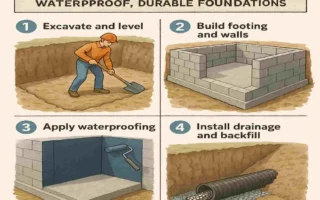
Foundations & Groundwork £5,000 – £8,000 Heavily dependent on your soil type (clay requires deeper trenches).
Walls & Roof Structure £20,000 – £30,000 Includes brickwork, insulation, timber frames, and roof tiles.
Windows & Exterior Doors £8,000 – £15,000 . It will rise significantly if you choose premium bifold or sliding doors.
Electrics & Plumbing £5,000 – £10,000 . It depends heavily on your kitchen/bathroom specification and heating needs.
Interior Finishes £10,000 – £20,000 Plastering, flooring, skirting, and professional painting.
Budgeting Tips for Your Home Addition
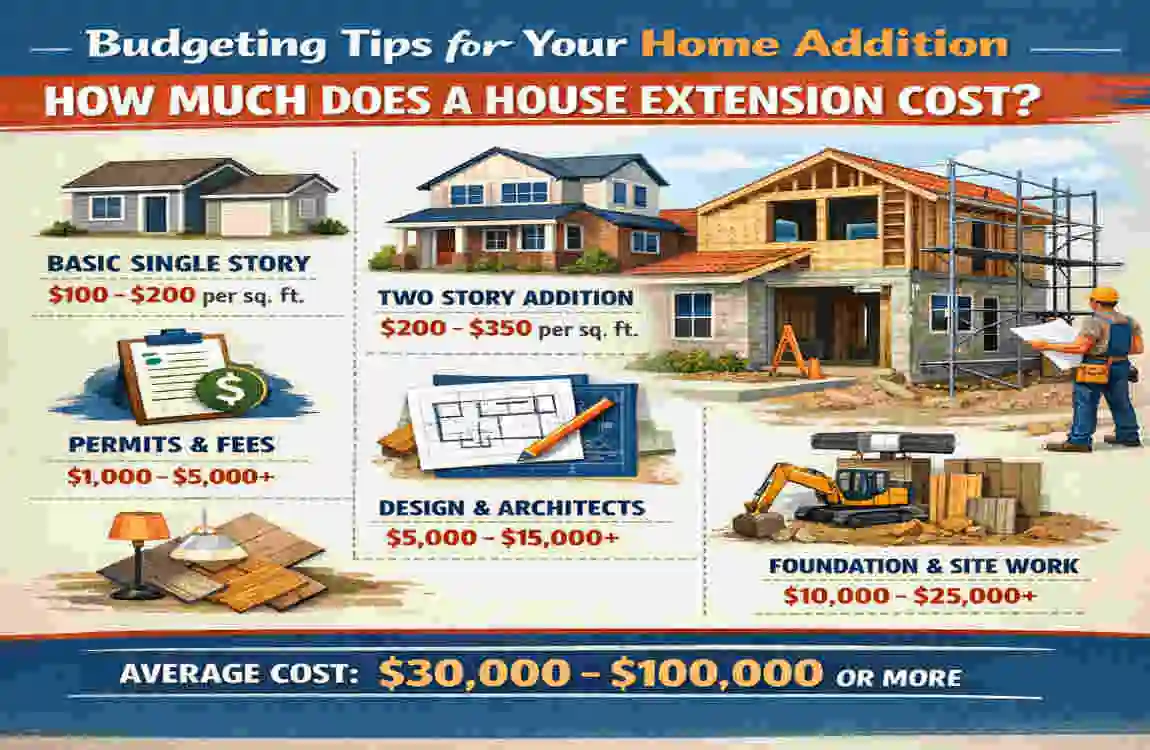
Seeing all those numbers might feel a little overwhelming, but do not panic! There are dozens of legitimate, safe ways to reduce your house extension costs without sacrificing the quality or safety of your build.
Let’s look at a smart budgeting framework to keep your finances firmly under control.
Smart Ways to Reduce House Extension Costs
Leverage Permitted Development Rights. Did you know you might not even need Planning Permission? In the UK, “Permitted Development” rights allow you to extend your home by up to 3 metres (or 4 metres for detached houses) without going through the lengthy, expensive council planning process. By designing your extension to fit within these rules, you save months of waiting and hundreds of pounds in application fees.
Phased Builds If you don’t have £80,000 sitting in the bank right now, consider a phased build. You can pay a builder to construct the “shell” this year, making the house wind and watertight. Then, next year, when you have saved more money, you can hire the electricians, plumbers, and plasterers to finish the interior.
Embrace DIY Elements You should absolutely leave the structural engineering, gas plumbing, and electrical wiring to the certified professionals. However, taking on the final finishes yourself can yield massive savings. By doing your own painting, laying your own click-laminate flooring, or even doing the final site cleanup and landscaping, you can easily shave 5% to 10% off your total bill.
Practice Value Engineering Value engineering is a fancy term for swapping expensive materials for cheaper alternatives that look the same. Love the look of solid oak flooring? High-quality luxury vinyl tile (LVT) looks identical, costs a fraction of the price, and is waterproof. Want a brick-slip feature wall? Look into high-quality wallpapers that mimic the texture. Smart swaps keep your budget intact.
Financing Options and ROI
Unless you have a mountain of cash saved up, you will likely need to finance your extension. Fortunately, there are several great options:
- Remortgaging: the most popular route. You borrow extra money against the equity already in your home. Interest rates are usually lower than those for personal loans, though they do increase your monthly mortgage payment.
- Home Improvement Loans: These are unsecured personal loans, typically ranging from £25,000 to £30,000. They are great for smaller projects, such as garage conversions.
The best part about financing an extension is the Return on Investment (ROI). A well-executed, high-quality extension doesn’t just give you more space; it actively increases your wealth. Adding a stylish single-storey rear extension can boost your property’s market value by 10% to 20%. In many cases, the value added to the house equals or exceeds the cost of the build!
Your Cost-Saving Checklist
Before you sign any contracts, make sure you have ticked off these crucial steps:
- Get 3 Detailed Quotes: Never accept the first price you are given. Get at least three itemised quotes from different builders to ensure you are getting a fair market rate.
- Use Local Professionals: Whether you are or London, local tradesmen won’t charge you for excessive travel time, and they usually have good relationships with local building suppliers, meaning cheaper materials.
- Track Inflation: 2026 averages are up 3% to 5% from last year. If you are using an online calculator from 2023, your numbers will be woefully inaccurate. Always use current-year data.
- Get It In Writing: Ensure every single detail—from the brand of the boiler to the colour of the plug sockets—is written into a formal contract before work begins.
Common Mistakes and FAQs
Even with a great budget in place, home additions can be stressful. Let’s look at the most common pitfalls homeowners fall into, and answer the most pressing questions you likely still have.
Pitfalls to Avoid When Budgeting
Underestimating Professional Fees One of the most frequent mistakes is assuming the builder’s quote covers everything. Homeowners often forget to budget for the architect, the structural engineer, building control fees, and VAT. This simple oversight is why so many projects face a stressful 15% budget overrun right at the finish line. Always budget for the entire project ecosystem, not just the bricks and mortar.
Ignoring the Party Wall Act. If you live in a terraced or semi-detached house in the UK, and you are digging foundations near your neighbour’s property boundary, you must comply with the Party Wall Act. You have to serve them a legal notice. If they dissent (which they are legally allowed to do), you will have to pay for a Party Wall Surveyor yourself, and potentially pay one for your neighbour too. This can easily add £1,000 to £2,000 to your budget and delay your start date by months. Handle this early!
Frequently Asked Questions (FAQs)
How much does a house extension cost per m²? In 2026, the UK average for a standard house extension is between £1,800 and £3,000 per square metre. This price fluctuates based on your location, the complexity of the design, and the quality of the interior finishes you choose.
What is the average single-storey kitchen extension cost? For a typical 20m² to 30m² single-storey kitchen extension, you should expect to pay between £40,000 and £72,000. Keep in mind that kitchen fittings (cabinets, appliances, islands) are expensive, so kitchen extensions usually skew toward the higher end of the per-square-metre average.
Can I live in my house during the extension build? Yes, in most cases, you can stay in your home. However, it will be noisy, dusty, and disruptive. If you are doing a massive wrap-around extension or removing your only kitchen/bathroom, you might need to rent temporary accommodation or set up a makeshift kitchenette in your living room for a few weeks.
Do I absolutely need to hire an architect? Legally, no. You can draw the plans yourself if you have the technical skills. However, practically, yes. An architect ensures your design is structurally sound, maximises natural light, and flows seamlessly with your existing home. They are well worth the investment.
Is it cheaper to build an extension or a conservatory? A conservatory is significantly cheaper than a traditional brick extension, often costing half the price. However, conservatories are notoriously difficult to heat in winter and can become uncomfortably hot in summer. An extension provides a year-round, fully insulated living space and adds much more long-term value to your property.
How long does a typical extension take to build? Once the builders actually break ground, a standard single-storey extension takes roughly 3 to 4 months to complete. However, the entire process—including architectural drawings, getting planning permission, and waiting for builder availability—can easily take 9 to 12 months. Start planning early!
Does an extension increase my council tax? Usually, no. Your council tax band is generally only reviewed when you sell the property. So while the extension will increase the value of your home for the next buyer, you likely won’t see a jump in your monthly council tax bill while you live there.
What is a “contingency budget” and why do I need one? A contingency budget is a safety net of cash (usually 10-15% of your total budget) that you set aside for unexpected problems. When digging foundations, builders might find poor soil that requires deeper, more expensive concrete trenches. Without a contingency, these surprises will halt your project entirely.