Low-slope roof ratios matter more than many homeowners realize. A roof with a gentle slope may look simple, but that small angle plays a big role in how well water drains, what materials you can use, and how much care the roof will need over time.
A low-slope roof is not fully flat. It still has a slight tilt so rainwater can move away from the surface. That small difference can help prevent pooling, leaks, and long-term damage.
If you are planning a roof repair, replacement, or new build, understanding low-slope roof ratios can help you make smarter choices. It can also help you talk more confidently with a roofing contractor and avoid expensive mistakes.
What Is a Low-Slope Roof?
Basic Definition
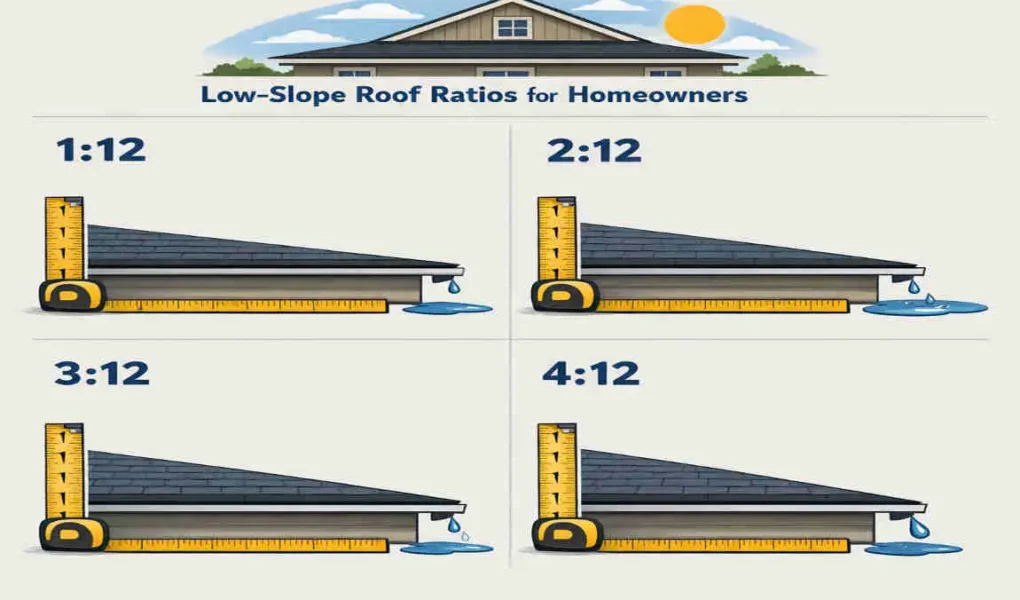
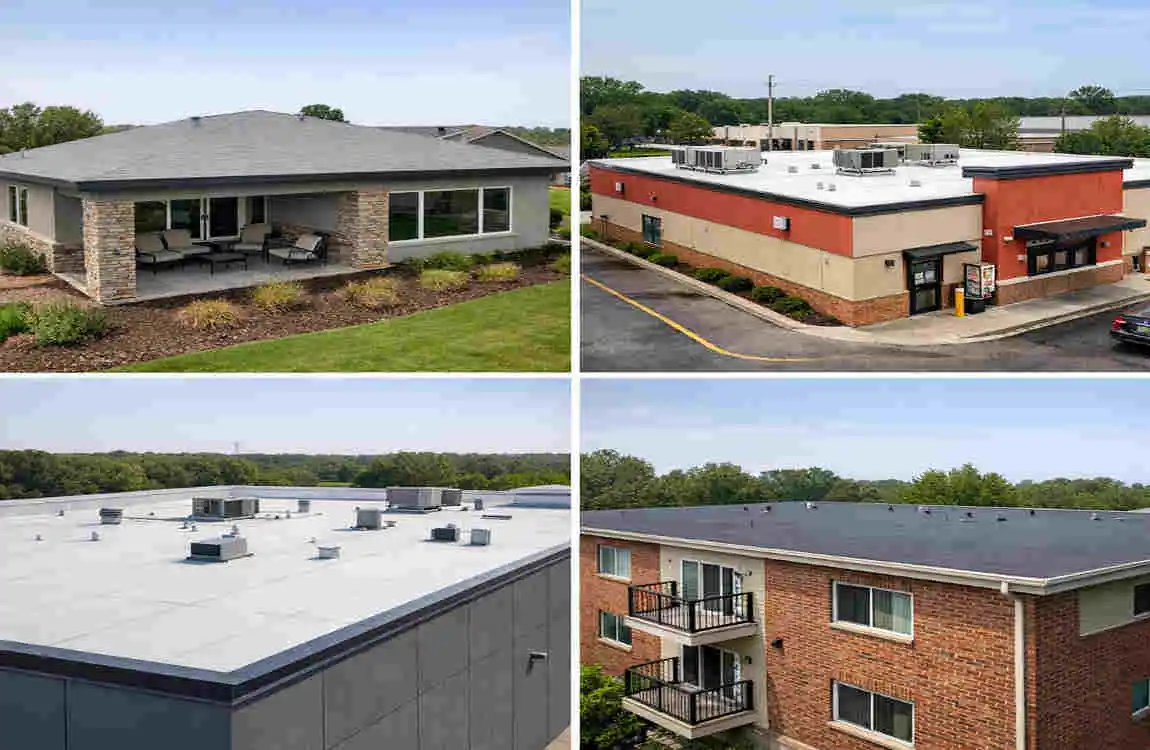
A low-slope roof usually has a pitch between 2:12 and 4:12. That means the roof rises 2 to 4 inches for every 12 inches of horizontal distance.
This is a gentle incline, which is why these roofs are sometimes mistaken for flat roofs. But in reality, they still need a slope to drain water properly.
Roof Ratio Made Simple
Roof ratio is just a simple way to describe the steepness of a roof. The first number shows the rise, and the second number is always 12 inches of run.
Here is a quick comparison:
Roof Ratio Rise Over 12 Inches Roof Type
1:12 1 inch Nearly flat
2:12 2 inches Low-slope
3:12 3 inches Low-slope
4:12 4 inches Low-slope
5:12 and above 5+ inches Conventional sloped roof
Low-Slope Roof vs Flat Roof
A low-slope roof and a flat roof are not the same.
A flat roof may look level, but it still needs a tiny slope so water can move toward drains. A low-slope roof has a more noticeable incline, even if it is still much flatter than a standard roof.
Why Low-Slope Roof Ratios Matter
Choosing the Right Roofing Material
Not every roofing material works well on a low-slope roof. Some materials need a steeper angle to shed water properly.
That is why knowing the roof ratio helps you choose the right product from the start.
Improving Water Drainage
Drainage is one of the biggest reasons roof slope matters. If the slope is too low for the material, water may sit on the surface instead of flowing away.
Standing water can lead to leaks, stains, and early roof damage.
Preventing Costly Problems
A roof with the wrong slope and wrong material combination can cause ongoing trouble. You may see leaks, soft spots, or seam damage much sooner than expected.
A correct roof ratio helps reduce those risks.
Helping With Budget and Planning
The slope can affect both installation and maintenance costs. Low-slope roofs often need special materials and careful sealing, which can change your budget.
Knowing the ratio early helps you plan better.
Best Roofing Materials for Low-Slope Roofs
Modified Bitumen
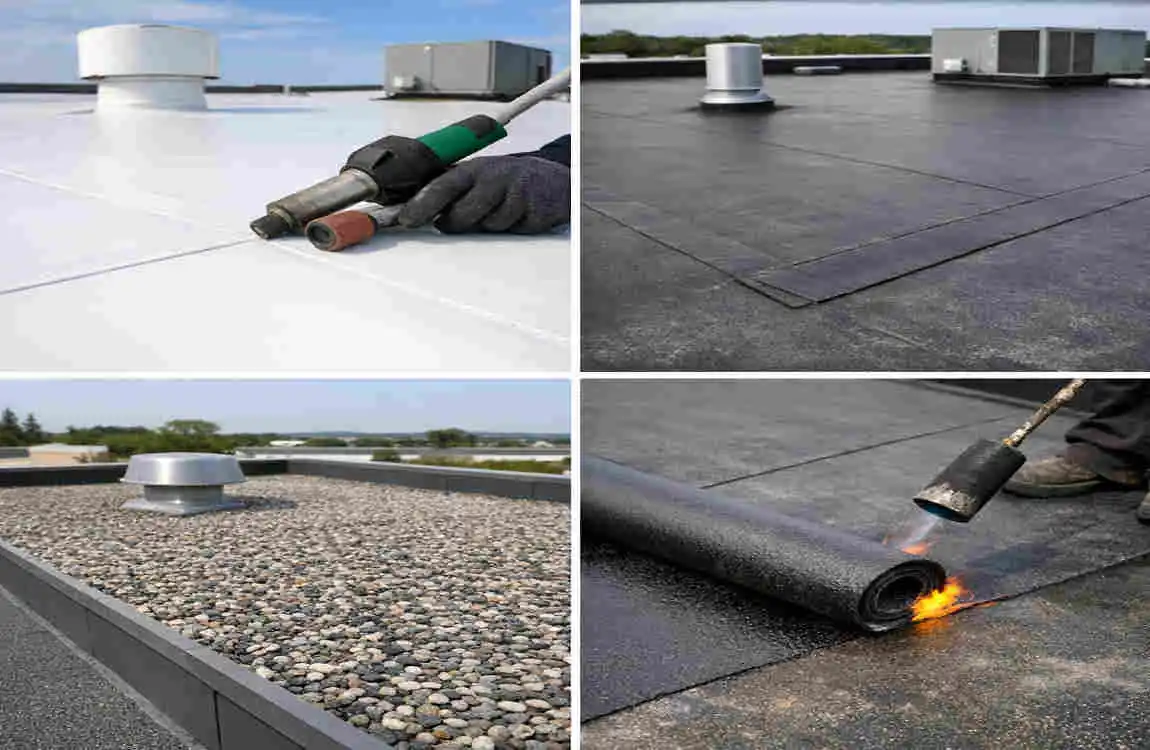
Modified bitumen is a strong and flexible roofing material often used on low-slope roofs. It works well because it handles water exposure better than many standard roofing products.
It is a common choice for homeowners who want durability and a proven system.
EPDM Rubber Roofing
EPDM is a rubber roofing membrane that is known for its simple design and weather resistance. It is often used on low-slope roofs because it performs well on gentle slopes.
It is especially useful when you want a dependable and practical option.
TPO Roofing Membranes
TPO roofing is another popular choice. It reflects heat well and can help with energy savings in warm climates.
It also works well on low-slope surfaces when installed correctly.
PVC Roofing Systems
PVC roofing is known for its strength and resistance to moisture and chemicals. It is often used in places where the roof may face more demanding conditions.
The right home can be a long-lasting solution.
Standing Seam Metal Roofing
Standing seam metal roofing can work on certain low-slope roofs, but only when the slope meets the right requirements. It should always be installed by someone who understands low-slope conditions.
What About Asphalt Shingles?
Traditional asphalt shingles are usually best for roofs with a slope of 4:12 or steeper. On lower slopes, they may not shed water well enough unless special underlayment requirements are met.
So if your roof is low-slope, shingles may not be the safest or smartest choice.
Advantages of Low-Slope Roofs
Modern Appearance
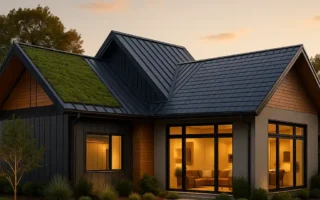
Low-slope roofs give homes a clean, modern look. Many homeowners like this simple style because it feels fresh and practical.
Lower Construction Costs
These roofs can sometimes cost less to build than steep roofs. The structure may be simpler, and materials may be easier to install in some cases.
Easier Access for Inspection
Because the roof is less steep, it is often easier to inspect and maintain. That can make routine checks simpler and safer.
Useful Rooftop Space
Low-slope roofs often provide usable space for solar panels, HVAC equipment, or other rooftop features.
Better for Certain Home Designs
If you like a modern or minimalist style, a low-slope roof may fit your home design very well.
Potential Drawbacks of Low-Slope Roofs
Slower Water Drainage
Since the slope is gentle, water moves more slowly off the roof. That means it needs good drainage design to work properly.
Higher Risk of Pooling
If drainage is poor, water may collect in low spots. This can lead to damage over time.
Special Materials Are Often Needed
Low-slope roofs usually need roofing materials made for this exact purpose. That can limit your options.
More Frequent Inspections
These roofs should be checked regularly because small issues can become bigger problems faster.
Maintenance Tips for Low-Slope Roof Ratios
Keep Drains and Gutters Clear
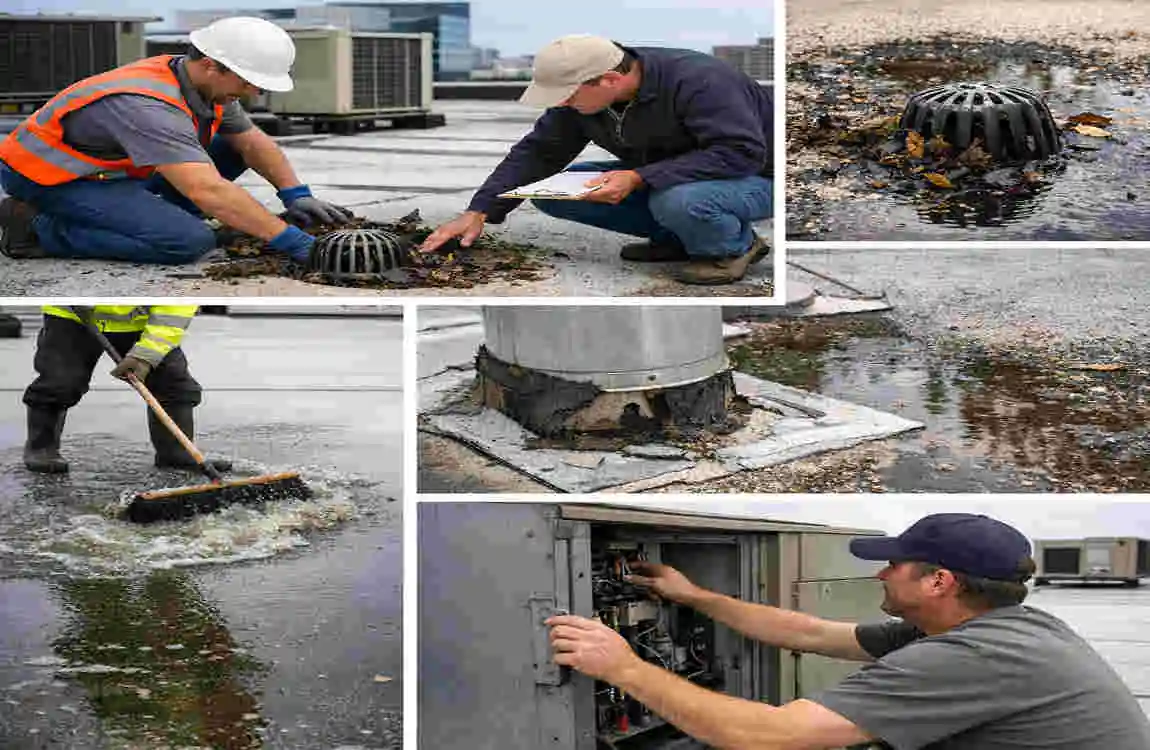
Leaves, dirt, and debris can block water flow. Clean gutters and drains often so water can move off the roof without trouble.
Inspect After Storms
Heavy rain, wind, or hail can damage roof seams or create weak spots. A quick inspection after bad weather is a smart habit.
Look for Cracks or Separated Seams
Low-slope roofs often use seams and membrane layers. If those areas crack or separate, water can get in.
Remove Debris Regularly
Branches, leaves, and trash can trap moisture. Cleaning the roof surface helps protect it.
Schedule Professional Checks
A roofing professional can spot small issues before they become costly repairs. Even occasional inspections can save money later.
Quick Guide: Choosing the Right Roof Material
Best Match by Roof Type
- 2:12 to 4:12: Use low-slope roofing systems like EPDM, TPO, PVC, or modified bitumen
- 4:12 and above: Asphalt shingles may be suitable
- Very low slopes: Special waterproof systems are often needed
Simple Rule to Remember
If the roof slope is low, choose a material designed for low-slope use. That one rule can prevent many future problems.
Frequently Asked Questions
What is considered a low-slope roof?
A low-slope roof usually has a pitch between 2:12 and 4:12, meaning it rises 2 to 4 inches for every 12 inches of horizontal distance.
Is a low-slope roof the same as a flat roof?
No. A flat roof still has a slight slope for drainage, while a low-slope roof has a more noticeable incline.
Can asphalt shingles be installed on a low-slope roof?
Usually, asphalt shingles work best on roofs with a 4:12 slope or greater. Lower slopes often need different roofing systems.
Which roofing material is best for low-slope roofs?
Common choices include EPDM, TPO, PVC, and modified bitumen.
Do low-slope roofs require more maintenance?
Yes. Because water drains more slowly, these roofs need regular inspections and cleaning to help prevent leaks and damage.
| Roof Ratio | Slope (Rise:Run) | Approx. Angle | Common Use | Best Roofing Materials |
|---|---|---|---|---|
| 1:12 | 1 inch rise per 12 inches | 4.8° | Nearly flat roofs | TPO, EPDM, PVC membranes |
| 2:12 | 2 inches per 12 inches | 9.5° | Modern homes, garages | Metal, modified bitumen, membrane roofing |
| 3:12 | 3 inches per 12 inches | 14° | Low-slope residential roofs | Asphalt shingles (with underlayment), metal roofing |
| 4:12 | 4 inches per 12 inches | 18.4° | Standard residential roofs | Asphalt shingles, tile, metal |
| Low-Slope Range | 1:12 to 3:12 | 5°–14° | Homes, porches, additions | Waterproof membrane or standing-seam metal |
| Drainage | Moderate | Varies | Requires proper flashing and gutters | Prevents water pooling |
| Maintenance | Regular inspections | — | Check seams, drains, and debris | Extends roof lifespan |
| Typical Lifespan | 20–50 years | — | Depends on material and maintenance | Membrane and metal last the longest |