
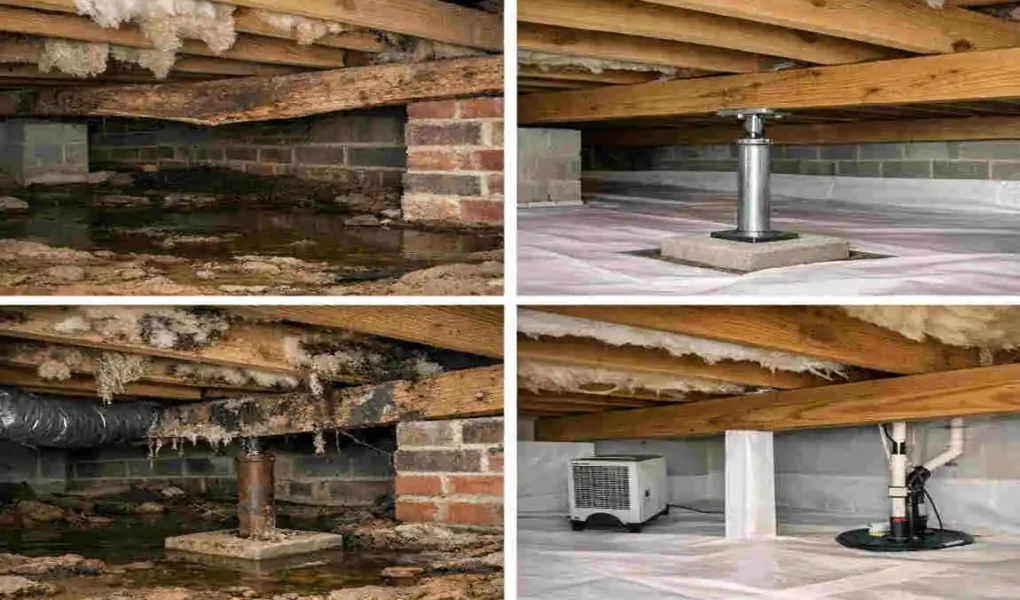
A sagging crawl space is not just an eyesore. It often means something underneath your home is weak, wet, damaged, or shifting. If you ignore it, the floors above may start to feel uneven, bouncy, or unsafe.
The good news is that this problem usually gives warning signs before it requires a major repair. If you understand the cause early, you can fix it before the damage spreads.
What Causes a Crawl Space to Sag?
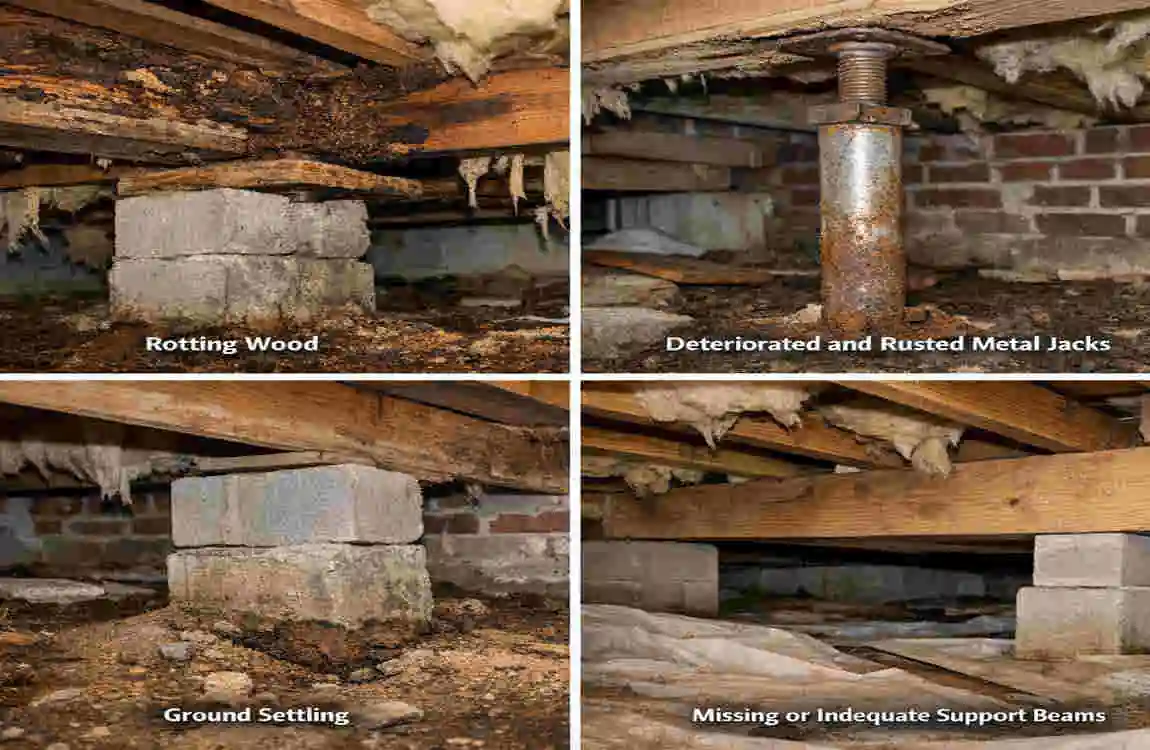
Moisture and Water Damage
One of the biggest causes is too much moisture. Water from leaks, poor drainage, or high humidity can slowly damage the wood in your crawl space.
When wood stays wet, it can rot, swell, warp, and weaken. Over time, that makes joists and beams lose strength. You may also notice musty smells, mold, or damp wood.
Weak or Damaged Floor Joists
Floor joists are the wooden supports that hold up the floor above the crawl space. If they are cracked, rotted, undersized, or damaged by pests, they may begin to sag.
This often shows up inside the luxury home as soft floors, dips, or bouncy spots.
Failing Support Posts
Many crawl spaces use support posts or piers to carry weight. If these posts shift, crack, sink, or break down, the beam above them can start to sag.
Even a small problem with one support post can affect the structure around it.
Foundation Settlement
Sometimes the issue starts with the foundation itself. If the ground under your home settles or moves, the crawl space supports may shift too.
This can lead to uneven floors, cracks in walls, and doors that stick.
Termites and Other Pests
Termites and other wood-destroying pests can quietly eat away at beams and joists. The damage may not be obvious at first, but it can become serious fast.
When wood loses too much strength, it can no longer properly support the luxury home‘s weight.
Common Signs You Should Not Ignore
Watch for these warning signs:
- Uneven or sloping floors
- Bouncy or soft spots
- Cracked or sagging wood
- Standing water or damp soil
- Mold, mildew, or musty smells
- Doors and windows that stick
- Cracks in walls or ceilings
- Leaning support posts
If you notice more than one of these, it is time to inspect the crawl space closely.
How to Fix a Sagging Crawl Space
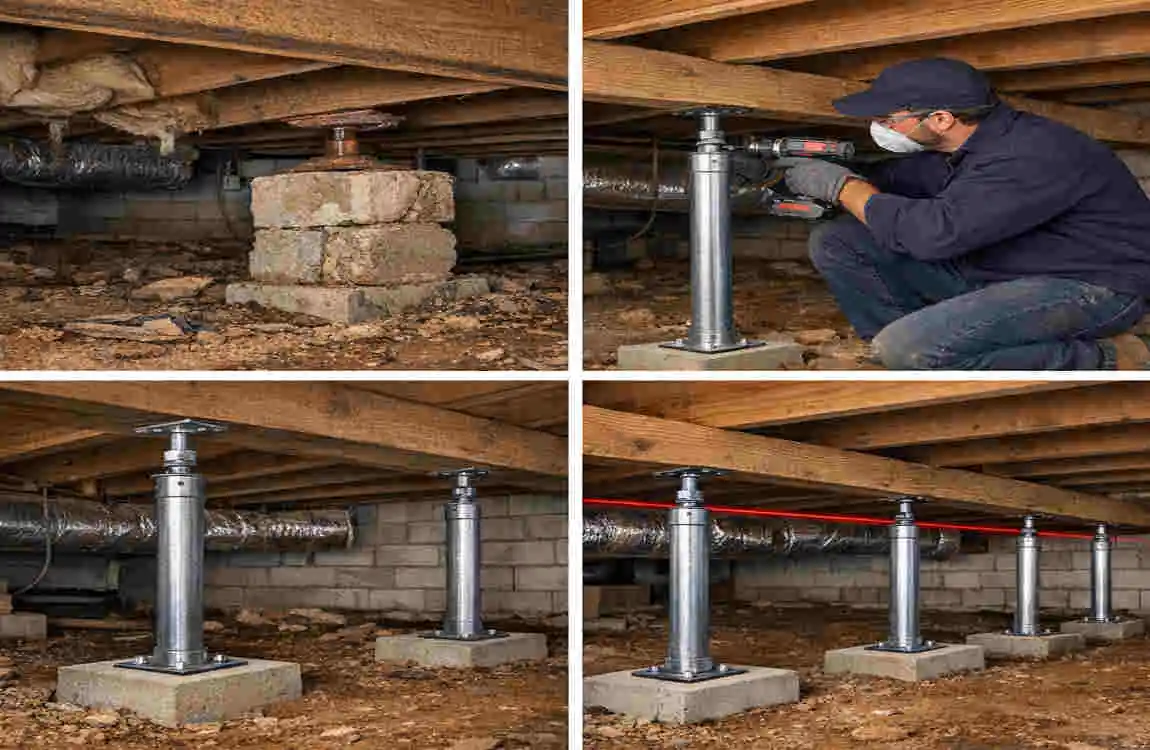
The right fix depends on the real cause. Do not just add support and hope for the best. If you miss the root problem, the sagging may come back.
Cause What It Means Common Fix
Moisture: Wood is becoming weak or rotting. Fix leaks, improve drainage, use a vapor barrier.
Damaged joists Floor supports are cracked or rotten Replace or reinforce joists.
Weak support posts Posts are shifting or failing Install stronger posts or piers.
Foundation settlement Home is moving or sinking Structural evaluation and foundation repair.
Termite damage Wood has been eaten away Pest treatment and wood repair.
Repair or Replace Damaged Wood
If joists or beams are badly rotted, they may need to be replaced. In some cases, a contractor can strengthen them by adding new lumber beside the old wood. This is often called sistering.
This helps restore strength without replacing every piece, but only if the damage is not too severe.
Install or Replace Support Posts
If the support posts are not strong enough, a professional may add new ones or replace the weak ones. These posts need to sit on solid footings, not soft soil.
If the base is not stable, the repair will not last.
Control Moisture
A dry crawl space is much less likely to sag. That means you may need to:
- Fix plumbing leaks
- Improve drainage around the house
- Reduce humidity
- Add a vapor barrier
- Use a dehumidifier if needed
Keeping water out is one of the best ways to protect the wood under your luxury home.
Check the Foundation
If the crawl space is sagging because the foundation moved, the foundation issue should be handled first. Otherwise, any repair may fail later.
A structural professional can tell you whether the luxury home needs stabilization or another type of repair.
Can You Fix It Yourself?
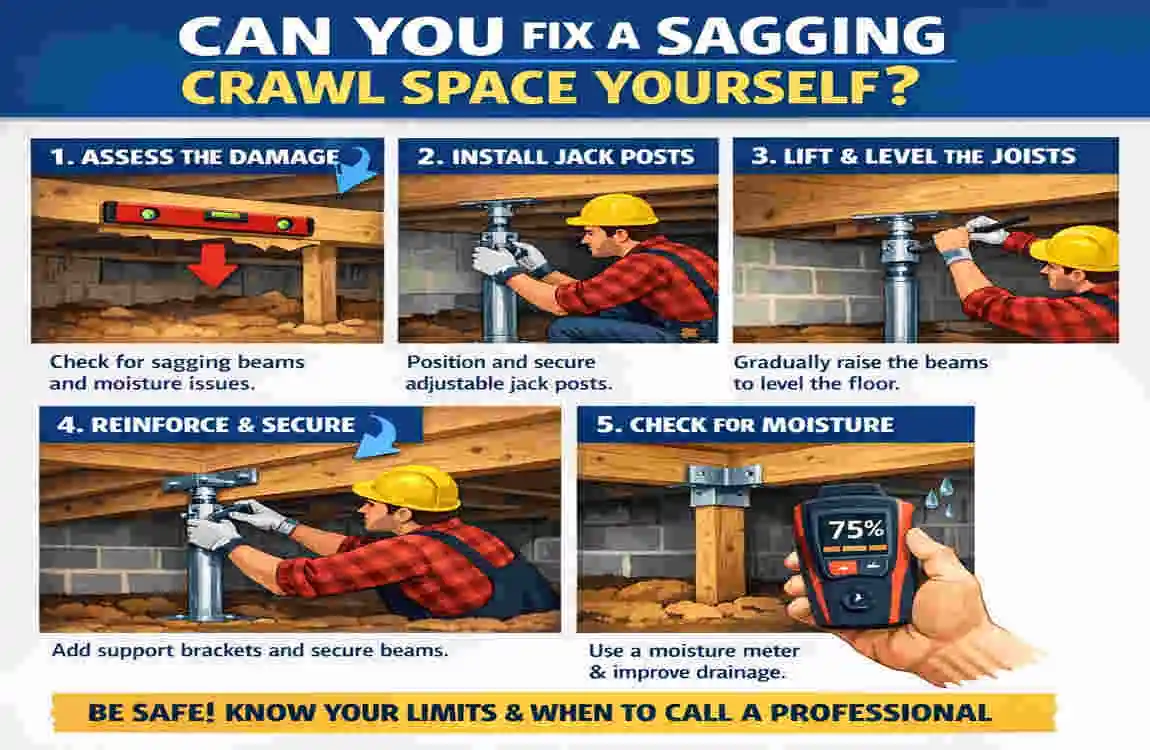
Small moisture problems may be manageable for a homeowner. For example, you might fix a simple leak or improve airflow.
But structural repairs are not a safe DIY job. Crawl spaces support the weight of your home. If a beam is lifted or a post is installed the wrong way, the damage can get worse.
If the sagging is visible or growing, it is best to call a professional.
Frequently Asked Questions
Why is my crawl space sagging?
The most common reasons are moisture, rotted wood, damaged joists, weak support posts, pests, or foundation settlement.
Is a sagging crawl space dangerous?
It can be. If the sagging is severe, it may compromise your home’s structure and make the floors above unsafe.
How do you support a sagging crawl space?
Repairs may include reinforcing joists, replacing damaged beams, installing stronger support posts, or fixing the foundation problem.
Can water cause a crawl space to sag?
Yes. Water and humidity can weaken wood over time, leading to sagging.
How can I prevent crawl space sagging?
Keep the area dry, well-drained, and pest-free, and check it regularly for damage or movement.
| Cause | What Happens | Common Fix |
|---|---|---|
| Moisture & Water Damage | Excess moisture weakens wood and supports. | Fix leaks, improve drainage, and replace damaged wood. |
| Weak or Damaged Joists | Floor joists may bend or sag under stress. | Reinforce or replace damaged joists. |
| Settling Foundation | Foundation movement can cause uneven support. | Repair or stabilize the foundation. |
| Poor Support Posts | Weak, shifting, or improperly placed posts cannot support the floor. | Replace or add properly sized support posts. |
| High Humidity | Long-term humidity can cause wood to swell, rot, or weaken. | Improve ventilation or install a crawl-space dehumidifier. |