
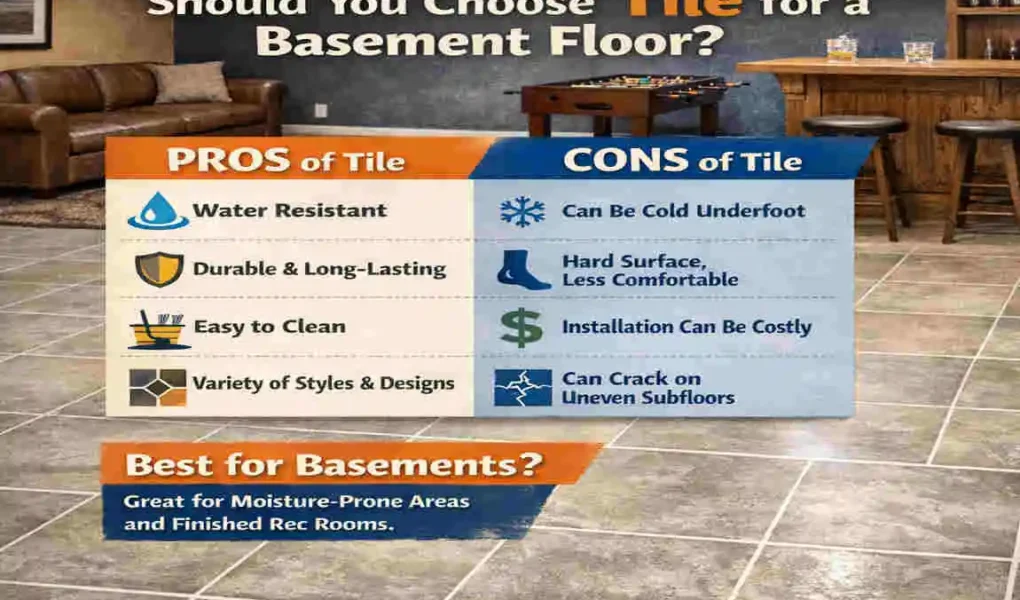
When you plan a basement remodel, flooring becomes one of the biggest decisions. Basements often deal with moisture, cold air, and concrete subfloors, so not every flooring type works well there. That is why many homeowners ask, is tile good for a basement floor?
The short answer is yes. Tile can be a smart choice because it is durable, easy to clean, and better at handling moisture than many other flooring options. Still, tile is not perfect for every basement. You need to think about comfort, installation, and the condition of the floor before you decide.
Is Tile Good for Basement Floor?
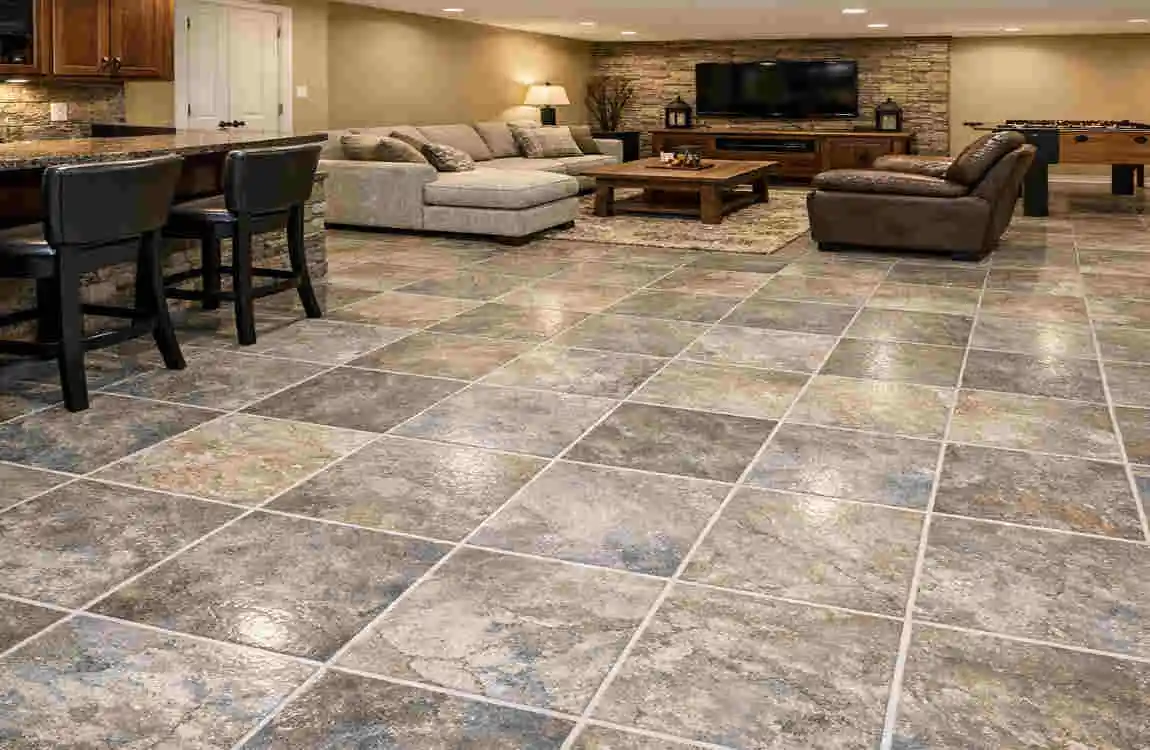
Yes, tile is one of the best choices for a basement floor.
It works well because it is moisture-resistant, strong, low-maintenance, and long-lasting. It also looks clean and polished, which makes a basement feel more like a finished living space.
If your basement has a history of dampness, tile can still work well as long as you prepare the floor properly. That part matters a lot.
Benefits of Tile Flooring in a Basement
Excellent Moisture Resistance
Basements often have humidity or minor water issues. Tile handles this better than many flooring materials. Porcelain and ceramic tiles do not absorb much water, which makes them a practical option.
Highly Durable
Tile can last for many years without wearing down quickly. It stands up well to foot traffic, furniture, and daily use. If you want flooring that lasts, tile is a strong choice.
Easy Maintenance
Tile is simple to clean. You can sweep, vacuum, or mop it without much effort. This makes it a good option for busy households.
Wide Variety of Designs
Tile comes in many colors, shapes, and finishes. You can choose a style that looks modern, classic, or even wood-like. This gives you a lot of flexibility.
Improves Home Value
A finished basement with attractive tile flooring can make your home feel more polished. Buyers often like floors that look durable and easy to care for.
Drawbacks of Basement Tile Flooring
Cold Surface
Tile can feel cold underfoot, especially in winter. If you live in a cooler area, this may be a concern. A rug or radiant heat can help.
Hard Underfoot
Tile is not soft. If you spend a lot of time standing in the basement, the surface may feel uncomfortable without mats or rugs.
Installation Cost
Tile can cost more to install than some other basement flooring types. The price depends on the tile, labor, and prep work needed.
Potential Cracking
If the concrete beneath shifts or develops cracks, the tile may crack too. That is why floor preparation is so important before installation.
Best Types of Tile for Basement Floors
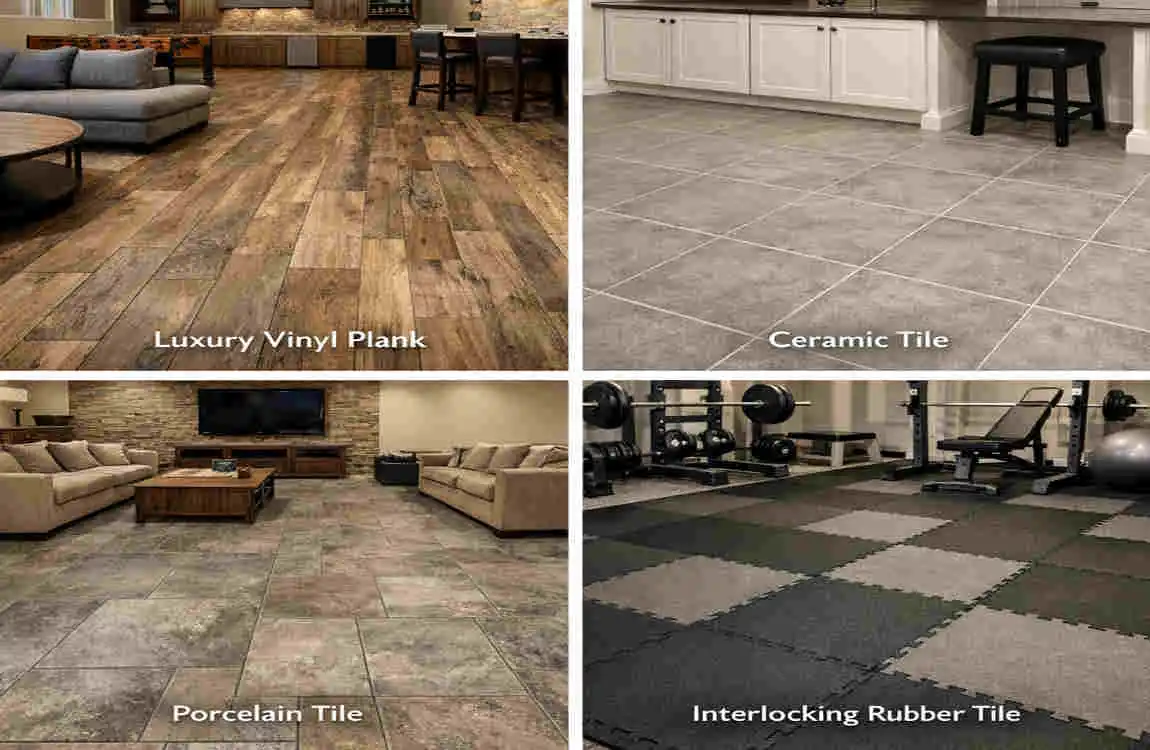
Porcelain Tile
Porcelain is usually the best choice for basement floors. It is dense, durable, and absorbs very little water. It also comes in many styles.
Ceramic Tile
Ceramic tile is another good option. It is often a little less expensive than porcelain and still performs well in basements.
Natural Stone Tile
Stone tile looks beautiful and adds a premium feel. However, it may need more sealing and care than porcelain or ceramic.
Wood-Look Tile
If you want the look of wood without water problems, wood-look tile is a smart choice. It gives the basement a warm style while still offering tile’s durability.
Tile vs Other Basement Flooring Options
Flooring TypeWater ResistantDurabilityComfortCost
Porcelain Tile Excellent High Medium $$–$$$
Ceramic Tile Very Good High Medium $$
Vinyl Plank Excellent Medium High $$
Laminate Poor Medium High $$
Epoxy Excellent High Low $$
Tile stands out for its strong mix of durability and moisture resistance. Vinyl may feel softer, but tile usually lasts longer.
How to Prepare a Basement Before Installing Tile
Check Moisture Levels
Before anything else, check for dampness. If the basement has water problems, fix them first. Tile works best in a dry, stable space.
Repair Cracks
Cracks in the concrete should be filled and repaired. A damaged subfloor can lead to tile problems later.
Level the Concrete Floor
Tile needs a flat surface. If the floor is uneven, the tiles may not bond properly or may crack over time.
Install a Waterproof Membrane
A waterproof layer can help protect the tile from moisture coming through the concrete. This is a smart step in many basements.
Tile Installation Tips
Choose the Right Adhesive
Use an adhesive made for basement conditions and tile type. The right bonding material helps the floor last longer.
Use Waterproof Grout
Waterproof grout helps protect the joints between tiles. It also makes cleaning easier.
Leave Expansion Joints
Tile floors need room to move slightly with temperature changes. Expansion joints help prevent cracking.
Seal Grout Regularly
If your tile setup requires sealing, do it on schedule. This helps protect against stains and moisture.
How Much Does Basement Tile Flooring Cost?
Material Costs
Tile prices vary a lot. Ceramic is usually more affordable, while porcelain and stone are often more expensive.
Installation Costs
Professional installation can raise the total price, especially if the floor needs leveling, crack repair, or moisture protection.
Factors That Affect Price
Several things change the final cost:
- Type of tile
- Size of the basement
- Condition of the concrete floor
- Labor rates in your area
- Extra materials like membrane or grout
If the basement needs extensive prep work, the project will cost more.
Is DIY Installation Worth It?
Pros of DIY
DIY can save money if you already have some tile experience. It may work well for a small basement with a simple layout.
When to Hire a Professional
Hire a professional if the floor has moisture issues, major cracks, or uneven spots. A pro can help avoid costly mistakes.
Maintenance Tips for Basement Tile Floors
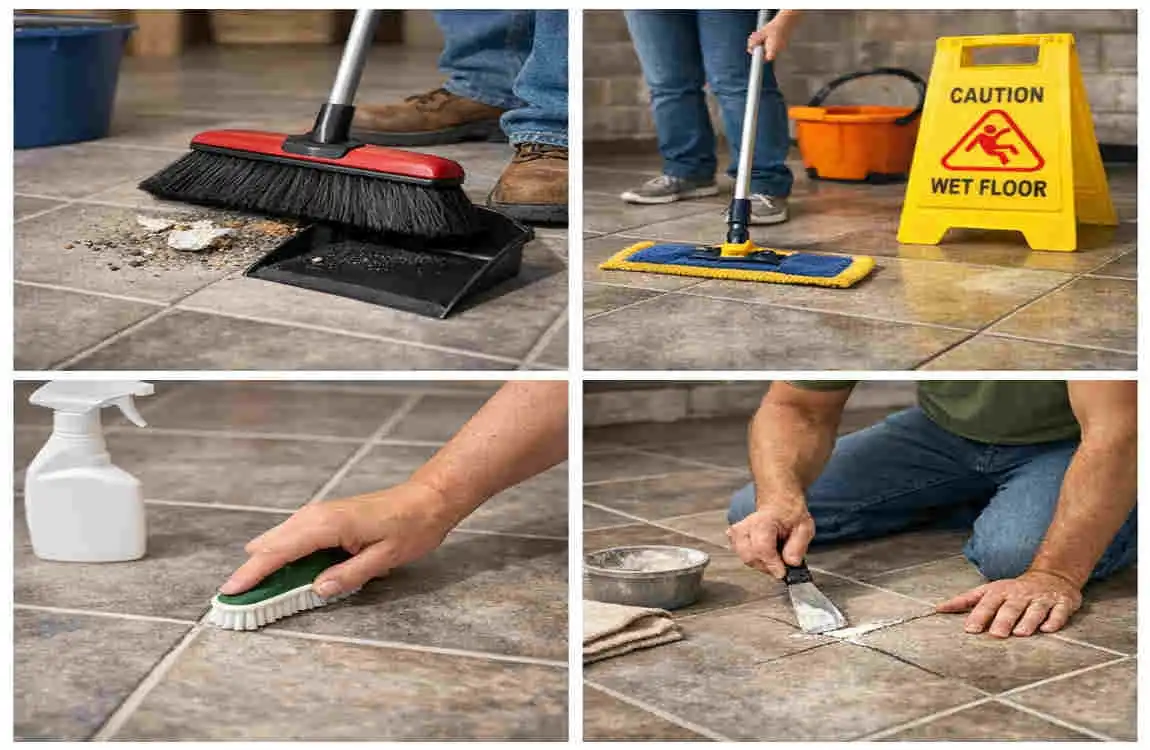
To keep your basement tile looking good, follow these simple steps:
- Sweep regularly
- Mop with a mild cleaner
- Clean grout lines
- Repair damaged tiles quickly
- Reseal grout when needed
These small habits help the floor stay clean and last longer.
Common Mistakes to Avoid
Many basement flooring problems happen because of a few common mistakes. Try to avoid these:
- Ignoring moisture problems
- Using tile that is not suited for basements
- Skipping floor leveling
- Choosing slippery finishes
- Using the wrong grout
A little planning goes a long way.
Frequently Asked Questions
Is tile good for a basement floor?
Yes. Tile is moisture-resistant, durable, and suitable for most basement spaces.
What type of tile is best for a basement?
Porcelain tile is usually the best choice because it absorbs very little moisture and lasts a long time.
Does tile make a basement colder?
Yes, tile can feel cold. Rugs or heated flooring can help solve that.
Can tile be installed directly on a concrete basement floor?
Yes, but the concrete must be clean, level, dry, and stable first.
Is tile better than vinyl flooring for a basement?
Tile is usually more durable, while vinyl feels warmer and softer. The better option depends on your needs.
How long does basement tile flooring last?
With proper installation and care, tile can last 30 to 50 years or more.
| Topic | Information |
|---|---|
| Is Tile a Good Basement Flooring? | Yes, tile is one of the best flooring choices for basements due to its durability and moisture resistance. |
| Main Benefits | Water-resistant, long-lasting, easy to clean, mold-resistant, and available in many styles. |
| Potential Drawbacks | Can feel cold and hard underfoot; installation costs are higher than some flooring options. |
| Best Tile Types | Porcelain and ceramic tiles are the most popular choices for basement floors. |
| Moisture Resistance | Excellent when installed over a properly prepared and waterproofed subfloor. |
| Comfort Level | Can be improved by adding radiant floor heating or area rugs. |
| Maintenance | Sweep regularly and mop with a mild cleaner; reseal grout periodically if needed. |