House carpet beetles are small pests, but they can cause a lot of frustration in a home. They often go unnoticed at first, then slowly damage carpets, clothes, upholstery, and stored fabrics. The problem usually starts with the larvae, which feed on natural fibers and hide in quiet, dusty places.
| Method | Description | Effectiveness | |
|---|---|---|---|
| Deep Vacuuming | Vacuum carpets, furniture, corners, and hidden areas thoroughly | Removes eggs, larvae, and adult beetles | |
| Hot Washing | Wash clothes, bedding, and fabrics in hot water | Kills larvae and eggs instantly | |
| Heat Drying | Use high-heat dryer cycles for infested items | Eliminates remaining pests | |
| Freezing Items | Place delicate items in freezer for 72+ hours | Kills all life stages safely | |
| Insecticide Spray | Apply approved carpet beetle insecticides | Fast chemical control for severe infestations |
Many homeowners only notice the issue after finding holes in clothing, shed skins, or tiny beetles near windows. By that point, the beetles may already be nesting in hidden areas. That is why early action matters.
What Are House Carpet Beetles?
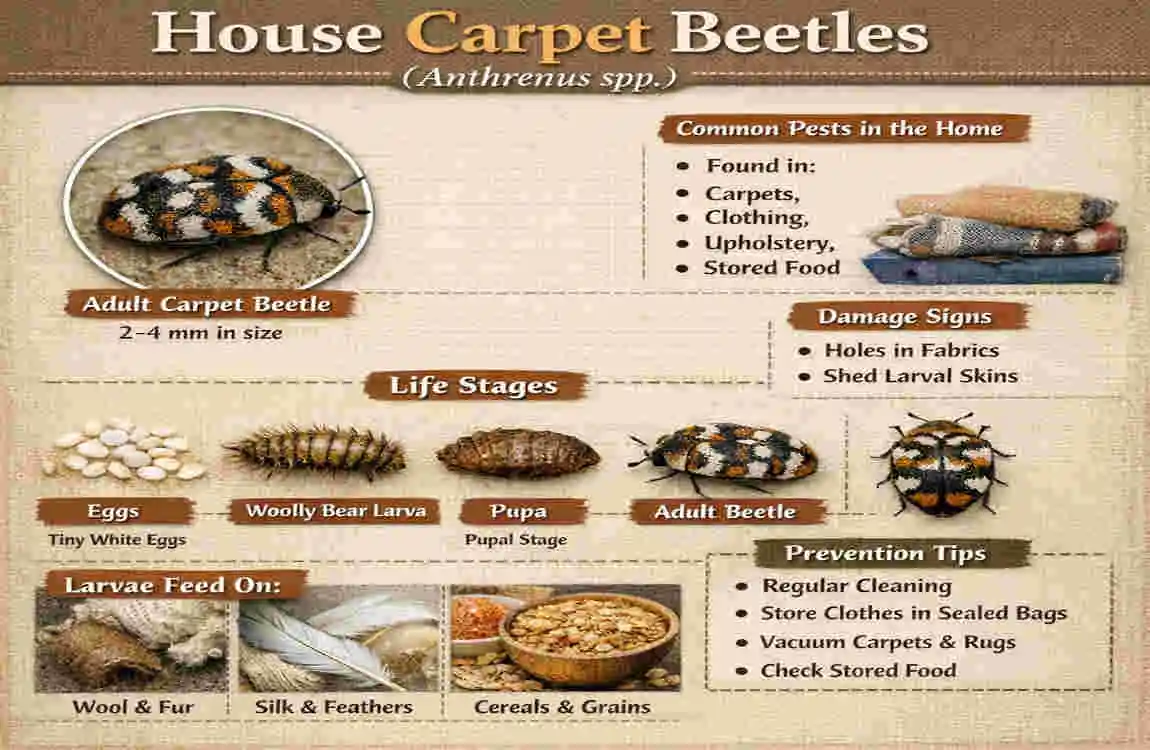
House carpet beetles are tiny insects that often live indoors and feed on natural materials. They are usually round or oval, and adults may be black, brown, or patterned, depending on the type.
The most common types found in homes include:
- Black carpet beetle
- Varied carpet beetle
- Furniture carpet beetle
The life cycle goes from egg to larva, then pupa, and finally adult. The larval stage causes the most damage because the larvae eat wool, silk, fur, feathers, and other natural fibers.
Inside the home, they often hide in carpets, closets, air vents, baseboards, and furniture seams. Since they prefer dark and quiet places, they can spread before you realize they are there.
Causes of Carpet Beetle Infestation in Homes
Carpet beetles usually enter homes through open doors, windows, or cracks. They may also come inside with clothing, flowers, second-hand furniture, or stored items.
Common causes include:
- Open windows and small entry points
- Used furniture or clothing that already has eggs or larvae
- Dust, lint, and pet hair buildup
- Bird nests near attics, vents, or eaves
- Poor cleaning in hidden corners
- Seasonal changes that push beetles indoors
A home with soft fabrics, food crumbs, and dust gives them easy hiding spots. If bird nests are near the house, adult beetles may also move indoors after feeding outdoors.
Signs of House Carpet Beetle Infestation
You may not see the insects right away, but their damage usually leaves clear signs. Small holes in clothes, rugs, and blankets are often one of the first clues.
Watch for these signs:
- Irregular holes in carpets, clothing, or upholstery
- Shed larval skins
- Tiny dark droppings
- Adult beetles near windows or light fixtures
- Damage to wool, silk, cotton, and other natural fibers
- Skin irritation or mild allergic reactions in some people
If you notice these signs together, it often means the infestation is active. In that case, you should inspect both visible and hidden areas of the home.
Where Carpet Beetles Hide in Your Home
Carpet beetles like dark, quiet places where they can feed and grow without being disturbed. They often stay out of sight for long periods.
Common hiding places include:
- Under furniture and rugs
- Closets and storage boxes
- Air ducts and vents
- Attics with bird nests
- Behind baseboards and in corners
- Upholstered furniture seams
Because these spots are easy to overlook, you should check them carefully during cleanup. A quick surface cleaning is usually not enough.
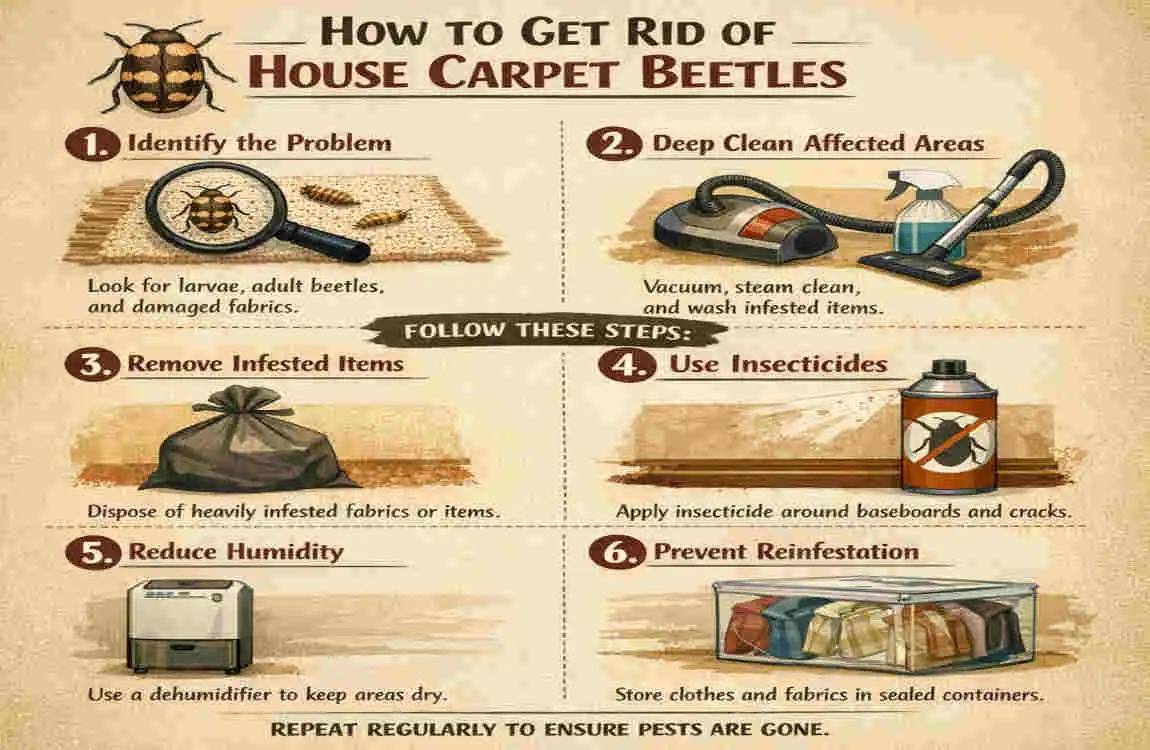
Step-by-Step Guide: How to Get Rid of House Carpet Beetles
Deep Cleaning the Infested Area
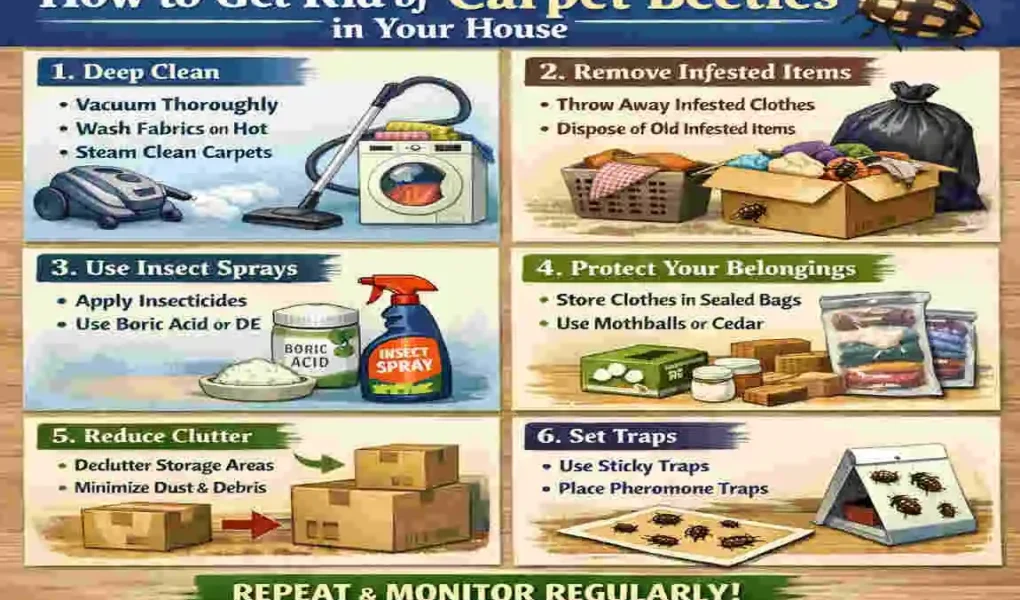
Start by vacuuming every affected area very carefully. Focus on carpets, rug edges, furniture seams, baseboards, closets, and corners. A vacuum with a HEPA filter is especially useful because it helps trap tiny eggs, larvae, and dust.
After vacuuming, empty the vacuum bag or canister right away. Seal the waste in a plastic bag and throw it out outside the home. This helps prevent beetles from getting back inside.
Washing and Heat Treatment
Wash clothing, bedding, and washable fabrics in hot water when possible. Then dry them on a hot setting. Heat is one of the easiest ways to kill larvae and eggs.
For delicate items that cannot be washed, place them in a dryer-safe bag or use another safe method recommended for the fabric. Always check the care label before using heat.
Freezing Infested Items
Some delicate items can be treated by freezing them. This works well for objects that cannot handle heat or water. Seal the item in a plastic bag and place it in the freezer long enough to affect the eggs and larvae.
This method takes patience, but it can protect valuable fabrics and keepsakes without damaging them.
Using Insecticides (Chemical Control)
If the infestation is serious, insecticides may help. Look for products made for carpet beetles or indoor crawling insects. These are often sprays or powders used in cracks, edges, and hidden spaces.
Use them carefully and follow the label instructions exactly. Keep children and pets away from treated areas until it is safe. Never apply chemicals to blankets, clothing, or items that touch skin unless the product clearly allows it.
Natural Remedies for Carpet Beetles
If you prefer a gentler approach, natural methods can help reduce beetles and support cleanup.
Some common options include:
- Diatomaceous earth for dry cracks and hidden spots
- Vinegar spray for wiping surfaces
- Essential oils such as lavender, peppermint, or eucalyptus
These methods may not solve a severe infestation on their own, but they can support regular cleaning and prevention. Always test sprays on a small area first to avoid damage.
Professional Pest Control Treatment
If the infestation keeps recurring or spreads to several rooms, it may be time to call a pest control expert. Professionals can identify hidden sources, treat affected areas more thoroughly, and recommend a better long-term plan.
This is often the best choice when the problem is large, hard to locate, or connected to bird nests, vents, or wall spaces.
How to Prevent House Carpet Beetles from Returning
Prevention is just as important as removal. Once you clean up the infestation, you need to make the home less inviting.
A simple prevention plan can include:
- Vacuum carpets, furniture, and corners regularly
- Clean behind beds, sofas, and appliances
- Store clothes in sealed containers
- Use natural repellents or mothballs where safe and appropriate
- Install or repair window screens
- Seal cracks and gaps around doors and windows
- Reduce pet hair and lint buildup
- Remove bird nests near the house
You should also check closets and storage areas from time to time. A few minutes of regular cleaning can stop a new infestation before it starts.
Common Mistakes People Make When Dealing with Carpet Beetles
Many people treat only the adult beetles they can see, but the larvae are usually the real problem. If you ignore hidden spots, the infestation may continue.
Other common mistakes include:
- Skipping corners, baseboards, and furniture seams
- Using the wrong cleaner or product
- Stopping treatment too early
- Forgetting upholstered furniture and stored clothing
A complete cleanup works much better than a quick surface fix. If you miss the hiding places, carpet beetles may return.
Natural vs Chemical Treatment: Which Is Better?
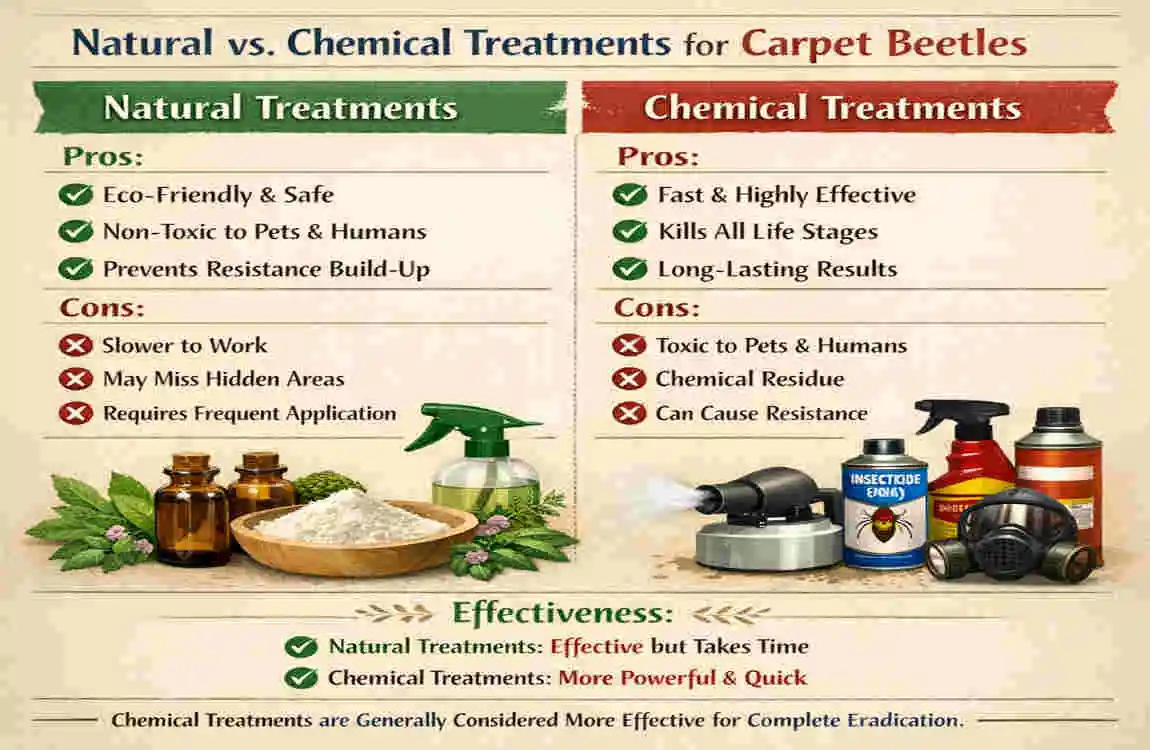
Both natural and chemical treatments can work, but they serve different needs. Natural methods are often safer for daily use and small problems. Chemical treatment can be more effective when the infestation is more severe.
Method Best For Pros Limits
Natural treatment Light infestation Safer, simpler, low odor May work slowly.
Chemical treatment Heavy infestation Stronger and faster Needs careful use
For most cleaning homes, the best choice is a mix of deep cleaning, heat, and prevention. If the problem is severe, professional treatment may give faster and more complete results.
Frequently Asked Questions (FAQ)
What attracts house carpet beetles?
They are attracted to natural fibers, dust, lint, pet hair, bird nests, and stored fabrics. Homes with hidden debris and dark corners are especially appealing to them.
Are carpet beetles harmful to humans?
They do not bite like some pests, but their hairs can cause skin irritation or allergy-like reactions in some people. Their main harm is the damage they cause to fabrics.
Can carpet beetles go away on their own?
Usually, no. If they have a food source and hiding spots, they can stay active for a long time. Cleaning and treatment are usually needed.
How long does it take to eliminate an infestation?
It depends on how bad the problem is and how quickly you act. A small infestation may improve fast with deep cleaning, while a larger one may take longer and need repeat treatment.
Do carpet beetles live in beds?
They can hide in bedding, mattresses, and bedroom furniture if there is lint, hair, or natural fabric nearby. They are more likely to stay around edges, seams, and less disturbed areas.
What is the fastest way to kill carpet beetles?
Vacuuming, heat treatment, and targeted insecticides are often the fastest methods. For delicate items, freezing can also help. The best results come from combining methods.