
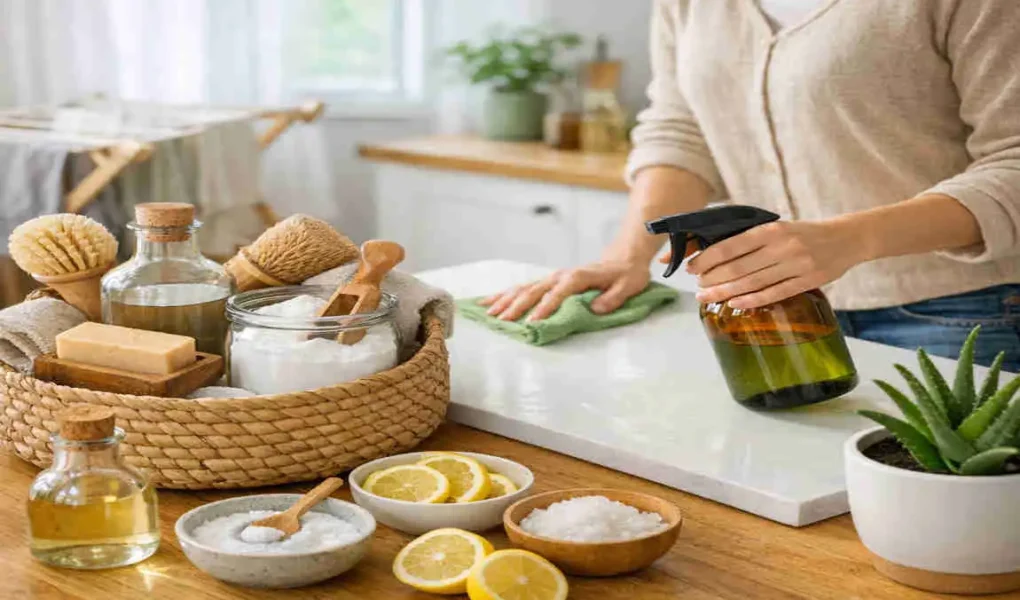
Keeping a home clean does not have to mean using harsh chemicals or creating extra waste. In fact, eco-friendly cleaning can be simple, effective, and easier on your family and the environment.
If you want a cleaner home with fewer strong odors and less plastic waste, a few small changes can make a big difference. Let’s look at some easy ways to clean more sustainably without complicating your routine.
Why Choose Eco-Friendly Cleaning?
A smarter way to clean
Traditional cleaners often contain harsh chemicals and come in single-use plastic bottles. They may work well, but they are not always the best choice for everyday cleaning.
Eco-friendly cleaning uses reusable tools, gentler ingredients, and low-waste products whenever possible. This can help you keep your home fresh while creating less trash.
Better for your home and air
Many people also like eco-friendly cleaning because it can reduce strong chemical smells indoors. That matters, especially if you have kids, pets, or anyone sensitive to strong scents.
It is a practical way to keep your space clean while feeling a little better about the products you use.
Simple Eco-Friendly Cleaning Tips
Use Reusable Cleaning Cloths
One of the easiest swaps is replacing paper towels with washable microfiber or cotton cloths. These cloths can be used again and again, which helps reduce waste.
You can keep different cloths for different rooms. For example, use one set for the kitchen, another for the bathroom, and another for general dusting. That keeps things cleaner and more organized.
Try Simple Natural Ingredients
Some everyday ingredients can handle many common cleaning tasks. White vinegar, baking soda, and mild soap are useful for many basic household tasks.
Baking soda can help with odors and light grime. Diluted vinegar can help with mineral spots on some surfaces. But be careful—vinegar should not be used on natural stone such as marble or granite, as it can damage the finish.
Also, never mix vinegar with bleach or other chemical cleaners. That can create dangerous fumes.
Choose Concentrated or Refillable Products
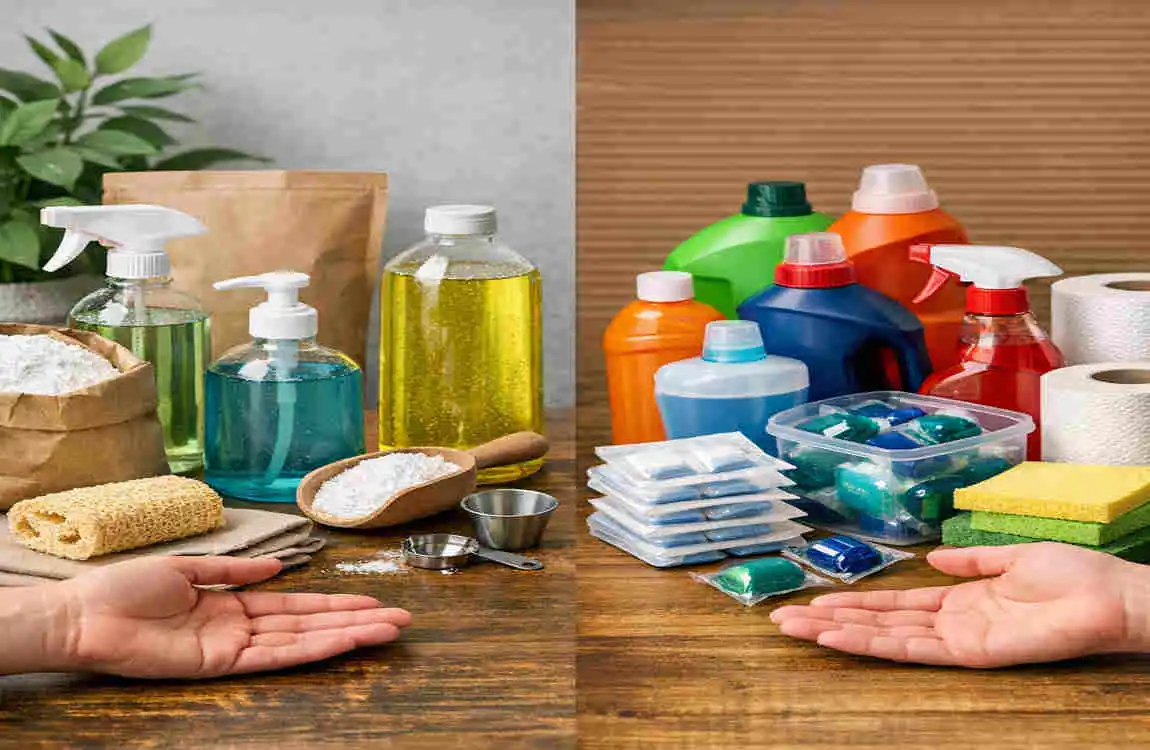
When you need to buy cleaning products, look for refillable bottles, concentrated formulas, or minimal packaging. These options often reduce plastic use and cut down on waste from shipping and storage.
They may also last longer, which can save money over time.
Clean Regularly
A simple routine can help you avoid bigger messes later. If you dust, wipe, and vacuum often, dirt does not have time to build up.
That means you may need fewer strong cleaners in the long run. Focus on kitchen counters, bathroom surfaces, floors, and door handles since these areas get touched often.
Reduce Water Waste
Eco-friendly cleaning is not only about products. It is also about using water wisely.
Try not to leave the tap running while wiping surfaces or rinsing cloths. Use a bucket when it makes sense, and only use the water you really need.
Small changes like this can save water without making cleaning harder.
Improve Indoor Air Naturally

Instead of using lots of air fresheners, try to keep your home well ventilated. Open windows when the weather allows so fresh air can move through the space.
This can help reduce stale smells without adding more aerosol sprays or extra packaging to your home.
Eco-Friendly Cleaning Checklist
Cleaning TaskGreener Choice
Dusting Reusable microfiber cloth
Glass cleaning Refillable cleaner
Odor control Baking soda
General wiping Washable cotton cloth
Floor cleaning Reusable mop
Product storage Refillable containers
Water use Clean with only what you need
A Few Simple Habits to Make It Easier
Build a small routine.
You do not need to change everything at once. Start with one or two habits, like using reusable cloths or buying refillable cleaners.
Once those feel normal, add another small change. Over time, your cleaning routine becomes more sustainable without feeling like extra work.
Keep products simple
Many cleaning tasks do not require a long list of ingredients. In many cases, less is more. Simple products are easier to store, easier to use, and often easier to trust.
That can make cleaning feel less stressful and more manageable.
Frequently Asked Questions
Is eco-friendly cleaning effective?
Yes. Eco-friendly cleaning methods can work well for dust, dirt, odors, and everyday messes when you use the right product for the job.
What is the best natural cleaner for a home?
There is no single best cleaner for every surface. Mild soap, baking soda, and diluted vinegar can all be useful, depending on the task.
How can I make cleaning more sustainable?
Start with small changes. Use reusable cloths, buy refillable products, reduce water waste, and avoid disposable cleaning items when possible.
Is vinegar safe for all surfaces?
No. Vinegar is acidic and can damage marble, limestone, and other natural stone surfaces. Always check first before using it.
| Cleaning Tip | Eco-Friendly Approach | Main Benefit |
|---|---|---|
| Use Natural Cleaners | Try vinegar, baking soda, and lemon where appropriate | Reduces harsh chemicals |
| Choose Reusable Cloths | Use washable microfiber or cotton cloths | Cuts household waste |
| Save Water | Use only the water needed for each task | Conserves water |
| Avoid Single-Use Products | Replace disposable wipes with reusable alternatives | Reduces plastic waste |
| Pick Eco-Friendly Products | Choose biodegradable, plant-based cleaners | Supports a greener home |
| Improve Ventilation | Open windows while cleaning when practical | Helps freshen indoor air |