The short answer is yes, it can — especially when a nest is built in hidden places like lofts, wall cavities, roof spaces, or behind eaves. At first, a nest may seem harmless. But if it is left alone, it can grow quickly and become a bigger problem for your home.
The good news is that most wasp problems can be prevented with a few simple habits. If you know where wasps like to nest and what attracts them, you can take action early and protect your house before damage starts.
How Wasp Nests Cause Damage
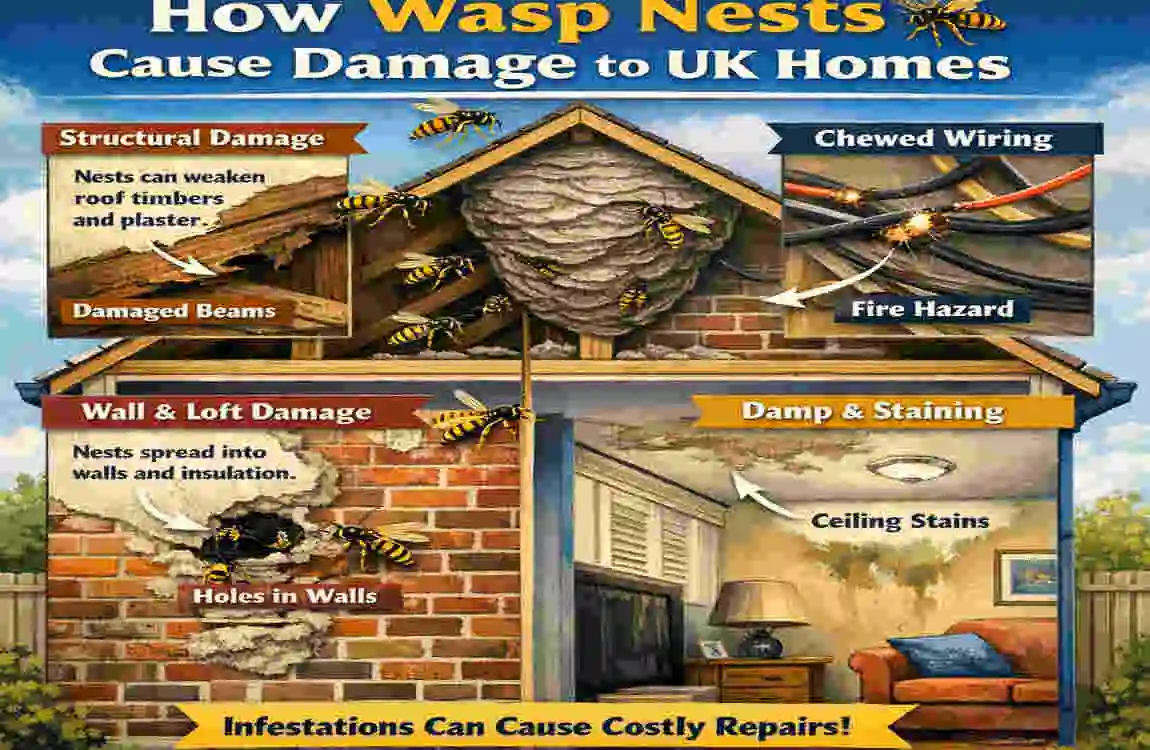
They can put pressure on weak areas.
Large nests can put strain on vulnerable parts of the luxury home, especially in lofts, roof spaces, or wall voids. This is more likely when the nest grows over time and sits in one place for weeks or months.
They may affect insulation and hidden spaces.
Wasps often build nests in places you rarely see, such as insulation, attic corners, and empty wall gaps. Once inside these areas, they can make repairs more annoying and expensive later on.
They can lead to bigger repair costs.
If a nest is ignored, the damage is often not just from the wasps themselves. You may end up dealing with entry holes, disturbed insulation, and stained or damaged hidden areas.
They can create safety risks.
Wasps can become defensive if their nest is disturbed. That makes DIY removal risky, especially if the nest is large or in a tight space near your home.
Common Places Wasps Nest Around the Home
Wasps like places that are warm, protected, and quiet. Around a UK house, that often means:
- Roof eaves and soffits
- Lofts and attics
- Wall cavities and small cracks
- Sheds and garages
- Garden buildings
- Around vents, windows, and roof openings
These areas shelter wasps from wind and rain, which is exactly what they look for when building a nest.
Signs You May Have a Wasp Nest
If you spot a problem early, you can often deal with it before it gets worse.
Watch for these signs:
- More wasps were flying around one area
- Buzzing sounds inside walls or ceilings
- Wasps are entering through small gaps
- Visible nest-building near rooflines or sheds
- Higher wasp activity in spring and summer
If you see the same area being visited again and again, that is often a sign that a nest is nearby.
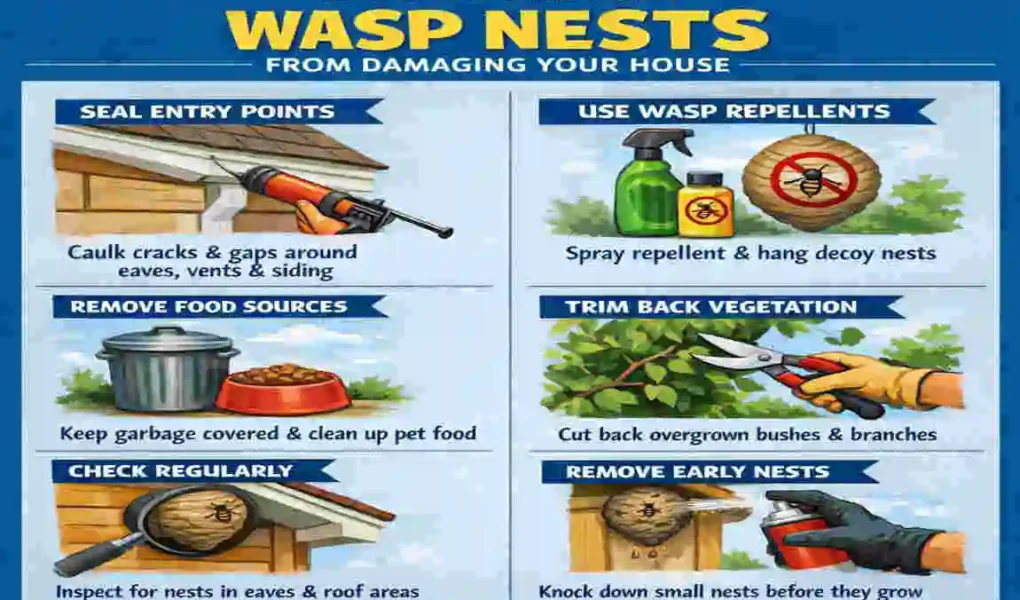
How to Prevent Wasp Nests from Damaging Your House
The best way to protect your home is to make it less attractive to wasps in the first place.
Seal cracks and gaps.
Check around eaves, siding, windows, doors, and roof edges. Even small gaps can give wasps a way inside. Sealing them early is one of the simplest ways to reduce nesting risk.
Fit or repair screens.
Make sure vents and openings are protected with good screens. This helps block wasps from entering lofts, roof spaces, and other hidden areas.
Keep bins closed
Open rubbish bins attract all kinds of pests, including wasps. Keep lids shut and clean bins regularly, especially in warmer months.
Clear outdoor food sources
Wasps are drawn to sweet smells and food scraps. Try to avoid leaving:
- Pet food outside
- Fruit falling on the ground
- Dirty plates or drink cans outdoors
Trim nearby plants
Bushes, trees, and climbing plants close to the house can create quiet nesting spots. Keeping them trimmed back makes your home less inviting.
Seasonal Prevention Tips for UK Homeowners
Wasps are most active in the warmer months, so timing matters.
Spring is the best time to inspect
Look around your home in spring before nests get larger. This is when early activity is easier to spot and easier to stop.
Check again after bad weather.
Strong winds and storms can open new gaps in roofs, walls, and soffits. A quick check after bad weather can save you trouble later.
Focus on high-risk areas.
Pay special attention to:
- Rooflines
- Loft access points
- Soffits
- Garden sheds
- Vent openings
These are the places where wasps most often settle.
When to Call a Professional
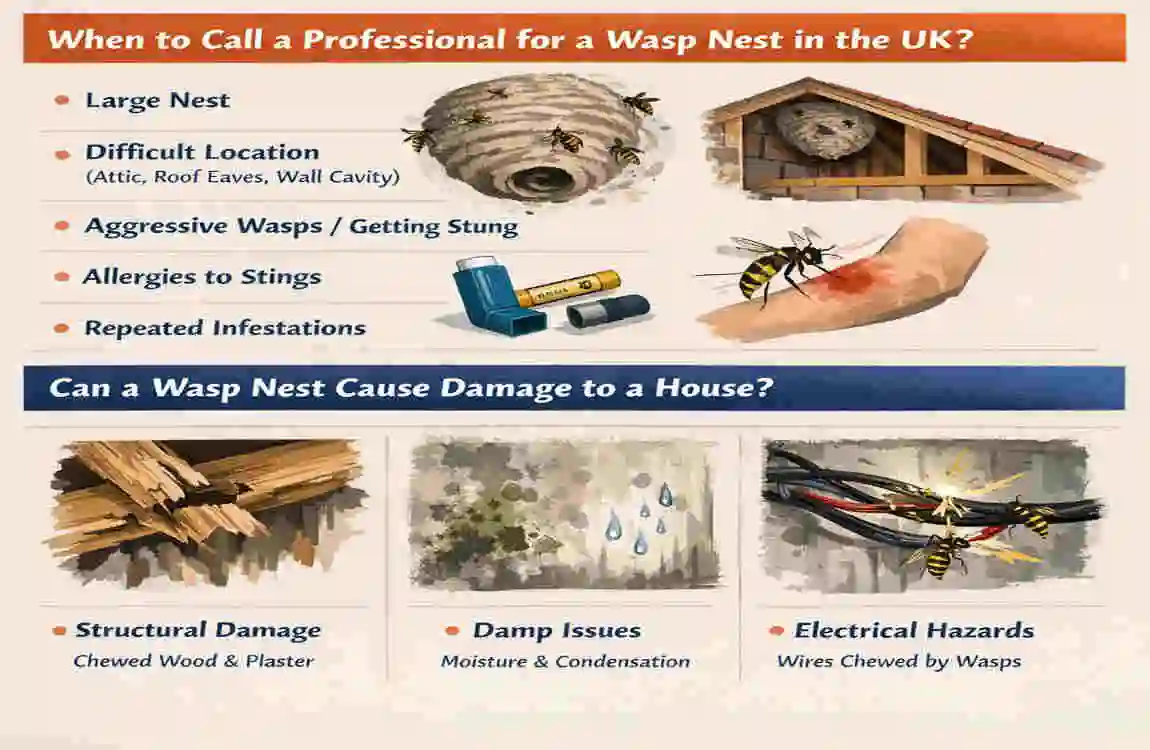
Sometimes the safest choice is to bring in a professional.
Call for help if:
- The nest is large
- The nest is inside walls, lofts, or roof spaces
- You notice aggressive wasp activity
- Anyone in the home has a sting allergy
- You think the nest may be affecting the structure of the house
A professional can remove the nest more safely and help you avoid making the problem worse.
Quick Prevention Checklist
Area to Check: What to Look For: Why It Matters
Roof eaves, gaps, holes, nest activity, common entry point for wasps
Loft space, buzzing sounds, visible nest signs. Hidden nests can grow fast
Windows and vents, broken screens, open edges, easy access for nesting
Garden area: fallen fruit, open bins, shelter spots. These attract wasps
Sheds and garages, cracks, corners, roof openings, quiet places for nest building
FAQ
Can a wasp nest damage a house in the UK?
Yes. A wasp nest can damage a house in the UK if it is hidden in structural spaces and left for too long.
Do wasps chew through wood or insulation?
Wasps do not usually chew through wood as some pests do, but they can still build in damaged areas and disturb insulation or hidden spaces.
What should I do if I find a nest in my loft?
Avoid disturbing it. Keep away from the area and call a professional if the nest is active or hard to reach.
How do I stop wasps from coming back next year?
Seal gaps, clean outdoor areas, close bins, and regularly inspect rooflines and vents.
Are wasp nests more common in summer?
Yes, wasp activity usually increases in warmer months, which is when nests are more likely to grow quickly.
| Topic | Quick Points |
|---|---|
| Can wasp nests damage a house? | Yes, especially if nests grow in roofs, walls, lofts, or eaves . |
| Main risks | Structural strain, blocked vents, damage to insulation, and sting risk if disturbed . |
| Where wasps nest | Roof gaps, wall cracks, lofts, sheds, garages, vents, and under eaves . |
| How to prevent nests | Seal cracks, repair screens, close bins, clean food spills, and trim nearby plants . |
| Best time to act | Early spring, when nests are small and easier to stop . |
| When to call a pro | If the nest is large, hidden, or hard to reach . |