
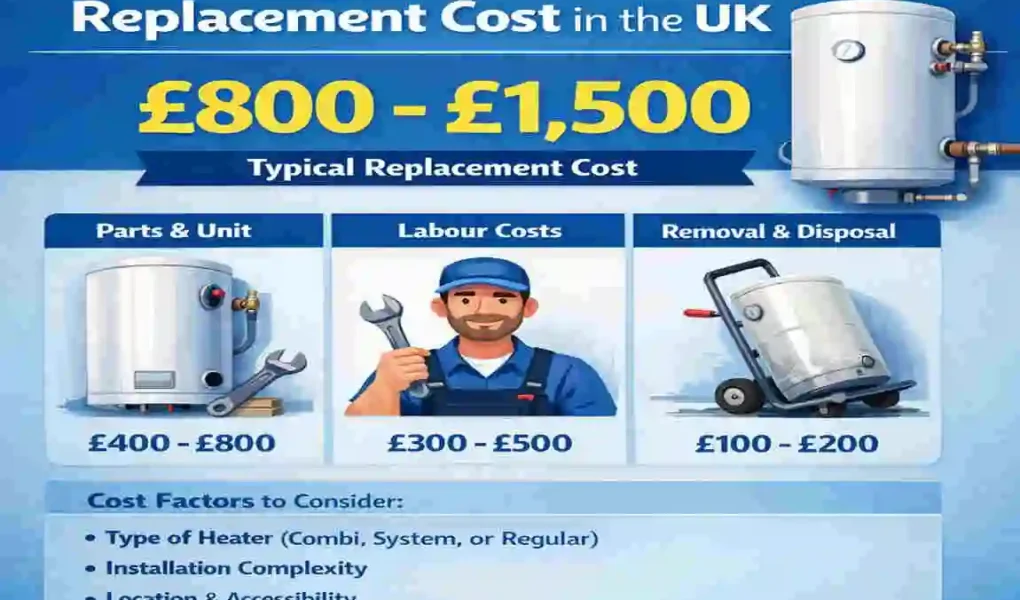
Waking up to a cold shower is never a nice surprise. It usually means one thing: your water heater may be failing, and you are now facing a decision most homeowners would rather avoid. You need hot water again, but you also need to know what the cost of a water heater replacement in the UK really looks like before you commit to anything.
The truth is, replacement costs can vary widely. For many UK homes, the average water heater replacement cost is between £2,200 and £3,200. However, smaller jobs can be cheaper, and more complex replacements can go well above that. The final price depends on the type of system you have, the size of your home, the brand you choose, and the difficulty of the installation.
This matters now more than ever. Energy bills remain a major concern, older systems are becoming less efficient, and many UK homes still rely on equipment well past its best. In many cases, a unit lasts 10 to 15 years, and once it starts breaking down regularly, replacing it often makes more sense than repeatedly repairing it. It also helps to remember that modern systems can be far more efficient, which may lower your monthly running costs over time.
Understanding Water Heaters in the UK
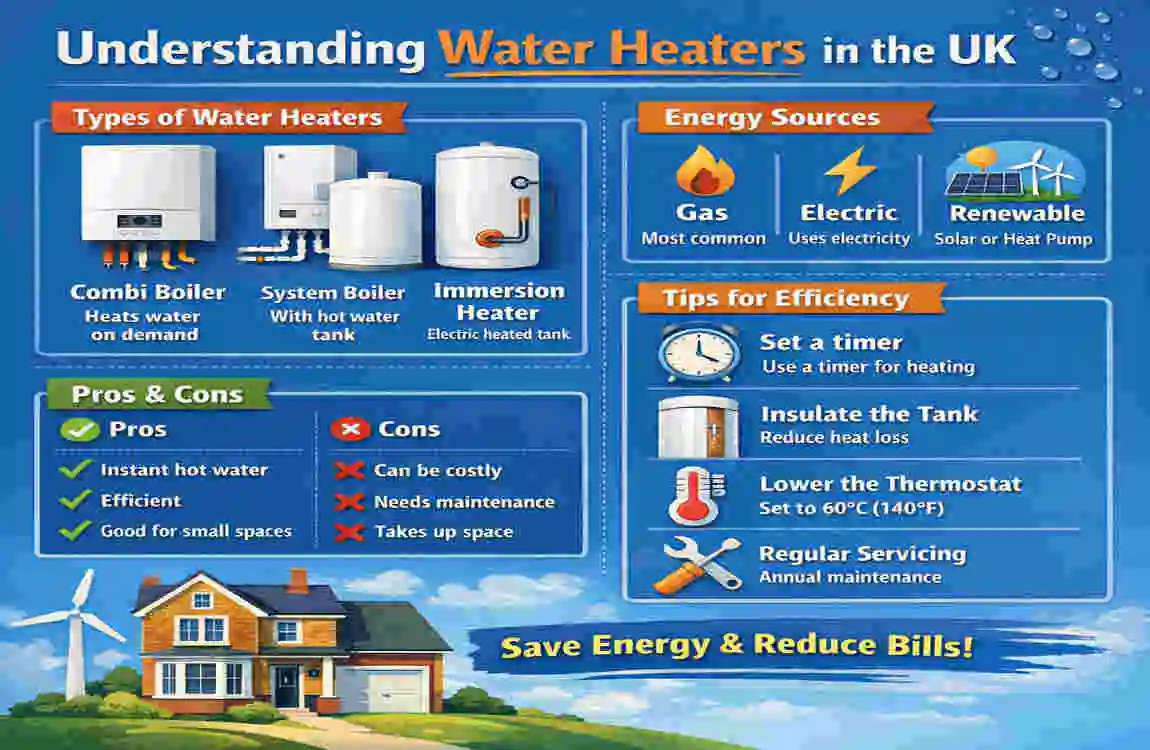
What people mean by “water heater” in the UK
Before we talk about the cost of replacing a water heater in the UK, it helps to clear up a common point of confusion.
In the UK, the term water heater can mean different things depending on the home and the system. Some people use it to mean a boiler, while others mean a hot water cylinder or a storage system that keeps water ready for showers, taps, and baths.
This is a little different from how the term is used in other countries. In the UK, most homes rely on one of these setups:
- A combi boiler, which heats water on demand
- A system boiler with a hot water cylinder
- A conventional boiler with a tank and cylinder
- An electric hot water cylinder in some properties
So when homeowners ask about the average water heater replacement cost in the UK, they are often really asking about the cost of replacing a boiler or hot water system.
Main types of water heating systems
Here is a simple breakdown of the most common types.
Type Description Typical Lifespan
Combi Boiler provides heating and hot water on demand without a separate tank, lasting 10–12 years.
System Boiler: Works with a hot water cylinder and suits larger homes. 12–15 years.
Conventional Boiler: Older setup with a tank and cylinder, often found in older homes 15+ years old. old
Electric Water Cylinder Stores and heats water using electricity , 10–15 years
Combi boilers
A combi boiler is one of the most common choices in the UK. It is compact, efficient, and works well in smaller to medium-sized homes. It heats water only when needed, so you do not need a separate hot water tank.
The main benefit is convenience. You get hot water quickly, and the system usually takes up less space. The downside is that it may struggle in larger homes where several taps or showers run simultaneously.
System boilers
A system boiler is better suited to larger homes or families that need more hot water at once. It works with a hot water cylinder that stores heated water for later use.
This setup can be more reliable for homes with multiple bathrooms. However, it does need more space, and the installation is usually more involved than a combi boiler replacement.
Conventional boilers
A conventional boiler is often found in older UK homes. It usually works alongside both a cold-water tank and a hot-water cylinder.
This type is not always the most efficient option today. However, it may still be useful in homes with older pipework or specific water pressure issues. Replacement often becomes a bigger job because it may involve changing several parts of the system at once.
Why the type matters so much
The type of system you have significantly affects the cost of replacing a water heater in the UK. A simple combi swap is usually much cheaper than a full conversion from a conventional setup to a modern system. That is why getting the right diagnosis first is so important.
If you are not sure what system you have, a heating engineer can identify it quickly. That first check can save you from paying for the wrong kind of upgrade.
Average Water Heater Replacement Cost in the UK Breakdown
What is the national average?
Let’s get to the main question: How much does it cost to replace a water heater in the UK?
For most households, the average water heater replacement cost in the UK falls around £2,200 to £3,200 in 2026. That range covers a typical replacement where the new system is similar to the old one and no major structural work is needed.
However, you may pay less if you are replacing a smaller electric unit, or more if you are upgrading to a larger, more efficient system. In some London and South East areas, costs can rise above £4,000, especially when the job is more complex.
A simple way to think about it is this:
- Basic replacement: around £1,200 to £1,800
- Average replacement: around £2,200 to £3,200
- More complex installation: around £3,500 to £4,500+
That is why it is better to think of replacement costs as a range rather than a single number.
What makes up the total price?
The total cost of replacing a water heater in the UK usually includes several parts. The unit itself is only one part of the bill.
Cost Component, Typical Share, Approximate Cost
New unit 40–50% £800–£2,500
Labor 30–40% £500–£1,000
Materials and fittings 10–20% £200–£500
Extras and upgrades 5–10% £100–£800+
New unit cost
This is the cost of the actual boiler, cylinder, or water-heating equipment—the price varies depending on the model, size, efficiency, and brand. A compact boiler will usually cost less than a high-capacity system built for a large household.
Labour cost
Labor covers the installer’s time and skill. In many cases, replacement takes 1 to 2 days, though a simple swap may be completed more quickly. The more complex the job, the more labor you will pay for.
Materials and fittings
This includes pipes, valves, seals, brackets, and other small but necessary items. These may not sound expensive, but they add up quickly, especially if the installation needs changes to existing pipework.
Extra work
Extra work can include flushing the system, adding controls, upgrading safety parts, or removing an old cylinder. These are not always included in the first quote, so it is important to ask.
Regional price differences
The cost of replacing a water heater in the UK also varies depending on where you live.
RegionLow-End CostHigh-End Cost
London / South East £2,500 £4,000+
Midlands / North of England £1,800 £3,000
Scotland / Wales £2,000 £3,500
Why location affects the price
In busy city areas, labor rates are often higher. Travel time, parking, and demand can also raise the total. In some rural areas, the cost may rise for a different reason: fewer engineers available locally, which can limit competition.
So yes, the same system can cost more in one part of the UK than in another. That is completely normal.
A closer look at common replacement scenarios
To help you picture the numbers, here are a few typical situations:
- Small flat with a basic electric unit: around £1,200 to £1,800
- Average family home with a combi boiler swap: around £2,000 to £3,000
- Large home with a system conversion: around £3,000 to £4,500+
- Older property needing pipework changes: often £3,500+
When comparing quotes, always check whether the price includes removal of the old unit, testing, flushing, and any extra materials. A lower quote may look attractive at first, but it may not include these costs. Still, it can end up costing more if key items are missing.
Factors Affecting Water Heater Replacement Cost in the UK
Home size and hot water demand
One of the biggest cost drivers is the size of your home and the amount of hot water your family uses.
A small home with one bathroom will usually need a simpler system than a property with three bathrooms and several people using showers at the same time. If your hot water demand is high, you may need a larger unit or a different type of system altogether.
That means the water heater replacement cost in the UK rises not just because the unit is bigger, but because the whole setup needs to support more usage.
Fuel type
The fuel type also matters a lot.
- Gas systems are often the most common and can be cheaper to run
- Electric systems may cost less to install in some cases, but they can be more expensive to use
- Oil systems often have higher installation and replacement costs
- LPG systems can also vary depending on the property
A gas boiler replacement is often mid-range in cost, while some electric replacements can be cheaper upfront. But cheaper upfront does not always mean cheaper in the long run.
Efficiency rating
If your old unit is very inefficient, replacing it with a modern A-rated system can save money on energy bills over time. Many homeowners focus only on the upfront price, but that can be a mistake.
A newer system may cost more at installation, but it can reduce waste and improve performance. In other words, a slightly higher water heater replacement cost in the UK might make sense if your monthly bills go down afterward.
Accessibility and installation difficulty
Some homes are easy to work in. Others are not.
If the system is in a tight loft, a small cupboard, a difficult-to-reach basement, or an awkward part of the house, the labor time will usually increase. Installers may need extra time to lift equipment, remove old parts, or make layout changes.
This is one of the most overlooked reasons for higher prices.
Age and condition of your current system
If your current water heating system is old, it may not be a simple swap. The engineer may find corroded pipes, weak valves, poor water pressure, or damaged fittings. If so, more repair work is needed before the new unit can even be fitted.
That can turn a simple replacement into a more involved project.
Possible extra issues that affect cost
Here are some common problems that can increase the final bill:
- Old or damaged pipework
- System flushing or power flushing
- Insulation upgrades
- Asbestos-related work in older properties
- Electrical upgrades
- New controls or thermostats
- Conversion from one system type to another
You do not always need all of these, but it helps to be aware that they can affect the total price.
A practical tip
Always get at least three quotes from qualified engineers. That gives you a realistic view of the water heater replacement cost in the UK for your home and helps you spot quotes that are unusually high or too low.
Water Heater Brands and Models: Cost vs. Value
Why the brand matters
Not all water heaters are built the same. Some brands are known for strong reliability and good aftercare. Others offer lower prices but may not last as long or may have fewer advanced features.
When people think about the cost of replacing a water heater in the UK, they often look at the cheapest option first. That is understandable, but it is not always the best decision. A slightly more expensive model that is more efficient and reliable can often save money over time.
Common UK brands
Some of the most recognized names in the UK include:
- Worcester Bosch
- Vaillant
- Ideal
- Baxi
These brands are popular because they are widely available, well supported, and often installed by many UK heating engineers.
Cost and value comparison
Brand / Model Capacity Cost Range Efficiency
Worcester Greenstar 30kW £1,800–£2,500 A-rated
Vaillant ecoTEC 35kW £2,000–£3,000 A+
Ideal Logic 24kW £1,600–£2,300 A-rated
Baxi 800 28kW £1,500–£2,200 A-rated
Budget vs Premium options
A budget model may be the right choice if you need a straightforward replacement and want to keep upfront spending low. These units can still be reliable, especially if fitted properly and serviced regularly.
A Premium model may cost more, but it often offers:
- Better efficiency
- Quieter operation
- Longer warranty options
- More advanced controls
- Stronger build quality
If you expect to stay in the home for many years, a Premium model may be worth the extra cost. If you are planning to move soon, a solid mid-range option may be the smarter choice.
Matching the model to your home
The best system is not always the most expensive one. It is the one that suits your household.
Ask yourself:
- How many people live in the home?
- How many bathrooms do you use?
- Do you need hot water from several taps at once?
- Is space limited?
- Is energy efficiency a top priority?
When the system is properly matched to the home, you are more likely to achieve good performance and a fair water heater replacement cost in the UK.
Additional Costs and Hidden Fees
The parts people forget to budget for
Many homeowners focus on the main replacement price and forget about the smaller items. That is where surprises happen.
Here are some common extras that may appear on the final bill:
Extra Cost, Typical Range, Notes
Old unit removal and disposal £100–£200 , may be separate from labor
Power flush/system flush £250–£500. Helps remove sludge and debris
New thermostat or controls £200–£500 Useful for better control
Pipework changes £150–£800+ Depends on complexity
Emergency call-out +20% or more , higher cost for urgent jobs
Disposal of the old unit
The old system does not disappear on its own. It has to be removed and disposed of properly. Some installers include this in the price, but others charge separately.
Upgrades and controls
A new heating setup may also be a good time to upgrade your controls. Smart thermostats, improved timers, and better temperature control can all help improve comfort and reduce waste.
These items are not always essential, but they can add value.
Grants and energy schemes
In some cases, you may qualify for financial support through government-backed energy schemes or local efficiency programs. These can help reduce the overall cost of water heater replacement in the UK, especially if you are moving to a more energy-efficient system.
The exact support available depends on your property, income, system type, and location. It is always worth asking a qualified installer whether you may qualify.
VAT and installation pricing
VAT treatment can vary depending on the work and the type of property or upgrade involved. Some energy-saving installations may qualify for reduced or zero-rated VAT in certain situations, but this depends on the details. A reputable installer should explain this clearly in your quote.
How to Save on Water Heater Replacement Cost in the UK
Compare at least three quotes.
This is the simplest and often the most effective way to save. Prices can vary more than you might expect, even for similar systems.
When you get multiple quotes, compare not just the total amount but also what is included. A cheaper quote with missing items is not always a real saving.
Choose the right size, not the biggest one.
A larger system is not always better. If your luxury home only needs a modest unit, paying for extra capacity may be wasteful.
A good installer should help you choose a system that matches your household, not oversell you a bigger one than you need.
Replace before it becomes an emergency.
Emergency replacements are often more expensive because the work must be done quickly. If your unit is showing signs of failure, do not wait until it breaks completely unless you have to.
Planning gives you more time to compare options and avoid rushed decisions.
Ask about bundled services.
Some companies offer better pricing if you combine a replacement with a service, flush, or upgrade. That can help lower the total cost compared with booking each job separately.
Consider off-peak timing
In some periods, especially quieter months, installers may offer better availability or lower prices. If your current system is still working, scheduling the work at a less busy time may help.
Avoid DIY mistakes
This part is important. Water heating systems and gas-related work should only be handled by the right qualified professional. Trying to save money by doing it yourself can lead to safety problems, failed inspections, and bigger repair bills later.
Use this simple savings checklist.
Here is a quick way to stay in control:
- Check what type of system you already have
- Decide what you actually need
- Get three written quotes
- Compare what each quote includes
- Ask about guarantees and aftercare
- Choose efficiency, not just the lowest price
A thoughtful approach can make a real difference to the final cost of a water heater replacement in the UK.
Step-by-Step Replacement Process
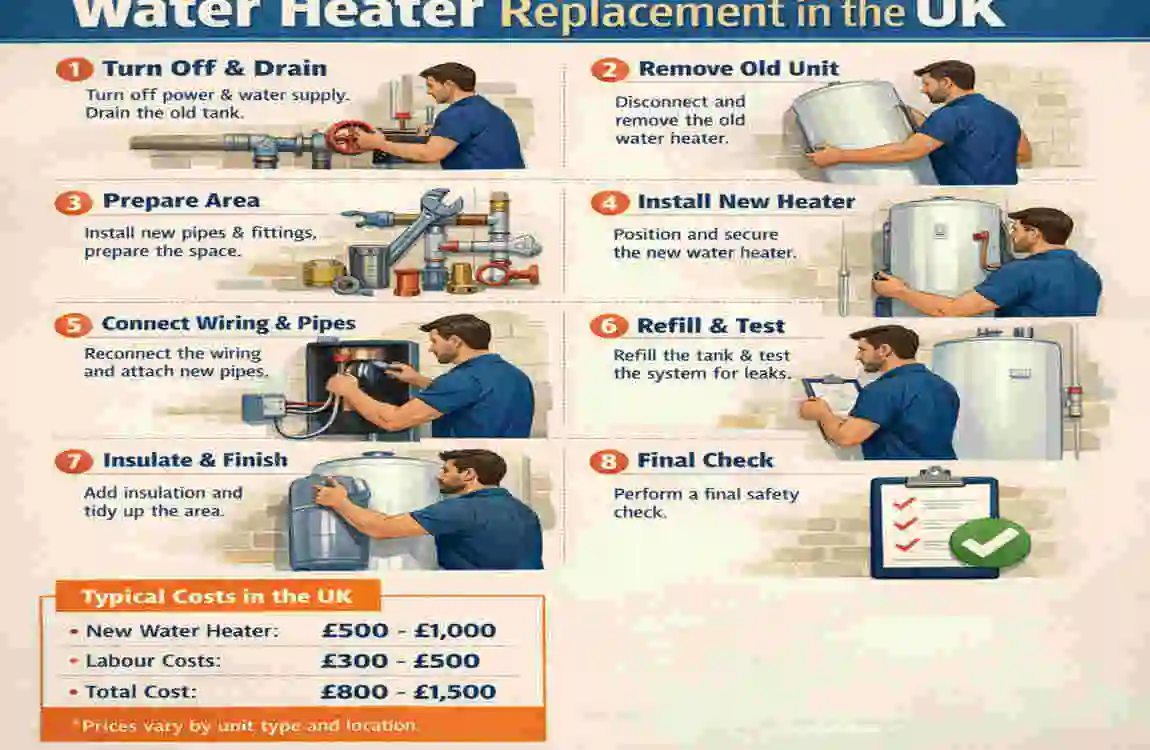
What usually happens during replacement?
If you have never replaced a water heating system before, the process can feel a bit unclear. In reality, it is usually straightforward when handled by an experienced engineer.
Inspection and diagnosis
First, the engineer checks your current setup. They look at the type of system, the condition of the pipework, the location, and the reason for replacement.
This helps them understand whether you need a like-for-like swap or something more involved.
Quote and approval
Next, you receive a quote. A good quote should explain the cost of the unit, labor, materials, and any likely extras.
Once you approve the price, the installation date is booked.
Removal of the old system
On installation day, the old unit is disconnected and removed. This can also include draining the system and preparing the area for the new equipment.
Installation of the new unit
The new system is fitted, connected, and checked carefully. This may take anywhere from 4 to 8 hours for a simple replacement, or longer for a more complex job.
Testing and commissioning
Once fitted, the system is tested to make sure it is safe, efficient, and working properly. The engineer may also show you how to use the controls and explain basic maintenance.
FAQs
How much is the average water heater replacement cost in the UK?
The average water heater replacement cost in the UK is usually around £2,200 to £3,200 for a typical home. Smaller replacements can be cheaper, while larger homes or more complex installations may cost more. The final price depends on the type of system, labor, and any additional work required.
What is the cheapest water heater replacement cost in the UK?
The cheapest replacements can start at around £1,200 for a basic electric system or a simple like-for-like swap. However, the final price depends on your home and setup. A very low quote may not include disposal, flushing, or other essential parts, so always check carefully.
Does replacing a water heater increase home value in the UK?
Yes, it can. A modern, efficient heating system can make a home more attractive to buyers by suggesting lower operating costs and less immediate maintenance. While it may not add a huge amount on its own, it can support a stronger sale price and better first impressions.
How long does a water heater replacement take in the UK?
Most replacements take one day, although some jobs may take two days or more if the system is complex. A simple like-for-like replacement is usually faster. If pipework changes, flushing, or system conversions are needed, the job may take longer.
Is it better to repair or replace an old water heater?
If the system is still fairly new and the issue is small, repair may be the better choice. But if the unit is old, inefficient, or frequently breaking down, replacement is usually smarter in the long run. Repeated repairs can quickly add up and may cost more than a new system.
What affects the water heater replacement cost in the UK the most?
The biggest factors are system type, home size, installation difficulty, fuel type, and brand choice. Labor costs also vary by region. If your home needs extra pipework, a flush, or conversion work, the price can rise significantly.
| Water Heater Type | Average Cost Range (Supply + Install) | Labour Time | Key Notes |
|---|---|---|---|
| Immersion Heater | £100–£200 | 1–2 hours | Basic electric element; cheapest option for small fixes |
| Unvented Cylinder | £800–£2,500 | 4–8 hours | Popular for mains pressure; add £300–£500 for extras |
| Combi Boiler | £2,200–£3,500 | 1–2 days | Gas-fired, no tank needed; national average for homes |
| System/Conventional Boiler | £2,500–£4,500+ | 1–3 days | Larger homes; higher if oil-fired or upgrades needed |