
When designing a basement, flooring is one of the most crucial decisions homeowners face. The right flooring can transform a basement into a warm, inviting space, while the wrong choice can lead to costly repairs, discomfort, and aesthetic disappointment. Naturally, many homeowners ask: “Is laminate flooring good for basement spaces?”
Understanding Laminate Flooring
To decide whether laminate flooring is right for your basement, it’s essential first to understand what it is and why it’s so popular.
What Is Laminate Flooring?
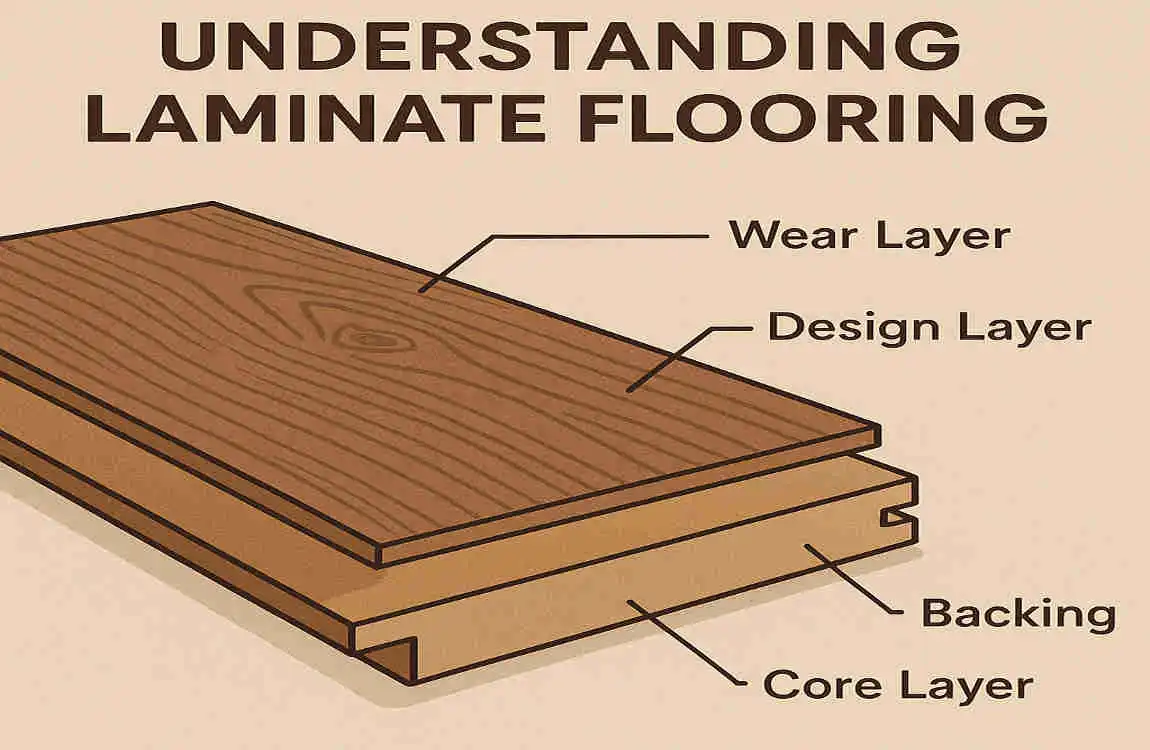
Laminate flooring is a multi-layered synthetic flooring material designed to mimic the look of natural hardwood, stone, or tile. It’s made of several layers:
- Wear layer: A transparent protective layer that resists scratches, stains, and fading.
- Design layer: A high-resolution printed layer that creates the realistic appearance of wood, stone, or tile.
- Core layer: A thick, durable layer made of high-density fiberboard (HDF) or medium-density fiberboard (MDF) for stability.
- Backing layer: A moisture-resistant layer that provides additional stability and protection.
Because of its layered construction, laminate flooring is durable, affordable, and versatile, making it a popular choice for many homes.
Types of Laminate Flooring
Laminate flooring comes in various types, allowing homeowners to choose options that suit their specific needs. Key distinctions include:
- Thickness: Laminate planks range from 6 mm to 12 mm thick. Thicker planks often feel more stable and provide better sound insulation.
- Wear layer: The durability of the laminate depends on the thickness of its wear layer, typically measured by its Abrasion Class (AC) rating. For basements, an AC3 or higher is recommended for better durability.
- Finishes: Laminate flooring is available in matte, glossy, and textured finishes to suit different aesthetic preferences.
Benefits of Laminate Flooring
Laminate flooring offers several advantages that make it appealing for various rooms in the house:
- Cost-effectiveness: Laminate is significantly more affordable than hardwood or stone.
- Design variety: Thanks to advanced printing technology, laminate can replicate the look of hardwood, tile, or stone with impressive realism.
- Durability: It resists scratches, dents, and fading, making it a durable option for high-traffic areas.
- Ease of installation: Laminate features a click-and-lock installation system, making it a DIY-friendly option.
But how do these benefits hold up when laminate is used in a basement? Let’s explore the basement environment and the challenges it poses for flooring.
Basement Environment: Challenges for Flooring
Basements are unique spaces in any home. Their below-ground location creates specific environmental challenges that flooring materials must withstand.
Common Basement Conditions
Basements are often subject to:
- Humidity: Since basements are located below grade, they tend to trap moisture from the surrounding soil.
- Cold temperatures: Basements are typically cooler than the rest of the house because they are closer to the ground.
- Occasional moisture or flooding: Even well-maintained basements can experience water leaks or flooding from heavy rain or plumbing issues.
Flooring Challenges in Basements
These conditions can lead to common problems with basement flooring:
- Mould and mildew growth: Moisture trapped beneath some flooring materials can create an environment where mould can thrive.
- Warping and buckling: Many flooring types, including improperly installed laminate, can warp when exposed to water or high humidity.
- Cold surfaces: Concrete subfloors in basements can make floors feel uncomfortably cold underfoot.
Because of these challenges, choosing the right flooring for basements is essential. This is where the question of laminate flooring’s suitability arises.
Pros of Using Laminate Flooring in Basements
Despite the challenges of basement environments, laminate flooring has several advantages that make it a viable option when installed correctly.
Stylish Variety
Laminate flooring offers a wide range of styles, colours, and finishes. Whether you want the look of rustic hardwood, elegant stone, or sleek tile, laminate can deliver without the hefty price tag of natural materials. This makes laminate an excellent choice for homeowners looking to create a cosy, stylish basement.
Easy Installation and Maintenance
Laminate flooring is designed for easy installation, thanks to its click-and-lock system. This means you could install it as a DIY project, saving on labour costs. Additionally, laminate is easy to clean and maintain—regular sweeping and occasional mopping are usually sufficient.
Durability
Laminate flooring is resistant to scratches, fading, and wear, making it suitable for moderate-traffic areas like basements. When paired with a proper underlayment, it can also handle light moisture without issue.
Cost-Effective Solution
Compared to hardwood or tile, laminate is much more affordable. For homeowners on a budget, laminate flooring allows you to achieve a high-end look without breaking the bank.
Comfort and Warmth
Standing on a concrete basement floor can be uncomfortable, especially in colder months. Laminate flooring, when installed with an underlayment, provides cushioning and insulation, making the space feel warmer and more inviting.
Cons and Limitations of Laminate Flooring for Basements
While laminate flooring has its advantages, there are also some limitations to consider before choosing it for your basement.
Susceptibility to Water Damage
Traditional laminate flooring isn’t waterproof. If water seeps into the seams or edges, it can cause the planks to swell, warp, or buckle. This makes it less suitable for basements prone to flooding or high humidity.
Potential for Mould Growth
If moisture gets trapped underneath the laminate, it can create the perfect environment for mould and mildew to grow. This is especially concerning in basements, where moisture issues are common.
Lack of Insulation
While laminate flooring can feel warmer than bare concrete, it doesn’t provide as much insulation as some other flooring options, such as carpet or engineered wood.
Maintenance and Replacement
If parts of your laminate floor sustain water damage, you may need to replace the damaged planks. Unlike tile or vinyl, laminate cannot always be repaired easily.
To mitigate these cons, proper preparation and installation are essential. Let’s look at expert tips for making laminate flooring work in your basement.
Expert Tips to Make Laminate Flooring Work in Your Basement
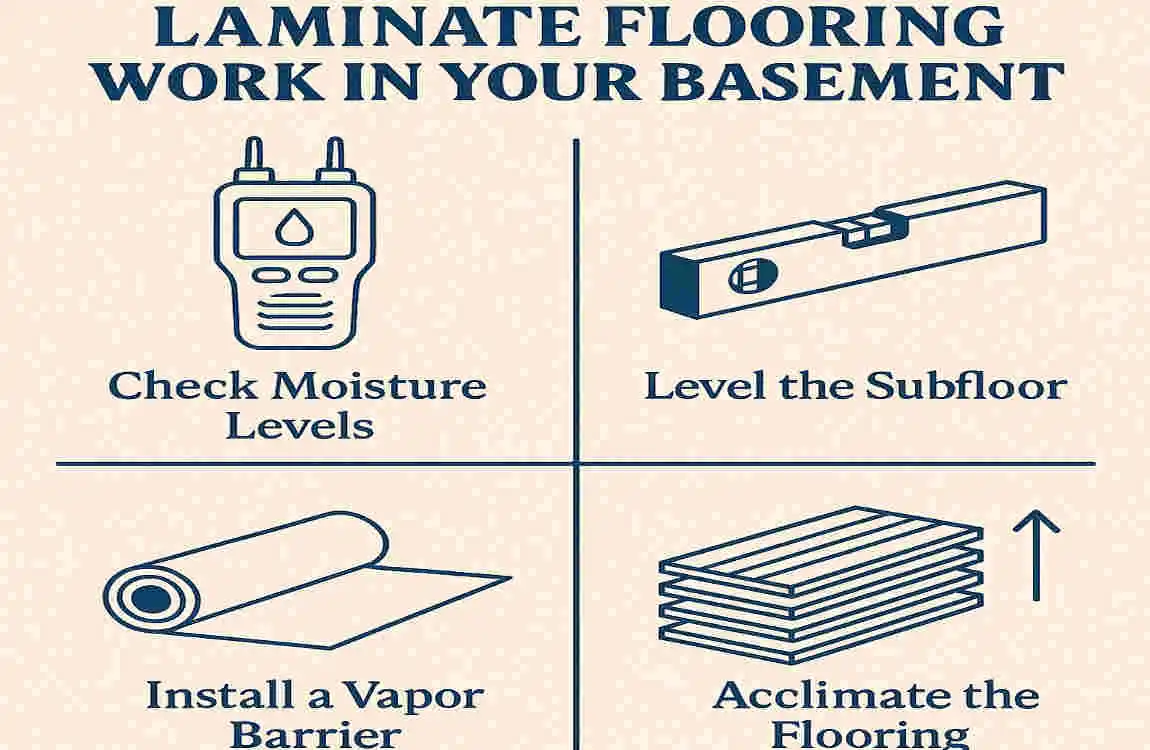
If you’re set on using laminate flooring in your basement, here are some practical steps to ensure success:
Test for Moisture
Before installing laminate flooring, test your basement for moisture issues. Use a moisture meter to check the humidity levels in the concrete subfloor. Address any leaks or dampness before proceeding.
Choose Water-Resistant Laminate
Not all laminate flooring is created equal. Opt for water-resistant or waterproof laminate options specifically designed for areas with higher moisture levels.
Use a Moisture Barrier
Install an underlayment with a built-in moisture barrier to protect the laminate from potential water seepage. This also adds insulation and soundproofing.
install Properly
Proper installation is key to preventing moisture-related issues. Follow the manufacturer’s guidelines carefully and leave an expansion gap around the edges to accommodate temperature and humidity fluctuations.
Maintain Regularly
Keep your laminate flooring in good condition by cleaning spills immediately, using rugs in high-traffic areas, and avoiding excessive water during cleaning.
Alternative Basement Flooring Options to Consider
While laminate flooring is a popular choice, it’s worth exploring other basement flooring options. Here’s a quick comparison:
Flooring Type: Pros and Cons
Vinyl Waterproof, affordable, durable, Limited design variety compared to laminate.
The Engineered Wood is warmer and more natural-looking. More expensive, susceptible to some moisture
Tile Waterproof, durable, stylish Cold underfoot, harder to install
Carpet Warm and comfortable Susceptible to mould and stains
Each option has its own strengths and weaknesses, so consider your specific needs when making a decision.
How to Decide If Laminate Flooring Is Right for Your Basement
Ultimately, the decision comes down to a few key factors:
- Moisture levels: If your basement has low moisture levels, laminate can work well.
- Budget: Laminate is an affordable option compared to many alternatives.
- Aesthetic preferences: If you want the look of hardwood or tile at a lower cost, laminate is a great choice.
- Comfort: With an underlayment, laminate can provide a comfortable and warm surface.
Consult a flooring professional to assess your basement and determine whether laminate flooring is the best option for your space.