
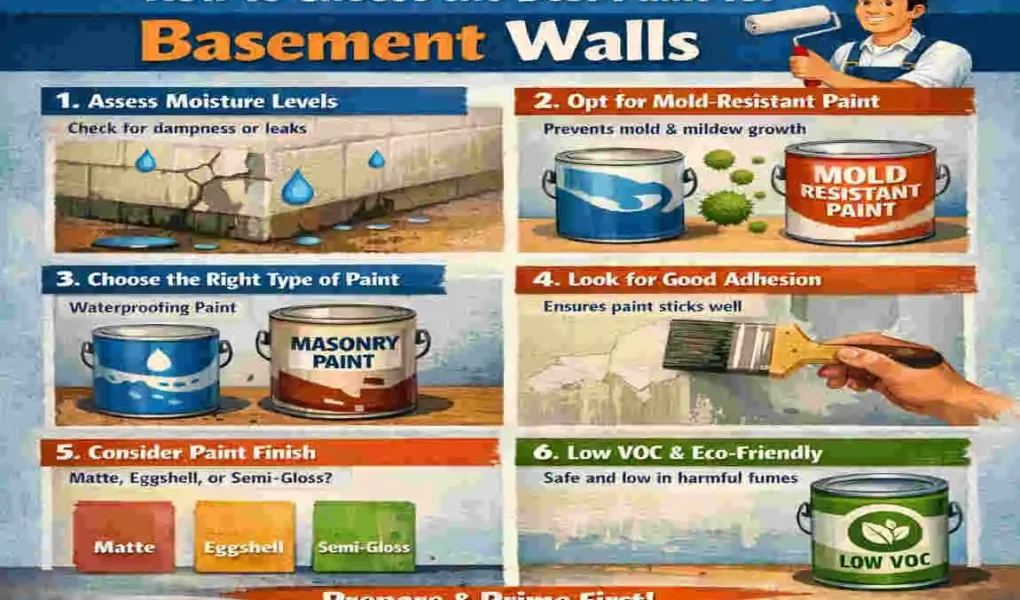
Basement walls need special care because they deal with more than just colour and style. They often face moisture, humidity, cold air, and occasional water stains. If you choose the wrong paint, the finish can peel, bubble, or wear out too quickly.
That is why it helps to know what paint to use on basement walls before you start painting. The right paint can protect the surface, improve the room’s look, and make cleaning much easier.
Why Basement Walls Need Special Paint
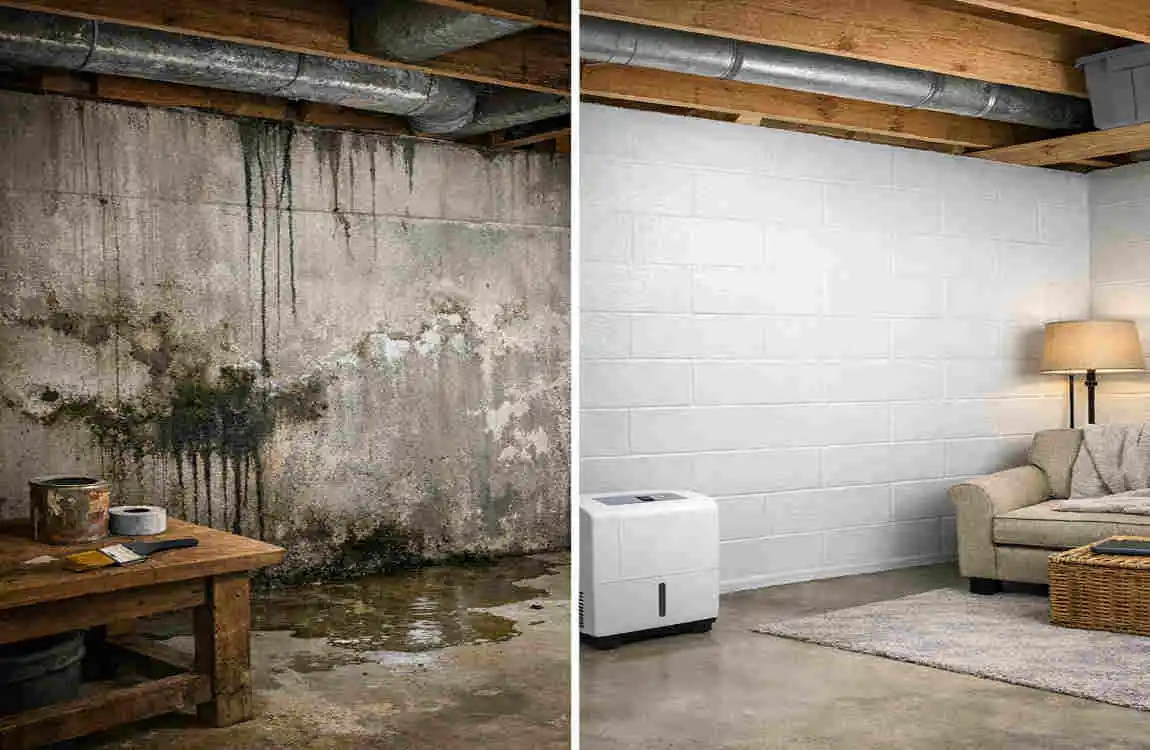
Common Problems with Basement Walls
Basement walls are not like regular interior walls. They usually face more stress and environmental changes.
Some common issues include:
- Moisture
- Water stains
- Mould and mildew
- Concrete dust
These problems can damage paint over time. That is why standard wall paint is often not strong enough for the job.
Benefits of Using the Right Basement Paint
The right paint does more than improve appearance.
It also gives you:
- Better durability
- Moisture resistance
- Easier cleaning
- Improved appearance
When you choose the right product, your basement walls last longer and stay looking fresh.
What Paint to Use on Basement Walls
Acrylic Latex Paint
Acrylic latex paint is one of the best choices for finished basements.
It is easy to apply, dries fairly quickly, and has low odour, which makes it more comfortable to use indoors. It also works well if you want a smooth, clean look.
This paint is a good option when the basement is mostly dry and already feels like a living space.
Masonry Paint
Masonry paint is made for concrete and brick surfaces.
It sticks well to rough basement walls and gives a strong finish. If your walls are bare concrete, this is often a smart choice.
It is long-lasting and made for surfaces that need extra strength.
Waterproof Basement Paint
If your basement gets damp or has minor moisture problems, waterproof basement paint can help.
It is designed to resist moisture and protect the wall surface. This makes it useful in older homes or basements that need extra defence.
It is not a fix for serious water leaks, but it can help protect the walls after proper repairs.
Epoxy Paint
Epoxy paint is one of the strongest options available.
It is highly durable and works well in utility basements, storage areas, and workspaces. It also resists stains and certain chemicals, making it useful in high-traffic spaces.
If you want long-term protection and a tough finish, epoxy paint is a strong choice.
Best Paint Finish for Basement Walls
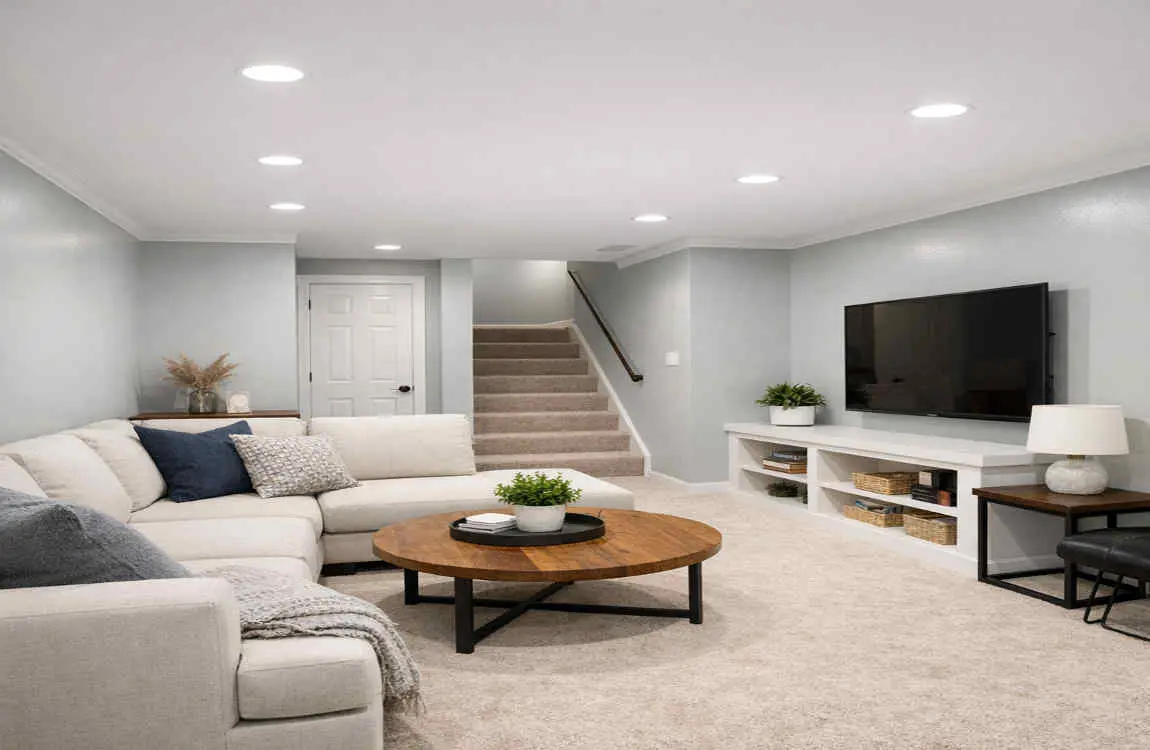
Matte Finish
Matte finish hides small flaws in the wall.
It works best if the surface is not perfect and you want a soft, simple look. However, it is not always the easiest to clean.
Eggshell Finish
Eggshell gives a light shine without looking too glossy.
It works well in basements that are used as family rooms or finished living areas. It offers a nice balance between style and practicality.
Satin Finish
Satin is one of the most popular choices for basement walls.
It is easier to wipe clean than matte or eggshell, and it still looks smooth and attractive. If you want a mix of beauty and durability, satin is a smart option.
Semi-Gloss Finish
Semi-gloss is more reflective and easier to clean.
It works best in utility spaces, laundry areas, or basements that may get dirty more often. The shine can also help brighten darker rooms.
Preparing Basement Walls Before Painting
Inspect for Moisture
Before painting, check the walls carefully for damp spots, leaks, or water stains.
If the wall is still wet, paint will not stick properly. Fix moisture issues first so the new paint lasts longer.
Repair Cracks
Small cracks should be sealed before painting.
This helps create a smoother surface and strengthens the wall. Use a proper repair product made for concrete or basement walls.
Clean Concrete Walls
Dust and dirt can stop paint from bonding well.
Wipe or brush the walls clean before starting. If the walls have a lot of concrete dust, remove as much as possible so the paint can stick better.
Remove Mold
If you see mould or mildew, clean it fully before painting.
Painting over mould will not solve the problem. It can return later and damage the finish again.
Apply Primer
Primer is very important for basement walls.
It helps the paint stick, seals porous surfaces, and creates a better final finish. In many cases, primer is the step that makes the biggest difference.
Step-by-Step Guide to Painting Basement Walls
Gather Materials
Before you begin, collect everything you need.
Basic supplies may include:
- Paint
- Primer
- Roller and brush
- Painter’s tape
- Drop cloths
- Cleaning supplies
Having everything ready makes the process smoother.
Prime the Surface
Apply primer evenly across the wall.
This step is especially useful on concrete or repaired surfaces. Let the primer dry fully before moving to the next step.
Apply the First Coat
Use steady strokes and do not overload the roller.
A thin, even coat works better than a thick one. Take your time so the finish stays smooth.
Add a Second Coat
Most basement walls look better with a second coat.
This improves colour, coverage, and durability. It also helps the paint last longer.
Let the Paint Cure Properly
Drying and curing are not the same.
Even if the wall feels dry, the paint may still need time to harden fully. Be gentle with the walls until the paint has fully cured.
Best Paint Colours for Basement Walls

Light colours work best in most basements because they help the room feel brighter and more open.
Good choices include:
- White
- Light gray
- Beige
- Greige
- Soft blue
- Warm cream
These shades reflect more light and help reduce the dark, closed-in feeling that many basements have.
Common Mistakes to Avoid
Painting Wet Walls
This is one of the biggest mistakes.
If the wall still has moisture, the paint may peel or bubble later. Always fix the moisture problem first.
Skipping Primer
Primer should not be ignored.
It helps the paint stick and improves the final result. Without it, basement paint may not last as long.
Choosing Interior Wall Paint Only
Regular wall paint is not always strong enough for basement surfaces.
Basement walls need paint that can handle humidity and rougher conditions.
Ignoring Ventilation
Good airflow matters.
If the room has poor ventilation, paint may take longer to dry, and odour may linger. Open windows or use fans when possible.
Applying Thick Coats
Thick coats can lead to drips and uneven drying.
Two thin coats usually work better than one heavy coat.
Maintenance Tips
A painted basement wall still needs care.
Here are a few simple ways to keep it in good shape:
- Keep humidity low
- Inspect walls annually
- Clean stains promptly
- Repair peeling paint early
- Improve ventilation
These habits help your basement walls stay fresh and protect your home for longer.
Frequently Asked Questions
What paint to use on basement walls?
Waterproof masonry paint or high-quality acrylic latex paint is the best choice for most basement walls.
Do basement walls need primer?
Yes. Primer improves adhesion, seals porous concrete, and increases paint durability.
Can I paint directly on concrete basement walls?
Yes, but the walls should be clean, dry, and properly primed before painting.
What is the best finish for basement walls?
Satin or eggshell finishes offer a balance of durability, ease of cleaning, and an attractive appearance.
Is waterproof paint worth it?
Yes. Waterproof paint helps protect basement walls from moisture damage and extends the life of the finish.
| Factor | Recommendation | Why It Matters |
|---|---|---|
| Best Paint Type | Acrylic latex masonry paint | Resists moisture and provides long-lasting coverage. |
| Finish | Satin or eggshell | Easy to clean while hiding minor wall imperfections. |
| Moisture Resistance | Choose waterproof or moisture-resistant paint | Helps prevent peeling, mold, and mildew. |
| Primer | Use a masonry or stain-blocking primer | Improves adhesion and seals porous concrete surfaces. |
| Wall Material | Match paint to concrete, brick, or drywall | Ensures proper bonding and durability. |
| Color Choice | Light neutral shades (white, gray, beige) | Makes basements appear brighter and more spacious. |
| Mold Protection | Paint with mildew-resistant additives | Reduces the risk of mold growth in damp areas. |
| VOC Level | Low-VOC or zero-VOC paint | Improves indoor air quality and reduces odors. |
| Surface Preparation | Clean, dry, and repair cracks before painting | Creates a smooth finish and extends paint life. |
| Maintenance | Wash walls gently and inspect for moisture yearly | Keeps the paint looking fresh and prevents damage. |